Why freedom abroad affects us all

Why freedom abroad affects us all

Why freedom abroad affects us all

The CEO and Director of the U.S. Agency for Global Media, Grant Turner, has written about the importance of the work of USAGM broadcasters internationally

 
Just over four months ago, on December 30, a young Chinese ophthalmologist who worked at the central hospital in Wuhan, China, tried to warn colleagues about a contagious infection he’d noticed in several patients.
 
Within days, he was warned by police about “making false comments” and ordered to return to work. Months later, the infection he rang alarm bells about had made its way around the world and killed more than 80,000 Americans.
 
It’s impossible to know how many lives were lost as a result of silencing Dr. Li Wenliang. But it has never been more evident that freedom of information in other countries affects the lives of those in the United States.
 
Dr. Wenliang’s story is tragic, but unfortunately, not rare. For years, China has had one of the most repressive media environments in the world. But the explosive growth of coronavirus cases, as well as critical reporting on the government’s response to it, have only exacerbated censorship and repression of independent media and citizen journalists alike.
 
Personal attacks-like the one on Dr. Wenliang and other truth-tellers-and the subsequent oppressive media environment they create, are just two strategies for silencing the truth that is now amplified by the pandemic.
 
For example, according to the U.S. Department of State, Iran’s lack of transparency about its coronavirus outbreak has resulted in a devastating public health risk to the Iranian people, as well as to the region.
 
In taking a similar approach to obfuscating the facts, the governments of Hungary, Thailand, and Cambodia have made legislative moves to ban so-called “fake news.” In fact, they are using these powers to silence critics.
 
Even in environments where media exists in a free market, the coronavirus’s negative impact on advertising spends has been catastrophic for many independent and alternative publications.
 
These challenges to media environments are being augmented by the global health crisis. As press freedom declines around the world, the importance of the universal right to a free press has never been more apparent.
 
Journalists everywhere, including those who work for the public service networks of the U.S. Agency for Global Media (USAGM), are facing increasing risks while reporting on the pandemic. They are routinely harassed and threatened just for reporting the news. Three of USAGM’s journalists are currently in jail, and eighteen have been killed in the line of duty.
 
And, in this global health crisis, the threats are more complicated. Not only are governments taking stronger action against journalists, but reporters must also physically distance themselves to avoid contracting the virus.
 
As the Columbia Journalism Review so eloquently put it, newsrooms have had to make decisions about “how to keep an industry that relies on human contact running, even as public health experts and government officials mandate social isolation.”
 
I can say, without equivocation, that USAGM’s networks and others are managing those difficult decisions with clarity, insight and fortitude. Journalists around the world are essential workers – reporting the truth, engaging audiences and connecting people, despite the logistical challenges of reporting during a pandemic.
 
Before the health crisis began, research indicated that more than 350 million people each week seek out content from USAGM’s five networks-some with support from our newest entity devoted to internet freedom, the Open Technology Fund-despite the best efforts of governments to block it. Now, even more, audiences are seeking out our news and information.
 
The world marked World Press Freedom Day on May 3, and we reflected on the essential services journalists provide, especially during this unique time in history. By reporting on the spread of the virus and how the public can protect themselves, and by holding governments accountable for their public health response, journalists reporting in one country have the power to save lives in another. For that, we owe them a tremendous debt of gratitude and our ongoing commitment to protect them and their work.

India’s public service broadcaster helping nation

India’s public service broadcaster helping nation

India’s public service broadcaster helping nation

Prasar Bharati, India’s public service broadcaster, reports that it has been receiving accolades and praise from all over the world for its multidimensional approach to public service broadcasting during the COVID-19 pandemic.

A key element of this approach is the combination of high frequency infomercials on COVID-19 with iconic TV shows based on Indian epics such as RAMAYAN, MAHABHARAT, CHANAKYA and others. Similarly, All India Radio (AIR), the radio service of Prasar Bharati, has been regularly broadcasting the government advisories at high frequency while engaging celebrated authors such as Mr. Ruskin Bond to use the power of radio for some old fashioned book reading and story telling.

The re-telecast of RAMAYAN has seen more than 200 million viewers tuning in during the entire episode while the highest viewed episode with an audience of 77 million established a global record.

The Wall Street Journal (WSJ) on 28 April 2020 published an article titled “Coronavirus lockdown creates captive audience for 80’s show” highlighting how the series engaged audiences across India during the nationwide lockdown

Similarly, the British Broadcasting Corporation (BBC) on 4 May 2020 published an article titled “The Ramayan: why Indians are turning to nostalgic TV” covering a range of aspects of the popularity of the Doordarshan TV shows and has given a comparison of viewership garnered by the RAMAYANA and popular international TV shows.

AIB protests closure of ABS-CBN, most watched broadcaster in the Philippines

AIB protests closure of ABS-CBN, most watched broadcaster in the Philippines

AIB protests closure of ABS-CBN, most watched broadcaster in the Philippines

Delay to franchise renewal appears politically motivated

The Association for International Broadcasting is dismayed by the forced close-down of multiple award-winning broadcaster ABS-CBN in the Philippines.

The closure, on 5 May, follows the failure of the media regulator in the Philippines to renew the operating franchise of the broadcaster, the oldest television network in south-east Asia. The 25-year franchise expired on 4 May. Despite following the renewal procedure and gaining extensive support by politicians in the country, ABS-CBN has not managed to conclude an agreement to continue operating its broadcast services on radio and television.

The Philippines National Telecommunications Council issued a “cease and desist” notice to ABS-CBN on 5 May applying to all the company’s radio and TV stations. The company complied after the main evening television newscast, taking all its transmitters off the air.

“This is a bad day for the Philippines, a bad day for Filipinos and a bad day for media freedom,” says Simon Spanswick, chief executive of the AIB. “ABS-CBN is one of the Philippines’ prime providers of news, information and entertainment, reaching almost the entire 106 million population. Its programmes are award-winning domestically and internationally, recognised by judges in our own annual awards as the best in class as well as in other competitions. To remove a country’s most-watched TV news broadcaster during a global pandemic where reliable news, information and advice are essential for citizens’ wellbeing is an appalling misjudgement.”

President Duterte has regularly criticised ABS-CBN, accusing it of bias against his presidency. The broadcaster denies this. The failure to renew the franchise is seen by many observers as a direct political attack on the network.

In addition to its internationally respected broadcasts, ABS-CBN operates a Foundation that provides assistance to people across the Philippines in times of natural disaster and has been working to support the most disadvantaged citizens who have been adversely affected by the COVID-19 pandemic.

The AIB, which is a member of the Advisory Network of the intergovernmental Media Freedom Coalition, is raising this issue publicly and making representations to the Philippines government. Other Advisory Network organisations are also raising this disturbing issue.

“The closure is a direct attack on free media in the Philippines,” continues Simon Spanswick. “The failure of the authorities and Congress in the Philippines to renew the franchise in a timely manner and in accordance with the country’s legislative framework sends a chilling message to anyone in the media in the Philippines: Duterte’s government will do anything to prevent free speech and to stop it from being held to account.”

The forced closure of ABS-CBN has been widely reported by AIB Members including Australia’s ABC, Al Jazeera, the BBC, France 24, Voice of America and others as well as major international papers including the Financial Times and New York Times. 

Manuela Kasper-Claridge is Deutsche Welle’s new editor-in-chief

Manuela Kasper-Claridge is Deutsche Welle’s new editor-in-chief

Manuela Kasper-Claridge is Deutsche Welle’s new editor-in-chief

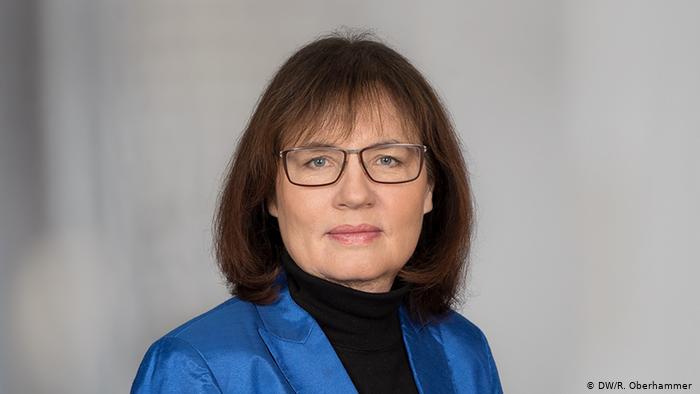
Manuela Kasper-Claridge, former deputy editor-in-chief and head of the economics, science and environment editorial department at Deutsche Welle, is the new editor-in-chief of Germany’s international media organization. After three years in this position, Ines Pohl will become DW bureau chief in Washington.

DW Director of Programming Gerda Meuer: “I am very pleased that the excellent journalist and program manager Manuela Kasper-Claridge will set new trends as editor-in-chief. She has always kept a close eye on the successful digitization and regionalization of our programming. Together with her team, she will provide fresh impetus. Manuela Kasper-Claridge is an experienced manager, who is committed to strengthening the journalistic profile of the brand DW. Her energy and journalistic judgement will be of particular benefit to us, not only in these times when our audiences are increasingly relying on us to provide reliable information as a result of the coronavirus crisis.”

For the first time, in March, content from all channels and platforms in DW’s 30 broadcasting languages reached more than one billion viewings worldwide. The main driver of the increase is the coverage of COVID-19, but longer documentary formats are also popular.

Manuela Kasper Claridge: “It is exciting to see how DW’s services are in demand worldwide, especially in these times. As editor-in-chief, I will work together with my colleagues to continue building on the strengths of our journalistic reporting,” said Manuela Kasper-Claridge. “Digital and diverse, innovative and clear, explanatory and reliable. We want exclusive stories that stimulate debate; we want to create added value for the users in all our target regions. And we aim to achieve all this with editorial teams, who are experts for the continents and know exactly what moves and inspires people.”

Kasper-Claridge joined Deutsche Welle 28 years ago and has reported from all parts of the world. She has developed award-winning international TV and multimedia formats, including Global Ideas, Founders’ Valley, Eco Africa and Eco India.

The outgoing Editor-in-chief Ines Pohl will take over as DW bureau chief in Washington in July. Pohl previously reported from the U.S. from 2016 to 2017, primarily on the first presidential election campaign and the inauguration of Donald Trump. “From a journalistic point of view, with the upcoming presidential elections and the impact of the Corona pandemic on the U.S., this year is an enormously exciting time for the move back to Washington,” said Pohl. “I am interested in questions of democratic legitimacy and the shaping of social transitions – and my passion is human rights.”

(Source: DW press release)

NHK World-Japan’s programme highlights for May

NHK World-Japan’s programme highlights for May

NHK World-Japan’s programme highlights for May

Some of the programming highlights from NHK World-Japan in May:


Sake R-Evolution

Part 1: May 22

Part 2: May 23

23:10/ 5:10 / 10:10 / 17:10

Sake is growing in profile along with the global boom in Japanese cuisine. Micro sake breweries are now being founded overseas, and a foremost French cellar master visited Japan to blend his own sake.


Bento Expo

Mondays
0:30 / 6:30 / 13:30


Bento connects the world! Discover a universe of bento from Japan and around the world, with step-by-step instructions and delicious tips and tricks!


Journeys in Japan
Mondays
23:30 / 5:30 / 12:30 / 17:30

Explore a different side of Japan. Meet the locals and discover traditions and cultures not usually found in guidebooks!


Trails to Oishii Tokyo
Wednesdays

14:30 / 20:30 / 2:30

Delicious food from Tokyo’s markets! Learn about the amazing ingredients which are sourced from across Japan and sold at Tokyo’s fresh food markets.

Al Arabiya relaunches with new technology and design

Al Arabiya relaunches with new technology and design

Al Arabiya relaunches with new technology and design

Dubai-based pan-Arabic broadcaster Al Arabiya has unveiled new technology, studios and design across its television and digital platforms in a move designed to retain its top spot in a highly competitive market.

The Al Arabiya News Channel, a 24/7 free-to-air news and current affairs satellite outlet, is ranked the top news channel across many countries in the region, reaching 36 million viewers a week. The network has seen strong growth in its social and digital platforms, including Al Arabiya English and other foreign language editions, with more than 20 million users viewing 88 million web pages every month.

“We are relaunching with new studios, a new design and more importantly, taking advantage of new technologies that will take the viewer into the next generation of journalism across not only our television screens but also our social media and digital offerings,” said Mamdouh Almuhaini, General Manager of the Al Arabiya Media Network. “The network has always stayed ahead of the curve compared to its competitors by renewing itself either through branding or improving its content.”
 

Partnering with global companies


The revamp involved rebuilding the broadcast studios in Dubai’s Media City to integrate new technology and set design. Al Arabiya partnered with New York-based Clickspring Design for the set design. The new studios are equipped with robotic Blackcam cameras that will enable the viewer to have a more immersive experience, showing not only the anchor but also the dozens of writers, reporters and editors that bring the content alive. Al Arabiya collaborated with Ross Video, whose Cambot cameras allow viewers to move anywhere around the studio floor. The network partnered with Belgian company Barco to deliver networked visualisation solutions.

New ‘organic and younger’ branding

Al Arabiya is also launching a new visual identity including an evolved logo, new on-air graphics and an updated font. The redesign of Al Arabiya’s unique Arabic font is the first since the channel launched in 2003.

“We created the original Al Arabiya font 17 years ago and it was the first font to be used on-screen. The font became so popular that it spread everywhere, being used by so many designers in the world, including big brands, as showcased on so many billboard brands and places,” said Fadi Radi, Head of Creative.

Al Arabiya’s staff began working on the revamp several months ago before the global coronavirus pandemic hit, which delayed the relaunch by a few weeks. But Al Arabiya’s General Manager Mamdouh Almuhaini said employees pushed through with limited people on site.

“We had to change some of our procedures as we had to reduce our physical staff to 20 percent at our studios, while the rest of our team worked from home. Despite the difficult circumstances, we are sure we will be providing something that is fitting of the Al Arabiya name and fitting of what Al Arabiya’s viewers expect of their network,” Almuhaini said.