IBC 2020 joins roster of cancelled media events

IBC 2020 joins roster of cancelled media events

IBC 2020 joins roster of cancelled media events

International trade show and conference becomes latest casualty of COVID-19

The IBC media industry show has been cancelled. In a message to the media community on 18 May, IBC CEO Michael Crimp said:

Following on from my previous statement I wanted to give you an update on the developments and situation at IBC.

As previously outlined, the IBC team has been focused on assessing and developing appropriate plans for IBC2020 this September at the RAI Amsterdam. 
Within these plans it is crucial that IBC can deliver a safe and successful environment. However, as governments announce the route forward, it has become clear that a return to (a new) normal is unlikely to be achieved by September.

It has also become evident, through our dialogue with the IBC community, that an early decision is preferential for the industry so it can plan for the future. 
Right now, despite the best work of the IBC team and our Dutch colleagues, there are still many unknowns. Therefore, we cannot guarantee that we will be able to deliver a safe and valuable event to the quality expected of IBC.

It is also evident that important aspects of a large-scale event such as IBC will be greatly altered by social distancing, travel restrictions, masks etc. so much so that the spirit of IBC will be compromised.

With that in mind and based on what we know at this point, it is with a heavy heart IBC has made the difficult decision to cancel the IBC2020 show. You may have seen IBC and the IABM surveys on this topic. Evidence gathered from these IBC stakeholders helps to confirm this decision. 

Whilst this is hugely disappointing for us all, IBC will continue to play a vital role in supporting the industry to get back on track wherever we are able.

For more than 50 years, IBC has provided the central annual meeting place for the Media, Entertainment & Technology community. For example, over the coming months IBC will continue to engage with the industry through its digital platform IBC365. Details of our plans will follow soon.

Your views continue to help shape IBC.  If you have suggestions, questions or concerns regarding this decision and announcement please do not hesitate to contact us using our dedicated email address: use our dedicated email address statusupdates@ibc.org

The cancellation of IBC follows hard on the heels of announcements by Panasonic and Ross Video that they were pulling out of the event. As the AIB’s calendar of media events shows, almost all conferences and exhibitions scheduled since late February until the (northern hemisphere) autumn or early winter.
Yemen: Over 150 NGOs appeal for overturning of journalist death sentences

Yemen: Over 150 NGOs appeal for overturning of journalist death sentences

Yemen: Over 150 NGOs appeal for overturning of journalist death sentences

More than 150 human rights NGOs have signed a letter calling for the death sentences imposed on four Yemeni journalists to be rescinded. This is the text of the letter:​

Organisations which support human rights, press freedom and journalists are calling on United Nations mechanisms and member states  to help save the lives of four Yemeni journalists who were sentenced to death in April 2020 in the capital Sana’a on charges of “spying” and “spreading false news.” Of the six other journalists in the same case whom the judge ordered to be freed, after five years in detention, only one has been released so far. The de facto authorities in Sana’a, the Houthis, must immediately overturn the death sentences and free the other nine journalists who have been convicted in violation of their right to freedom of expression.

We recently celebrated World Press Freedom Day on 3 May 2020. Journalism, especially independent and critical journalism, is vital to promote transparency accountability, good governance and respect for human rights and the rule of law.  Journalists are in no way actors in the conflict in Yemen and cannot be targeted under any circumstances. 

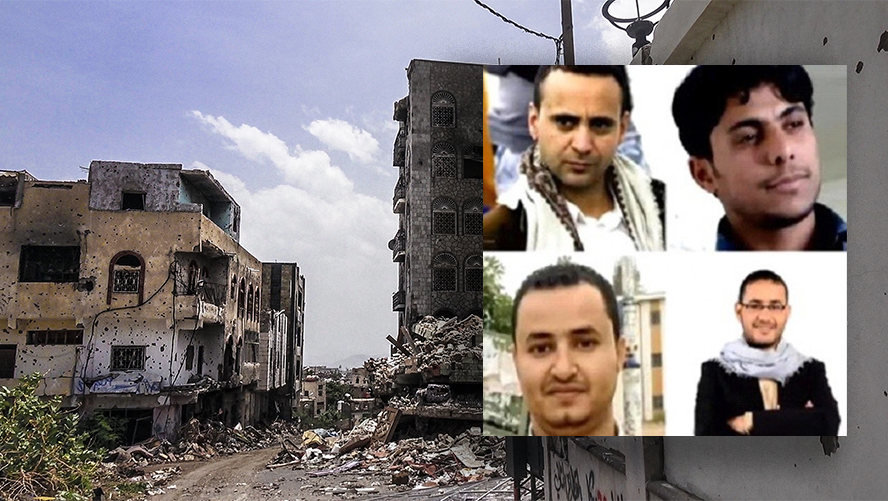
The four journalists, Abdulkhaleq Ahmed Amran, Akram Saleh Al-Walidi, Al-Hareth Saleh Hamid and Tawfiq Mohammed Al-Mansouri were convicted on 11 April 2020 by the Specialised Criminal Court in Sana’a, which is controlled by the Houthis. Their lawyer Abdelmajeed Sabra, who was denied access to the verdict hearing, began the appeals process on 22 April 2020.

The judge sentenced the other six journalists, Hisham Ahmed Tarmoom, Hisham Abdulmalik Al-Yousefi, Haitham Abdulrahman Al-Shihab, Essam Amin Balgheeth, Hassan Abdullah Annab and Salah Muhammad Al-Qaedi, to time already served in prison, or approximately five years, and also placed them under police supervision for a period of another three years. In addition, the electronic devices and materials that were in their possession when they were arrested remain confiscated.

The Public Prosecution had demanded that the maximum penalties be directed against them according to Articles 16, 21, 126 second, and 136 of the Penal Code (Law No. 12 of 1994 on crimes and penalties).

The journalists were charged with spreading false news “in support of the crimes of Saudi aggression and its allies against the Republic of Yemen.” The journalists were also accused of “harming the public interest by setting up several websites and pages on the Internet and social networks and running them in secret in several hotels in the capital, Sana’a.” The Saudi-led coalition has been fighting a war against the Houthis in Yemen since 2015. 

On 9 June 2015, a group of Houthi forces arrested nine of the journalists while they were using the Internet at the Qasr Al-Ahlam hotel in Sana’a. Salah Mohammad Al-Qaedi was later detained at his home in Sana’a by Houthi forces on 28 August 2015. They were arbitrarily detained,  held in solitary confinement at length, tortured and mistreated while in captivity, and were not formally charged until more than three years later. In December 2018, fabricated charges were issued against them related to their peaceful exercise of the rights to freedom of opinion and expression in a show trial that violated international fair trial and due process standards. 

Meanwhile, despite the court’s decision to release the six journalists, the authorities continue to delay their release. Until the date of this appeal, only journalist Salah Mohammad Al-Qaedi has been released (on 23 April 2020). 

The undersigned organisations call on all the parties to the conflict to uphold the right to freedom of expression and cease their efforts to muzzle journalists and media organisations.

We, the undersigned, call on the United Nations, specifically the UN Working Group on Arbitrary Detention and the Group of Eminent Experts on Yemen, and UN Members states, such as the United Kingdom and Canada, who co-chair the Media Freedom Coalition of 35 states, to request the de facto authorities in Sana’a, the Houthis, to:

  1. Overturn the sentences against the ten journalists, particularly the death sentences imposed on journalists Abdulkhaleq Ahmed Amran, Akram Saleh Al-Walidi, Al-Hareth Saleh Hamid and Tawfiq Mohammed Al-Mansouri, and release them immediately;
  2. Immediately free journalists Hisham Ahmed Tarmoom, Hisham Abdulmalik Al-Yousefi, Haitham Abdulrahman Al-Shihab, Essam Amin Balgheeth, and Hassan Abdullah Annab, following the court’s order to release them on 11 April 2020, and ensure they are not subjected to further judicial measures to restrict their work;
  3. Free all detained and disappeared Yemeni journalists, and drop all charges against them;
  4. Make every effort to ensure the safety and physical integrity of journalists – in accordance with customary international humanitarian law; and
  5. Ensure that journalists are able to carry out their work without fear of arrest or other forms of reprisals and restrictions that violate their right to freedom of expression.

The list of signatories can be seen at https://www.gc4hr.org/news/view/2386

Why freedom abroad affects us all

Why freedom abroad affects us all

Why freedom abroad affects us all

The CEO and Director of the U.S. Agency for Global Media, Grant Turner, has written about the importance of the work of USAGM broadcasters internationally

 
Just over four months ago, on December 30, a young Chinese ophthalmologist who worked at the central hospital in Wuhan, China, tried to warn colleagues about a contagious infection he’d noticed in several patients.
 
Within days, he was warned by police about “making false comments” and ordered to return to work. Months later, the infection he rang alarm bells about had made its way around the world and killed more than 80,000 Americans.
 
It’s impossible to know how many lives were lost as a result of silencing Dr. Li Wenliang. But it has never been more evident that freedom of information in other countries affects the lives of those in the United States.
 
Dr. Wenliang’s story is tragic, but unfortunately, not rare. For years, China has had one of the most repressive media environments in the world. But the explosive growth of coronavirus cases, as well as critical reporting on the government’s response to it, have only exacerbated censorship and repression of independent media and citizen journalists alike.
 
Personal attacks-like the one on Dr. Wenliang and other truth-tellers-and the subsequent oppressive media environment they create, are just two strategies for silencing the truth that is now amplified by the pandemic.
 
For example, according to the U.S. Department of State, Iran’s lack of transparency about its coronavirus outbreak has resulted in a devastating public health risk to the Iranian people, as well as to the region.
 
In taking a similar approach to obfuscating the facts, the governments of Hungary, Thailand, and Cambodia have made legislative moves to ban so-called “fake news.” In fact, they are using these powers to silence critics.
 
Even in environments where media exists in a free market, the coronavirus’s negative impact on advertising spends has been catastrophic for many independent and alternative publications.
 
These challenges to media environments are being augmented by the global health crisis. As press freedom declines around the world, the importance of the universal right to a free press has never been more apparent.
 
Journalists everywhere, including those who work for the public service networks of the U.S. Agency for Global Media (USAGM), are facing increasing risks while reporting on the pandemic. They are routinely harassed and threatened just for reporting the news. Three of USAGM’s journalists are currently in jail, and eighteen have been killed in the line of duty.
 
And, in this global health crisis, the threats are more complicated. Not only are governments taking stronger action against journalists, but reporters must also physically distance themselves to avoid contracting the virus.
 
As the Columbia Journalism Review so eloquently put it, newsrooms have had to make decisions about “how to keep an industry that relies on human contact running, even as public health experts and government officials mandate social isolation.”
 
I can say, without equivocation, that USAGM’s networks and others are managing those difficult decisions with clarity, insight and fortitude. Journalists around the world are essential workers – reporting the truth, engaging audiences and connecting people, despite the logistical challenges of reporting during a pandemic.
 
Before the health crisis began, research indicated that more than 350 million people each week seek out content from USAGM’s five networks-some with support from our newest entity devoted to internet freedom, the Open Technology Fund-despite the best efforts of governments to block it. Now, even more, audiences are seeking out our news and information.
 
The world marked World Press Freedom Day on May 3, and we reflected on the essential services journalists provide, especially during this unique time in history. By reporting on the spread of the virus and how the public can protect themselves, and by holding governments accountable for their public health response, journalists reporting in one country have the power to save lives in another. For that, we owe them a tremendous debt of gratitude and our ongoing commitment to protect them and their work.
India’s public service broadcaster helping nation

India’s public service broadcaster helping nation

India’s public service broadcaster helping nation

Prasar Bharati, India’s public service broadcaster, reports that it has been receiving accolades and praise from all over the world for its multidimensional approach to public service broadcasting during the COVID-19 pandemic.

A key element of this approach is the combination of high frequency infomercials on COVID-19 with iconic TV shows based on Indian epics such as RAMAYAN, MAHABHARAT, CHANAKYA and others. Similarly, All India Radio (AIR), the radio service of Prasar Bharati, has been regularly broadcasting the government advisories at high frequency while engaging celebrated authors such as Mr. Ruskin Bond to use the power of radio for some old fashioned book reading and story telling.

The re-telecast of RAMAYAN has seen more than 200 million viewers tuning in during the entire episode while the highest viewed episode with an audience of 77 million established a global record.

The Wall Street Journal (WSJ) on 28 April 2020 published an article titled “Coronavirus lockdown creates captive audience for 80’s show” highlighting how the series engaged audiences across India during the nationwide lockdown

Similarly, the British Broadcasting Corporation (BBC) on 4 May 2020 published an article titled “The Ramayan: why Indians are turning to nostalgic TV” covering a range of aspects of the popularity of the Doordarshan TV shows and has given a comparison of viewership garnered by the RAMAYANA and popular international TV shows.

AIB protests closure of ABS-CBN, most watched broadcaster in the Philippines

AIB protests closure of ABS-CBN, most watched broadcaster in the Philippines

AIB protests closure of ABS-CBN, most watched broadcaster in the Philippines

Delay to franchise renewal appears politically motivated

The Association for International Broadcasting is dismayed by the forced close-down of multiple award-winning broadcaster ABS-CBN in the Philippines.

The closure, on 5 May, follows the failure of the media regulator in the Philippines to renew the operating franchise of the broadcaster, the oldest television network in south-east Asia. The 25-year franchise expired on 4 May. Despite following the renewal procedure and gaining extensive support by politicians in the country, ABS-CBN has not managed to conclude an agreement to continue operating its broadcast services on radio and television.

The Philippines National Telecommunications Council issued a “cease and desist” notice to ABS-CBN on 5 May applying to all the company’s radio and TV stations. The company complied after the main evening television newscast, taking all its transmitters off the air.

“This is a bad day for the Philippines, a bad day for Filipinos and a bad day for media freedom,” says Simon Spanswick, chief executive of the AIB. “ABS-CBN is one of the Philippines’ prime providers of news, information and entertainment, reaching almost the entire 106 million population. Its programmes are award-winning domestically and internationally, recognised by judges in our own annual awards as the best in class as well as in other competitions. To remove a country’s most-watched TV news broadcaster during a global pandemic where reliable news, information and advice are essential for citizens’ wellbeing is an appalling misjudgement.”

President Duterte has regularly criticised ABS-CBN, accusing it of bias against his presidency. The broadcaster denies this. The failure to renew the franchise is seen by many observers as a direct political attack on the network.

In addition to its internationally respected broadcasts, ABS-CBN operates a Foundation that provides assistance to people across the Philippines in times of natural disaster and has been working to support the most disadvantaged citizens who have been adversely affected by the COVID-19 pandemic.

The AIB, which is a member of the Advisory Network of the intergovernmental Media Freedom Coalition, is raising this issue publicly and making representations to the Philippines government. Other Advisory Network organisations are also raising this disturbing issue.

“The closure is a direct attack on free media in the Philippines,” continues Simon Spanswick. “The failure of the authorities and Congress in the Philippines to renew the franchise in a timely manner and in accordance with the country’s legislative framework sends a chilling message to anyone in the media in the Philippines: Duterte’s government will do anything to prevent free speech and to stop it from being held to account.”

The forced closure of ABS-CBN has been widely reported by AIB Members including Australia’s ABC, Al Jazeera, the BBC, France 24, Voice of America and others as well as major international papers including the Financial Times and New York Times. 

Manuela Kasper-Claridge is Deutsche Welle’s new editor-in-chief

Manuela Kasper-Claridge is Deutsche Welle’s new editor-in-chief

Manuela Kasper-Claridge is Deutsche Welle’s new editor-in-chief

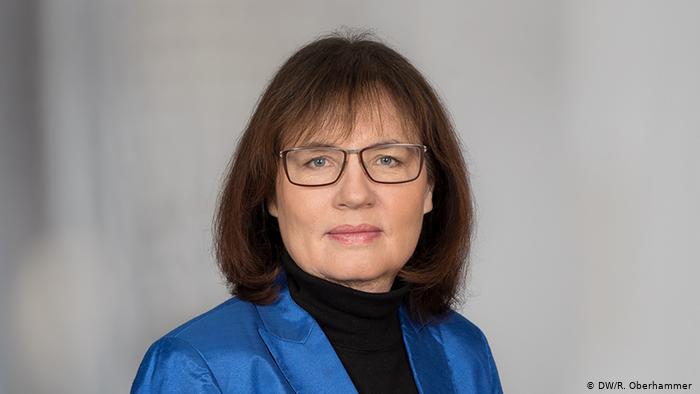
Manuela Kasper-Claridge, former deputy editor-in-chief and head of the economics, science and environment editorial department at Deutsche Welle, is the new editor-in-chief of Germany’s international media organization. After three years in this position, Ines Pohl will become DW bureau chief in Washington.

DW Director of Programming Gerda Meuer: “I am very pleased that the excellent journalist and program manager Manuela Kasper-Claridge will set new trends as editor-in-chief. She has always kept a close eye on the successful digitization and regionalization of our programming. Together with her team, she will provide fresh impetus. Manuela Kasper-Claridge is an experienced manager, who is committed to strengthening the journalistic profile of the brand DW. Her energy and journalistic judgement will be of particular benefit to us, not only in these times when our audiences are increasingly relying on us to provide reliable information as a result of the coronavirus crisis.”

For the first time, in March, content from all channels and platforms in DW’s 30 broadcasting languages reached more than one billion viewings worldwide. The main driver of the increase is the coverage of COVID-19, but longer documentary formats are also popular.

Manuela Kasper Claridge: “It is exciting to see how DW’s services are in demand worldwide, especially in these times. As editor-in-chief, I will work together with my colleagues to continue building on the strengths of our journalistic reporting,” said Manuela Kasper-Claridge. “Digital and diverse, innovative and clear, explanatory and reliable. We want exclusive stories that stimulate debate; we want to create added value for the users in all our target regions. And we aim to achieve all this with editorial teams, who are experts for the continents and know exactly what moves and inspires people.”

Kasper-Claridge joined Deutsche Welle 28 years ago and has reported from all parts of the world. She has developed award-winning international TV and multimedia formats, including Global Ideas, Founders’ Valley, Eco Africa and Eco India.

The outgoing Editor-in-chief Ines Pohl will take over as DW bureau chief in Washington in July. Pohl previously reported from the U.S. from 2016 to 2017, primarily on the first presidential election campaign and the inauguration of Donald Trump. “From a journalistic point of view, with the upcoming presidential elections and the impact of the Corona pandemic on the U.S., this year is an enormously exciting time for the move back to Washington,” said Pohl. “I am interested in questions of democratic legitimacy and the shaping of social transitions – and my passion is human rights.”

(Source: DW press release)