NHK World-Japan’s programme highlights for May

NHK World-Japan’s programme highlights for May

NHK World-Japan’s programme highlights for May

Some of the programming highlights from NHK World-Japan in May:


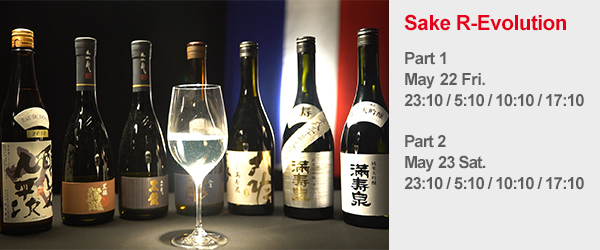
Sake R-Evolution

Part 1: May 22

Part 2: May 23

23:10/ 5:10 / 10:10 / 17:10

Sake is growing in profile along with the global boom in Japanese cuisine. Micro sake breweries are now being founded overseas, and a foremost French cellar master visited Japan to blend his own sake.


Bento Expo

Mondays
0:30 / 6:30 / 13:30


Bento connects the world! Discover a universe of bento from Japan and around the world, with step-by-step instructions and delicious tips and tricks!


Journeys in Japan
Mondays
23:30 / 5:30 / 12:30 / 17:30

Explore a different side of Japan. Meet the locals and discover traditions and cultures not usually found in guidebooks!


Trails to Oishii Tokyo
Wednesdays

14:30 / 20:30 / 2:30

Delicious food from Tokyo’s markets! Learn about the amazing ingredients which are sourced from across Japan and sold at Tokyo’s fresh food markets.

Al Arabiya relaunches with new technology and design

Al Arabiya relaunches with new technology and design

Al Arabiya relaunches with new technology and design

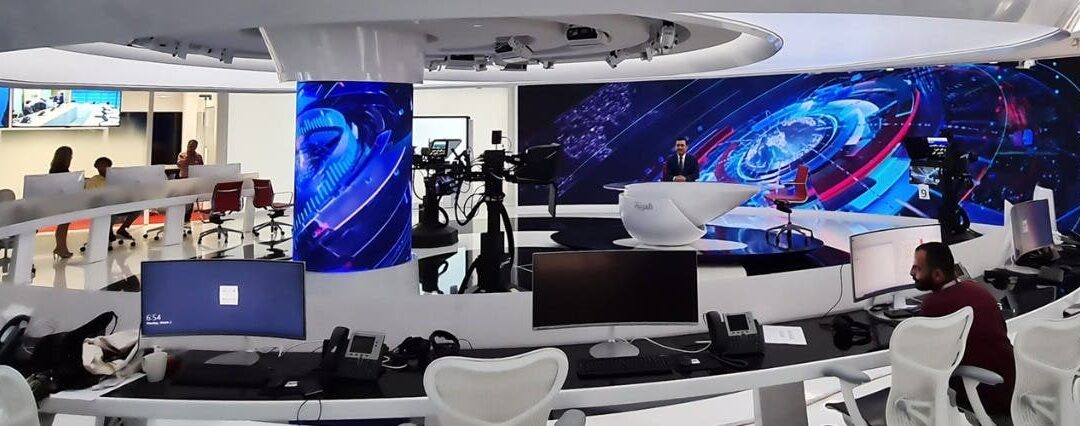
Dubai-based pan-Arabic broadcaster Al Arabiya has unveiled new technology, studios and design across its television and digital platforms in a move designed to retain its top spot in a highly competitive market.

The Al Arabiya News Channel, a 24/7 free-to-air news and current affairs satellite outlet, is ranked the top news channel across many countries in the region, reaching 36 million viewers a week. The network has seen strong growth in its social and digital platforms, including Al Arabiya English and other foreign language editions, with more than 20 million users viewing 88 million web pages every month.

“We are relaunching with new studios, a new design and more importantly, taking advantage of new technologies that will take the viewer into the next generation of journalism across not only our television screens but also our social media and digital offerings,” said Mamdouh Almuhaini, General Manager of the Al Arabiya Media Network. “The network has always stayed ahead of the curve compared to its competitors by renewing itself either through branding or improving its content.”
 

Partnering with global companies


The revamp involved rebuilding the broadcast studios in Dubai’s Media City to integrate new technology and set design. Al Arabiya partnered with New York-based Clickspring Design for the set design. The new studios are equipped with robotic Blackcam cameras that will enable the viewer to have a more immersive experience, showing not only the anchor but also the dozens of writers, reporters and editors that bring the content alive. Al Arabiya collaborated with Ross Video, whose Cambot cameras allow viewers to move anywhere around the studio floor. The network partnered with Belgian company Barco to deliver networked visualisation solutions.

New ‘organic and younger’ branding

Al Arabiya is also launching a new visual identity including an evolved logo, new on-air graphics and an updated font. The redesign of Al Arabiya’s unique Arabic font is the first since the channel launched in 2003.

“We created the original Al Arabiya font 17 years ago and it was the first font to be used on-screen. The font became so popular that it spread everywhere, being used by so many designers in the world, including big brands, as showcased on so many billboard brands and places,” said Fadi Radi, Head of Creative.

Al Arabiya’s staff began working on the revamp several months ago before the global coronavirus pandemic hit, which delayed the relaunch by a few weeks. But Al Arabiya’s General Manager Mamdouh Almuhaini said employees pushed through with limited people on site.

“We had to change some of our procedures as we had to reduce our physical staff to 20 percent at our studios, while the rest of our team worked from home. Despite the difficult circumstances, we are sure we will be providing something that is fitting of the Al Arabiya name and fitting of what Al Arabiya’s viewers expect of their network,” Almuhaini said.

Trt World Citizen’s “Journalism For Juniors” starts online workshops

Trt World Citizen’s “Journalism For Juniors” starts online workshops

Trt World Citizen’s “Journalism For Juniors” starts online workshops

‘Journalism for Juniors’ (J4J) was launched by TRT World Citizen – the social responsibility arm of Turkey’s public broadcaster TRT – with the slogan of ‘’Inspiring for Positive Change.’’ As in-person trainings have been temporarily put on hold due to the Covid-19 outbreak, J4J will continue its training online with a new series of workshops.

As many of TRT’s journalists continue to work and produce content from their homes, Journalism for Juniors is launching a new series to help you create content using just your smartphones. The workshops will be available via weekly online videos, with  TRT staff serving as volunteer trainers.


The workshops will be hosted on the social media accounts of “TRT World Citizen” and “Journalism for Juniors” (Instagram, Twitter, Facebook, Youtube) and will continue throughout the COVID-19 outbreak. The objective of the workshops is to help participants continue to develop their knowledge, skills and competencies related to journalism. The titles of some of the workshops are as follows:  “Journalism 101”, “Storytelling”, “Video Journalism”, “Field Production”, “How to Use Social Media”, “Introduction to Youtube for beginners “, “Mobile Journalism” and “Image Capture with Camera”.

The Journalism for Juniors program gives the students an opportunity to learn new skills including: Mobile Journalism, Storytelling, Field Production, and Journalism Basics.

Through interactive workshops the program combines theory and the opportunity for students to practice new skills. The aim is to motivate, educate, and allow the students to express themselves in an impactful way.

(Source: TRT World press release)


Public Media Serving in the time of a pandemic…

Public Media Serving in the time of a pandemic…

Public Media Serving in the time of a pandemic…

The year 2020 will be forever etched in our minds. No matter where we live, we share common experiences of fear, grief and the suffering that comes with uncertainty.

And yet in this time of crisis, we are seeing communities come together as never before. We are discovering an even deeper respect for our health workers and other first responders, as well as for the many unsung heroes who are putting the needs of others ahead of their own, often at considerable risk.

Rarely has the role of public service media been of greater importance than it is now. That is why we, the members of the Global Task Force for public media, would like to add our salute to the essential service being provided at this time by public broadcasters around the world.

Our countries may differ by culture and language, but we all share the common duty to Inform, Educate and Entertain. Our engagement with audiences of all ages across a range of broadcast and online services is critical to our success in serving them whenever, wherever and however they want.

We are seeing audiences turn to public media in record numbers for the trusted news and reliable information that is our hallmark – and that has become a matter of life and death. As with all organisations, we have had to adapt to cover COVID-19 in depth. Each of us is also playing an important role for our democracies and holding our public institutions and politicians to account, to ensure there is transparency in their actions.

The Global Task Force is particularly proud of the speed with which public media across the world have responded to the challenge of supporting the education of children who are learning at home by bringing together brilliant partners from across the public and private spheres. Public service media is uniquely placed to play this role.

Meanwhile our promise to entertain helps keep spirits up, especially among our older audiences who are the most vulnerable. We continue to support the performers and creative talent who inspire us and help define our cultures, bringing us closer in a time of social distancing.

To achieve these aims, our employees, our freelancers, our creative industry partners, and of course our private media colleagues, have shown unwavering commitment to provide essential services in these difficult times. The audio, film and television production sectors are a vital and growing part of our economies. Policy makers must take steps to protect the long-term health of this sector.

For all these reasons, we, the members of the Global Task Force, urge policy makers and politicians to support and defend the independence of public media and of journalism more broadly. Truly independent public service media has never been more precious to democracies around the world. Together, we will get through the current crisis.

We thank you, our public, for your continued support and for inviting us into your homes and lives.

Signed, Global Task Force for public media

David Anderson, Managing Director, ABC (Australia)
Thomas Bellut, Director General, ZDF (Germany)
Delphine Ernotte Cunci, President & CEO, France Télévisions (France)
Tony Hall, Director General, BBC (United Kingdom)
Jim Mather, Chair of the Board, RNZ (New Zealand)
Hanna Stjärne, Director General , SVT (Sweden)
Catherine Tait, President & CEO, CBC/Radio-Canada, GTF Chair (Canada)

RSF complains to UN about coronavirus press freedom violations

RSF complains to UN about coronavirus press freedom violations

RSF complains to UN about coronavirus press freedom violations

Reporters Without Borders (RSF) has written to two United Nations special rapporteurs asking them to formally condemn governments that have violated the right to information in connection with the coronavirus epidemic, thereby putting public health and lives in danger both in their own countries and the rest of the world.

Sent on 12 April to the special rapporteur on the right to health, the Lithuanian Dainius Pūras, and to the special rapporteur on the right to freedom of opinion and expression, the American David Kaye, the letter asks them to condemn governments that have either used the epidemic as grounds for violating the right to information, or have done so in spite of it.

The facts reported in the letter have been gathered by a new RSF tool called Tracker-19 in reference not only to Covid-19 but also article 19 of the Universal Declaration of Human Rights. This RSF tool aims to evaluate the Covid-19 pandemic’s consequences for journalism, documenting state censorship and deliberate disinformation, and their impact on the right to reliable news and information. It also offers recommendations on how to defend journalism during the pandemic.

The letter lists cases of censorship, arbitrary detention, harassment or violence against journalists, and disturbing legislative development in a total of 38 countries. The list is not exhaustive.

The Brazilian and US president have staged ferocious verbal attacks on journalists. Reporters have been arrested in Algeria, Jordan and Zimbabwe. An Orwellian law has imposed an “information police state” in Hungary. Cambodia’s prime minister has used the Covid-19 crisis to bolster his authority. And in China, the suppression of journalism allowed the epidemic to spread in Wuhan, and then to the rest of the world. RSF is also very concerned about journalists in Turkey and Saudi Arabia who, despite the epidemic, are still detained in prisons where they are very vulnerable to the virus.

RSF asks the special rapporteurs to issue not just a warning but also an “urgent appeal” to each country where press freedom violations jeopardising the right to health have been observed. The aim to is to obtain concrete measures, such as the release of imprisoned journalists.

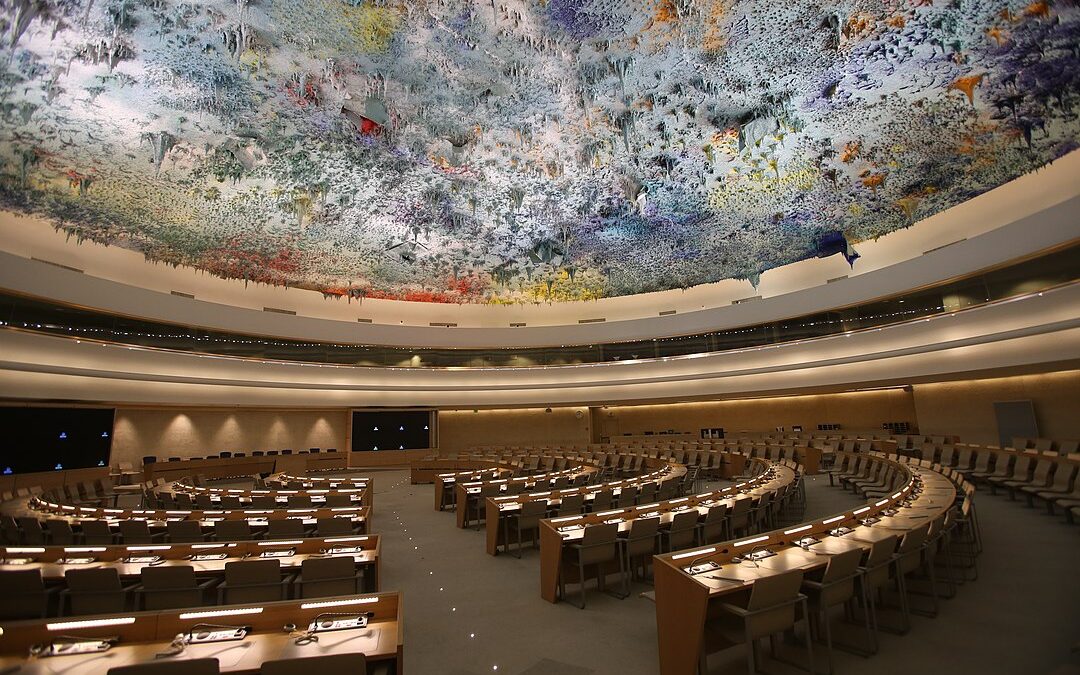
Attached to the Office of the UN High Commissioner for Human Rights in Geneva, the special rapporteurs are tasked with examining, monitoring, advising and publicly reporting on human rights issues under “special procedure” mechanisms. If violations are confirmed, the rapporteurs can denounce them and ask the governments concerned to address them. What they have observed can also be included in their public reports to the UN Human Rights Council and UN General Assembly.

David Kaye, Harlem Désir (the OSCE representative on freedom of the media) and Edison Lanza (the Inter-American Commission on Human Rights special rapporteur for freedom of expression) issued a joint statement about the Covid-19 pandemic on 19 March, stressing the importance of truthful information by governments, protecting the work of journalists, and combatting disinformation.

UN High Commissioner for Human Rights Michelle Bachelet voiced concern on 9 April about the measures taken by some countries to restrict press freedom and freedom of expression and, in particular, about censorship of criticism on the grounds of combatting disinformation.

RSF’s letter also calls on the special rapporteurs to publicly proclaim that the right to information is “inherent” to the right to health, that the former is an essential component of the latter, that they are necessarily and closely linked and inseparable. Recognising the right to information as inherent to the right to health would extend the former’s scope , especially when safeguarding public health is at issue, and would help to combat both disinformation and arbitrary restrictions on information more effectively.

Enshrining an intrinsic link between the right to information and the right to health would mean that all arbitrary restrictions of the first would also be violations of the second. The balance between the two rights would thereby be assured, and would prevent the protection of public health being used as a pretext for censorship or disinformation.

The preamble of the International Declaration on Information and Democracy, approved by a commission of 25 prominent persons from 18 countries, says: “Knowledge is necessary for human beings to develop their biological, psychological, social, political and economic capacities.”

On the basis of this Declaration, 35 countries have joined an Information and Democracy Partnership that recognizes the right to reliable information and says: “Information can be regarded as reliable insofar as its collection, processing and dissemination are free, independent, diverse and based on cross-checking of various sources, in a pluralistic media landscape where the facts can give rise to a diversity of interpretation and viewpoints.”

“The coronavirus epidemic requires respect for the principles of press freedom and the right to information,” RSF secretary-general Christophe Deloire said. “As the Declaration on Information and Democracy says, ‘the right to information consists of the freedom to seek, receive and access reliable information.’  Violating this right endangers the health and even the lives of human beings. We call on the UN’s institutions to publicly denounce governments that violate this right.”


Image: Ludovic Courtès

Mediatel Digital Events

Mediatel Digital Events

Mediatel Digital Events

Like most of the industry we have had to get creative and adapt to everyone’s new life of working from home until further notice; you may have seen that Mediatel recently launched Mediatel Digital Events to ensure they can still bring quality content to our clients.
 
Every two weeks, their Future of series will deliver a non-stop 14-day digital experience focusing on all of the key subjects in media and advertising. Starting in April, our expertise in key areas such as TV, Audio, Outdoor, Publishing, Gaming, Media Research, and Online Video will come to life across Videonet and Mediatel News, through a series of in-depth features, exclusive interviews, downloadable reports and unrivalled opinion pieces from industry leaders, with a digital event sitting at the very heart of each 14-day content extravaganza. The list of events and dates are as follows:
 
 
·       The Future of Audio | 6 – 17 April 2020
·       Videonet Connected TV Awards Winners Presentation | 16 April 2020
·       The Future of TV Advertising UK | 20 April – 1 May 2020
·       The Future of Media Trading | 4 – 15 May 2020
·       The Future of Publishing | 18 – 29 May 2020
·       Videoscape Europe | 1 – 12 June 2020
·       The Future of OOH | 15 – 26 June 2020
·       The Future of TV Advertising Global | 29 June – 10 July 2020
·       The Future of Gaming | 13 – 24 July 2020
If you would like to join these digital events then use this link to sign up.