Killing the Messenger | 2019

Killing the Messenger | 2019

Killing the Messenger | 2019

Sharp decline in 2019 media deaths as reporters retreat from deadly conflicts

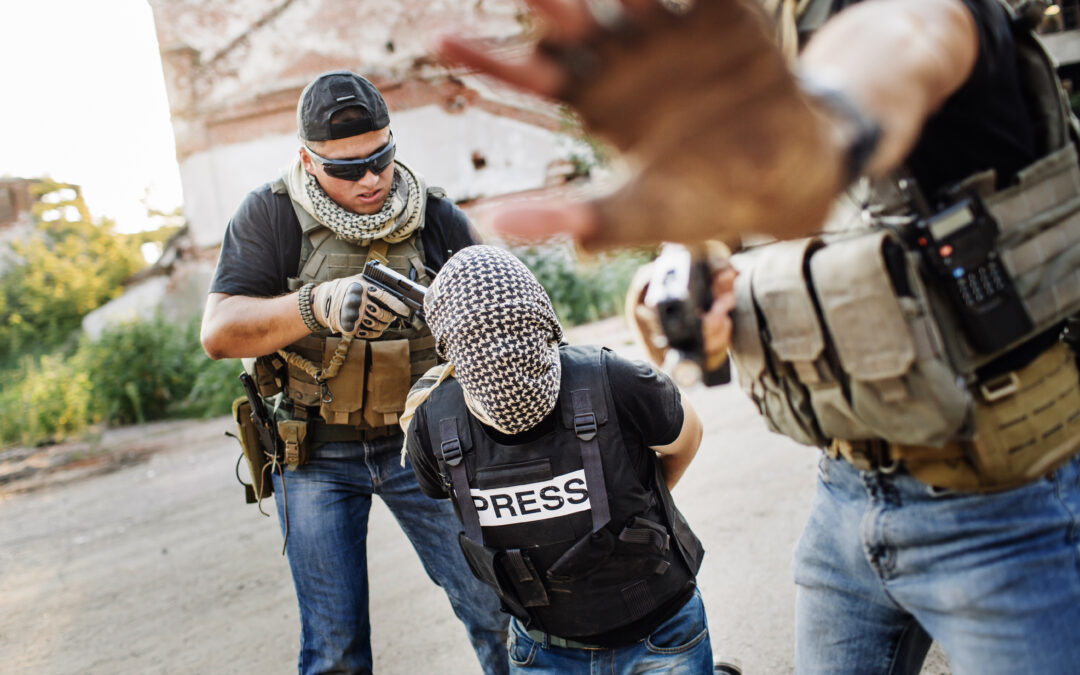
A total of 48 journalists died in incidents, and accidents, directly related to their job in 2019. That was the lowest number of media workers killed in 16 years, according to the ‘Killing The Messenger’ report of journalism casualties from around the world, published annually by the International News Safety Institute (INSI).

It was also a year of apparent breakthroughs in investigations into the murder of high profile journalists, with significant legal developments in the killings of Ján Kuciak from Slovakia; Saudi Arabia’s Jamal Kashoggi; and Daphne Caruana Galizia in Malta.

There was a big reduction in casualties in war zones, where deaths more than halved in 2019 compared to the previous year and were a fraction of the average tally for the previous two decades.

INSI director Elena Cosentino said that explanations behind the drop in the number of media casualties are multiple but a reduction of hostility towards the media is not one of them.

“Our industry was spared the mass killings that blighted previous years when dozens of media workers lost their lives in targeted attacks,” said Cosentino.

“There was also a big reduction in casualties in war zones. That’s not because war reporting got any safer. The decline in casualties was simply because fewer journalists reported from conflict zones in the first place. Syria, Yemen and Afghanistan were deemed simply too dangerous for either local or international media to cover and were dropped from many outlets’ news agenda.”

Mexico, where 12 journalists died, was the deadliest country for media workers in 2019, according to ‘Killing The Messenger’, which is compiled for INSI by the Cardiff School of Journalism. Tanzania was the second deadliest country on the INSI list, simply because a car accident claimed the lives of five media workers going about their jobs. Four journalists died in Afghanistan and also in Syria and three in Honduras and in Somalia.

Last year also marked the first time in 21 years that no journalist was killed on foreign soil. As international correspondents withdrew from the world’s most dangerous places, all 48 casualties that INSI recorded last year were local journalists reporting from their home countries. The majority died in places supposedly at peace, killed by unknown assailants while reporting on crime, politics and corruption.

Though in 80 percent of the cases impunity prevailed, legal developments on previous killings, particularly in Daphne Caruana Galizia’s case, provided some hope. However, progress only came after a relentless campaign waged by Daphne’s family, huge international pressure and intense media scrutiny from all over the world. Most murdered journalists don’t generate headlines when they are killed and the institutions that should protect them are often the biggest threats.

“Daphne’s case proves that with enough time and pressure even the most powerful could one day be held to account. As happened in Malta, raising the cost of killing a journalist is the ultimate aim for everyone in the news industry. Despite the progress made in 2019, that still feels like a long way off,” said Cosentino.

Read the full Killing the Messenger report.


Main image: AFP via INSI

30 years of broadcasting to the Pacific

30 years of broadcasting to the Pacific

30 years of broadcasting to the Pacific

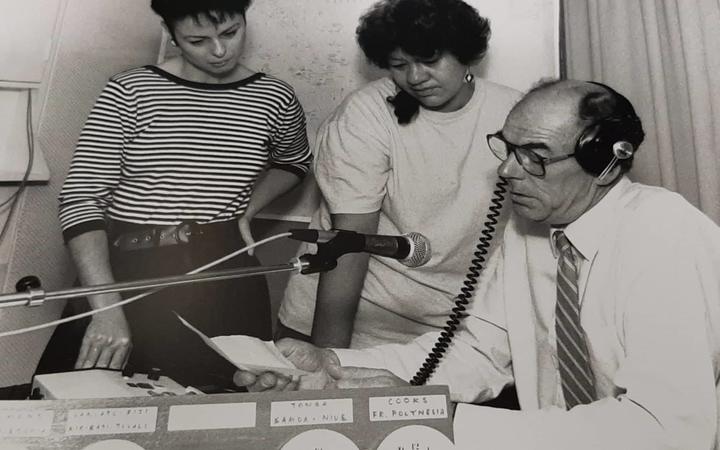
On 24 January 1990, Radio New Zealand International beamed into the Pacific, on a new 100 kilowatt transmitter.

New Zealand has had a short-wave service to the Pacific since 1948. The station broadcast on two 7.5kw transmitters from Titahi Bay, which had been left behind by the US military after the Second World War.

In the late 1980s, following growing political pressure to take a more active role in the Pacific area, the New Zealand government upgraded the service.

A new 100kw transmitter was installed and, on the same day the Commonwealth Games opened in Auckland, the service was re-launched as Radio New Zealand International.

“What we were able to understand was how important radio was and still is in the Pacific, where as here radio had become a second cousin to television… different thing in most of the countries we worked with,” said RNZ International’s first manager Ian Johnstone, from 1990 to ’93.

Mr Johnstone said news of a dedicated Pacific service into the region was welcomed by Pacific communities.

He also said it was important for New Zealanders to remember that New Zealand was part of the Pacific.

“One of the nice things is we say we are part of the Pacific, we are the southern corner of Polynesia, and let’s remember that.”

Linden Clark was manager from 1994 to 2016. She said the strength of the service had been its connection with Pacific people in New Zealand and the region.

“The history of of RNZI – RNZ Pacific – is absolutely marked by fantastic contributions from a whole range of people – not only employed people – but those who have given their time in all sorts of ways – both of the Pacific region and the Pacific communities here in New Zealand.

“That is the history of the station and I think that’s partly why it means so much to everybody who has had something to do with it.”

She said RNZ Pacific had built strong relationships over the years.

“We have always been about trying to support and partner with those Pacific media, radio stations, individuals and journalists, rather than broadcast and talk to them.

“We want to talk with them and use their expertise and develop that and that’s been really satisfying.”

Adrian Sainsbury, who’s RNZ Pacific’s frequency manager, said in the early days, it was difficult to get Pacific stations to take bulletins as the Australian Broadcasting Corporation’s Radio Australia was the dominant broadcaster in the Pacific.

“And we built up, over time an extensive network. And as I say, from a handful, of possibly two or three, we are now right up to 20 now, across the Pacific, stretching right up to Micronesia,” he said.

Sainsbury said RNZ Pacific was now the only dedicated Pacific broadcast service on short-wave across the region.

The signal can sometimes be heard as far away as Japan, North America, the Middle East and Europe.

Changing media landscape in the region

“In many ways, the development seen in the Pacific this century has been much faster than elsewhere – television has made a late entry to be quickly followed by an explosion of social media – just like everywhere else,” according to Walter Zweifel, former News Editor for over 20 years.

He said the internet has built information bridges in the region that were simply not there two decades ago. Gone are the days of the fax but distances are still a challenge.

Given the geography and the cost of running a media outlet, he said radio had remained resilient and vital.

“Small countries, for example in Micronesia, are still struggling to develop their local media and technological change has brought little benefit,” he said.

“In more populous countries, multi-media output has flourished. Like elsewhere, the printed press has faced steep challenges. Fiji lost one of its daily papers as did French Polynesia, which now only has one daily left.”

 And challenges remain for journalists in the region.

“There has been a professionalisation in my view. There seem to be more and better trained journalists in the field and at the same time more gatekeepers and communicators around decision-makers.”

“Depending on the country, access is now more difficult while there is more information in terms of releases and statements. Also depending on the country, journalism can be frustrated. While places like the US-affiliated territories and countries accept free media, others have clamped down on liberties known earlier. Fiji is an example of the latter,” he said.

“Pressure on individual journalists has continued, with cases of overt and covert threats popping up in many places.

“Variations throughout the region are however huge. Restrictions are still widely in place for outsiders wanting to report from Indonesia’s Papua region, and Nauru nowadays all but bans foreign reporters. In the French Pacific, there has been an improvement as the media lost some of the timidity of the Lafleur and Flosse era.”

Thirty years later the service has developed and established itself as the region’s most comprehensive and reliable source of regional news and is relayed daily by over twenty Pacific radio stations.

It broadcasts on a range of platforms including analogue and digital short-wave, satellite, and online and has an estimated audience of 1.8 million people in the Pacific.

The RNZ Pacific website attracted nearly eight million page views in 2019.

Koro Vaka’uta has been RNZ Pacific’s News Editor for the past year. He said it was awe-inspiring looking back at what had been achieved over the past 30 years and in some way it just added to the responsibility of what the current team was doing.

“With so much of the media landscape changing there is also an onus on RNZ Pacific to be dynamic and progressive in its approach now and in the coming years, while maintaining its core news role with integrity,” he said.

“While that’s probably one of the biggest challenges, there is also an increasing awareness of the importance of telling Pacific stories through culturally appropriate lenses and we will seek to do that through our growing Pasifika staff numbers and through being a vehicle for people on the ground or whenua itself to have a voice.”

Top image: (L-R) Linden Clark, Elma Maua and Ian Johnstone preparing for the launch of RNZ International – now RNZ Pacific – in 1990. Photo: RNZ Pacific


“It’s Our Time” – MBC Group propels Shahid to new heights

“It’s Our Time” – MBC Group propels Shahid to new heights

“It’s Our Time” – MBC Group propels Shahid to new heights

Celebrating a fresh era in digital entertainment, MBC Group has unveiled the all-new version of its video on demand (VOD) service, Shahid.

The unveiling took place this evening as part of an exclusive event held at the Dubai Opera in Downtown Dubai, attended by HH Sheikh Ahmad bin Mohammed bin Rashid Al Maktoum; HE Turki Alshabanah Saudi Minister of Media; MBC Group Chairman, Waleed Al-Ibrahim, MBC Group General Manager Ali Al-Hedeithy, newly appointed CEO, Marc Antoine d’Halluin; and top business decisionmakers, VIPs and celebrities from the world of entertainment and Arab media.

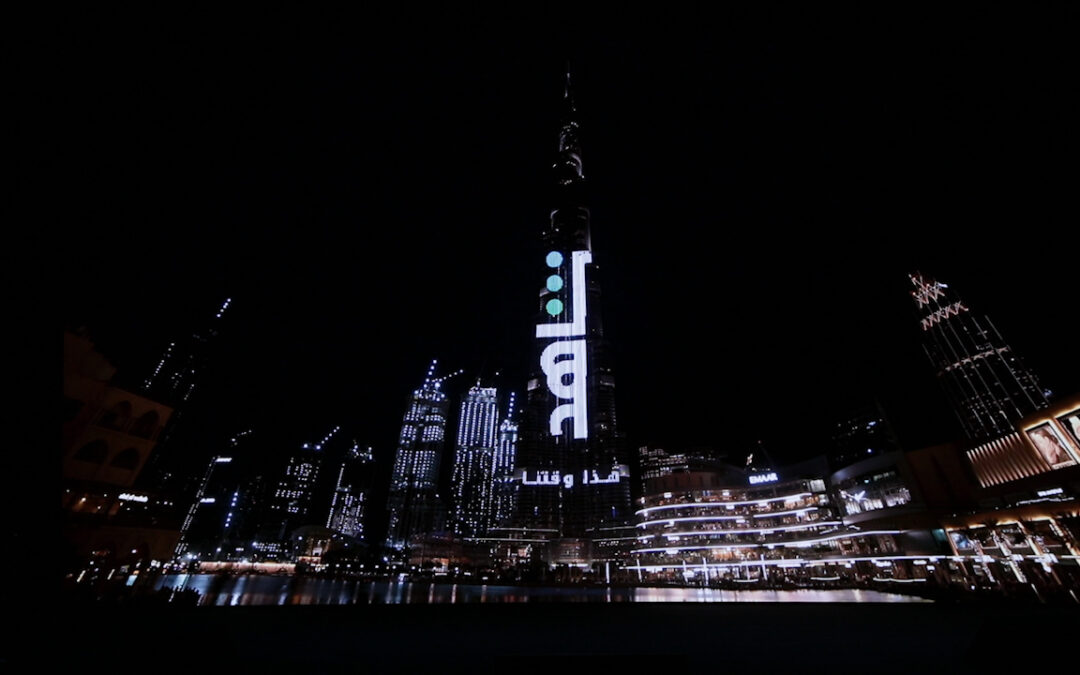
Shahid’s brand new slogan: “It’s Our Time” took centre stage, illuminating the emirate’s iconic Burj Khalifa tower.

In his opening speech, MBC Group Chairman Al-Ibrahim commented: “The social and economic reforms currently being witnessed by my home country, the Kingdom of Saudi Arabia – ones that are being spearheaded by His Royal Highness the Crown Prince Mohammed bin Salman – is something we have always dreamed of. It gives me great pride to witness this dream being finally realised. Today, it is almost apt that we face a new start for our Group, albeit with a difference in objectives.

“But here is where we will begin. As we look ahead, we strive to take control of our own narratives, showcasing our stories to the rest of the world through the very best in original films, series, and other media content, produced and marketed via MBC Studios,” he continued.

“Secondly, we’re immensely proud to provide the region with an advanced digital platform that is on par with the best in the world. Shahid is a global brand that is worth watching.”

“And of course, we are leveraging the pivotal moment the Kingdom is currently witnessing, which includes expanding on the local and regional media content industry – and fostering the talent that will enable us to do so,” Al-Ibrahim stated. “At MBC Group, we are going to continue to provide the best media experience in the entire region; engineering ideas and uniting the very best in creative talent. It’s our time.”

INCREASING FOURFOLD

On his part, MBC Group CEO Marc Antoine d’Halluin demonstrated figures from the track-record of the company over the past decade, stating: “During the past ten years, MBC has acquired and produced approximately 46,000 hours of Arabic-language entertainment content, valued at an estimated $1.3 billion. This is broken down into 26,000 hours of media, entertainment and other content, plus 20,000 hours of television series, which includes about 600 dramas.”

D’Halluin continued: “Over the next two years, we aim to substantially increase the size of our investment into drama productions, thus increasing them fourfold, of which the majority will be original and exclusive content. Shahid will certainly benefit from MBC’s proven experience in investment and growth to provide the best and most diverse international digital media experience in the region.”

A DIVERSE OFFERING

With Shahid witnessing a surge in popularity, Johannes Larcher, Managing Director, Digital & VOD at MBC Group stressed that the platform outperforms all regional players in the digital entertainment sector today. Larcher highlighted several factors that distinguish the all-new Shahid’s offering – including premium quality of content, diversity of content, as well as additional content via regional and global partnerships – providing a unique service and premiere digital viewing experience for users in the Middle East region and beyond.


INTRODUCING THE ALL-NEW SHAHID:

SHAHID PREMIERES & SHAHID ORIGINALS

Shahid PREMIERES will focus on first-look exclusives from the world of cinema and television, as some new series will, from now on, start their lifecycle on Shahid even before MBC channels.

Shahid ORIGINALS, meanwhile, will focus on a variety of local and regional productions, set to include long-form content such as drama series, as well as short-from content, which both will be fully exclusively featured on Shahid.

Several Middle Eastern stars appearing in Shahid’s upcoming brand-new content were in attendance during the launch event at the Dubai Opera.

===

GLOBAL PARTNERSHIPS AND A SPECIAL OFFER “FOR LIFE”

Partnering up with Shahid are the global entertainment companies DISNEY and FOX, providing around 3,000 hours of quality family entertainment. Also announced was a partnership with global music streaming platform SPOTIFY.

Naturally, MBC’s top-rated channels are included in the brand-new Shahid, which include nine HD channels, streamed live, as well as a catch-up service.

To celebrate the launch of the all-new platform, users can take advantage of a special introductory subscription offer (promotion period runs until February 29, 2020) consisting of a discount of up to 70% off the Shahid VIP subscription value, valid until the subscriber decides to cancel, or “for life”.

BBC seeks to double global audience to one billion

BBC seeks to double global audience to one billion

BBC seeks to double global audience to one billion

BBC Director-General sets out vision for next seven years

  • Increasing reach of BBC News

  • Taking BBC Sounds app global

  • Story-led commissioning innovation in BBC News

  • Making Corporation carbon neutral

  • More staff away from London

The BBC Director-General Lord Tony Hall gave a New Year’s address to staff from the new BBC broadcast centre in the Welsh capital, Cardiff, on 14 January.

In his wide-ranging speech – relayed to all BBC offices in the UK and abroad – Hall said that the plans he was announcing would set the Corporation up for the rest of the current Royal Charter period that runs until 2027.

Hall said that the BBC brand is “recognised, and at times revered”, all over the world, with 426 million people using BBC products every week. He praised the work of BBC Studios, the in-house production unit, highlighting the immense audience for the landmark “Planet” series produced by the BBC Natural History Unit. Alongside this, BBC News is growing as it gives “so many more people access to news and information they can trust”. He cited the example of India where the BBC is now reaching 50 million people, an increase of 70% in the last year.

Now Hall wants to build on these successes and double global reach to one billion people every week by the end of this decade. He praised the last UK government that provided new funding for BBC World Service and he said that he’s looking forward to working with Boris Johnson’s new government. In addition, Hall wants to develop the BBC global brand and associated revenues further, gaining additional revenue from outside the UK at the same time as reaching the one billion audience figure.

Hall said that Fran Unsworth, Director of BBC News, is looking at new ways of working, including how best to bring the diverse range of BBC News teams together and how they can best create impact among audiences, including making sure that all the Corporation’s audiences recognise that BBC News “is really for them”. There’s to be a new “story-led” approach to commissioning in News and more detail on this will be announced towards the end of January. “It’s not just about how we cover news, it’s about what we cover’” said Hall. Audiences have told the BBC that they want explanation and analysis that helps them explore solutions. During 2020 there will be a “major focus on big themes, the things that matter beyond the headlines and the immediate.”

Hall spoke of the new Cardiff headquarters for BBC Wales that uses the newest generation of broadcast technology, live IP. He said that the building in the centre of the Welsh capital is the “most connected and flexible media centre in the world,” that is also the “greenest and most sustainable broadcast centre in Europe and…the world’s most accessible building for neurodiversity.” The renowned school of journalism at Cardiff University has moved alongside the BBC in the city.

Outside Wales, a new BBC technology hub is being created in Newcastle-upon-Tyne in the north-east of England. This is where software engineers, designers, product developers and data scientists will be based, driving the BBC’s digital services for UK and international audiences.

The curation team of BBC Sounds – the digital app for audio content – will be based at Salford on the outskirts of Manchester in the north of England. Hall said that BBC Sounds will be opened up to new British creators and will bring the best podcasts to everyone – presumably meaning that the platform will be available to storytellers to use to reach larger audiences. The BBC Sounds app will become available globally later in 2020, taking live BBC content and archived material to international audiences.

Importantly in terms of sustainability, Hall said that he wants to see “what it would take to make the BBC’s operations carbon neutral in this Charter period.” The BBC created the Albert initiative that broadcasters and production companies can use to help them become more sustainable. The AIB has been working with Albert to take its message to broadcasters and producers internationally.

Reading between the lines, Hall’s speech was perhaps a message to the UK government that said: “we know what we need to do, and we’re doing it. Mess with the BBC at your peril.” For example, moving more teams to places across the UK can be seen as a hedging move, protecting the BBC from accusations of being too London-centric and making it harder for any future licence-fee settlement to shrink the BBC’s staff numbers if it poses a threat to regional jobs and economies. The fact that Hall cited the way other organisations are drawn to where the BBC is establishing or expanding bases demonstrates that the presence of the BBC is a local multiplier, helping to drive growth in the media and digital sectors where it operates.

There is more news to come from the BBC over the coming weeks. Broadcasters and media companies, both in the UK and around the world, as well as politicians will be looking at how the world’s largest publicly funded broadcaster is adapting to ever-increasing competition from streaming services, the challenges in the news sector and the problems associated with climate change.

Main image: JThomas / BBC Cymru Wales

Al Jazeera English revamp

Al Jazeera English revamp

Al Jazeera English revamp

Al Jazeera English has launched its new and refreshed on-air branding and studio. The refresh project enhances news, programmes, broadcasting, and operational features.
The channel’s  renovated newsroom incorporates a state-of-the-art studio set, décor, an expanded video wall and a presenter desk that rotates through 270 degrees with enhanced lighting capabilities. This setup allows for camera positions to be utilised with reverse shots into the newsroom. In addition, revised on-screen graphics feature creative elements with new colour themes.
“We are excited to be starting the new decade with a refreshed look,” said Giles Trendle, Managing Director of Al Jazeera English. “This has involved the renovation of our studio and news room in Doha and the creation of some new on-screen features based on internal consultation as well as employee and audience feedback.”
Commenting on the refresh, Duncan Preston, Head of Global Creative, said, “This has been an amazing project, a huge effort has been made by all departments, coming together with one vision; the aim of creating a more dynamic, modern and fresh on-screen presence that will really enhance and promote the Al Jazeera brand as we move into a new decade”.
Reflecting on the project, Russell Maguire, Programs Manager for the Projects Directorate under Technology and Network Operations Division, said: “This has been a complex project to implement as maintaining on-air continuity is of paramount importance combined with the need to push on and deliver against an aggressive time constraint”.
The refresh project is the result of an initiative to enhance Al Jazeera English’s studio and newsroom to bring it up to the modern look and feel of Al Jazeera Media Network. 

BBC Persian makes urgent appeal to UN as harassment spikes during Iran protests

BBC Persian makes urgent appeal to UN as harassment spikes during Iran protests

BBC Persian makes urgent appeal to UN as harassment spikes during Iran protests

The harassment of BBC Persian staff and their families in Iran has been stepped up during protests in the country, the UN has heard.

In an urgent complaint, UN Special Rapporteurs heard anonymised testimony from a number of the affected journalists which makes clear the gravity of the current situation which they now face. Elderly relatives have been subjected to solitary confinement, degrading prison conditions and interrogation, and express threats have been made to journalists’ safety in the UK and elsewhere.

In addition, over the past number of weeks Iran is known to have taken extra-territorial action against a number of individuals considered to be critical of the regime. The Iranian authorities claim that foreign broadcasters are encouraging dissent within Iran – in essence blaming the protests on the media.

BBC Persian journalists are extremely concerned for their own safety and wellbeing, and for that of their family members in Iran.

BBC World Service Director Jamie Angus says: “Following the civil unrest, we have seen some deeply disturbing developments regarding the state-backed harassment of BBC Persian staff in London and their families in Iran.

“Over the last few weeks, family members of BBC staff have been called in for questioning, had their passports confiscated and told that they must ask their relatives to stop working for the BBC or face the consequences. At the same time, the Iranian media has cited BBC Persian television as allegedly encouraging unrest and violence in Iran.

“While BBC Persian staff have borne the brunt of this harassment over many years, the Iranian authorities are widening their offensive against journalists from other media outlets reporting on the protests and have imposed an internet shutdown. There can be no doubt that these actions constitute a clear breach of the universal human right of free expression. We call on all those who believe this fundamental right should be powerfully defended to support BBC Persian and all journalists who report on Iran.”

This is the first time BBC Persian journalists have filed a communication with the Special Rapporteur on Extrajudicial, Summary or Arbitrary Executions.

Caoilfhionn Gallagher QC and Jennifer Robinson, international counsel for the BBC World Service at Doughty Street, say: “BBC Persian journalists are facing harassment and persecution because of their essential work reporting on events inside Iran. This decade-long harassment campaign against BBC Persian staff has included a national security criminal investigation, asset freeze and ongoing targeting of their family in Iran.

“This recent escalation has coincided with a brutal crackdown upon dissent within Iran, and has included express threats being made by state officials to their families about the safety of BBC Persian journalists outside Iran. This places the journalists and their families at grave risk, but it also hampers the ability of international organisations and other States to hold Iran to account for its response to protests within Iran.

“The UN Special Rapporteur on Extrajudicial, Summary or Arbitrary Executions, Agnes Callamard, has repeatedly raised concern about impunity for the persecution of journalists and the need to take early action to protect against and prevent violence against journalists. We call on the UN to condemn Iran’s attempts to intimidate and terrify BBC Persian journalists into silence, at a time when their work is needed more than ever.”

Michelle Stanistreet, NUJ general secretary, says: “This campaign of harassment has to stop. This cruel and inhumane tormenting of families has to cease. The Iranian government must recognise that this harassment of individuals and their families are clearly understood by the international community for what they are: an attack on journalism and on press freedom, one that the NUJ and everyone who cares about media freedom will not allow to be successful.”

The three mandate holders hearing the complaint – the Special Rapporteurs on the Promotion and Protection of the Right to Freedom of Opinion and Expression, Human Rights in Iran, and Extrajudicial, Summary or Arbitrary Execution – had already acknowledged the deteriorating situation in Iran in a UN statement issued on 22 November 2019.

There are many disturbing and credible reports of killings of protestors on a large scale. Grave concerns have been expressed that the authorities may be using excessive force against those participating in the protests. In addition, the authorities have introduced measures to curtail the public’s access to news and social media, with a nationwide internet shutdown.

Image: Adobe Stock