Global audience for USAGM programming hits record high

Global audience for USAGM programming hits record high

Global audience for USAGM programming hits record high

The U.S. Agency for Global Media’s five networks together reached 354 million people in a typical week during fiscal 2020, the biggest audience ever.


That total is an increase of 4 million from last year’s record audience, according to the 2020 Performance and Accountability Report, which USAGM recently presented to Congress.


“People around the world crave independent, unbiased news and I’m so proud that USAGM’s federal networks and grantees were able to deliver it, especially during COVID-19 when there was so much disinformation,” said USAGM CEO Michael Pack.


USAGM’s networks — Voice of America (VOA), Radio Free Europe/Radio Liberty, the Office of Cuba Broadcasting (OCB), Radio Free Asia (RFA), and the Middle East Broadcasting Networks (MBN) — deliver news and programming via radio, television, and internet in 62 languages.


As people worldwide struggled with COVID-19 and other events of 2020, they increasingly turned to USAGM digital platforms. USAGM networks registered upticks in digital activities beginning in January 2020, which resulted in an overall 32 percent growth in web visits and 83 percent growth in social media engagement actions over the previous year.


For example, RFA Mandarin saw a nearly 400 percent rise in audience engagement and an 800 percent increase in video views on Facebook in FY 2020 as a result of its coverage of COVID-19 and the Hong Kong political crisis.


USAGM networks also are using creative ways to distribute content to audiences digitally. For example, VOA Spanish uses WhatsApp to distribute programs, video, audio, and text content to subscribers in Venezuela. RFE/RL uses Telegram in Iran, Russia, and Central Asia to push news updates as well as to solicit user-generated content.


Overall audience growth occurred in several key markets, including in Iraq, by 2.9 million for MBN content, and in northern Iraq, where the weekly audience for VOA content increased 1.4 million. In Venezuela, the audience for USAGM content increased 0.8 million, a 44 percent increase from 2016.


Of note was the 3.3 million increase in the Democratic Republic of Congo’s weekly audience, where VOA launched Lingala-language programming in 2019. VOA is the first international broadcaster to have a service in Lingala, which is understood by 80 percent of the DRC population.


USAGM also continued to reach large audiences in countries of key U.S. national security and foreign affairs interest, notably China, which ranks first in USAGM weekly audiences with 65.4 million. Iran and Russia also make the top 10.


The growth came in the middle of a global pandemic when it was a challenge to not only report the news, but also to collect data to see how many people were getting information from USAGM. Travel restrictions implemented by foreign governments to limit the spread of COVID-19 resulted in delaying in-person survey research planned for FY 2020 to FY 2021.


Also in 2019 and 2020, USAGM launched new digital-only services in Bulgaria, Hungary, and Romania and those services will be measured in future reports.


The gains more than offset audience declines due to the loss of key affiliates in Turkey and Cambodia because of government crackdowns in those countries. The shift from radio to digital-only transmission for Radio Sawa outside of the Levant also reduced the total audience but USAGM anticipates that future surveys will show audience gains in those markets through increased usage of new digital offerings.

[Source: USAGM press release; Image: Adobe Stock/Jo Panuwat D]

Significant increase in usage figures on DW websites during U.S. election week

Significant increase in usage figures on DW websites during U.S. election week

Significant increase in usage figures on DW websites during U.S. election week

Last week, news and background information on the U.S. election on the DW websites accounted for about a quarter of the total usage. From November 3 to 8, DW provided comprehensive multimedia programs in 30 languages.

DW’s coverage of the U.S. elections featured interviews and live talks with more than 30 German and international politicians and renowned political, legal and human rights experts. DW correspondents shared perspectives from Moscow, Brussels and other locations around the world.

The usage figures are proof of the worldwide interest in DW’s reporting. DW Managing Director of Programming Gerda Meuer: “We benefit from our high credibility values. The audience trusts our journalism, which is tailored to the respective markets and media channels in our target regions. That is our strategy and it is successful.”

DW Editor-in-chief Manuela Kasper-Claridge: “With the coverage of the U.S. election, DW was able to make full use of its strengths through its diverse language and regional departments. Live ticker and analytical articles as well as continuous fact-checking were requested by users around the world in different languages. The interest in the social media offerings was also very high.”

One highlight was the more than nine-hour live TV broadcast on election night. “We followed two goals: First, to provide our audience with all the correct and necessary information quickly and reliably,” says DW Head of News Max Hofmann. “And second, to provide the context for a better understanding of what was happening. In the U.S., it’s often only about domestic political aspects, but we wanted to show what this election means for Germany, Europe and the whole world. Looking at the usage figures and the feedback from our audience, we have definitely achieved these goals.”

DW’s fact-checking team researched, evaluated facts and figures and explained its findings on complex issues on TV and online. “Never before has an election been influenced by so much disinformation as this one – probably also because President Trump himself disseminated countless fake news,” says DW Head of Fact-checking Joscha Weber. “We countered the rumors and false statements with facts.”

Washington Bureau Chief Ines Pohl, whose team of reporters traveled through numerous U.S. states in the six weeks leading up to the election and talked to people from all groups of voters, on DW’s election coverage: “After 7,000 miles from California back to Washington, our ‘Road Trip to the White House’ came to an end shortly before the election on November 3. Owing to the experiences we gained on our trip, we were not only able to convey the euphoric mood on the streets on this historic day, but also to explain to our international audience, with analyses and assessments on all channels, the problems that the divided American society and its future president Joe Biden and his vice president Kamala Harris now face.”

DW websites

From November 3 to 8, coverage of the U.S. election on the DW websites generated an average of 770,000 visits per day. On November 4 and 8, there were even more than one million visits per day.
The following languages services accounted for most of the traffic: English (26 percent), Russian (18 percent) and Arabic (16 percent). Live updates in these three languages as well as in Chinese were particularly popular.

[Source: DW press release]

NHK WORLD November programme highlights

NHK WORLD November programme highlights

NHK WORLD November programme highlights

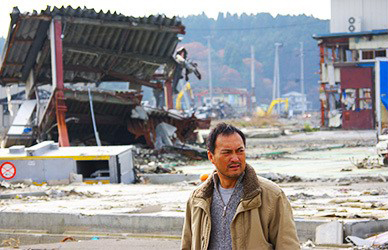
The Ryukyu Kingdom (15C-19C) flourished in present-day Okinawa through international trade and developed a unique culture known for its beautifully dyed and woven textiles. While craftspeople made painstaking efforts to revive some of these traditions after they were lost in World War II, one particularly exquisite type of fabric called “ton-byan” remains a mystery. Join Japan’s leading textile designer Sudo Reiko as she travels around Okinawa, searching for the secrets of this lost craft.

People around the world grieved when fire ravaged Shuri Castle in Okinawa, a World Heritage Site. Six months later, just as reconstruction was to begin, the COVID-19 pandemic complicated the plans. Now, a year after the fire, performers with ties to Okinawa are singing songs of solidarity and encouragement. Experience the lavish scenery of Okinawa and listen to the music, performed from the heart.

Japan Railway Journal

Thursdays
15:30 / 21:30 / 3:30 / 9:30

Go behind the scenes of Japan’s amazing railways. Interesting facts, new technologies, expert tips, plus where to go, how to get there and more!


Seasoning the Seasons

Sundays
23:30 / 5:30 / 12:30 / 17:30

Beautiful Japan. Explore the four seasons across Japan, through its long history, ancient traditions,local festivals, food and daily life.

[Source: NHK WORLD press release]


The post-Brexit licensing conundrum

The post-Brexit licensing conundrum

The post-Brexit licensing conundrum

​Volker Schmits of AIB member firm SCHMITSPARTNERS looks at the issues for broadcasters with UK or EU channel licences wanting to continue targeting audiences in the UK or EU Member States

In three months – at the end of the transition period on 31 December 2020 – Brexit will be in full effect and the UK will leave the European Union.

Whilst the UK government and the Commission are still working on the wording of a Trade Deal, the English position prevailing since the Chequers White Paper of July 2018 has ultimately been accepted by the EU: There will be no mutual recognition of broadcasting licences between the UK and EU countries after the end of this year.

What might be regarded as merely a matter for the national media regulators and their market supervision, can directly affect the relationship between channels and have an impact on the liability of network operator: (i) Any television channel that is actively doing business in the EU without a proper licence is likely to violate national unfair competition laws and thus could be challenged by a law abiding competitor. And (ii) most aggregators, platforms and channel distributors are contracting with duly licenced broadcasters only in order to minimize their liability for violations of third party rights in the programme.

Quite a number of major television stations have relocated from the UK to the EU continent during 2019 and 2020. Discovery, Viacom CBS, Sony Pictures, DAZN and others have found new regulatory home bases for their international channels – predominantly in the Netherlands, Spain, Czech Republic but also in Germany and on Malta.

For those OFCOM regulated channels that are still balancing the pros and cons, on 30 January 2020 the UK regulator published a document entitled Frequently asked questions on linear television services and video on demand services after Brexit.

To some extent, this document is proposing that OCFOM licenced broadcasters should rely on the European Convention on Transfrontier Television of May 1989 (“ECTT”) for their distribution into the EU in future.

We believe that this approach may result in legal difficulties for the respective channel:

  • There are certain countries in the EU that have not signed the ECTT, namely Denmark, Greece, Ireland, Luxembourg, the Netherlands and Sweden.
  • The ECTT does not have any enforcement or dispute resolution mechanisms built in.
  • Many aspects of the 21st century TV business are not addressed at all by the ECTT (on demand/non-linear services, cable and satellite collective music rights matters, catch-up) -leaving aside all provisions that needed to be implemented into the member state’s legislation under the EU Audiovisual Media Services Directive of 14 November 2018.

SCHMITSPARTNERS has assisted numerous international broadcasters to identify the best suitable EU jurisdiction and to acquire a television broadcasting licence (see also www.broadcastinglicence.com).

In light of this experience, we would argue that there are multiple solutions and many can be tailored to the current circumstances of the channel. An OFCOM regulated channel does not necessarily need to relocate entirely: even a third party aggregator or a cross-licensing concept could eventually serve the broadcaster’s purpose.

In any case, the remaining weeks in 2020 are still more than adequate to apply for and receive an EU licence by a national regulator.

For more details contact v.schmits@schmitsparters.com / T +35699333920​

UK high value TV show beats the pandemic

UK high value TV show beats the pandemic

UK high value TV show beats the pandemic

How do you make a high value show that gets a whole nation talking but has logistical challenges of having contestants from across the country in close proximity to each other, to crew and presenters?

That is the challenge that faced Love Productions, makes of the award-winning Great British Bakeoff [GBBO]. This staple of UK television for the past decade, that has the power to clear supermarkets out of ingredients within 24 hours of transmission, regularly attracts audiences of over six million people on the UK’s Channel 4. In an article for the Daily Telegraph, cookery expert and GBBO judge Prue Leith told the story behind this year’s unprecedented production. 

Prue Leith: What really went on inside the Bake Off bubble

Filming the new series of Bake Off was like living in a microcosm of the perfect society, writes the presenter

After months of lockdown, The Great British Bake Off came to life and I found myself in a bubble with 150 other people on the 115-acre Down Hall estate. Confined for seven weeks somewhere near Bishop’s Stortford. No hope of remission. Once you were in you couldn’t leave. If you had to leave, you’d not be allowed back.

It turned out to be one of the most remarkable periods of my long life. But to enter the bubble wasn’t easy. We were all quarantined for nine days beforehand and had to take two Covid-19 tests. My husband had to isolate and be tested too (“gagging orders” he called them) just to drive me there. His car was locked and unused for the nine days, then we drove – no stopping – straight to location.

On arrival I had another Covid test, was issued with masks and sanitiser; then confined to my room until given the all-clear 24 hours later. There were notices everywhere – Keep Your Distance, Wash Your Hands, Sanitise Before Touching Your Glass, One at a Time in the Lift, If You Love Me Don’t Hug Me.

It’s true that most telly people were desperate to be back at work, but it is still remarkable that almost all the long-established Bake Off team signed up to the quarantining and abandoned home and hearth for seven weeks. Everyone has partners or children (in my case grandchildren) to miss. Twenty of the hotel staff and two gardeners had to join the rest of us in the bubble. And the 12 bakers had to leave home, family, friends and their familiar kitchens.

Like a posh boarding school

Down Hall, a spa hotel, usually has a staff of 150. Now they were down to 20, looking after 130 of us, and their elegant rooms were plastered with safety instructions and notices: Crew Lounge, Production Office, Baker’s Dining Room, Talent Lounge”. The spa was closed, and we queued for meals. It felt a bit like a posh boarding school.

The famous tent was on a grassy expanse with a sloping field below, and beyond that woods and a stream. Two hundred yards away was the tent where Paul Hollywood and I discuss the pitfalls of each technical challenge. It’s known as Perfect, Perfect because we chat and drool over the model example of the bake-to-be. Between the two tents were four cute shepherd’s huts for Paul, Matt Lucas (our new judge), Noel Fielding and me, complete with desk, bed and comfy chair. Perfect for a cosy lie-down between takes.

Dotted about were more tents: 12 well-equipped kitchens for the bakers to practise in; tented offices; stores; laundry; green rooms; medical centre; guard room at the gate; cleaning station for sanitising incoming deliveries.

A dozen golf buggies belted along between the tents, moving people or kit, or running errands. Sometimes it felt like a small town, with all the citizens diligently working in the same factory.

Medics were everywhere, checking everyone’s temperature. Security guards patrolled, cleaners cleaned. Covid didn’t stand a chance. It must have been the safest place in England.

I’d never have thought 150 people could be locked up together for nearly seven weeks without a quarrel. Who could imagine we’d get every episode filmed to schedule, that we’d get through without anyone testing positive for Covid, with our location – and indeed the fact that we were filming at all – kept secret until almost the very end.

TV history in the making

Success was largely down to months of meticulous planning. This time, absolutely everyone involved in the show, from wardrobe to electricians, gardeners and chaperones (two of the bakers brought children with them) had to be given bed and board. I do think we made television history. Few people thought it would be possible to make a complicated 10-episode show in lockdown, but Channel 4 and Love Productions were determined, feeling Bake Off would be solace to the nation.

The unspoken fear throughout was that one of us would prove Covid-positive and all that effort would be for naught as the show was abandoned.

The more talked about, but less terrifying danger was that Noel Fielding’s girlfriend, Birdy, would have their new baby early. Then Noel would have to quit, leaving Matt to host the show alone. The pregnant Birdy, with two-year old Dali, was in the bubble with us, but the production company put her – and us all – at ease, going to extraordinary lengths to make sure we would be safe and comfortable. And to have a jolly time on days off: there was football, cricket, rounders, croquet, lots of ping pong, and an ongoing tennis

One balmy evening everyone turned out to play or watch a game of rounders. Sitting on the grass, glass in hand, cheering on the Oldies thrashing the Yoof felt pretty good. Sadly, the young reversed this at the return match a fortnight later.

On sunny days off, the lawns would be dotted with people lounging about on beanbags, reading, playing board games or just dozing in the sun.

In the evenings there were movies on a big screen (beanbags on the floor), and one night we all played bingo, with Matt calling the numbers and Noel winning first prize of a tower of Pot Noodles.  Matt was an instant success with everyone. He has that winning combination of wit and kindness that makes everyone love him. One of the producers, Lucy, put a dozen colleagues through twice-weekly gruelling HIIT classes and another, Becka, ran yoga sessions. There’s something about the holiday camp atmosphere that makes you want to join in, so I ran two flower-arranging workshops.

After a while, restrictions were eased a bit and spouses could join us – provided they went through the nine days of quarantine again. John brought our Cavalier spaniels, Tattie and Teasle, whereupon my daily walk through the woods became compulsory. Two badly trained spaniels and a lot of rabbits is a recipe for disaster. Rabbit poo is their favourite treat and rabbit chasing their favourite sport. Tattie broke two leads.

Bake-Off make-up and wardrobe wagons have always been a gossip centre, with jokes and impromptu singing, and this year, on days off, there might have been the occasional Negroni.

Pre-Covid, I never realised working full-time, keeping house and catching up with friends, family and emails was at all stressful. That was just my life, and I was happy with it. But I had no idea what stress-free really is. I know now. It’s being in a lockdown bubble with a crowd of really nice people, with meals provided, grounds to get lost in, entertainment laid on, working with a bunch of cheerful, can-do, non-complaining colleagues committed to getting the nation’s favourite show on the road, then time off lying on a beanbag in the sun, reading those books that have been piling up by my bedside for years, walking the dogs and FaceTiming my beloved to hear that he really, really misses me.

For some families the tensions of lockdown might accelerate relations into disaster, but many couples, I think, have woken up to how much they love each other, how glorious nature is, how precious time doing what you want to do is. And if you can have the luck we had, to do our work in a bubble, what could be better? The lockdown Bake Off has, I think, turned some long-time acquaintances and work colleagues into friends, and allowed us all to be proper people, not trying to be cool and indifferent. We became what we are at heart – caring, concerned, even loving.

Our bubble became a microcosm of the perfect society with no need to lock a door, with everyone doing their job with energy and commitment, and everyone appreciating the value of others. And I’m sure that, as well as the bakers’ efforts, will be plain to see as the series goes on.

Image: Mark Bourdillon/C4/Love Productions

UN releases podcast with Julia Roberts

UN releases podcast with Julia Roberts

UN releases podcast with Julia Roberts

Project Everyone has released a podcast looking at the world in 2020 on behalf of the United Nations and the Sustainable Development Goals.

Hosted by Julia Roberts and created by the United Nations on its 75th Anniversary, Nations United tells the story of the world as it is, as it was, and as it could be.

It features unique contributions from education advocate Malala Yousafzai, UN Goodwill Ambassadors Don Cheadle and Michelle Yeoh, UNESCO Special Envoy for Peace, Forest Whitaker, actor and women’s rights activist Thandie Newton OBE, UN Secretary-General António Guterres and UN Deputy Secretary-General Amina Mohammed.

Alongside that there are exclusive performances from Burna Boy, and a UN performance from Beyoncé.

The podcast is available for use by broadcasters anywhere in the world, not only for digital platform release but for use in linear broadcasting, too.

http://podfollow.com/nations-united-urgent-solutions-for-urgent-times