ABC welcomes Australian government’s focus of Media Reform Green Paper

ABC welcomes Australian government’s focus of Media Reform Green Paper

The ABC has welcomed the Australian government’s focus on what the Corporation says are much-needed reforms to the Australian television and screen industry. The ABC has called for greater consultation on finding effective measures to ensure the future sustainability of the sector.

The ABC’s response to the government’s Media Reform Green Paper highlights the continued importance of free-to-air (FTA) television services, noting that 75% of Australians watch FTA television for an average of 21.3 hours a week, compared with 12.4 hours for online video-on-demand (VOD) viewers.

David Anderson, ABC Managing Director, said: “We welcome the Green Paper’s recognition of the essential role that FTA television plays in making Australian news, culture and stories available to all Australians.

“As the nation’s biggest backer of homegrown content and creativity, the ABC agrees that broadcast television is important for most Australians and will remain so for the foreseeable future.

“We look forward to further consultation involving the government and FTA broadcasters to find the best approach to ensuring a sustainable future for the Australian television industry across the next decade and beyond.”

The ABC’s response to the Green Paper proposes principles that should be applied to developing a future roadmap for television, including:

  • Maintaining the Australian television broadcasting system and the distinct roles that national and commercial broadcasters play in it;
  • Equitable distribution of spectrum in each broadcast market; and
  • Ensuring consistent access to ABC services for all Australians across metropolitan, regional and remote areas.

In response to the Green Paper, the ABC says the proposal to shift broadcasters to delivering services through shared multiplexes, reducing the number of 7 MHz channels allocated for broadcasting, will require broadcasters to reduce the number and/or quality of the channels they offer audiences.

The ABC also submits that the Green Paper model removes any future growth path for FTA television, by preventing broadcasters from offering television services in higher-resolution formats to meet audiences’ expectations and remain competitive with online platforms.

The ABC welcomes the invitation in the Green Paper to propose other means of ensuring a sustainable Australian broadcast television sector.

The ABC submission makes the following points:

  • In combination with other funding sources such as Screen Australia, state screen agencies and the producer offset, additional funding for the ABC of $30 million per annum over the next three years would deliver more Australian stories on television screens. That funding will support the production of an extra 36 hours of Australian drama, factual and children’s content and 30 hours of arts, music and specialist programming a year.
  • The ABC strongly supports the introduction of regulatory mechanisms to ensure the presence and prominence of FTA broadcasters’ services on connected-TV platforms, which are becoming a new type of gatekeeper for Australian media services and content.
  • The ABC acknowledges the merit of the proposition that major international VOD services should contribute to the Australian production sector. Both content commissioners and audiences benefit from a thriving independent sector, and the Corporation supports measures that would sustain and grow it. The ABC would support regulation that would require SVODs to contribute to an Australian content fund. Careful design is required to ensure that it does not add to inflationary pressures already affecting the production sector.
  • Legislating an explicit requirement for the national broadcasters to provide new Australian programming is unnecessary. In the absence of any quota, the ABC is already a major investor in Australian content and a key partner to Australia’s independent production sector. Further, the imposition of an explicit content obligation risks affecting the ABC’s operational independence.

The ABC’s response to the Media Reform Green Paper is available to read here.

France 24 consolidates its European media position

France 24 consolidates its European media position

France 24 consolidates its European media position

According to the Ipsos Affluent Survey Europe 2021* carried out in 2020 with opinion leaders in 21 European countries, France 24 has made tremendous progress in terms of both awareness and reach.

The international news channel – which operates in French, English, Spanish and Arabic – has recorded the highest increase in awareness amongst all the international news channels: up 10.4 points in one year. 47% of opinion leaders say that they know about the channel and 4.7% watch it every week (+0.6 point). France 24’s weekly viewership has increased significantly in French-speaking countries (France, Belgium, Luxembourg, Switzerland) as well as in Portugal, Spain and Turkey.

The excellent performances on TV are complemented by the channel’s success on digital platforms: 5.5% of opinion leaders visit its websites each month (+0.7 point).

In total, more than 7.1 million European opinion leaders (+1.5 point within a year) are in contact with France 24 each month, on television or online. 

*Source: Ipsos Affluent Survey – Europe 2021, surveys lead from January to December 2020 in Top 20% of households by income in each of 21 countries across Europe: Austria, Belgium, Czech Republic, Denmark, Finland, France, Germany, Hungary, Ireland, Italy, Luxembourg, Netherlands, Norway, Poland, Portugal, Spain, Sweden, Switzerland, Turkey, The United Kingdom and Russia (Moscow and Saint-Petersburg).

France 24 | June highlights

France 24 | June highlights

France 24 | June highlights

France 24 has announced its June programme highlights

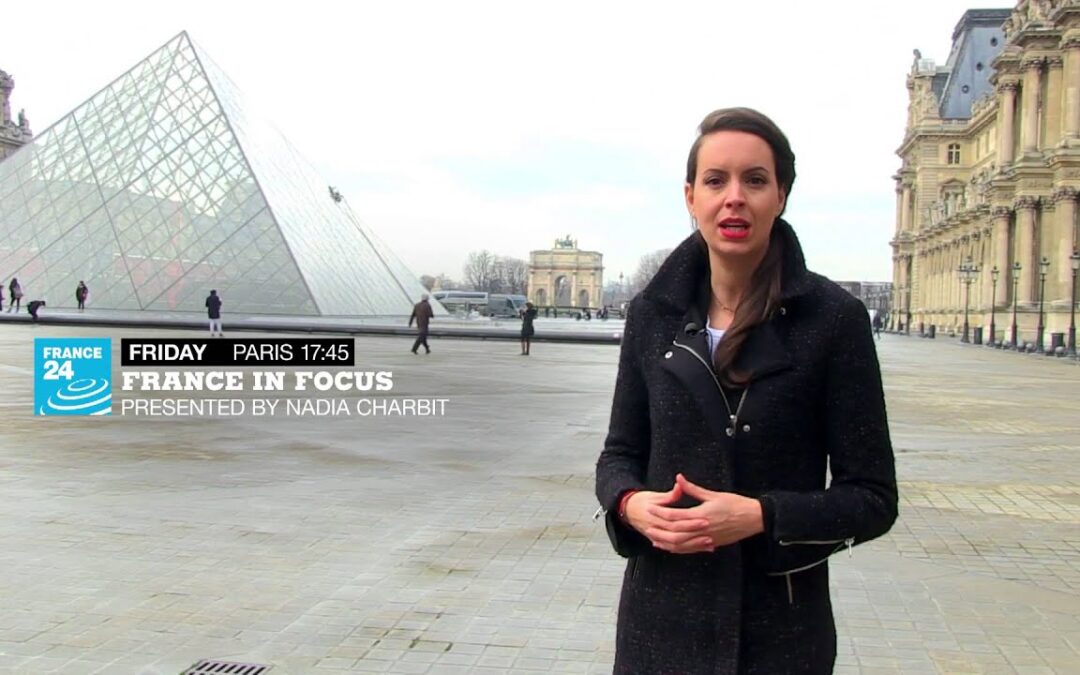
FRANCE IN FOCUS – 4 June 1545 GMT

40 years ago in the United States, an unknown disease mainly affecting homosexual people was discovered. Two years later, a French team published their discovery about what is now known as AIDS. Today, how far has French research on AIDS advanced? How do people live with the disease in 2021 in France? To answer these questions and more, “France in Focus” interviews Aurélien Beaucamp, head of the NGO AIDES.

REVISITED – Sewol ferry disaster – 13 June 1910 GMT

On April 16, 2014, MV Sewol sank off the south-west shores of South Korea, with 476 passengers onboard including 325 students on a school trip. Few of them survived as they were asked to remain in their cabin as the ferry sank. The sinking of Sewol, which killed 304 people, resulted in widespread social and political reaction within South Korea, sparking debate on the “culture of obedience”. It resulted in a generation of young politicised South Koreans being born following the tragedy. Today they are not even 20 years old, but they are eager to make a change. France 24’s correspondent in Japan Constantin Simon reports from Ansan, the victims’ city a few kilometres from Seoul, where the pain remains vivid.

EUROPE NOW – Summer 2021: Greece’s Covid Odyssey – 19 June 1115 GMT

Summer has begun in Europe: restrictions on travel are ending, beaches and bars are beckoning, and Greece is particularly keen to fill them all with holidaymakers. Greece is the European country that relies the most heavily on tourists for its national wealth. In non-covid times, the sector generates a fifth of Greek GDP and employs one in six of the workforce. But the sector has been rocked by the pandemic – this after a decade of austerity and financial crisis from which businesses and banks have still not entirely recovered.

As Greece tries to stage a grand international reopening, France 24’s Europe Editor Catherine Nicholson and her team take viewers from North to South, from the mainland to the islands.

ENTR – multilingual digital project

ENTR operates in six languages (English, German, French, Portuguese, Romanian and Polish) targeting young Europeans ion Facebook, Instagram, YouTube and Twitter. With regularly scheduled video formats translated in all the languages, ENTR’s content shines a light on journeys and initiatives that inspire people to take action, create change and enable the European youth to connect around thought-provoking topics  such as climate, solidarity, liberties, culture, technology and employment.

ENTR is developed by France Médias Monde and Deutsche Welle in partnership with other European media.

Signiant recruits Dan Marshall to Chief Revenue Officer post

Signiant recruits Dan Marshall to Chief Revenue Officer post

Signiant recruits Dan Marshall to Chief Revenue Officer post

Signiant has announced that Dan Marshall has been appointed to the newly created role of Chief Revenue Officer. Reporting directly to CEO Margaret Craig, Marshall is now responsible for driving all of the company’s global sales activities. He assumed the role on May 3, 2021.     

“Dan’s knowledge of the industry and his relationships with key customers are second to none,” said Craig. “I’m thrilled to welcome him to the leadership team and the timing is perfect. Signiant’s market momentum continues to accelerate, driven by SaaS products that solve mission-critical problems today while laying the groundwork for a much broader platform vision going forward. As a trusted advisor to media executives around the world, Dan will jumpstart our ability to deliver the Signiant message and engage with the industry at a strategic level.”

Marshall brings many years of experience building and driving high-performance, customer-centric sales organisations in the media technology sector. He joins Signiant from Amazon Web Services (AWS), where he led several large teams involved in implementing media workflows in the cloud. Marshall joined AWS in 2015 via its acquisition of Elemental Technologies, a pioneer in multi-screen video streaming technologies, where he led the sales organisation from the start-up phase through to market leadership. Prior to Elemental he managed sales and other customer-facing functions for Omneon, where he played a pivotal role in growing a global business that transformed the video server and storage market. 

Commenting on his move to Signiant, Marshall points to the highly differentiated nature of Signiant’s cloud-native SaaS platform. “During my time at AWS I was deeply involved in conceptualising and implementing the next-generation media supply chain, and I want to continue to play an active role in supporting customers on that journey. Building on a foundation of widely-deployed transport optimisation technology, Signiant is the only media tech company that is pursuing a true platform strategy. This approach allows us to deliver even greater value to our customers ⎯ we’re driving down TCO by delivering economies of scale, reduced complexity, and agile, efficient workflows. I know these are the things that matter to media enterprises in today’s challenging environment, and I’m excited to join an innovative, entrepreneurial software organisation that is already on a high-growth trajectory.”  

Long established within the M&E industry for optimising the transfer of large files over IP networks, Signiant’s role in the media technology stack has expanded dramatically in recent years. In today’s hybrid cloud, multi-cloud world, the company’s Software-Defined Content Exchange (SDCX) platform provides the connective fabric between globally distributed content repositories ⎯ both within and between media companies of all sizes. In addition to providing fast, secure access to media assets regardless of storage type and location, this increasingly involves management of information about the assets. “The recently announced acquisition of Lesspain Software is an important milestone in the Signiant story,” adds Marshall. “By expanding the value proposition beyond file transfer into adjacent media-centric capabilities, we’re delivering on a unique and compelling vision of the future that aligns with emerging customer needs.”

Russian regulator protests to Google on RT YouTube restrictions

Russian regulator protests to Google on RT YouTube restrictions

Russian regulator protests to Google on RT YouTube restrictions

Russian media regulator Roskomnadzor says that it has written to Google demanding all restrictions on the YouTube channel of RT to be lifted.
 
The regulator says that YouTube has blocked a range of items from the site, and restricted RT’s ability to upload new videos.
 
The letter from Roskomnadzor notes that such actions by the YouTube video hosting administration violate the key principles of free dissemination of information, unhindered access to it and are an act of censorship against the Russian media.
 

The Russian regulator has demanded that all all restrictions be removed “as soon as possible,” as well as providing an explanation for the reasons for their introduction.

In its statement on the issue, Roskomnadzor says that according to Russian law, if Internet companies ignore warnings “about violations of the rights of Russians on the Internet, including censorship of the Russian media,” it has the power to impose “administrative fines” of up to one million roubles (about US$13,640). The regulator goes on to say that repeated refusals to comply with its requirements will result in a multiple increase in fines – up to three million roubles.

The RT YouTube channel, checked by the AIB on 29 April, shows no uploads have been made since 24 April 2021.

Calls for Eutelsat to drop Chinese state TV channels

Calls for Eutelsat to drop Chinese state TV channels

Calls for Eutelsat to drop Chinese state TV channels

According to a report carried on the RFI website, 13 people who describe themselves as the “victims of forced confessions broadcast on Chinese television” have written an open letter to Europe’s largest satellite operator, Eutelsat, asking it to review company policy of broadcasting Chinese channels CGTN and CCTV-4.

In the letter dated 30 March, the asked French satellite TV company Eutelsat, to reconsider its policy of carrying Chinese state media. The signatories allege that they “were forced by the Chinese police to record confessions to alleged crimes and these were then broadcast by Chinese state-owned, Communist Party-controlled television networks – CGTN and CCTV-4 – both of which are aired in France via Eutelsat”.

Asked to respond to the allegations, Eutelsat has told RFI that “it is not within its remit to judge the content and suspend the broadcast of a channel under contract without an injunction from a competent authority”.

Paris-based Eutelsat is the world’s third largest satellite operator in terms of revenue. Its 39 satellites provide broadcasts for almost 7,000 television stations, including Sky, Fox News, RFI’s sister channel France24, BBC World and CNN International, covering most of Europe, but also beaming into Africa, Asia and the Americas.

The 13 signatories include 11 Chinese citizens and two non-Chinese, representing dozens of people who found themselves detained or imprisoned by Chinese authorities, and who were forced to publicly admit their supposed wrongdoings.

Torture

“As direct victims of this practice, we appeal to you to carefully examine the information provided below, and to consider whether TV providers in democratic societies should continue to be morally complicit in airing such intentionally distorted information obtained through torture, threats and deprivation,” wrote the thirteen.

The open letter is supported by the Spain-based human rights organisation Safeguard Defenders, whose founder, co-signatory Peter Dahlin, was himself paraded in front of millions of viewers on China’s central television. Dahlin says that the accused were “denied the right to fair trial, the right to see a lawyer, and the right not to be tortured,” while they found themselves forced by threats to their families, themselves “and through torture,” to agree to appear in front of the cameras and “confess” their crimes.

According to the signatories, China’s state television has aired forced confessions of more than 100 people since Xi Jinping came to power in 2013, pointing out that “most victims are rights lawyers, NGO workers and journalists”.

The letter notes that Australian public broadcaster SBS temporarily halted using CGTN content in March pending a review of human rights concerns. In February, the UK broadcast regulator Ofcom removed CGTN from the airwaves for partiality and violation of privacy. The Chinese channel then successfully sought a European broadcast licence via French regulator CSA.

Just weeks after the CSA had determined that CGTN met the technical criteria required for broadcasting, Safeguard Defenders submitted two complaints against the channel.

China retaliated against the CGTN expulsion from the UK by banning the BBC from broadcasting in China – even though the reception of the BBC in China is limited to compounds for foreigners and 5-star hotels. In a reaction to Safeguard Defenders’ complaints, CGTN said the rights group intended to “distort and harm China’s image and interests”.

Meanwhile, Eutelsat points out that responsibility for the content “in the case of non-European channels rests with the regulator of the country where the uplink is located,” in this case the France-based CSA, “which also has the ability to take legal action”.

According to the RFI report, Eutelsat insists it will “immediately comply with any subsequent decision by the CSA or the French courts, as it does systematically.”


Main picture: CCTV headquarters in Beijing