UK Foreign Secretary: Media Freedom is key to holding political leaders to account

UK Foreign Secretary: Media Freedom is key to holding political leaders to account

UK Foreign Secretary: Media Freedom is key to holding political leaders to account

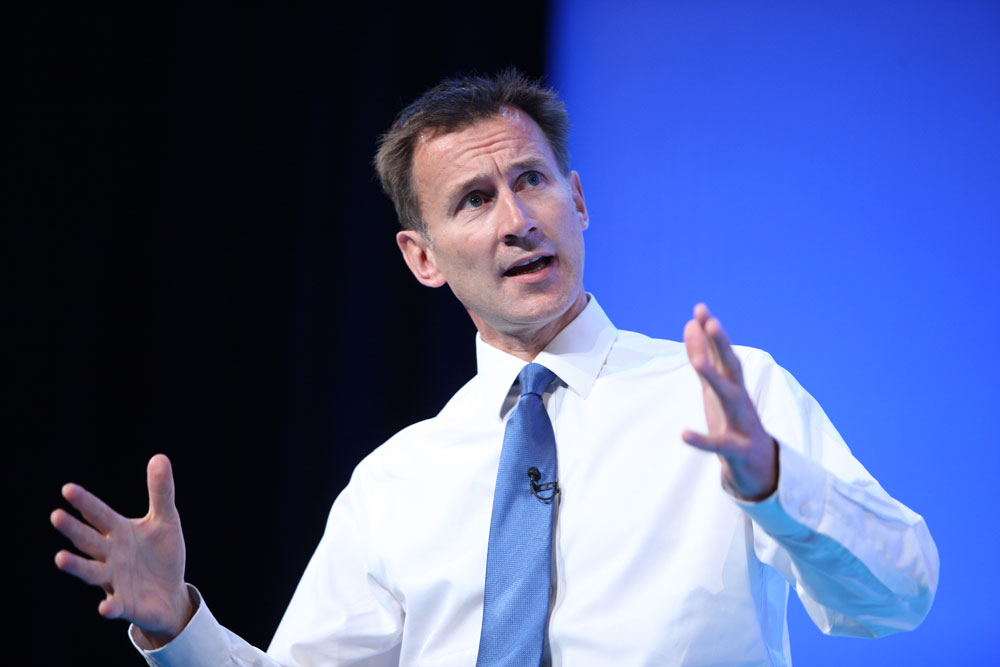
Speaking at the71st World News Media Congress in Glasgow on 1 June 2019, the UK Foreign Secretary Jeremy Hunt will argue that a free media is not a “Western” value but instead forms a pillar of a thriving society, benefiting people around the world.

Mr Hunt will say that media freedom is crucial to holding political leaders to account.

He will say:

“Democracy and freedom of expression mean nothing unless independent journalists are able to scrutinise the powerful – and discover the stubborn facts – however inconvenient this might sometimes be for politicians on the receiving end.

“If we want to embrace the opportunities of a free society, encourage the open exchange of ideas, and pass informed judgement on our leaders peacefully through the ballot box, then we must defend the institution which enables all of this.”

Mr Hunt will highlight the dangerous global climate for journalists and warn against complacency in the UK. He will say:

“Last year, 99 journalists were killed and another 348 locked up by governments.

“In April, Lyra McKee was murdered by dissident republicans in Northern Ireland. 

“The senseless killing of a talented young journalist showed that here in the United Kingdom, we have no cause for complacency.”

Speaking ahead of the Global Conference for Media Freedom in London in July, the Foreign Secretary will highlight the power that the international community wields in holding those who act against journalists to account. He will say:

“We cannot physically stop journalists from being locked up for doing their jobs.

“But we can alert global public opinion and make sure the diplomatic price is too high.”  

Highlighting the international support for Burmese journalists Wa Lone and Kyaw Soe Oo, who reported a massacre in Rakhine State for Reuters News Agency he will say:

“From their cells, Wa Lone and Kyaw Soe Oo won the Pulitzer Prize for International Reporting in April.

“Then, last month, they were freed after the President of Burma granted a pardon and the country’s civilian leaders wisely acted to correct a grave failure of due process.

“The generals gained nothing from their actions because the facts emerged anyway.”

The Foreign Secretary will host a major conference on 10-11 July to bring together global leaders, shine a spotlight on media repression, and build a coalition of governments committed to a stronger diplomatic response when media freedom is curtailed.

Image: Flickr under a Creative Commons license
From AI to politics, 2,500 delegates meet at DW Global Media Forum

From AI to politics, 2,500 delegates meet at DW Global Media Forum

The 12th annual Global Media Forum took place in Bonn on 27-28 May, organised by Germany’s international broadcaster DW.
Bringing together more 2,000 delegates from all parts of the world, the lively conference examined everything from AI to the future of local journalism under the title Shifting Powers.
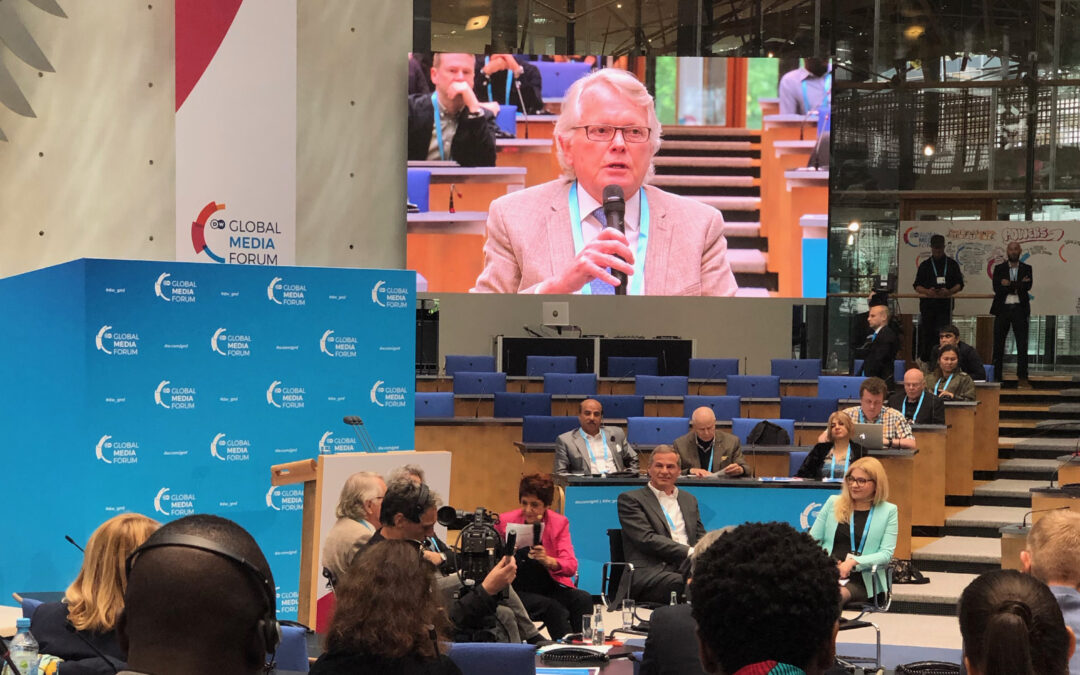
Pointing to one potential future, a robot was in conversation with DW executive Guido Baumhauer (pictured left) while the relationship between media and politics was examined by a panel including Lord Michael Dobbs, the British politician who wrote the original House of Cards novel (photo above).

With lively conversation and debate, and the unique opportunity to meet journalists and media executives from some of the most hard-to-reach places on the planet, DW’s Director-General Peter Limbourg says that the Global Media Forum is being positioned to become the media equivalent of the Munich Security Conference. A bold ambition – and it’s one that’s quite likely to be achieved.
AIB Members urge broadcast manufacturers to engage over cyber security

AIB Members urge broadcast manufacturers to engage over cyber security

Members of the Association for International Broadcasting have written to key suppliers to the broadcasting industry urging greater engagement over cyber security. The letter calls on suppliers to broadcasters to ensure that their products – which form critical parts of the broadcast chain – have high-levels of robust security that will help to mitigate the effects of cyber attacks.

The letter is a result of work by the AIB Cyber Security Working Group to identify key issues of concern within Members of the Association for International Broadcasting about the current state of security provided within equipment. The Working Group has been active for the past four years, drawing together the Chief Information Security Officers and Chief Technology Officers across a wide range of AIB Members. Its purpose is to share intelligence about threats and to share knowledge about ways to mitigate attacks on broadcasters.

“The number of attempts to breach the security of broadcasting networks is constantly increasing,” says AIB Cyber Security Working Group chairman and CISO at Arqiva, Denis Onuoha. “Yet the supply side of the industry is not accelerating its work on developing robust security at the same rate. This disconnect is something that the AIB – and other industry associations – is striving to end. We want suppliers to the broadcasting industry to understand the concerns and the needs of broadcasters across the world and to work across the sector to improve security.”

Not every cyber attack is successful. However, the high-profile attacks that have been revealed clearly demonstrate the havoc that can be wreaked when defences are breached. The costs involved in recovering a broadcasting operation following a successful attack run into tens of millions of dollars, while the reputational damage is potentially even more damaging.

“As a global trade association, it is in our DNA to support Members in dealing with challenging subjects, such as cyber security,” comments AIB chief executive, Simon Spanswick. “There is often a reluctance to discuss cyber security, or a hope that an attack ‘won’t happen to me’. This is misguided as it is only through collaboration that the questions that the industry faces can be successfully navigated. The AIB wants to ensure that none of its Members have to deal with the aftermath of a cyber attack and that is why the Association is calling on the supply side of the industry to engage.”

Through its Working Group, the AIB is now in regular contact with the national security services in a number of countries in order to share knowledge and expertise. The Association is developing plans for the creation of a broadcast cyber security research unit within the information security department of a major UK university that will develop a live broadcast production and transmission laboratory where undergraduate and postgraduate research into security of equipment will be undertaken in conjunction with industry.

“All the work that the AIB undertakes on cyber security is of benefit both to Members and the wider industry,” continues Spanswick. “That’s why we’re encouraging the active and supportive involvement by the supply side in our cyber security initiatives. It’s only by working together that the industry can combat the very real threats that exist.”

Reuters journalists freed from Myanmar prison

Two Reuters journalists who had been jailed for their reporting on the Rohingya crisis in Myanmar walked out of prison on 7 May 2019, freed in a presidential amnesty after a global campaign for their release.

According to the AFP news agency, Wa Lone and Kyaw Soe Oo were mobbed by media as they stepped out of Yangon’s notorious Insein prison after their lengthy detention.

Their December 2017 arrests made them an international cause célèbre and a sign of Myanmar’s deteriorating press freedoms under Nobel laureate and civilian leader Aung San Suu Kyi.

Wa Lone, 33, thanked people from “around the world” for advocating for their release and vowed he would return to work.

“I can’t wait to go to my newsroom,” he said. “I am a journalist and I am going to continue.”

Reuters editor-in-chief Stephen Adler said: “We are enormously pleased that Myanmar has released our courageous reporters”.

“Since their arrests 511 days ago, they have become symbols of the importance of press freedom around the world. We welcome their return.”

The two men waved and smiled broadly as they walked out of the jail.

The pair were convicted on charges of violating the official secrets act and sentenced to seven years each.

At the time of their arrest they had been reporting on a September 2017 massacre of 10 Rohingya Muslims in conflict-hit Rakhine state, where the Myanmar army forced some 740,000 of the stateless minority to flee over the border to Bangladesh.

The case prompted an outcry around the world and crushed what was left of Suu Kyi’s legacy as a rights defender.

Reuters has said the two were imprisoned in retaliation for their expose.

The army convicted soldiers for the massacre in a rare response to allegations of atrocities.

While inside, the duo missed numerous family milestones, including the birth of Wa Lone’s daughter.

But they were also showered with numerous awards and honours in response to their work.

Last month, Wa Lone and Kyaw Soe Oo won the prestigious Pulitzer prize.

They were also featured earlier on the cover of TIME magazine as part of its person of the year coverage featuring journalists targeted for their reporting.

The case against them become a byword for the war against press freedom and prompted an international campaign that attracted the support of prominent rights lawyer Amal Clooney.

Rights groups and legal experts say the case against the reporters was riddled with irregularities.

A whistleblowing police officer testified during their trial that his superior had ordered his team to trap the reporters in a sting — testimony the judge chose to ignore.

Suu Kyi led her National League for Democracy party to victory in historic 2015 polls, ending decades of military-backed rule.

But the dreams of a new day for Myanmar were short-lived after the army’s campaign against the Rohingya in Rakhine state, which UN investigators have said amounted to genocide.

Myanmar has denied the charges and said it was defending itself against Rohingya militants, who attacked and killed police officers in August 2017.

The Association for International Broadcasting lodged a protest with the Myanmar authorities at the time of the conviction of the two journalists. 


UK Foreign Secretary creates 60 new scholarships for journalists across Africa

UK Foreign Secretary creates 60 new scholarships for journalists across Africa

UK Foreign Secretary creates 60 new scholarships for journalists across Africa

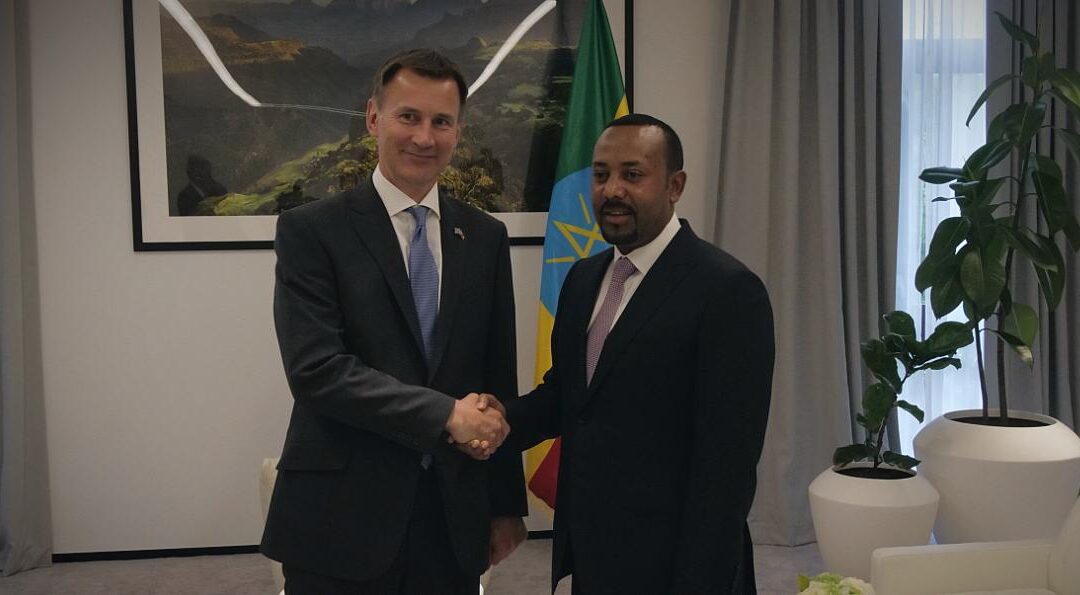
As part of its Global Campaign for Media Freedom, the British Foreign Secretary, Jeremy Hunt, has made a landmark speech during the principal UNESCO-organised World Press Freedom Day event in Addis Ababa.

  • 60 exceptional African journalists to receive new scholarships over the next five years to gain experience in the newsrooms of Britain’s leading media organisations
  • £15.5m of UK aid money will be given to help Ethiopia run transparent, free and fair elections.

The Foreign Secretary has today set out his vision to improve media freedom around the world, calling on leaders to recognise that a “media freedom is not a “Western” value, still less a colonial-style imposition, but instead a force for progress from which everyone benefits.”

Speaking at the UNESCO World Press Freedom Day celebrations, hosted by the African Union in Addis Ababa, Jeremy Hunt said in a speech that “whatever we politicians claim during election campaigns, no single party or leader or philosophy has a monopoly on wisdom. Instead the progress of humanity clearly shows that wisdom arises from the open competition between ideas when different viewpoints are given the oxygen to contend freely and fairly.”

He said that a free media “provides a channel for people to voice discontent without resorting to violence. If problems and tensions are bottled up then they are far more likely to boil over. Stopping journalists from reporting a problem does not make it go away.”

Jeremy Hunt also made the link between a free media and lower levels of government corruption, saying that “far more effective than the crackdowns regularly launched by authoritarian regimes is the sunlight of transparency – just witness the striking overlap between the least corrupt countries in global indices and those with the freest media.”

The Foreign Secretary also announced in his speech that £15.5m of UK aid money will be given to help Ethiopia run transparent, free and fair elections.

The money will build the capacity of the elections board to run the election which will make electoral operations more transparent and enhance communications and engagement for the National Election Board of Ethiopia. It will also prevent electoral violence through enhanced monitoring and early warning to improve effectiveness of electoral dispute mechanism.

If successful and peaceful, the elections in May 2020 will be a major step towards building a democratic culture in Ethiopia and will lay a platform for a continuation and deepening of Prime Minister Abiy’s political and economic reforms.

The Foreign Secretary also announced a new Chevening Africa Media Fellowship programme that will provide 60 exceptional African journalists over the next five years to gain experience in the newsrooms of Britain’s leading media organisations. This year, applicants from ten African countries will be eligible, including Ethiopia.

The Association for International Broadcasting is working with the UK Foreign Office on its Global Campaign for Media Freedom, and the major Global Conference to be hosted by the UK and Canadian governments in London on 10-11 July 2019.

Image: British Embassy in Ethiopia/Facebook