
26 June 2019
Text and video content from the BBC News Chinese website bbc.com/chinese now features on the popular Hong Kong news portal, Yahoo Hong Kong, and its mobile apps, Yahoo Hong Kong News and Yahoo TV.
Thanks to an agreement between BBC News and Yahoo Hong Kong, the BBC News Chinese content will be published as top stories on the Yahoo site. The Yahoo Hong Kong homepage now features a BBC News Chinese index.
Business Development Director, BBC World Service, Simon Kendall, says: “This is a great development for the BBC in Hong Kong where our news services in English, Cantonese and Mandarin reach a million people weekly. We have a strong and loyal audience on the audio platform, and with this partnership we will look to further enhance our engagement with digital audiences.”
Launched in 1999, Yahoo Hong Kong is one of the territory’s leading news portals. Rico Chan, Director of Yahoo Hong Kong, says: “Deeply rooted in Hong Kong, we have been serving it for two decades, and it is our ultimate goal to establish a high standard and trusted content platform by partnering with forward-thinking and pioneering media to catalyse the development of media industry. BBC News is one of the most valuable media brands globally, with positive and sharp ambitions. Our collaboration with BBC News Chinese strengthens our commitment to our users, allowing us to offer more abundant, premium, reliable content to millions in Hong Kong.”
The BBC’s recently launched Hong Kong bureau is home to journalists working on news in Mandarin, Cantonese and English, as well as to the commercial news operation, BBC Global News. The BBC also has an office for BBC Studios in Hong Kong, bringing world-class drama and entertainment programmes to Chinese audiences.
BBC News is available in Hong Kong on TV, via the BBC World News channel; online in English via bbc.com/news, and in simplified and traditional Chinese script, along with audio content in Cantonese and Mandarin, onbbc.com/chinese. The BBC News Chinese weekly hour-long radio programme in Cantonese, Newsweek, is broadcast on RTHK, along with the daily overnight broadcasts of BBC World Service radio in English. BBC Minute, a 60-second news bulletin in English, is carried by Hong Kong’s Metro Radio.
BBC News Chinese is part of BBC World Service which delivers news content around the world in English and 41 other language services, on radio, TV and digital. BBC World Service reaches a weekly audience of 319m. As part of BBC World Service, BBC Learning English teaches English to global audiences. BBC News attracts a weekly global audience of 394m people to its international services including BBC World Service, BBC World News television channel and bbc.com/news.

18 June 2019
More people around the world are tuning into the BBC than ever before, reaching a new high of 426m a week – an increase of 50m (13 percent) over the year, according to new figures released on 18 June 2019.
The Global Audience Measure (GAM) shows BBC News has an audience of 394m globally, a rise of 47m. The BBC World Service in English, and 42 languages, account for 319m of that figure – with an increase of 41m.
BBC World Service in English and the BBC World News TV channel have both achieved all-time record audiences of 97m and 101m respectively. BBC World Service’s 42 language services have climbed to 259m. BBC Global News, the commercial subsidiary of BBC News which operates the BBC World News channel and bbc.com, makes up most of the remainder and has seen increases across TV and digital of 6m, to 121m – another record high. Overall, BBC News has seen increases of 23m for TV (to 214m), 12m for audio (to 178m) and 18m for online (to 95m).
 BBC Director-General Tony Hall (pictured) says: “Every day our teams do an amazing job bringing independent, impartial news to audiences around the world, and today we can see just how much the BBC is valued. Thanks to Government investment we’ve been able to launch the biggest expansion of the World Service since the Second World War, and this shows how much the BBC can do for the UK.”
Jamie Angus, Director of the BBC World Service Group, says: “The BBC is on track to reach its audience target of 500m weekly, and has posted all-time record audiences for both World Service Radio and BBC World News. But most importantly we’re continuing to produce groundbreaking journalism that is attracting growing audiences, and making huge impact. From investigative journalism like Africa Eye to our work countering fake news and disinformation, the BBC is showing why it remains the world’s most trusted source of news.”
Three countries – India, Kenya and the USA – have seen the most impressive gains since 2018.
India, where BBC News now operates in nine languages, has seen a rise of 20m to 50m to become the top overseas market for BBC News. The USA becomes the third largest market overall with 38m, up 5m. The audience in Kenya has increased from 6m to 15m in the last year reaching 50 percent of the population. In Afghanistan, the BBC reaches 59 percent of the population. BBC News websites (World Service and bbc.com) have increased their combined reach by 6m to 51m globally, bucking wider trends for news sites.
The top 10 countries by BBC News audience are:
- India 50m
- Nigeria 41m
- USA 38m
- Kenya 15m
- Afghanistan 12m
- Bangladesh 12m
- Egypt 11m
- Iran 11m
- Tanzania 10m
- Pakistan 9m
Syndication of BBC content via partner television and radio stations around the world, and distribution via digital platforms like YouTube and Facebook, now add up to over 60 percent of audience reach.
Audio continues to be a major platform for the World Service, rising by 12.9m to 173m listeners worldwide. On all platforms, 30 percent of the audience is aged between 15-24 years.
Over the past two years new BBC News bureaux were opened in India, Kenya, Nigeria and South Korea, and 12 new language services were launched as part the largest expansion of the BBC World Service since the 1940s, funded by the UK government. The expansion has taken place against a background of rapid growth of rival international news services from Russia, China and the Middle East.

10 June 2019
Hit Filipino movies from broadcaster ABS-CBN will soon make their debut in China for the first time via Phoenix Movie Channel, after the network successfully concluded a milestone deal with Phoenix Satellite Television, a leading entertainment group that aims to provide Chinese everywhere with high quality content.
16 ABS-CBN titles that will premiere starting September this year include Daniel Padilla and Kathryn Bernardo’s 2016 box office hit, “Barcelona: A Love Untold.”
Dramas and rom-coms that are also well recognised overseas given their international theatrical and OTT releases such as “Four Sisters and a Wedding”, “My Ex and Whys”, “You’re My Boss”, “Everything About Her” and “Can’t Help Falling In Love” are part of the lineup that will soon be seen on Phoenix Movie Channel.
Phoenix is also bringing other rom-coms that have made a mark in Filipino pop culture to China for their relevant themes, like “Love You To The Stars and Back,” “Dear Other Self,” “My Perfect You,” “To Love Some Buddy,” “Can We Still Be Friends,” “Always Be My Maybe,” “The Achy Breaky Hearts,” and “First Love.”
Completing the list are restored Filipino classics, “Kasal” and “Hihintaying Kita sa Langit.”
10 June 2019
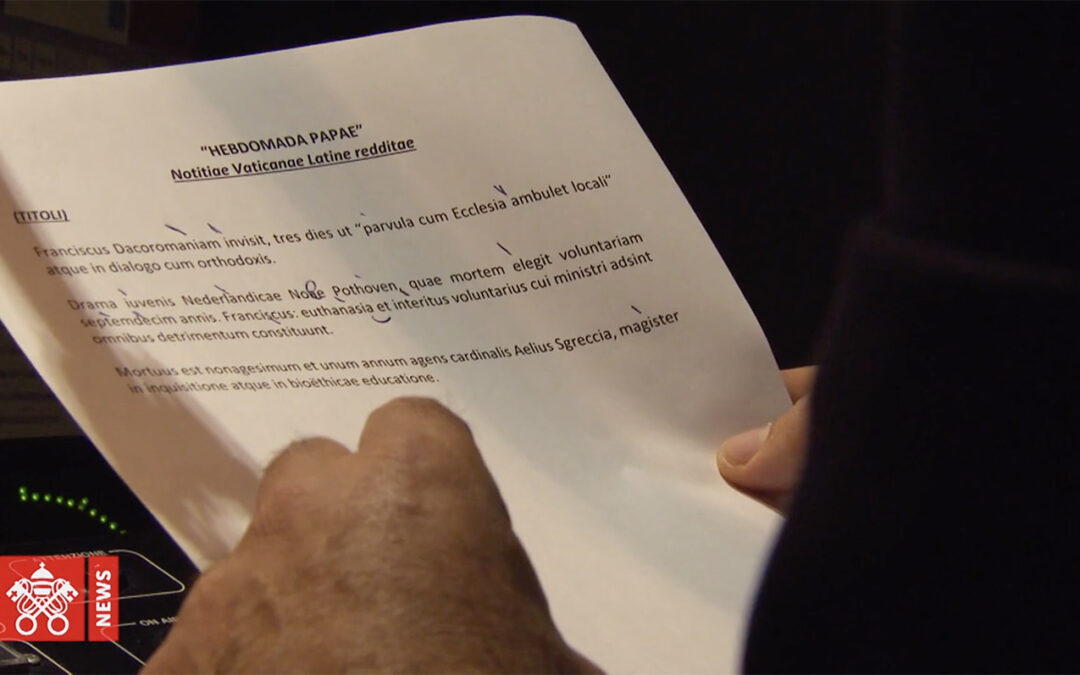
Vatican Radio has launched a weekly five-minute news bulletin – in Latin. Harnessing the resources of the Vatican’s Latin Letters Office – a department of the Secretariat of State where Church documents are written in or translated into Latin – the programme is described by Vatican Radio’s Editorial Director Andrea Tornielli as “a real, informative news bulletin”/ According to Tornielli, the programme was not conceived “with a nostalgic look to the past, but as a challenge for the future”.
The weekly bulletin is titled Hebdomada Papae, notitiae vaticanae latine redditae or The Pope’s week – Vatican news in Latin. There are very real challenges, however, in using a dead language to report on modern day life. According to a report in the UK Daily Telegraph, Vatican translators have had to come up with some ingenious ways of communicating contemporary concepts into Latin. A suicide bomber, for instance, is rendered as voluntarius suis interromptor while xenofobia is exterarum gentium odium. Latin equivalents of modern terms are often tongue-twisters, such as Certaminibus Mundialibus Sphaeromachiae for the football World Cup, or follis canistrīque ludus for basketball. Much of the Latin in use today has been invented by contemporary scholars and would not have been known to the Romans. There is a word, for instance, for popcorn – máizae grana tosta, or toasted maize grains.
Despite the fanfare for the new weekly programme that went to air on 8m June, Vatican Radio is not the only – nor the first – broadcaster to air programmes in Latin. Finland’s public broadcaster YLE has aired a weekly news bulletin in Latin for many years, under the title Nuntii Latini.

10 June 2019
Sharon White, the Chief Executive of the UK media and telco regulator Ofcom, has announced she is leaving to become the Chairman of major UK retailer John Lewis. John Lewis also also owns the UK Waitrose supermarket brand. (she has insisted retaining the Chairman title)
Ms White has run Ofcom for the last four years. During her time at Ofcom she has dealt with some critical issues including the consideration of breaking up British Telecom (BT) and taking on the responsibility for regulation of the BBC from the BBC Trust. She has also started the work for preparing the regulator to take on a major role in regulating online content because of the increased political pressure on large technology companies.
At John Lewis Ms White will replace Charlie Mayfield who steps down in early 2020. She is reported to be receiving a salary of £990,000 and she will be only the sixth chair of the John Lewis partnership and the first woman to hold the position – and reportedly insisted on keeping the title chairman, rather than changing the job to a gender-neutral title.
Prior to her taking up the Ofcom role Ms. White, an economist by training, was permanent secretary to the UK treasury where she was responsible for overseeing public finances. She also held roles at the UK Ministry of Defence and The World Bank, and was a policy advisor at 10 Downing Street.
She joined the board of house builder, Barratt Developments, as a non-executive director in January 2018.
Ms. White joins John Lewis at an interesting time with falling profits and many fellow high street stores suffering severe trading issues. Her appointment has been met with surprise in some corners because of her lack of retail experience.
“I readily recognise that Sharon is not the conventional retail choice. But these are not conventional retail times, nor is the partnership a conventional company,” said Sir Charlie, who has led the retailer since 2007.
Ms White said her experience at Ofcom would help in her new job. “In my current role, my vision has been to ensure that consumers in fast-moving markets get high-quality, reliable services at fair prices, from thriving businesses they can trust,” she said in a statement.
The AIB has worked closely with Sharon and her teams and we wish her well in her new position.
7 June 2019
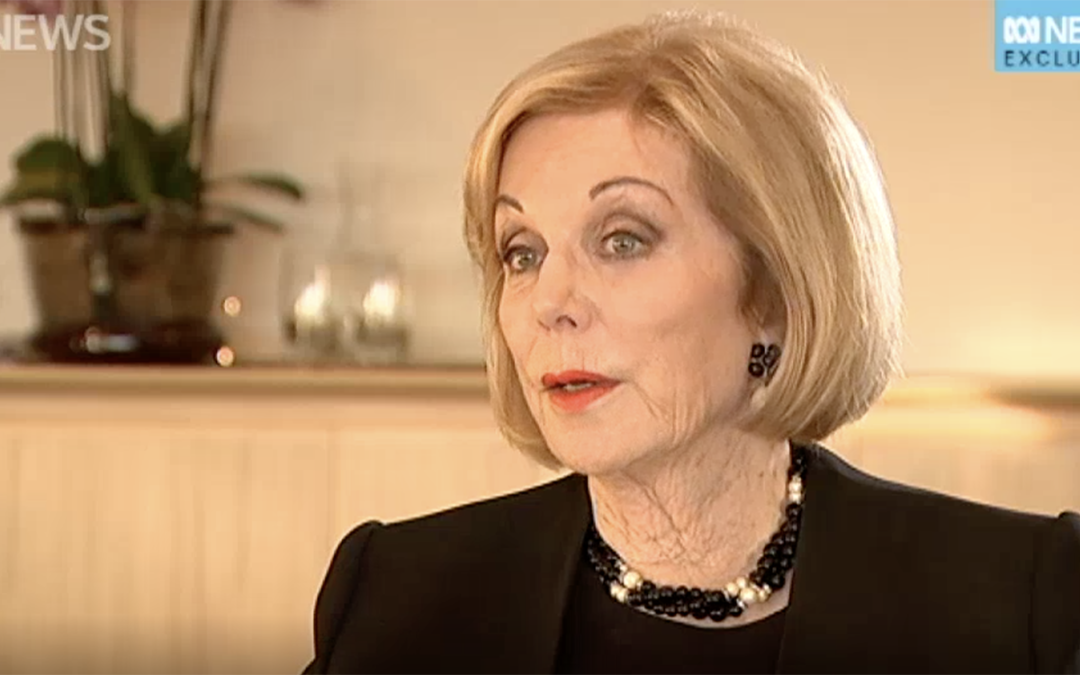
Following the raid on the ABC, the Corporation’s chair Ita Buttrose issued this statement:
On behalf of the ABC, I have registered with the Federal Government my grave concern over this week’s raid by the federal police on the national broadcaster.
An untrammelled media is important to the public discourse and to democracy. It is the way in which Australian citizens are kept informed about the world and its impact on their daily lives.
Observance of this basic tenet of the community’s right to know has driven my involvement in public life and my career in journalism for almost five decades.
The raid is unprecedented – both to the ABC and to me.
In a frank conversation with the Minister for Communications, Cyber Safety and the Arts, Paul Fletcher, yesterday, I said the raid, in its very public form and in the sweeping nature of the information sought, was clearly designed to intimidate.
It is impossible to ignore the seismic nature of this week’s events: raids on two separate media outfits on consecutive days is a blunt signal of adverse consequences for news organisations who make life uncomfortable for policy makers and regulators by shining lights in dark corners and holding the powerful to account.
I also asked for assurances that the ABC not be subject to future raids of this sort. Mr Fletcher declined to provide such assurances, while noting the “substantial concern” registered by the Corporation.
There has been much reference in recent days to the need to observe the rule of law.
While there are legitimate matters of national security that the ABC will always respect, the ABC Act and Charter are explicit about the importance of an independent public broadcaster to Australian culture and democracy.
Public interest is best served by the ABC doing its job, asking difficult questions and dealing with genuine whistle-blowers who risk their livelihoods and reputations to bring matters of grave import to the surface. Neither the journalists nor their sources should be treated as criminals.
In my view, legitimate journalistic endeavours that expose flawed decision-making or matters that policy makers and public servants would simply prefer were secret, should not automatically and conveniently be classed as issues of national security.
The onus must always be on the public’s right to know. If that is not reflected sufficiently in current law, then it must be corrected.
As ABC Chair, I will fight any attempts to muzzle the national broadcaster or interfere with its obligations to the Australian public. Independence is not exercised by degrees. It is absolute.
