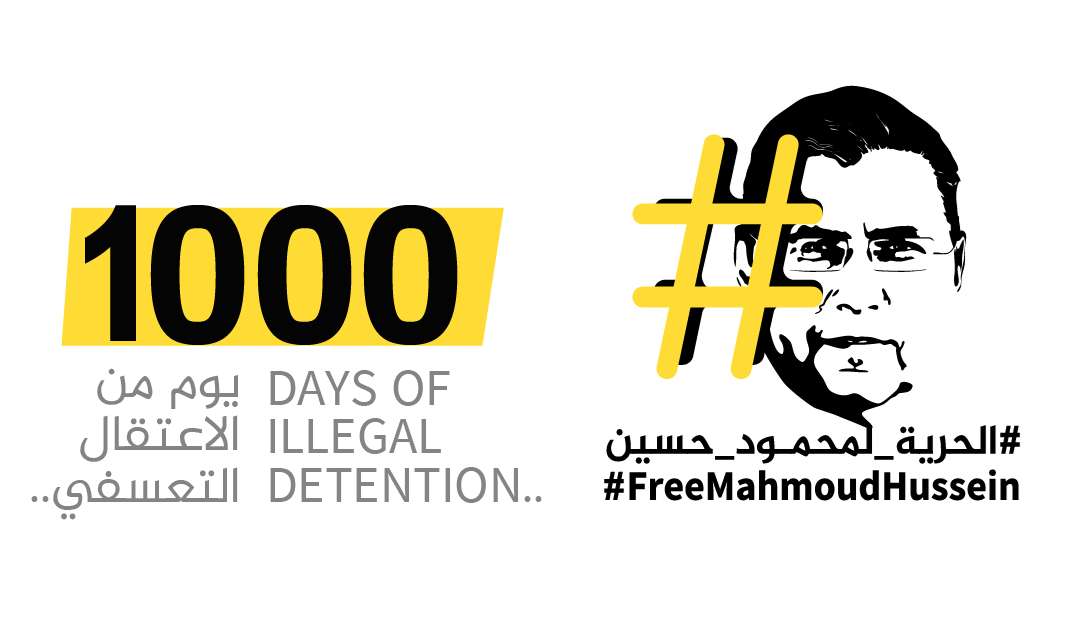
19 September will be the 1,000th day that Al Jazeera journalistMahmoud Hussein has spent behind bars after being detained by Egyptian authorities while visiting his family in December 2016.
NC1362
Al Jazeera Media Network has renewed its call for the immediate release of Mahmoud Hussein. On 23 May 2019, a court in Egypt rejected the appeal by the prosecutor for the continued detention of Mahmoud and ordered his release from prison. However, in defiance of the court order, the authorities opened a new investigation against him with unspecified charges and has returned him to prison. The Network strongly condemns the Egyptian authorities’ decision to return Mahmoud Hussein to Tora prison despite the court ruling he be released. Mahmoud is being detained by the Egyptian government in flagrant violation of international law and an infringement of his fundamental rights.
The Association for International Broadcasting joins with Al Jazeera and other media organisations in calling on the Egyptian authorities to release Mahmoud Hussein immediately.
Egypt continues its crackdown on media freedom. The country has the greatest number of journalists detained in any country in the world. Mahmoud Hussein has been robbed from 1000 days of his life with no end in sight, all without legal justification. Al Jazeera continues to strongly condemn this and refutes all charges against him and calls on the international community, media professionals, and human rights advocates to raise awareness and demand his immediate freedom.
On Thursday 19 September 2019 Al Jazeera Media Network is launching a solidarity campaign coinciding with the 1000 days of detention of Mahmoud Hussein. The campaign aims to focus on publicising the inhumane conditions he endures under detention, and to mobilise support and shed light on his case and call for his immediate release. As part of the campaign an online petition demanding his immediate release has been launched, and it can be accessed at www.FreeMahmoudHussein.com.
View a short report on Mahmoud Hussein’s detention and the international solidarity campaign here:
Productions across TV, radio and online from 20 countries have made the final cut
The shortlist for the AIBs 2019 – the 15th annual competition for the world’s best factual productions – has been published by the Association for International Broadcasting.
Work from over 50 companies has been selected to go through to the final judging by the international jury, with an immensely wide range of subjects covered. With 19 categories covering sport, daily journalism, human interest and much more, the AIBs are one of the most comprehensive international awards for factual producers.
“We have had the largest field of entries in the 15-year history of the AIBs,” says Simon Spanswick, chief executive of the Association for International Broadcasting. “Over 400 hours of work was submitted to this year’s competition, from production companies and broadcasters on every continent. The standard of work was extremely high and selecting the entries to go through to the final judging was a very real challenge. With reports and investigations covering child abuse, war crimes and natural disasters through to lighter subjects such as microscopic art, the subject range is immense.”
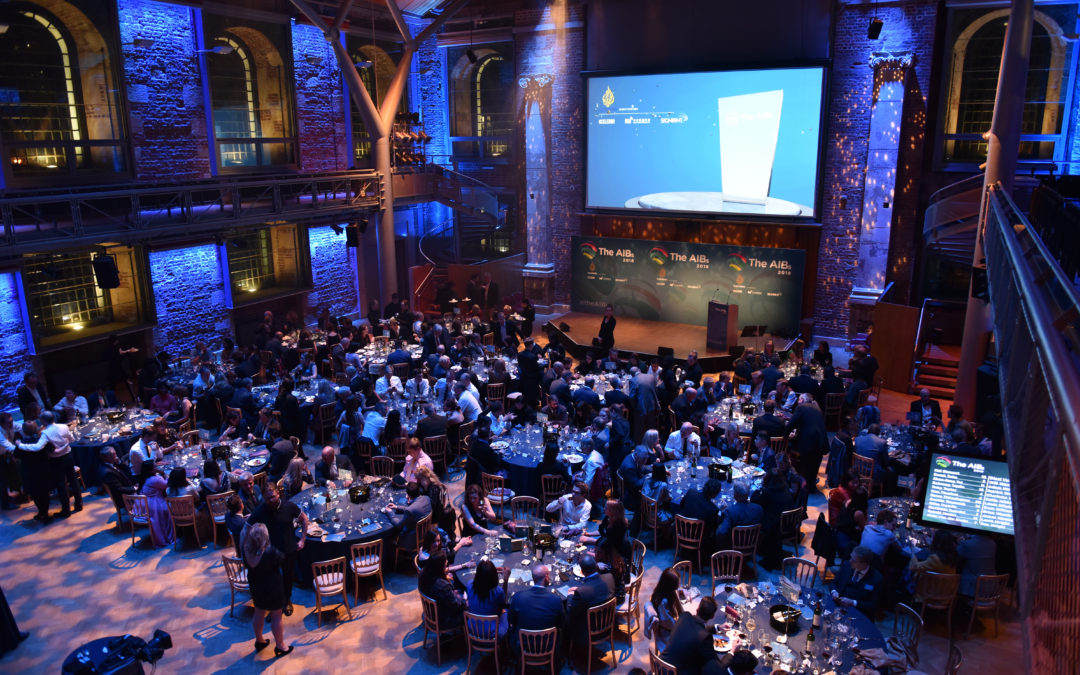
The shortlist of over 100 entries is now in front of the international jury of 59 programme makers, broadcast executives and other experts who will evaluate all the work. The winners in the 19 categories will be announced at the AIBs gala dinner in London on 6 November, attended by guests from all over the world. Bloomberg Television and Radio anchor Nerja Ćehić will host the awards, and Rana Rahimpour of BBC Persian will present the “in conversation” segment.
“The AIBs competition does not discriminate,” continues Spanswick, “between productions from large-scale broadcast networks or small-scale production companies, nor between productions in English or in any other language. It’s a level playing field and over the past decade and a half, prizes have been won by individual producers as well as by the broadcasting giants. That’s what makes this contest so appealing, and has gained its global reputation.”
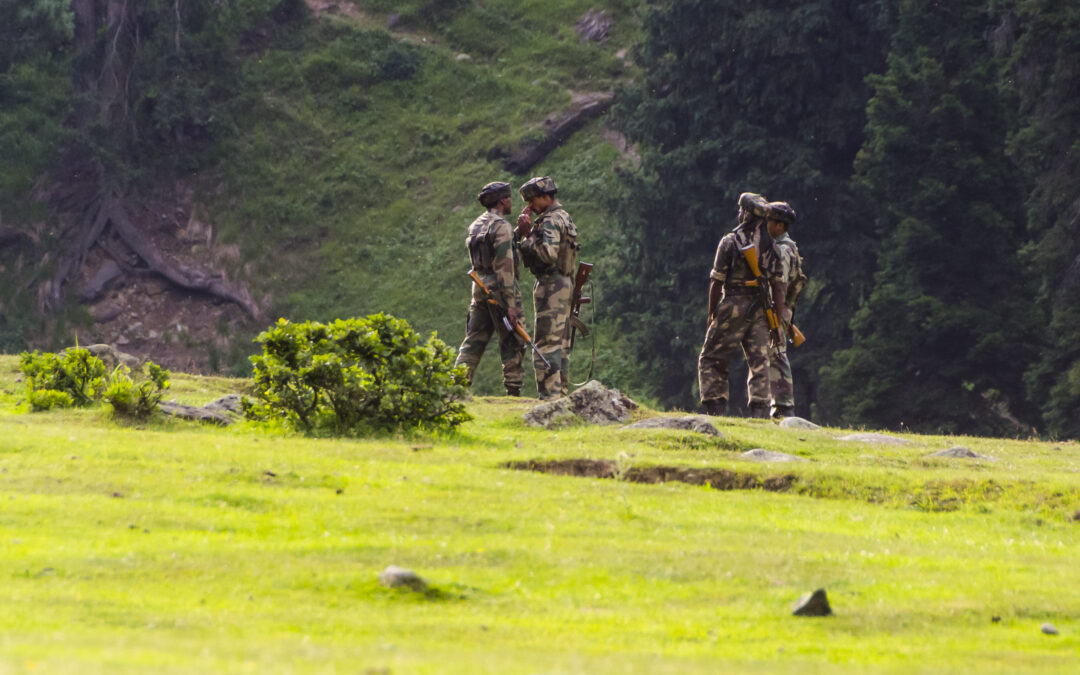
BBC World Service has extended output on shortwave radio in Indian-administered Kashmir to provide reliable news and information.
Director of the BBC World Service, Jamie Angus (pictured), said: “The provision of independent and trusted news in places of conflict and tension is one of the core purposes of the World Service. Given the shutdown of digital services and phone lines in the region, it’s right for us to try and increase the provision of news on our short wave radio services. Audiences in both India and Pakistan trust the BBC to speak with an independent voice, and we know that our reporting through several moments of crisis this year has been popular and valued by audiences who turn to us when tensions are highest.”
BBC News Hindi radio output (9515 and 11995kHz) will be extended by 30 minutes from Friday 16 August. The full one hour news programme will be on air from 19:30 to 20:30 local time.
On Monday 19 August, BBC News Urdu will launch a 15-minute daily programme, Neemroz. Broadcast at 12.30 local time on 15310kHz and 13650kHz, the programme will focus on news coming from Kashmir and the developments around the issue, and include global news roundup tailored for audiences in Kashmir.
BBC World Service English broadcasts (11795kHz, 9670kHz, 9580kHz, 7345kHz, 6040kHz) will be expanded, with the morning programming extended by an hour, ending at 08.30 local time; and the afternoon and evening programming starting an hour earlier, at 16.30 local time.
The shutdown has left people with very few options for accessing news at this time. However, news services from the BBC continue to be available in the region – through shortwave radio transmissions in English, Urdu, Hindi, Dari and Pashto. As well as providing an important source of news to the region, the South Asian language services have brought added depth to the BBC’s coverage of the Kashmir story.
The recent introduction of four new languages services for India – Gujarati, Marathi, Punjabi and Telugu, following additional investment from the UK Government – has enabled the BBC to offer a wider portfolio of languages and distribution methods to a region that is geographically diverse as well as politically tense. This year’s Global Audience Measure for the BBC showed that India is now the World Service’s largest market, with a weekly audience of 50m.
In an unprecedented collaboration, football leagues FIFA, the AFC, UEFA, the Bundesliga, LaLiga, the Premier League and Lega Serie A have called on the authorities in Saudi Arabia to take action against pirate pay-TV operator BeoutQ. The seven leagues have said that the Kingdom of Saudi Arabia must take “swift and decisive action” against the pirate TV company. The leagues say that they have been unable to get any Saudi Arabia-based legal firm to represent them in their efforts to shut down the operation that is taking signals of Bein and rebroadcasting them to viewers in Saudi Arabia with a different logo.
The joint statement reads:
We, the rights holders of various football competitions, collectively condemn in the strongest possible terms the ongoing theft of our intellectual property by the pirate broadcaster known as ‘beoutQ’ and call on the authorities in Saudi Arabia (KSA) to support us in ending the widespread and flagrant breaches of our intellectual property rights taking place in the country.
Since May 2018, we have collectively been working with an international legal counsel to monitor and compile evidence against beoutQ, whose broadcasts are regularly and on an industrial scale made available on an illegal basis. Following thorough analysis by technical experts of how beoutQ operates from a technical perspective, we are satisfied that beoutQ is operating specifically to target customers in KSA and is utilising the facilities of at least one KSA-based entity.
Over the past 15 months, we spoke to nine law firms in KSA, each of which either simply refused to act on our behalf or initially accepted the instruction, only later to recuse themselves.
As copyright holders we have reached the conclusion, regrettably, that it is now not possible to retain legal counsel in KSA which is willing or able to act on our behalf in filing a copyright complaint against beoutQ. We feel we have now exhausted all reasonable options for pursuing a formal copyright claim in KSA and see no alternative but to pursue beoutQ and a solution to this very serious problem of piracy by other means.
beoutQ’s infringement of our rights inevitably harms every aspect of the industry, from the rights holders to legitimate licensees, consumers and fans, participants (including players, clubs and national teams) and ultimately, the sport itself.
We have welcomed previous statements by the Saudi Ministry of Culture and Information and the Saudi Government against beoutQ. However, given the scale of beoutQ’s piracy in KSA and that the piracy continues unabated, we request that the Ministry and the Saudi Government take swift and decisive action against beoutQ.
We are committed, collectively and individually, to working with all relevant authorities to combat the beoutQ piracy.
The piracy affects other sporting rights holders, including Wimbledon and Formula 1.
The Irish government is to replace the traditional TV licence fee – currently EUR160 – with a new “device-independent broadcasting charge”. The change was announced by Ireland’s Minister for Communications Richard Bruton on 2 August and forms part of a comprehensive reform of the country’s TV licence fee system.
The changes come as consumption patterns and devices radically alter. According to RTÉ, it’s estimated that 10% of Irish homes now access content on devices that are not covered by the current licence fee. According to an RTE spokesman, licence evasion levels are 13%, far higher than in the UK and other European countries.
“The fact is that the number of homes that do not have a traditional television set – but who are nonetheless consuming public service content – is increasing rapidly and the current television licence fee mechanism reflects less and less how people consume public-service content,” said the RTE spokesman. “When added to the evasion rate, currently close to 25% of homes are now not paying the TV licence due to an outdated and inefficient system. This is resulting in tens of millions in lost funding for public media and the broader sector each year.”
The Minister also announced a review of the Broadcasting Act, to evaluate the proportion of the TV licence revenue which is allocated to the Sound and Vision Scheme which supports the independent sector and native Irish content. The review will also consider the minimum amount of funding that RTÉ is obliged to spend on commissioning external content. In 2018 this amounted to €39.7m and the Minister said that increasing this amount would provide an important stimulus to the independent production sector.
The changes in Ireland follow a referendum in Switzerland which agreed to keep the licence fee in the country in March last year.
The UK/Canada hosted Global Conference on Media Freedom will open in London on 10 July, with over 70 international government delegations, intergovernmental organisations, broadcasters and NGOs taking part. The focus of the Conference is spreading understanding of the need for media freedom, and gaining global consensus on how media freedom can be achieved, leading to greater prosperity, transparency and democracy.
The AIB will be at the event, along with a range of our Members from around the world. You can demonstrate your support for media freedom – tweet about it, share on social platforms, and talk about it to friends, family and colleagues.
And do contact us for more information on the work that the AIB is doing in this vitally important area.


 Director of the BBC World Service, Jamie Angus (pictured), said: “The provision of independent and trusted news in places of conflict and tension is one of the core purposes of the World Service. Given the shutdown of digital services and phone lines in the region, it’s right for us to try and increase the provision of news on our short wave radio services. Audiences in both India and Pakistan trust the BBC to speak with an independent voice, and we know that our reporting through several moments of crisis this year has been popular and valued by audiences who turn to us when tensions are highest.”