Haftar’s Russian Mercenaries: Inside the Wagner Group – a BBC World Service investigation

Haftar’s Russian Mercenaries: Inside the Wagner Group – a BBC World Service investigation

Haftar’s Russian Mercenaries: Inside the Wagner Group – a BBC World Service investigation

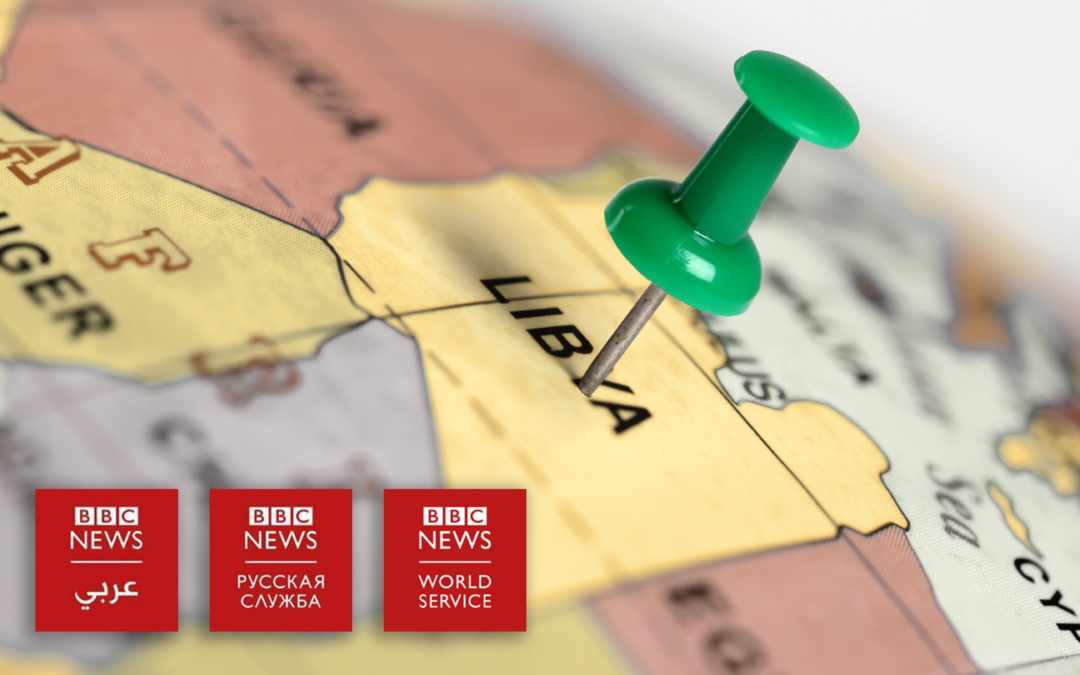
BBC News Arabic and BBC News Russian have teamed up to deliver a TV documentary which investigates the presence in Libya of fighters who are working for the Wagner Group – a shadowy Russian organisation supplying fighters to war zones – fighters who are accused of war crimes by the local population. Haftar’s Russian Mercenaries: Inside the Wagner Group reveals the organisation’s apparent access to sophisticated modern weapons that, according to expert testimony, could only come from Russian military supplies.  While Wagner employees almost never speak publicly, two former fighters discuss the types of people who are drawn to the organisation, their motivations, and the organisation’s goals.

BBC News Arabic and BBC News Russian journalists Nader Ibrahim and Ilya Barabanov reveal and analyse the contents of a tablet computer left behind by the Russian fighters when they were forced to retreat from the Libyan capital, Tripoli, in spring 2020. The tablet’s secrets include reconnaissance drone footage and manuals for anti-personnel mines and IEDs. Military maps of the frontline give an unprecedented insight into the group’s operations, as well as codenames of Wagner fighters, which helped the BBC to identify some of them. The tablet also provides evidence of the Russian mercenaries’ involvement in the mining and booby-trapping of civilian houses.

The film includes accounts of other suspected war crimes, among them the intentional killing of civilians. A Libyan villager describes how fighters, he believes were from the Wagner Group, kidnapped his father, his two brothers and their brother-in-law and later executed them. This blindfolded eyewitness survived by playing dead but still managed to glimpse the killers. His testimony, together with footage of Wagner fighters, allows the BBC to identify one suspected killer – a mercenary also suspected of involvement in possible war crimes in the conflict in Eastern Ukraine.

The killing of prisoners is also a war crime. Mohammed, a young veteran from Libya’s government forces, recounts how his soldiers were overwhelmed by Russian fighters who were better equipped and more professionally trained. He describes how one of his men was shot as he tried to surrender.  Four of them are still missing.

The BBC has obtained documents linking Wagner’s mercenaries in Libya to Evro Polis, a Russian company reported to be a beneficiary of contracts for oil and gas field developments in Syria. Yevgeny Prigozhin, a rich businessman close to President Vladimir Putin and currently under US sanctions, has been linked to both Evro Polis and Wagner by the Russian media and foreign intelligence sources.

One of the documents is a request for military equipment for Wagner’s continued operations in Libya. It was addressed to an unnamed “General Director”, believed by some to be Prigozhin.  A military analyst tells the BBC how the document suggests that, contrary to official Russian denials, such state-of-the-art technology would only be available from the Russian military.

A spokesperson told the BBC that Yevgeny Prigozhin has nothing to do with Evro Polis or Wagner.  Mr Prigozhin commented: “I have not heard anything about the violation of human rights in Libya by Russians and I am sure that this is an absolute lie.”

The Ministry of Foreign Affairs of the Russian Federation has responded to the allegations contained in the film:  “Russia is doing its utmost to promote a ceasefire and a political settlement to the crisis in Libya.  Information about the presence of Wagner employees in Libya […] is mostly based on rigged data and is aimed at discrediting Russia’s policy in the Libyan direction.”

Jelena Aparac, Chair-Rapporteur of the Working Group on the use of mercenaries, under the UN Human Rights Office of the High Commissioner, comments: “The Working Group on the use of mercenaries is concerned by the increased involvement and proliferation of non-state actors such as ‘Wagner’ operating in contemporary armed conflicts. The lack of transparency on their status, rules of engagement, roles and command structures allowed states to obscure their involvement in conflicts and evade responsibilities. We have repeatedly called for urgent attention and discussions on ways to counter mercenaries and related activities and supported the discussions on legally binding instruments for private military and security companies.”

Commenting on the investigation, the director of the documentary, Nick Sturdee, says:  “This film provides an unprecedented window into the workings of the Wagner Group and its relationship with the Russian state, uncovers detailed and hard evidence of Russian mercenaries fighting to topple the UN-recognised government in Tripoli, and broadcasts powerful testimony linking Wagner fighters to war crimes committed in Libya.”

Commissioning editor, Christopher Mitchell, adds: “The film dynamically conveys the two interacting investigations in Tripoli and Moscow.  As a joint teamwork between BBC News Arabic and BBC News Russian, this documentary showcases the way the World Service’s language teams benefit from each other’s reporting, insights, and expertise.”

Russian Mercenaries: Inside the Wagner Group is available via the BBC News Arabic website and YouTube channel and other digital and social-media platforms, and in English from 23:00GMT – on BBC News iPlayer (UK only).Content about the investigation will be available via the BBC News website and YouTube channel and via the BBC News Russian website.  The international TV channel, BBC World News, will show the film on Saturday 21 August.  Later, the film will be available via BBC News Russian.

Reporters: Ilya Barabanov and Nader Ibrahim

Producer/director: Nick Sturdee

Executive producers: Kateryna Khinkulova and Paul Mitchell

BBC News Arabic and BBC News Russian are part of BBC World Service. 

NHK WORLD programme highlights August

NHK WORLD programme highlights August

NHK WORLD programme highlights August

Part 1  Paavo Järvi: Bruckner, Symphony No.1 in C minor

Part 2  Roger Norrington: Beethoven, Symphony No. 6 in F major, op. 68 “Pastorale”

Part 3  Christoph Eschenbach: Brahms, Symphony No. 1 in C minor, op. 68

The fifth in the series presentation of Masterpieces Performed by NHK Symphony Orchestra is a 2021 Summer Special showcasing the orchestra performing the symphonies of Bruckner, Beethoven and Brahms with three world-renowned conductors. Enjoy the vibrant music forged by the NHK Symphony Orchestra and each conductor’s highly individual interpretations that created these unforgettable performances. Music critic Katayama Morihide and presenter Yamamoto Miki sets the scene in an introductory segment to the prerecorded concerts.

A recent discovery of films from post-WWⅡTokyo has provided valuable and, in some cases, unknown information about life in Japan at the time. We learn that Tokyo swallowed people, materials and money like a black hole, a metaphor for the black markets that sprang up overnight peddling goods from the Japanese army and U.S. military. People dove into these markets to survive the tough times. And those who profited gained power, moving the economy and politics forward. Tokyo Black Hole reveals the rarely discussed truth about real-life events in “Year Zero” of post-war Tokyo. It follows a young man living in present-day Tokyo who travels back in time and has “hands-on” experiences. His journey helps us understand the hardships of the time, and gives a better sense of how some people prospered despite the difficult circumstances.

TOKYO EYE 2020

Wednesdays

0:30 / 5:30 / 10:30 / 15:30 / 21:30 

Must-see Tokyo! Be like a local as you journey through this amazing city. Great food, unique shopping, plus the best and latest things to see and do.


Zero Waste Life

Fridays

1:45 / 6:45 / 12:45 / 17:45 / 22:45 

Meet people around Japan who strive for a life without waste under the traditional philosophy of “MOTTAINAI,” which values cherishing the things we have.


Australia’s Channel Nine rapped by regulator over paid-for editorial

Australia’s Channel Nine rapped by regulator over paid-for editorial

Australia’s Channel Nine rapped by regulator over paid-for editorial

Australia’s media regulator has announced that TCN Channel Nine (Nine) has breached broadcasting rules for failing to disclose a commercial arrangement with McDonald’s behind a segment on its Today programme aired in October 2020.

Over the course of the programme the Today show presenters discussed a new McDonald’s product line and presented the range on-camera.

An Australian Communications and Media Authority (ACMA) investigation found Nine did not satisfactorily bring to viewers’ attention that it had a commercial arrangement with McDonald’s to endorse the products, as required under the Commercial Television Industry Code of Practice.

Under the Code, broadcasters must disclose commercial arrangements to viewers if they air material that endorses or features the products of a commercial partner. This can be done before, during or after the programme or on the programme’s official website.

ACMA Chair Nerida O’Loughlin said viewers should not be left guessing if what they are watching is a paid endorsement.

“This kind of blurring of the lines between advertising and programme content breaks down the audience’s trust in what they are seeing,” Ms O’Loughlin said.

“Transparency around commercial arrangements is very important for viewers, particularly if the programme contains a mix of facts, editorial and advertisements.

“In this case Channel Nine was not clear enough in disclosing their commercial arrangement and I expect them to do better.”

Accepting the breach finding, Today will list all its commercial arrangements on its website. Nine will also bring the ACMA investigation and finding to the attention of its staff.

Last year Channel 7 also breached the commercial arrangement rules with a segment on The Morning Show showcasing a Big W clothing line. The ACMA report into this broadcast was published in October 2020.

In 2019 the ACMA commissioned qualitative and quantitative research to gauge community perceptions and attitudes to commercialisation in news and current affairs. It included a finding that 84 per cent of respondents believed that they had noticed commercial influence in television current affairs.

“The findings highlighted the importance Australians place on transparency, including measures which allow viewers to distinguish opinion or commercial content from factual reporting,” Ms O’Loughlin said.

France Médias Monde expresses its outrage following revelations regarding the use of Pegasus spyware

France Médias Monde expresses its outrage following revelations regarding the use of Pegasus spyware

France Médias Monde expresses its outrage following revelations regarding the use of Pegasus spyware

France Médias Monde has issued a statement in connection with the Pegasus spyware scandal:

On Sunday, July 18, a consortium of investigative journalists from 16 media organisations, led by Forbidden Stories, published its first findings from an inquiry into the extensive use, by several States, of Pegasus spyware to monitor mobile phone communications. Many of those targeted are journalists, including some working for France Médias Monde.

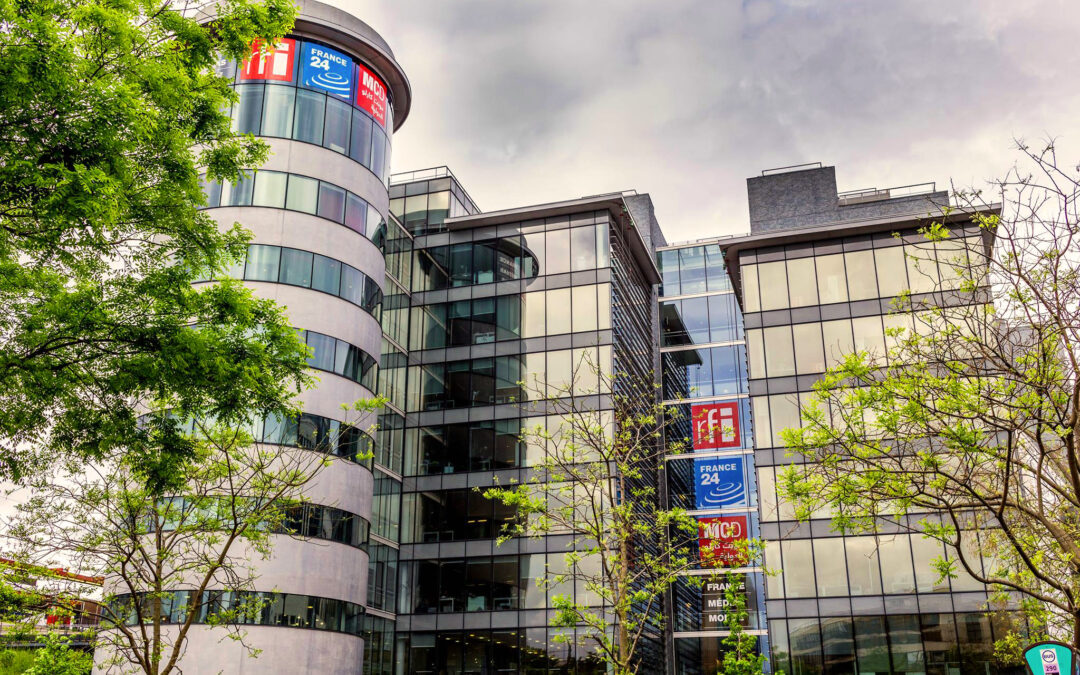
France Médias Monde (FMM), the consortium of France’s public-sector media outlets [comprising France 24, Radio France Internationale and Monte Carlo Doualiya], is outraged by these intrusive practices perpetrated by certain States that have little respect for people’s fundamental rights and freedoms.

FMM urges relevant national and international authorities to litigate this issue and asks that light be shed on these instances of cyber espionage.

Training our staff in the field of mobile devices security has been a priority for France Médias Monde for several years and will continue to be so given the worldwide context of violations of this type becoming increasingly common. 

These extremely intrusive spying practices which undermine freedom of the press, the safety of journalists and which Reporters Without Borders have strongly condemned, must cease now. 

France Médias Monde is a Member of the Association for International Broadcasting.

Pegasus and China-sponsored hacking cause alarm across media industry

Pegasus and China-sponsored hacking cause alarm across media industry

Pegasus and China-sponsored hacking cause alarm across media industry

This week’s revelations about the scale of infiltration of mobile phones used by journalists – including those working for a range of AIB Member companies – and further intelligence about the China’s cyber attacks on US companies, including Microsoft Exchange systems has sent shockwaves through the media and cyber security industries.

According to reports in the UK’s Guardian and the US Washington Post, the spread of Pegasus spyware has infiltrated the mobile phones of thousands of journalists, activists and lawyers, notably those involved in human rights cases. Journalists working for AIB Members Al Jazeera, Bloomberg and France 24, as well as Agence France-Presse, The Wall Street Journal, CNN, The New York Times, El Pais, the Associated Press, Financial Times, Le Monde, The Economist, and Reuters, were targeted by the Pegasus spyware, The Guardian reported.

The phone numbers of the affected phones were leaked to Amnesty International who worked with Forbidden Stories, a not-for-profit Paris-based journalism organisation. Amnesty has verified hundreds of the numbers tracing the users.

The AIB reported on the first Pegasus revelations in December 2020. The scale of the spyware infiltration had not been realised at that point.

This incident, and its scale, demonstrates the need for constant vigilance by everyone working in media organisations. The threats are real and immediate and it is why the AIB is involved in urgent, wide-scale research into the vulnerabilities that exist within the Internet of Things (IoT) that can be harnessed by malign actors. This work is being undertaken by the AIB’s research assistant and Doctoral student at the University of Oxford and will be provided to all AIB Members in order to help them better protect their organisations and staff from the increasing number of attacks that are being perpetrated. We have received input from a large number of AIB Members to assist in this work, including workflows and other data that will inform this major, important research project. Contact the AIB Secretariat to discuss how your organisation can get involved, or benefit from the work.

Separately, the US Cybersecurity and Infrastructure Security Agency [CISA] has provided background and support in connection with the Chinese cyber threat that has hit critical infrastructure in the USA and elsewhere in the world. CISA has uploaded the Current Activity regarding the U.S. Government release of an indictment and several advisories detailing Chinese cyber threat activity.

CISA reports that it, the Federal Bureau of Investigation (FBI), and the National Security Agency (NSA) have observed increasingly sophisticated Chinese state-sponsored activity targeting U.S. political, economic, military, educational, and critical infrastructure personnel and organisations. In response:

CISA also encourages users and administrators to review the blog post, Safeguarding Critical Infrastructure against Threats from the People’s Republic of China, by CISA Executive Assistant Director Eric Goldstein and the China Cyber Threat Overview and Advisories webpage.

The UK’s National Cyber Security Centre has also published details of the UK’s response to the Chinese threat. Its release says:

The UK has revealed that Chinese state-backed actors were responsible for gaining access to computer networks around the world via Microsoft Exchange servers. The NCSC assessed that it was highly likely that a group known as HAFNIUM, which is associated with the Chinese state, was responsible for the activity.

The NCSC recommends following vendor best practice advice in the mitigation of vulnerabilities, and any organisations which have yet to install security updates released for Microsoft Exchange servers should do so. More information can be found on Microsoft’s website: https://msrc-blog.microsoft.com/2021/03/02/multiple-security-updates-released-for-exchange-server/

The attack on Microsoft Exchange software was highly likely to enable large-scale espionage, including acquiring personally identifiable information and intellectual property. It is the most significant and widespread cyber intrusion against the UK and allies uncovered to date.

The UK is also attributing the Chinese Ministry of State Security as being behind activity known in open source as “APT40” and “APT31”. Activity relating to APT40 included the targeting maritime industries and naval defence contractors in the US and Europe, and for APT31 the targeting of government entities, including the Finnish parliament in 2020.

The NCSC statement is available on its website: https://www.ncsc.gov.uk/news/uk-allies-hold-chinese-state-responsible-for-pervasive-pattern-of-hacking

The UK Foreign Secretary’s statement is available at: https://www.gov.uk/government/news/uk-and-allies-hold-chinese-state-responsible-for-a-pervasive-pattern-of-hacking

David Kaye, former UN Special Rapporteur on freedom of expression and Marietje Schaake, International Policy Director at Stanford University’s Cyber Policy Centre, have written an op-ed piece in The Washington Post. It’s behind a paywall, although a limited number of articles are available free-of-charge each month. Read the piece here. David Kaye was one of the key contributors to the AIB/PMA Media Freedom Summit held earlier this year that brought together senior executives of broadcasters globally to discuss the challenges posed by media freedom infringements. 


WBU call for efforts to combat threats and violence against journalists

WBU call for efforts to combat threats and violence against journalists

WBU call for efforts to combat threats and violence against journalists

At their annual meeting, the World Broadcasting Unions (WBU) called for concerted efforts to combat threats and violence against journalists and other media professionals which constitute an attack on democracy. 

The safety of journalists and other media professionals has deteriorated over recent years and the COVID-19 pandemic has aggravated the situation in many countries. Attacks are getting more severe and include online harassment and threats, but also physical violence. 

Broadcasters’ journalists and production crews are confronted with increasing hostility and violence when they are simply doing their job, reporting from important events, giving balanced information, and putting facts in context. This intimidation has a chilling effect on media freedom and the ability of journalists to support the public with trusted and reliable news and information which has been so vital during the pandemic. 

Women journalists are particularly targeted. UNESCO research on Online violence against women journalists points to a sharp increase in online violence which often turns into offline attacks. 73% of women journalists who responded to the survey had experienced online violence, 25% had received threats of physical violence and 20% reported being attacked offline. 

Numerous standard-setting statements and practices1 adopted at international levels recognise off- and online threats and attacks as a serious danger to media freedom, which is a cornerstone of informed, healthy democracies. The intimidation of journalists can interfere with the right to freedom of expression and with the right of the public to receive information. These internationally agreed statements give guidance in areas of prevention, protection, prosecution, promotion of information, education and raising awareness of the potential threat to media freedom. 

We call on the authorities to guarantee rights and put into practice international principles and measures to protect journalists online and in the field. We welcome initiatives such as the Council of Europe’s Platform for the Protection of Journalism and the Safety of Journalists, and the African version of the platform launched this year by UNESCO. Broadcasters across different regions are ready to support these initiatives as well as any other efforts to ensure journalists and other media professionals can continue to provide a critical service to society at all times.