
NHK WORLD programme highlights May

NHK WORLD programme highlights May

NHK WORLD programme highlights May

Until the earthquake and tsunami of 2011, Sato Shinichi made a living at his photo studio in Minamisanriku. When the disaster struck, he evacuated to high ground, carrying an SLR camera. That camera allowed him to document the horror as the tsunami swallowed the town and destroyed lives. Since then, Sato has taken more than 300,000 photos, showing despair, regret, turmoil, and resolve for recovery. Now, he’s focusing on hope for a better future.

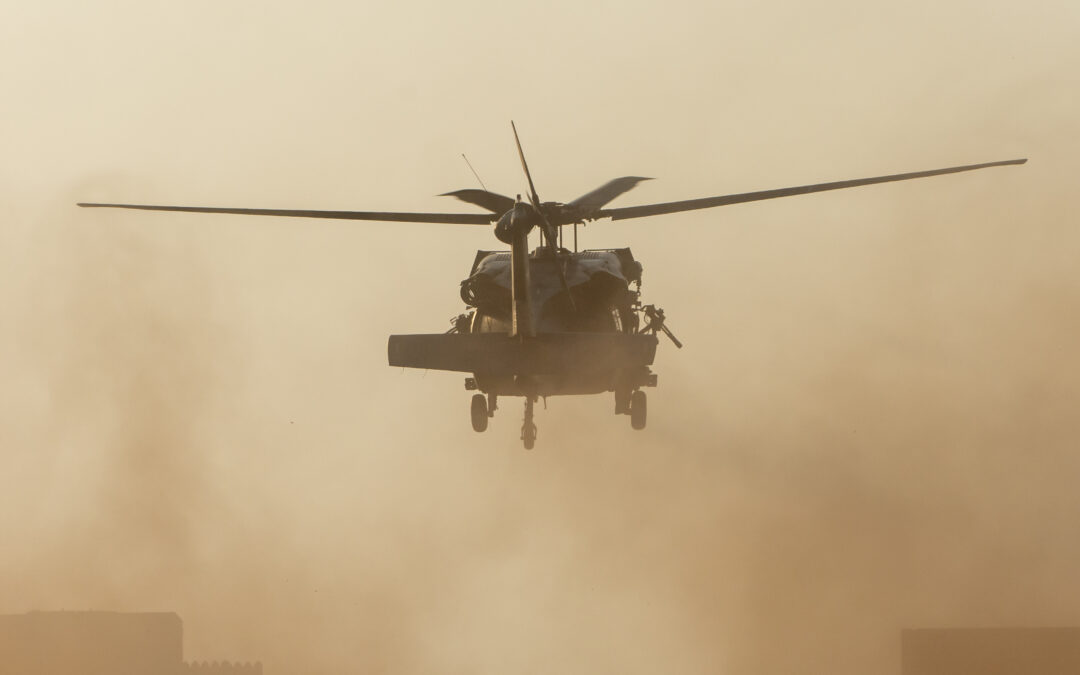
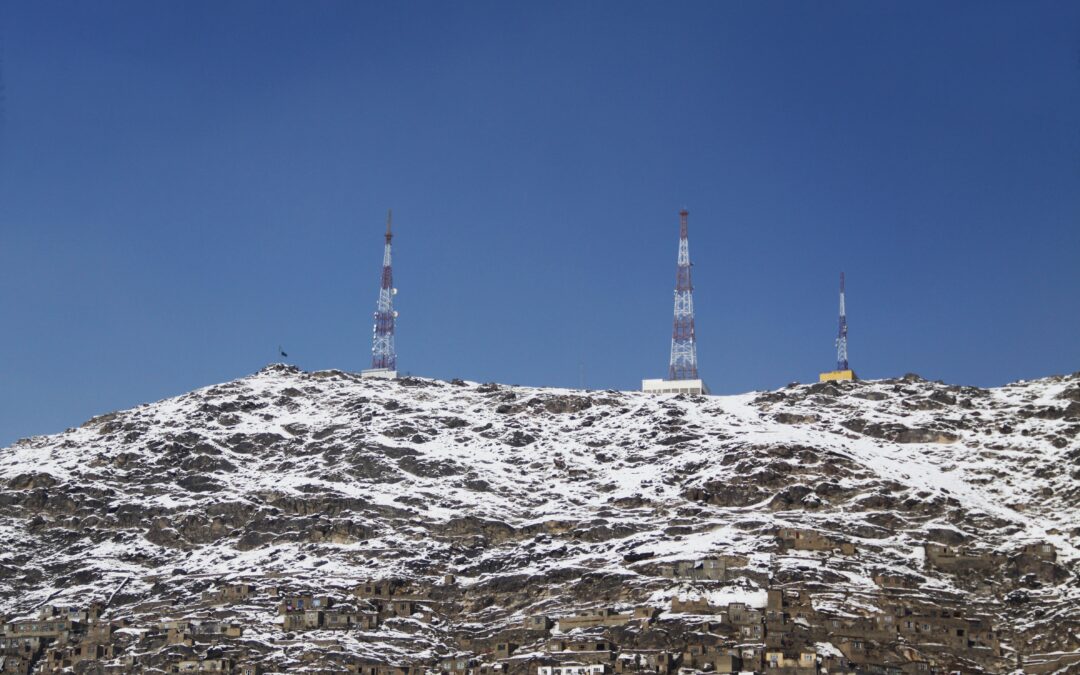
Nakamura Tetsu, who devoted his life to assist Afghanistan, was shot to death in December 2019. As a medical doctor, he treated individual patients and built clinics to provide ongoing care to larger numbers of people. He later embarked on projects to enhance irrigation in the dry, war-ridden country. At his side, there were one hundred or so young Japanese who assisted the doctor’s efforts. Some came after suffering setbacks in Japan. Others arrived with a vision of making a difference in the world. In this program, they reflect on how their time with him changed their lives.


Trails to Oishii Tokyo

Wednesdays

14:30 / 20:30 / 3:30 / 9:30


Delicious food from Tokyo’s markets! Learn about the amazing ingredients which are sourced from across Japan and sold at Tokyo’s fresh food markets.


Cycle around Japan


Saturdays

2:10 / 9:10 / 17:10 / 21:10


Come ride with us! Bicycle through the scenery of Japan, stay with locals and discover hidden traditions in a Japan you didn’t know existed.

[Source: NHK WORLD press release]

Council of Europe calls for stronger political will to protect media freedom

Council of Europe calls for stronger political will to protect media freedom

Council of Europe calls for stronger political will to protect media freedom

In a statement issued ahead of World Press Freedom Day on 3 May, Council of Europe Secretary General Marija Pejčinović Burić has urged European governments to show stronger political will to protect journalists and independent journalism in order to put a stop to the deterioration of media freedom in the continent.
 
“Media freedom is an essential pillar of our democracies which is too often taken for granted. Respect for freedom of the media is in decline in many countries. In the last years we have witnessed an increase in the number of cases of violence and intimidation against journalists.
 
“During the Covid-19 pandemic, there was a strong rise in reports of violence against journalists as well as censorship and reprisals for questioning governments policies. At the same time, quality media face serious economic challenges and many journalists have lost their jobs due to the pandemic. These worrying trends are highlighted in my annual report to be published in the next days.
 
“It is time to recall that states have an obligation to ensure that journalists can carry out their work free from violence and intimidation and fulfil their role as public “watchdog”, which includes holding public authorities accountable for their decisions and action.”
 
The annual report of the Platform for the Protection of Journalism and the Safety of Journalists, released by 14 international media freedom organisations, lists 201 serious cases of threats to media freedom in the 47 Council of Europe member states in 2020, a 40% increase compared to 2019. A record number of alerts concerned physical attacks (52 cases) and harassment or intimidation (70 cases).
Image: Council of Europe
Russian regulator protests to Google on RT YouTube restrictions

Russian regulator protests to Google on RT YouTube restrictions

Russian regulator protests to Google on RT YouTube restrictions

Russian media regulator Roskomnadzor says that it has written to Google demanding all restrictions on the YouTube channel of RT to be lifted.
 
The regulator says that YouTube has blocked a range of items from the site, and restricted RT’s ability to upload new videos.
 
The letter from Roskomnadzor notes that such actions by the YouTube video hosting administration violate the key principles of free dissemination of information, unhindered access to it and are an act of censorship against the Russian media.
 

The Russian regulator has demanded that all all restrictions be removed “as soon as possible,” as well as providing an explanation for the reasons for their introduction.

In its statement on the issue, Roskomnadzor says that according to Russian law, if Internet companies ignore warnings “about violations of the rights of Russians on the Internet, including censorship of the Russian media,” it has the power to impose “administrative fines” of up to one million roubles (about US$13,640). The regulator goes on to say that repeated refusals to comply with its requirements will result in a multiple increase in fines – up to three million roubles.

The RT YouTube channel, checked by the AIB on 29 April, shows no uploads have been made since 24 April 2021.

DW launches DW Magyar

DW launches DW Magyar

DW launches DW Magyar

In November 2020, DW announced an expansion of its journalistic offerings to include Hungarian as its 31st broadcast language, with the first reports to be published at the end of April. Hungarian was previously part of the German foreign broadcaster’s programming from 1962 to 1977 and from 1993 to 1999. DW believes that time has come to once again produce journalistically independent content for a primarily young target group under the title ‘DW Magyar’ and to initiate diverse debates on European issues. The program, which is distributed by several partner broadcasters in Hungary, is aimed primarily at users between the ages of 20 and 35.

Director General Peter Limbourg: “Now is the time for DW Magyar. Many media in Central and Eastern Europe that have reported critically on their governments are facing various obstacles to their work or have had to give up. With our programming which will soon be available in 32 broadcast languages, we are responding to the growing demand for information among the general public, as well as to the increasing restrictions on media freedom and the risks faced by journalists around the world.”

“We offer our audience true-to-life video reports from Hungary, Germany and other European countries, focusing on stories about current political, social, cultural and economic issues,” said DW Managing Director of Programming Gerda Meuer.  

“With our new offering in Hungarian, we want to enter into conversation with young people in an uninhibited and cosmopolitan manner and thus promote critical discourse about common values and challenges in Europe,” adds Adelheid Feilcke, Head of Programs for Europe.

On Wednesday April 28, DW will first launch a YouTube channel in Hungarian with around 15 video reports and features, including several editions of the formats Europeo and Untold Stories. The magazine Europeo features 4 to 5 reports per episode on one topic from different European perspectives. In Untold Stories, reporters of the same age as the target group meet interesting people from Hungary and tell their touching stories. TV magazines, reports and (web) video formats will follow in the medium term.

Initially ten reporters and editors work for the team in Germany and Hungary.
DW has been recording very high usage figures for months. Since the summer of 2020, monthly access to its digital offerings has remained constant at a level of more than one billion.  

[Source: DW press release]

Univision partners with Google to become media company of tomorrow

Univision partners with Google to become media company of tomorrow

Univision partners with Google to become media company of tomorrow

Google and Spanish-language media company Univision have announced a new, multi-year, strategic partnership that the US-based broadcaster says will accelerate growth across its portfolio of media and content properties, “providing solutions that will enable it to build the media company of tomorrow.”

Google Cloud will help drive Univision’s digital transformation, deepening the media company’s relationships with Hispanic audiences and communities, and enabling it to continue creating market-defining content for the next generation of Spanish-speaking viewers. Univision will also collaborate with other Google product areas, such as Android, Android TV OS, YouTube, Google Play, Google Ad Manager, and Google Search to enhance its capabilities and improve the overall viewer experience.

“At Univision, we’ve set out to be the most important global Spanish-language media company, and our partnership with Google is a critical piece of our transformation,” said Wade Davis, CEO of Univision Communications Inc. “By leveraging Google’s technology platform and expertise, we will transform our infrastructure to bring our customers an enhanced media experience.”

Google will help Univision consolidate its multiple digital distribution platforms, modernise its production systems, create a new customer data warehouse, and migrate key enterprise applications to Google Cloud. This will allow them to apply artificial intelligence (AI) and machine learning (ML) across its content libraries to provide customers with proactive, personalised recommendations. It will also enable the company to forge stronger advertising relationships with its audiences via insights derived from data.

“Increasing demand for digital media and streaming content is a huge opportunity for media companies to connect with audiences in new ways,” said Sundar Pichai, CEO of Google and Alphabet. “We’re excited to partner with Univision to use Google Cloud’s technology and platforms like YouTube, Play and Android, to inform, entertain, and engage the next generation of Spanish-speaking viewers around the world.”

As the media landscape evolves, Google will also help Univision expand its growing streaming offerings, allowing the company to reach more consumers on the devices of their choice, wherever they are in the world. For example, Univision will expand its global YouTube partnership in the coming years and will integrate with entertainment features on Google Search that help people discover TV shows and movies. The company will also use Google Ad Manager for ad decisioning globally and Google’s Dynamic Ad Insertion for PrendeTV and future video-on-demand offerings. Finally, Univision will distribute its content and services on Google Play across Android phones and tablets, as well as Google TV and other Android TV OS devices.

BBC brings ‘Once upon a time in Iraq’ to 11 countries

BBC brings ‘Once upon a time in Iraq’ to 11 countries

BBC brings ‘Once upon a time in Iraq’ to 11 countries

BBC News Russian audiences in 11 countries will be able to watch a Russian-language edition of the award-winning docuseries, Once Upon a Time in Iraq. From Monday 26 April, the five-part documentary will be published with Russian voiceover for audiences in Russia and ten other countries – Armenia, Azerbaijan, Belarus, Kazakhstan, Kyrgyzstan, Moldova, Tajikistan, Turkmenistan, Ukraine and Uzbekistan – via the BBC News Russian YouTube channel, its website bbc.com/russian and its channels on the social networks VKontakte and Odnoklassniki.


Premiered on the BBC platforms in the summer of 2020, Once Upon a Time in Iraq was produced for the BBC by Keo Films and directed by award-winning director James Bluemel. Illustrated with unique material from personal archives, the gripping documentary traces years of chaos and bloodshed following the 2003 invasion of Iraq by the US-led coalition. The story of the war that changed the world is told by the Iraqis and Americans who lived it.


James Bluemel is known for his Bafta-winning docuseries about the Syrian migrant crisis, Exodus: Our Journey to Europe. Talking about his work on Once Upon a Time in Iraq – which, in 2020, won two Rose d’Or awards – Bluemel says that he hadn’t expected much interest in the series. However, meeting and speaking to Iraqis or Americans, who were in Iraq over those years, he had the most fascinating insights and moving personal stories which hardly had been heard before.


He says: “I think people assume they know the story of the Iraq war and that there is nothing left to say. However, when the films were eventually shown on the BBC, the response was overwhelming. People engaged with the subject and characters, they began to think of the war in a more humanised, empathetic way. It remains a huge surprise that the films have had the reaction they have had. And now to know that they will be seen in Russia and 10 other countries is absolutely fantastic. I hope the series has a similar effect of bringing a more nuanced and empathetic response to what Iraqis have had to endure since 2003.” 


BBC News Russian Editor, Jenny Norton, adds: “Once Upon a Time in Iraq is a thought-provoking docuseries, offering a very frank and honest portrayal of the true impact of the US-led coalition’s intervention in Iraq. Unsparing on every level, this documentary by British film-makers is the kind of journalism that the BBC wants to bring to its Russian-speaking audiences.”


Each episode of Once Upon a Time in Iraq is dedicated to one or several people or events. In Episode One – The War – heavy-metal musician Waleed Nesyif who, like many Iraqi teenagers then, was infatuated by the West and saw life under Saddam as oppressive, tells about the Baghdad youths’ anticipation of the hostilities, and what the first weeks of the invasion brought about.


Episode Two – The Insurgency – about the following stage of the war when Iraq was gripped by waves of insurgency against the occupation, is told by US Lieutenant Colonel Nate Sassaman who found himself unprepared for the hostility they were faced with, and Allaa Adel who, as a 12-year-old in Baghdad, was hit in the face by shrapnel from a roadside bomb intended for the American military.


In Episode Three – Falluja – the story of the war’s most intense battle is told through the tragedy lived by embedded freelance photographer Ashley Gilbertson who, along with reporter Dexter Filkins, was working for New York Times, and by Falluja resident Nidhal Abed who, on the fateful day of 4 November 2004, had to take her two-year-old son Mustafa to the doctors.


In Episode Four – Saddam – the story of the fallen dictator is told by the CIA senior analyst John Nixon who interrogated him, a volunteer translator Samir Al Jassim who was involved in his capture, and the military policeman Brandon Barfield who accompanied him on his way to the gallows.


In Episode Five – The Legacy – the invasion’s outcomes are judged by Omar Mohamed, a Mosul university professor who authored an anonymous blog bearing witness to three years of the city’s life under ISIS. Waleed Nesyif, now a university-graduate Canadian citizen, and Um Qusay, a Sunni who risked her life by giving shelter to Shia soldiers fleeing an execution by ISIS, return to the film’s narrative.


Selected quotes from the documentary:


Dexter Filkins: “Ultimately war it’s a kind of laboratory of the human condition in extremis. You see the best of people and you see the worst. You see moments of incredible heroism and also hatred and irresponsibility.”


Nate Sassaman: “War as an institution is pure evil.”

“This is really the sole reason I’m sitting in this chair. Is that when we get to 2038 and there’s a whole other generation of lawmakers, instead of us rushing into things, like I feel like we rushed so badly. That we sit back, and we go through a whole bunch of other options before we set the before we set the force in action, because once the force is put into action, you can’t pull it back.”


Allaa Adel: “I hope that what happened to Iraq happens to America. I’ve never wished harm on anyone, but I wish it upon them.”


Omar Mohamed: “Can the Americans say they did something good in Iraq? I want them to look into my eyes and tell me this. They didn’t bring freedom. They brought chaos.”


Once Upon a Time in Iraq will be available for viewing on the BBC News Russian website and YouTube channel, as well as via VKontakte and Odnoklassniki. Each new episode will be published every day from Monday 26 April 2021.


BBC News Russian regularly brings to its audiences the best of the BBC’s documentaries.


BBC News Russian also connects with its audiences via FacebookInstagram, Telegram and Twitter.


BBC News Russian is part of BBC World Service.

[Source: BBC press release]