Al Jazeera launches new unified mobile app

Al Jazeera launches new unified mobile app

Al Jazeera launches new unified mobile app

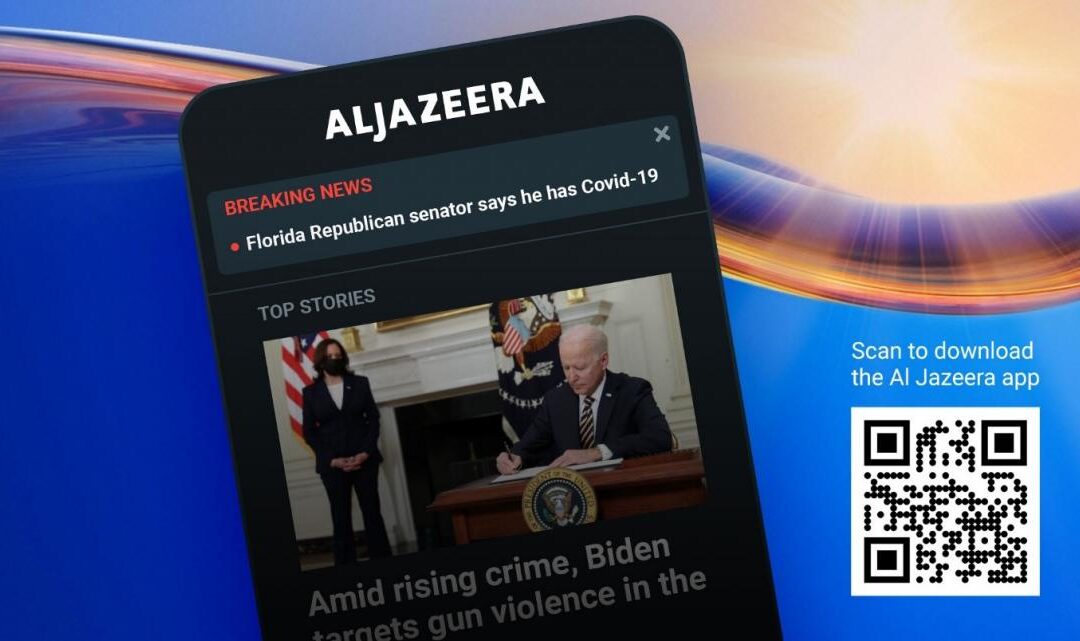
Al Jazeera Media Network has launched a new application utilising the Unified Mobile Platform (uMP) for its website content. The app was launched on the App store and Google Play, and is compatible with smartphones and tablets.

The app takes advantage of the new unified Content Management System (uCMS) architecture using GraphQL to simultaneously converge our newsrooms’ content in a single application – The Digital Voices of the Network.

Introducing the One Network, One App concept, David ‘Hos’ Hostetter, Digital’s Chief Technical Officer said, “Al Jazeera is committed to putting people at the centre of its editorial priorities by empowering its journalists to focus on the human story. I am excited to see this groundbreaking new mobile app come to light and provide the innovative experience and enable audiences to get the unique perspectives from across our digital newsrooms.”      

It is a one-stop application for Al Jazeera Media Network, aggregating content from our various websites, Arabic, English, Mubasher, Balkans, and Chinese platforms as well as providing the broadcast live streams in a single place.

Commenting on the launch, Paul Ingalls, Vice President of Engineering said, “This application employs an elegantly simple and novel approach, providing Al Jazeera with a world-class application that we can build on in the future. Leveraging our experience working with some of the best companies in the world around design like Apple and Google – the design paradigms really embrace this concept of ‘Less is More,’ influencing our approach to this application. The technical architecture also means we only support one app leveraging React Native across all platforms improving our overall efficiency, performance, and quality.”

The user experience of the app is a simple tap in/out feed approach complimented by the dark mode theme, which is geared towards helping Al Jazeera expand to a younger and more diverse audience. The app has also provided the newsroom with a much more flexible architecture in the sections area than ever before with planned tighter integration with existing tools.

Main features of the app include searching for topics and stories across all channels, infinite scrolling, and access to cached content when weak or no internet/cellular connection – the Digital team anticipates to expand and improve this application, bringing the voices of all the Network’s websites to the audiences.

Deutsche Welle launches YouTube channel in Tamil

Deutsche Welle launches YouTube channel in Tamil

Deutsche Welle launches YouTube channel in Tamil

DW is expanding its journalistic offering to include Tamil as its 32nd broadcast language on November 1. The DW Tamil YouTube channel complements programs in Hindi, Bengali and Urdu.​

The new YouTube channel DW Tamil is aimed primarily at a young, well-educated and urban audience in the southernmost Indian state of Tamil Nadu, but also in Sri Lanka, Singapore, Malaysia and the United States. Worldwide, some 70 million people speak Tamil. 

The reach of DW has grown significantly in India, marked by the launch of a new DW bureau in New Delhi in March 2021. The southern Indian states, including Tamil Nadu, attach great importance to their independence and their language. DW’s effort to expand its YouTube language services to Tamil and customize its offering caters to these particularities.

DW Director General Peter Limbourg said: “By broadcasting in Tamil, we will be able to reach a region whose people, on the one hand, are economically very progressive. On the other, they maintain a traditional image of society. In addition to our reports from Europe and the region, poverty reduction, the role of women in society and environmental protection will also be key topics for our users.”

DW Managing Director, Programming, Gerda Meuer said: “Young people between the ages of 16 and 25 are confronted with decisions that will determine the course of their future lives. What should I study? How do I want to work? How can I live sustainably? How can I give back to society? Our region-specific formats primarily reflect on questions like these.” Meuer said it is particularly important for the editorial team to showcase the innovative power and wealth of ideas that are generated in the lower castes of Indian society.

The new Tamil editorial team consists of five journalists. One editor plans and organizes the offering from Bonn, while four work on the ground in Tamil Nadu. “Only when we are on the ground can we find strong stories to tell professionally and authentically. That’s what DW stands for,” said Debarati Guha, DW Director, Programs for Asia.

In time for the launch of the new Service, DW also won a new partner broadcaster for South India. Puthiyathalaimurai TV is a Chennai-based news channel that is one of the most-watched TV channels in the federal state of Tamil Nadu. The company will work together with DW to produce a Tamil-language version of the successful DW format “Eco India”, which focuses on environmental and sustainability topics. As of November 13, Puthiyathalaimurai TV will broadcast new episodes Saturdays at 9:30 p.m. and again on Sundays at 10:30 a.m. (IST, Indian Standard Time).

DW has been recording very high usage figures for months. Monthly access to the digital offerings remains constant above the one billion mark, and weekly user contacts are at 289 million.

[Source: DW press release]


Belarus blocks online access to DW websites

Belarus blocks online access to DW websites

Belarus blocks online access to DW websites

In Belarus, access to the online services of DW, including all 32 languages, has been blocked. The Ministry of Communications and Informatization in Minsk announced that access to several news portals has been restricted.

DW Director General Peter Limbourg sees the suspension of the journalistic offerings of DW and other media outlets by the government in Belarus as an act of desperation: “The accusations against DW are absolutely ridiculous. Mr. Lukashenko has shown that he will stop at nothing to maintain his hold on power in his struggle against his own people. The heavy use of independent news outlets clearly shows that people in Belarus no longer trust the government-controlled media. We protest against the suspension of our offering because the people there have a right to objective information on the situation in their own country.”

On Thursday, October 28, 2021, users first called attention on social media to the fact that DW news pages were no longer accessible via numerous providers. Since then, the government has apparently rolled out the suspension across the entire country. Mobile use is also being limited.

Deputy Minister for Communications and Informatization Andrej Kunzewitsch announced in a communiqué on the ministry’s website that access to several online news portals would be limited, including DW.

He cited the dissemination of hyperlinks on the DW website to material that was, according to court decisions, extremist in nature: “Article 38 of the media law allows for a direct ban of the dissemination of hyperlinks to such material,” said Kunzewitsch.

DW considerably expanded its programme offerings for Belarus in the spring of 2021 so that Germany’s international broadcaster can cover the activities of civil society in Belarus.

More people can communicate with each other and have open access to information across the world than ever before. In this context, it is often forgotten that many people live in countries with the threat of punishment for freely expressing their opinions and the free flow of information is often prevented. DW has therefore made its stand against censorship one of its central principles and is dedicated to making sure that people everywhere can access relevant information on their environment.

In many countries, government control of infrastructure can lead to information being censored or cut off all together. That’s why DW has always worked to provide solutions to circumvent censorship and provide information to the people. For example, people in countries whose governments block or restrict access to independent news can access DW content securely and anonymously with the Tor Project. Websites accessible through Tor (The Onion Routing) can be recognised by the extension ‘.onion.’ A special browser such as the Firefox-based Tor browser is necessary in order to gain access to the websites.

Over the past decade, DW has also been utilising a censorship circumvention system called Psiphon, which works by using a network of different proxy servers (an intermediary between a user and an online source). With this technology, users in countries like China and Iran have been given the power to access unbiased information from reliable sources.

Counting down to the AIBs 2021

Counting down to the AIBs 2021

Counting down to the AIBs 2021

The AIBs 2021 – the 17th annual celebration of journalism and factual productions across TV, radio and digital platforms – will take to the air on Friday 12 and Monday 15 November at 1500 GMT.

The two shows will reveal the results of the contest, judged by our international panel of experts. Our judges have been working their way through the content over the past few weeks, evaluating and deliberating all the work that made it through to the final shortlist.

The two-part show will be hosted by Kamahl Santamaria, presenter on Al Jazeera English.

Also in the programmes will be an interview with photographer Giles Duley who the AIBs first featured in 2013. Giles was in Afghanistan in July, shortly before the country fell to the Taliban. He has many interesting stories to tell.

Join us on our Facebook or YouTube platforms to watch the shows and see the breadth and depth of the content in this year’s AIBs.
​

NHK WORLD-JAPAN launches “17 Goals for Our World” Campaign for COP26

NHK WORLD-JAPAN launches “17 Goals for Our World” Campaign for COP26

NHK WORLD-JAPAN launches “17 Goals for Our World” Campaign for COP26

NHK WORLD-Japan, the English-language international service of Japan’s public media organization, NHK, today announced it will present a collection of premiere and encore programming to commemorate and complement the United Nations’ Climate Change Conference (COP26) to be held in Glasgow, Scotland from October 31-November 12, 2021.

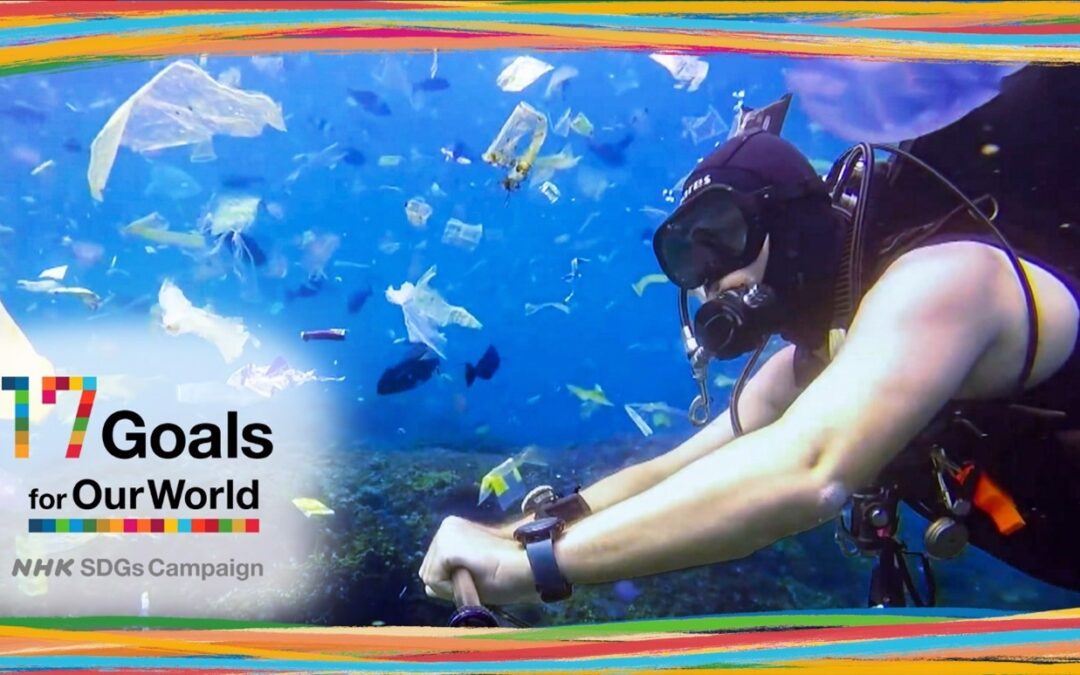
NHK WORLD-JAPAN, long committed to bringing issues of global importance to the forefront, in January 2021 launched a SDGs (Sustainable Development Goals) campaign that features programming and a special “17 Goals for Our World”  website that mirrors the SDGs set forth by the United Nations. The website highlights NHK WORLD-JAPAN’s vast collection of premiere and video on demand (VOD) programs that maps to each of the 17 goals, which include striving for clean water, health/well-being, education, sustainable cities, and responsible production/consumption; and eliminating poverty, hunger, and social inequalities.

The wide range of COP26-themed programming spans topics from man-made environmental damage to pollution to extreme weather and sustainability, and includes the popular series Zeroing In: Carbon Neutral 2050. The series, available now on VOD, was created in partnership with several public broadcasters in the U.S., and focuses on grassroots actions people can take to reach a carbon-neutral future.

Another currently available campaign program is Zero Waste Life, a series that highlights Japan’s “Mottainai” philosophy of striving for a life of wasting nothing and treasuring what we have. It airs as part of the event in November. Past episodes are also available to watch on VOD.

An episode of Direct Talk that highlights the “Peace, Justice and Strong Institutions” SDG is also featured among the VOD  content. “Braving Press Freedom:  Maria Ressa/Journalist,” offers insight and interviews with Ressa around her news site Rappler’s unwavering coverage of the struggle of journalists and activists fighting Philippines President Rodrigo Duterte’s attacks against press freedom and human rights. On October 8, 2021, Ressa was awarded the Nobel Peace Prize – the first Filipino journalist to be honored with the prestigious award.

Other programs related to the campaign feature a new documentary, Five Frames for Love, a short-form series of 15-minute vignettes that follow the unique, creative lifestyles of youth through five specific “frames”: Fashion, Family, Followers, Freedom, and Future. The series begins airing on November 20.

A short drama series, Mini-Dramas on SDGs, convey the message of the importance of individuals joining to create a society in which no one is left behind. Each two-minute film is based on one of the United Nations’ 17 SDGs, with each depicting how Japan is endeavoring to achieve these goals. This series are available to watch on VOD. 

Numerous other programs that highlight the 17 SDGs are available via VOD on the website. 

https://www3.nhk.or.jp/nhkworld/en/ondemand/special/sdgs/

[Source: NHK WORLD press release]

Call for entries for RT’s Khaled Alkhateb International Memorial Awards

Call for entries for RT’s Khaled Alkhateb International Memorial Awards

Call for entries for RT’s Khaled Alkhateb International Memorial Awards

RT is now accepting entries for the 2021 Khaled Alkhateb International Memorial Awards, an annual competition that recognizes the best journalism from conflict zones. The awards, now in their fourth year, were established in honor of RT Arabic freelance reporter, Khaled Alkhateb, who died, at the age of 25, on July 30, 2017 while reporting for RT from the frontlines in Syria.

Each winner of the 2021 Khaled Alkhateb International Memorial Awards will, starting this year and going forth, receive a monetary prize of 200 thousand Rubles (or foreign currency equivalent). 

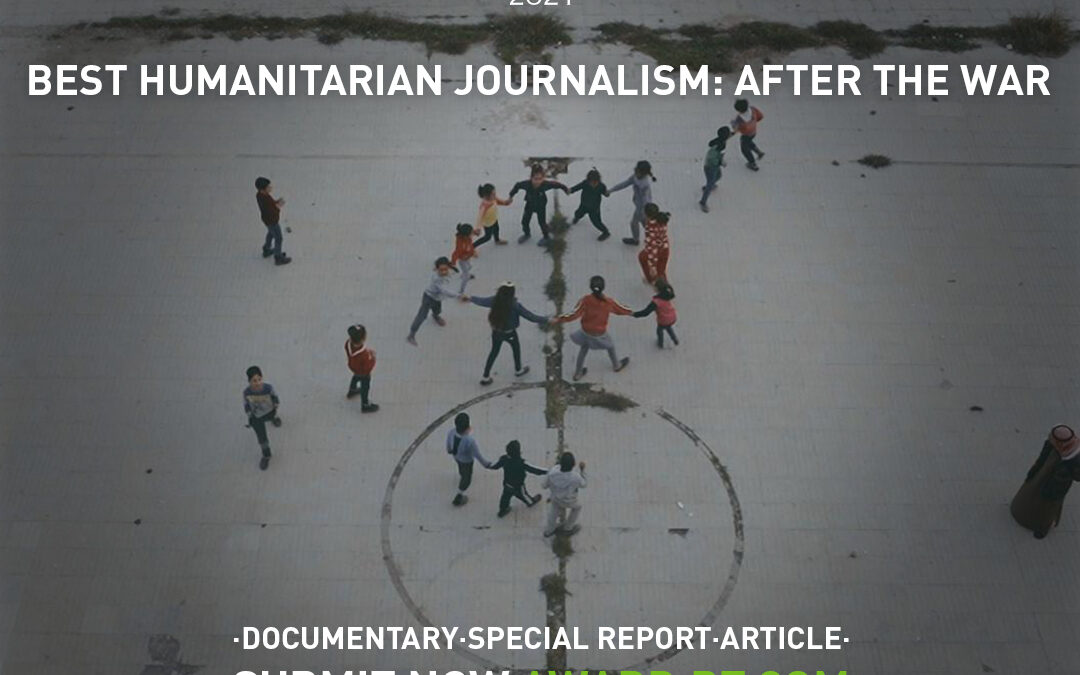
For the first three years the award was handed specifically for work from active conflict zones. Starting in 2021, RT has expanded the field of submissions to include ‘Best Humanitarian Journalism: After the War’. Launched in order to highlight the “stories that inspire and encourage”, the video and written reports in this category seek to feature the entire spectrum of experience of communities after the war, intimate and universal alike: the post-conflict challenges and aspirations, trauma and healing, tension and reconciliation.

The Khaled Alkhateb Award is one of the most inclusive awards in the world, with applications accepted in any language, from any country, focusing on any conflict. The award welcomes entries from freelance journalists, small independent outlets and international mainstream, global networks and publishers alike.

The inaugural recipients of the Khaled Alkhateb International Memorial Awards, in 2018, came from Iraq, Ireland and Singapore. Judging was conducted by an international jury of news media professionals and experts on the subject of war and armed conflicts, including former CBS correspondent Philip Ittner and the Association for International Broadcasting’s Tom Wragg. 2019 saw entries from 25 countries. Journalists from Russia, the United States, Italy, and India took top honors for their reports about conflicts in Syria, Iraq, and Libya. In 2020, the winners were reporters from Russia, Syria and India.

Find out more and submit your entry at https://award.rt.com/