France 24 | June highlights

France 24 | June highlights

France 24 | June highlights

France 24 has announced its June programme highlights

FRANCE IN FOCUS – 4 June 1545 GMT

40 years ago in the United States, an unknown disease mainly affecting homosexual people was discovered. Two years later, a French team published their discovery about what is now known as AIDS. Today, how far has French research on AIDS advanced? How do people live with the disease in 2021 in France? To answer these questions and more, “France in Focus” interviews Aurélien Beaucamp, head of the NGO AIDES.

REVISITED – Sewol ferry disaster – 13 June 1910 GMT

On April 16, 2014, MV Sewol sank off the south-west shores of South Korea, with 476 passengers onboard including 325 students on a school trip. Few of them survived as they were asked to remain in their cabin as the ferry sank. The sinking of Sewol, which killed 304 people, resulted in widespread social and political reaction within South Korea, sparking debate on the “culture of obedience”. It resulted in a generation of young politicised South Koreans being born following the tragedy. Today they are not even 20 years old, but they are eager to make a change. France 24’s correspondent in Japan Constantin Simon reports from Ansan, the victims’ city a few kilometres from Seoul, where the pain remains vivid.

EUROPE NOW – Summer 2021: Greece’s Covid Odyssey – 19 June 1115 GMT

Summer has begun in Europe: restrictions on travel are ending, beaches and bars are beckoning, and Greece is particularly keen to fill them all with holidaymakers. Greece is the European country that relies the most heavily on tourists for its national wealth. In non-covid times, the sector generates a fifth of Greek GDP and employs one in six of the workforce. But the sector has been rocked by the pandemic – this after a decade of austerity and financial crisis from which businesses and banks have still not entirely recovered.

As Greece tries to stage a grand international reopening, France 24’s Europe Editor Catherine Nicholson and her team take viewers from North to South, from the mainland to the islands.

ENTR – multilingual digital project

ENTR operates in six languages (English, German, French, Portuguese, Romanian and Polish) targeting young Europeans ion Facebook, Instagram, YouTube and Twitter. With regularly scheduled video formats translated in all the languages, ENTR’s content shines a light on journeys and initiatives that inspire people to take action, create change and enable the European youth to connect around thought-provoking topics  such as climate, solidarity, liberties, culture, technology and employment.

ENTR is developed by France Médias Monde and Deutsche Welle in partnership with other European media.

AIB supports Members with major work programme on Big Tech

AIB supports Members with major work programme on Big Tech

AIB supports Members with major work programme on Big Tech

Broadcasters and other media companies are constantly increasing their use of social media platforms to reach audiences globally. This brings with it a range of new challenges as audiences move their attention online to major social media platforms and linear broadcasting’s share of audience time diminishes.

Key among the questions facing Members of the Association for International Broadcasting – and other media companies across the world – is how to engage with the increasing number of platforms that they need to use to reach audiences and the range of new, challenging issues that arise.

To address these challenges, the AIB is establishing a Big Tech Intelligence Group. This will gather data from AIB Members on how effective their engagement is with social platforms they use to distribute content, and whether engagement is at the right level of seniority within social platforms to enable problems to be resolved.

“Broadcasters face a different set of problems with social platforms compared to traditional distribution,” comments Simon Spanswick, chief executive of the AIB. “Broadcasters using social platforms face significant issues over editorial control, data sharing and copyright among other subject areas. This new Intelligence Group will help all AIB Members – who collectively have weekly audiences of well over one billion people globally – in developing new ways to enhance relationships with social platform companies. The Group will also seek to demonstrate and remind social platforms of the very important role that AIB Members’ content has in driving platform take-up and usage that drives revenue growth for the platforms.”

AIB Members are currently completing a survey that will help to inform the work of the new Intelligence Group and its first meeting will be held in the coming weeks to map out the roadmap of the Group’s work.

Second libel suit against Maria Ressa withdrawn

Second libel suit against Maria Ressa withdrawn

Second libel suit against Maria Ressa withdrawn

Philippines businessman Wilfredo Keng has withdrawn his second cyber libel case against Rappler CEO Maria Ressa, with Makati judge Andres Soriano formally dismissing the case in open court on Tuesday, June 1.

“This case is hereby dismissed with prejudice. Let the cash bail posted by the accused on November 27, 2020, in the amount of P24,000 be released,” said Makati Regional Trial Court (RTC) Branch 148 Judge Andres Soriano in the written order released before courts closed Tuesday.

According to the order, Keng filed a manifestation on May 25 “praying for the dismissal of the civil aspect of this case and seeking that he and his witnesses be excused from further participating in this case.”

Keng said in the motion that “upon careful reflection, the private complainant has decided to redirect his focus towards helping out with the pandemic, instead of being pre-occupied with the prosecution of this case.”

“He now intends to dedicate time and resources to support ongoing efforts to battle the pandemic and to assist those adversely affected,” Keng said in the motion.

“The motion also urges for the dismissal of the criminal aspect of the case with prejudice,” said the order.


No objections

Ressa’s counsel, Ted Te, did not object.

“The public prosecutor manifested that with the private complainant turning hostile to the cause of the prosecution, the prosecution can no longer prove guilt of the accused beyond reasonable doubt,” said the order.

Te said they were prepared to “face the charge,” but the withdrawal and dismissal “is a welcome development.”

“It was based on the complainant’s voluntary withdrawal. That led the prosecutor to ask for dismissal: without the complainant, the prosecutor cannot prove the case beyond a reasonable doubt,” Te said.

“I’m glad to hear good news. I look forward to seeing the rest of the cases against me and Rappler dropped in the future,” said Ressa.


Background of the case

This case was Keng’s second cyber libel complaint against Ressa, over the same 2012 Rappler story which the journalist had already been convicted for by a Manila court in 2020. The conviction, which carried a sentence of a minimum of six months and one day to a maximum of six years, is on appeal. Ressa and former researcher-writer Reynaldo Santos Jr remain free.

Keng filed the second cyber libel complaint over Ressa’s tweets, which were screenshots of an old Philippine Star article about the businessman. That article was referenced in the contested 2012 Rappler article about the late former chief justice Renato Corona.

Philstar.com has already taken down the article from its website, saying it was because “the camp of Mr Wilfredo Keng raised the possibility of legal action.” Philstar.com said it wanted to be “prudent” because “the scope and bounds of the Cybercrime Prevention Act of 2012 are still unexplored.”

The legality of suing over screenshots of a story that Ressa did not author, but was merely sharing, is a hotly disputed issue because of the nuances of a young Philippine cybercrime law.

Ressa faces eight other charges before the Court of Tax Appeals (CTA), the Pasig City Regional Trial Court, and the Manila Regional Trial Court.

The four CTA cases and two Pasig cases all stemmed from the mother case involving the company’s Philippine Depositary Receipts, which the Court of Appeals has ruled to have been already cured.

The seventh case in Manila is another cyber libel suit over reporter Rambo Talabong’s investigative story about an alleged corruption scheme at the De La Salle-College of Saint Benilde (CSB). The eighth is the cyber libel case still pending with the Court of Appeals.

Source: Rappler.com

Photo: Jire Carreon/Rappler

NHK World programme highlights June

NHK World programme highlights June

NHK World programme highlights June

This episode showcases Japan’s long history of food preservation and the ingenious methods that have been developed over the centuries. Whether by employing salt, the open air, or a natural fermentation process, careful preservation has allowed for the enjoyment of seasonal delicacies all year round. Dive for hijiki seaweed, try your hand at creating kamaboko, and feast your eyes on many other household favorites like umeboshi.

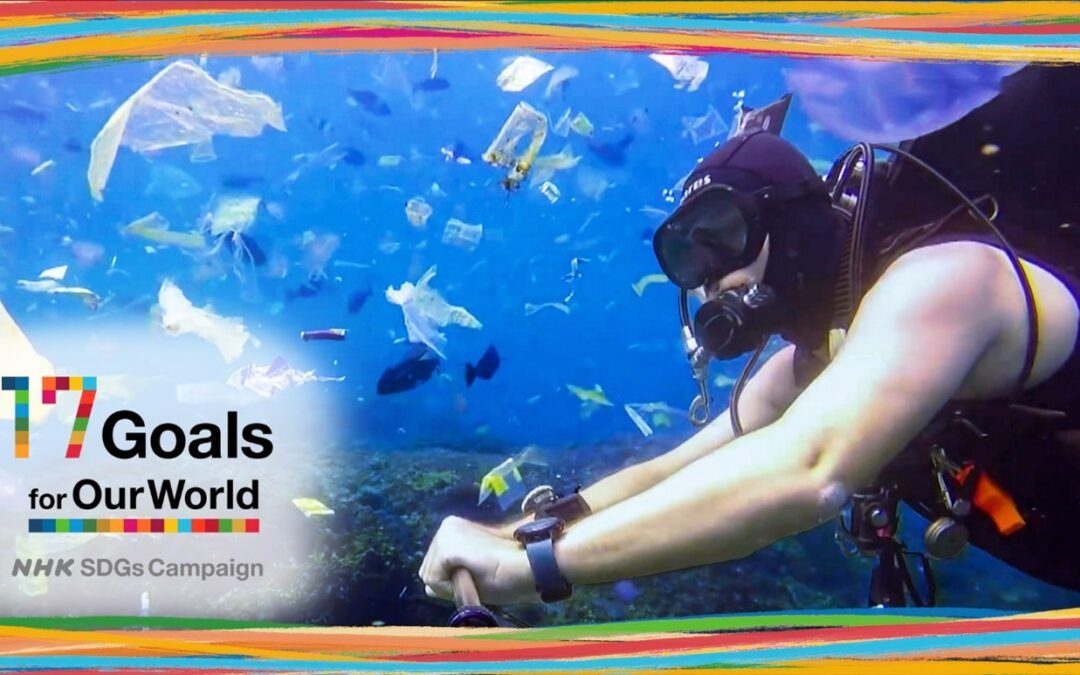
Being surrounded by ocean on all sides, Japan has long relied on the ocean for sustenance. Numerous fishing and cultivation methods have been developed over the centuries to ensure the sustainability of such resources. From top quality fish raised on olive leaves and orange peels, to cultivated seaweed and shellfish, learn about several robust methods with our reporters in this special instalment of “Trails to Oishii Tokyo,” focusing on Japan’s fisheries.

 Episode 5
Climate change is a looming crisis. One way to reach net-zero carbon output is to reduce the use of coal. In developed countries such as Japan technology can help reduce emissions, but a documentary from our partner station KCET shows that cutting back on coal is not so clear cut for countries like South Africa, where coal mining is still important. How can developed and emerging countries work together to move away from coal? We will mine for methods of ensuring a carbon-neutral future. 

Episode 6

The impact of climate change on the world’s seas is increasingly severe. The incidence of extremely high ocean temperatures known as marine heatwaves is likely to increase. Oceans play a vital role in mitigating climate change, taking in heat and carbon dioxide from the atmosphere. But this intake has warmed the ocean and made seawater more acidicputting undersea life at risk. With our US partner station KCET, we zero in on the health of our seas and look at efforts to protect marine life. 


Asia Insight

Fridays

0:30 / 5:30 / 10:30 / 15:30 / 21:30 

Dynamic Asia. Stories behind the world’s largest continent as it faces political, economic, cultural and technological change.


Japanology Plus

Thursdays

2:30 / 7:30 / 13:30 / 19:30

Fresh insights into Japan. Stories behind Japanese life and culture through the eyes of Peter Barakan, a 45-year resident and watcher of Japan.

[Source: NHK World press release]


ABC Australia celebrates NAIDOC week

ABC Australia celebrates NAIDOC week

ABC Australia celebrates NAIDOC week

ABC Australia celebrates the history, culture and achievements of Aboriginal and Torres Strait Islander peoples. NAIDOC Week which runs from 4 – 11 July is celebrated by all Australians and is a great opportunity to learn more about Aboriginal and Torres Strait Islander communities. 

In My Blood It Runs

This heart-warming observational documentary is about history, learning, love and resistance. Told through the eyes of charismatic 10-year-old Arrernte/Garrwa boy Dujuan and his family, the film charts the challenges Dujuan faces both in his school and on the streets of Alice Springs.

In his community Dujuan is recognised as a child-healer and a hunter. He speaks three languages, yet despite his depth of wisdom and intelligence, Dujuan is failing in school and facing increasing scrutiny from welfare and the police.  As he travels perilously close to incarceration, his family fight to give him a strong Arrente education alongside his western education.  We walk with him as he grapples with these pressures, shares his truths and somewhere in-between finds space to dream, imagine and hope for his future.

In My Blood It Runs reveals the complexities First Nations communities face negotiating colonisation whilst maintaining their cultural identities and practices through self-determination, the revitalisation of languages and connection to Country. It is a deeply moving insight into a side of Australia rarely depicted on screen.

4 July at 16:00 SIN / 18:00 PNG


Looky Looky Here Comes Cooky

Presenter, co-writer and slam poet Steven Oliver takes the audience on an incredible and scenic journey across Australia from the cliffs of Kurnell to the Torres Strait. As he travels the land interrogating Cook’s legacy, he poses the question, does Australia have a blurred history of Captain Cook?

11 July at 17:30 SIN / 19:30 PNG


Maralinga Tjarutja

WHEN THE DUST SETTLES, CULTURE REMAINS

Surviving aggressive colonisation, including dispossession to enable atomic testing, and through their tenacious spirit and cultural strength, the Maralinga people fight to retain their country.

These lands have been home to the Maralinga people for over sixty thousand years. This deep relationship with their country was challenged by the arrival of a colonising force that lead to the institutionalisation of the Maralinga people in the Ooldea Mission in the 1920s.

This attempt to dispossess was intensified as Maralinga land was used for the British Nuclear Test Program between 1953 and 1963. The Maralinga people never relinquished their connection to and responsibility for their country. They fought for the clean-up of the radioactive and other contamination, for compensation and for the handback in 2009 of the Maralinga Village and Test Sites.

What has been achieved is a rebuilding of traditional communities into vibrant, creative cultural communities that will ensure Maralinga custodianship of their lands for the next sixty thousand years.

11 July at 18:30 SIN / 20:30 PNG


Media Freedom Coalition statement on arrest of Roman Protasevich

Media Freedom Coalition statement on arrest of Roman Protasevich

Media Freedom Coalition statement on arrest of Roman Protasevich

Global Affairs Canada, representing the Media Freedom Coalition, released this statement on the detention of Roman Protasevich.

The undersigned members of the Media Freedom Coalition condemn in the strongest terms Belarus’ forced diversion and landing of a commercial aircraft and subsequent arrest of journalist Roman Protasevich. 

This unprecedented and shocking action constitutes a full frontal attack on media freedom and has serious implications on the right of freedom of expression and opinion more broadly. This action is all the more troubling when seen in the context of the large-scale campaign to silence independent voices in Belarus, including the May 18 raid on the offices of independent news site tut.by and the subsequent arrest of several staff. Some 400 journalists and workers in the media in Belarus have faced various forms of repression in the course of the August 9 election and its aftermath.

The Media Freedom Coalition demands the immediate and unconditional release of Mr. Protasevich as well as other journalists and media workers who have been detained in Belarus for doing their jobs. Those responsible must be held accountable for attacks on journalists and media workers.

Media freedom is an important part of democratic societies and essential to the protection of human rights and fundamental freedoms.

Australia, Austria, Bulgaria, Canada, Costa Rica, Cyprus, Czech Republic, Denmark, Estonia, Finland, France, Germany, Greece, Iceland, Italy, Japan, Latvia, Lithuania, Luxembourg, Netherlands, New Zealand, North Macedonia, Slovakia, Slovenia, Switzerland, Ukraine, United Kingdom, United States