A number of Egyptian media outlets have reported that outdoor advertising for Al Jazeera have appeared in the Egyptian capital Cairo. This is the first time for a number of years that Al Jazeera has been able to publicly advertise in the country.
Egypt’s Al-Masry al-Youm posted images of the advertising blllboards, and posts on social media showed the adverts.
The Al Jazeera bureau in Cairo has been raided and equipment seized repeatedly since the January 2011 uprising in Egypt. The channel’s staff have been detained, with accusations of inciting violence against the state. Al Jazeera has always denied the allegations.
Some commentators in Egypt have suggested that the Qatar-headquartered broadcaster may be able to reopen its Cairo bureau in the coming months.
DW and CPJ: Finding new ways to stand up for freedom of speech
DW has launched a new campaign that is branching out into an area where Germany’s international broadcaster has never been before: fashion. With the Uncensored Collection, DW is not only bringing attention to different ways to circumvent censorship, it’s also helping support and protect journalists worldwide. Proceeds will go to the Committee to Protect Journalists (CPJ), an independent, nonprofit organization that promotes press freedom worldwide.
The Uncensored Collection was developed in cooperation with Berlin-based designer Marco Scaiano. Along with highlighting an important message, each garment includes instructions for tools to help people circumvent censorship and access independent media – no matter where they are. Information about where to purchase items from the collection online is available at uncensored.dw.com.
“Freedom is stitched into everything we do,” said Guido Baumhauer, Managing Director Distribution, Marketing and Technology and responsible for DW’s global marketing activities. “The Uncensored Collection reflects our fight against censorship and our support for freedom of expression worldwide.”
“We are grateful to DW for partnering with CPJ on this innovative campaign to ensure that no one is deprived of the fundamental right to be informed,” said Gypsy Guillén Kaiser, Advocacy and Communications Director at CPJ. “As digital media is increasingly targeted for control, we must resist and be equipped to circumvent online censorship, which this campaign aims to do.”
More people around the world than ever before can easily communicate and access information. But it is easy to forget that there are many places where people who publish dissenting thought are punished and the free flow information is blocked. DW has made fighting censorship a core principle and works consistently to provide people everywhere with the information they need to understand problems and issues affecting their societies.
In many countries, government control of infrastructure can lead to information being censored or cut off all together. DW has worked to provide solutions to circumvent censorship and provide information to the people. For example, people in countries whose governments block or restrict access to independent news can access DW content securely and anonymously with the Tor Project. Websites accessible through Tor (The Onion Routing) can be recognized by the extension ‘.onion.’ A special browser such as the Firefox-based Tor browser is necessary in order to gain access to the websites.
Over the past decade, DW has also been utilizing a censorship circumvention system called Psiphon, which works by using a network of different proxy servers (an intermediary between a user and an online source). With this technology, users in countries like China and Iran have been given the power to access unbiased information from reliable sources.
Al Jazeera marks first quarter century anniversary
As Al Jazeera marks its 25th anniversary on November 1, the history of the media network is beset with the inherent risks, obstacles and outright attacks it had to weather by reporting from the world’s most strife-stricken places.
The dangers faced by Al Jazeera included multiple threats to shut down its bureaus and the killing or detention of its front-line journalists. They ranged from phone hacking and network-wide cyber-attacks, to state-sanctioned satellite scrambling and outright aerial bombardments on bureau locations.
Al Jazeera launched its first TV broadcast as an Arabic-language satellite news channel in 1996 from Doha, Qatar — dedicated to providing comprehensive news and live debate as the first independent news channel in the Arab world.
Since then, it has grown into the Al Jazeera Media Network, with several outlets in multiple languages. A private corporation for public benefit, the network now includes television channels, websites and other digital platforms.
Al Jazeera has led international coverage of some of the world’s most pivotal events — the 2003 US-led invasion of Iraq and the Arab Spring uprisings of 2011, for example — while reporting on crucial ongoing stories, including the Israeli-Palestinian conflict and the war in Afghanistan.
In the midst of these endeavours, Al Jazeera has been singled out by governments the world over who have tried to muzzle its reporting. In 2005, it was alleged that then-US President George W Bush mulled bombing Al Jazeera’s headquarters in Doha, in a meeting with then-British Prime Minister Tony Blair.
But it was mostly “Arab oppressive governments” that over the years have tried their level best to shutter Al Jazeera, said Sherif Mansour, programme director of the Committee to Protect Journalists in the Middle East and North Africa.
“During the Arab uprisings, and specifically since 2015, multiple countries blamed the channels for showing opposition voices in countries like Egypt, Saudi Arabia, Bahrain, UAE, and others where there was almost no other critical local or regional coverage,” Mansour told Al Jazeera.
“Accusing Al Jazeera of supporting terrorism, spreading false information, and insults has been the hallmarks of those censorship regimes, which also used it against other channels and independent individual journalists,” he said.
Press freedom advocates and media watchdogs, including Reporters Without Borders and the Committee to Protect Journalists, however, have condemned the various attacks on the network.
Raided and shuttered bureaus
Al Jazeera’s bureaus around the world have often borne the brunt of the pressure the network faced over the past 25 years — having been shuttered, hacked, raided, fired upon and even bombed from the air by authorities in various countries.
Most recently, at least 20 plain-clothed police officers stormed Al Jazeera’s bureau in Tunis, Tunisia’s capital, ordering all the staff to leave. This came in the wake of President Kais Saied’s move to remove the government in July.
Reporters said they were suddenly ordered by security forces to turn off their phones and were not allowed back into the building to retrieve their personal belongings.
Last year, in Malaysia, police raided Al Jazeera offices and seized two computers as part of an investigation into a documentary, a move Al Jazeera called a “troubling escalation” in a government crackdown on press freedom.
Other countries that have shut down Al Jazeera offices include Sudan and Yemen.
“We have documented many cases where the channel offices were forcibly shut down, had their journalist detained, expelled, and even killed,” Mansour said.
Calls to close down the network as a whole also came when Saudi Arabia, the United Arab Emirates, Bahrain and Egypt severed diplomatic and trade ties with Qatar in June 2017, accusing Doha of supporting terrorism.
At the time, the quartet issued a list of 13 demands to be met for the embargo to end — including shuttering Al Jazeera, which dragged the network into the regional crisis that lasted for more than three years.
Attacks on journalists
But nothing has hit the network as hard as losing its own people in its quest of telling truth to power. Since its inception, 11 Al Jazeera employees have paid the ultimate price in the line of duty.
In April 2003, correspondent Tariq Ayoub died as a result of severe injuries he sustained when a US fighter jet bombarded Al Jazeera’s bureau in the al-Karkh neighbourhood in Iraq’s capital, Baghdad. A US state department spokesman at the time said the attack was a mistake.
In 2004, Rasheed Wali was shot dead when covering clashes between US troops and Jaish al-Mahdi fighters in Karbala, Iraq.
Then, in 2011, cameraman Ali Hassan Al Jaber was killed in an ambush near rebel-held Benghazi in eastern Libya. Ali was returning to Benghazi from a nearby town when unknown fighters opened fire on the car he and his colleagues were travelling in.
In January 2013, correspondent Mohamed al-Massalma was shot dead by sniper fire while reporting from Syria’s Deraa. A year later, again in Syria, Hussein Abbas was killed when he was on his way back from covering the fighting on the outskirts of Idlib.
In September 2014, digital reporter Mohamed Abduljaleel al-Qasim was killed in an ambush by unidentified assailants in Idlib. Later that year, Mahran al-Deery, also a digital correspondent, was killed in a car accident when he was on his way to report on fighting between opposition factions and Syrian government forces in Sheikh Miskeen on the outskirts of Deraa. The incident occurred when he switched off his car’s headlights to avoid detection.
A year later, in June, photographer Mohamed al-Asfar was also killed in Deraa while covering fighting between opposition fighters and government troops in the Manshiya neighbourhood of the city. Also in 2015, photographer Zakariya Ibrahim died of shrapnel injuries he sustained while reporting on a Syrian government bombardment in the province of Homs.
Tragedy struck again in Syria in 2016 when Al Jazeera Mubasher correspondent Ibrahim al-Omar was killed in a Russian air raid on the town of Tamanyeen in Idlib province. Three weeks later, reporter Mubarak al-Ebadi was killed when was covering clashes in Jawf governorate in northern Yemen.
In honour of the fallen journalists, Al Jazeera established a monument at its headquarters in Doha; a steel tree sculpture with leaves that carry the names of the reporters. The monument serves as a constant reminder of the high price that has been paid in the pursuit of facts.
Al Jazeera’s steel tree monument carries the names of the journalists who have paid the ultimate price in the line of duty [Al Jazeera]
In other instances, journalists working for Al Jazeera have been wounded in the field, while many more have been intimidated, banned, forced to leave their country, prosecuted, and in some cases jailed for years.
Sami al-Haj, an Al Jazeera cameraman, was detained in the infamous US-run Guantanamo Bay facility for six years.
He was transferred there one month after Pakistani security forces arrested him at the Afghan-Pakistan border in December 2001. No charges have ever been brought against the Sudanese national.
He was regularly tortured and launched a hunger strike to protest against his detention in 2007.
“Sami al-Haj should never have been held so long. US authorities never proved that he had been involved in any kind of criminal activity,” said Reporters Without Borders at the time of his release. “This case is yet another example of the injustice reigning in Guantanamo.”
In a more recent case, Egyptian journalist Mahmoud Hussein was released from prison in Cairo in February after being held for more than four years without formal charges or trial. The 53-year-old had been held under preventive detention since December 2016 while visiting his family for a holiday.
He was accused of “incitement against state institutions and broadcasting false news with the aim of spreading chaos” — allegations that Al Jazeera rejected.
During his time in jail, Hussein suffered physically and psychologically. He was held for long periods in solitary confinement and denied proper medical treatment when he broke his arm in 2017.
“It is no coincidence these attacks happen mostly in one of the most censored regions in the world,” Mansour said, adding that Egypt is one of the “worst jailers in the world”.
Bombed offices
On May 15, an Israeli air raid destroyed a tower in the besieged Gaza Strip that also housed the media offices of Al Jazeera, The Associated Press and other news outlets during an 11-day Israeli assault on the coastal enclave.
The owner of the 11-storey al-Jalaa building, which also housed residential apartments, had less than an hour to inform everyone inside to evacuate.
Al Jazeera Gaza Bureau Chief Wael al-Dahdouh said that moments before the tower crashed to the ground, Al Jazeera crew was on-air nearby.
“We quickly became the news that we were covering … We saw it collapse with the rest of the world, right before our eyes,” al-Dahdouh recalled.
Despite these “sad moments”, Al Jazeera’s image and voice “remained loud and intact”, he said.
Al-Dahdouh noted there has not been an “official reason” from the Israeli side as to why they attacked and destroyed the structure.
“Choosing to destroy the building, which housed press offices and civilian homes, during such a crucial time … means Israel may have been angered from the amount of coverage by Al Jazeera,” al-Dahdouh added.
The attack in Gaza was not the first time an Al Jazeera office was bombed.
In 2002, a US missile destroyed Al Jazeera’s office in Kabul, the capital of Afghanistan. Fortunately, no journalists were in the office at the time. US officials said they believed the target was a “terrorist” site and did not know it was an office of Al Jazeera’s.
Telling the human story
Despite all these hardships, Al Jazeera continues to tell the stories that need telling.
“Journalists should not be subjected to arbitrary killing and detention, enforced disappearances, unfair trials, and psychological and physical torture; because of their profession and moral duty to uncover and impart truth,” said Mostefa Souag, acting Director General of Al Jazeera Media Network.
“Information today, is like water and air for human beings – it’s illegal to be forbidden. Journalism is not a crime!” he added.
Al Jazeera marks its 25th anniversary on November 1, while remembering the wounded and deceased colleagues, in particular, in the pursuit of shining a light on the issues that matter most from around the world.
It is a path full of risks and obstacles, but a journey we are determined to continue — to always tell the human story.
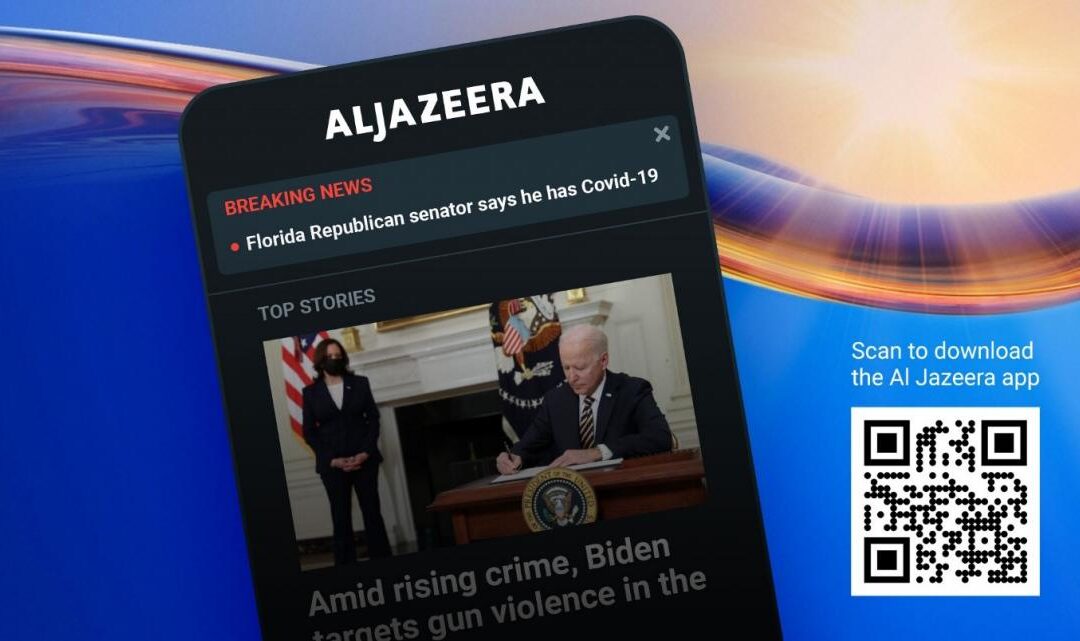
Al Jazeera Media Network has launched a new application utilising the Unified Mobile Platform (uMP) for its website content. The app was launched on the App store and Google Play, and is compatible with smartphones and tablets.
The app takes advantage of the new unified Content Management System (uCMS) architecture using GraphQL to simultaneously converge our newsrooms’ content in a single application – The Digital Voices of the Network.
Introducing the One Network, One App concept, David ‘Hos’ Hostetter, Digital’s Chief Technical Officer said, “Al Jazeera is committed to putting people at the centre of its editorial priorities by empowering its journalists to focus on the human story. I am excited to see this groundbreaking new mobile app come to light and provide the innovative experience and enable audiences to get the unique perspectives from across our digital newsrooms.”
It is a one-stop application for Al Jazeera Media Network, aggregating content from our various websites, Arabic, English, Mubasher, Balkans, and Chinese platforms as well as providing the broadcast live streams in a single place.
Commenting on the launch, Paul Ingalls, Vice President of Engineering said, “This application employs an elegantly simple and novel approach, providing Al Jazeera with a world-class application that we can build on in the future. Leveraging our experience working with some of the best companies in the world around design like Apple and Google – the design paradigms really embrace this concept of ‘Less is More,’ influencing our approach to this application. The technical architecture also means we only support one app leveraging React Native across all platforms improving our overall efficiency, performance, and quality.”
The user experience of the app is a simple tap in/out feed approach complimented by the dark mode theme, which is geared towards helping Al Jazeera expand to a younger and more diverse audience. The app has also provided the newsroom with a much more flexible architecture in the sections area than ever before with planned tighter integration with existing tools.
Main features of the app include searching for topics and stories across all channels, infinite scrolling, and access to cached content when weak or no internet/cellular connection – the Digital team anticipates to expand and improve this application, bringing the voices of all the Network’s websites to the audiences.
DW is expanding its journalistic offering to include Tamil as its 32nd broadcast language on November 1. The DW Tamil YouTube channel complements programs in Hindi, Bengali and Urdu.
The new YouTube channel DW Tamil is aimed primarily at a young, well-educated and urban audience in the southernmost Indian state of Tamil Nadu, but also in Sri Lanka, Singapore, Malaysia and the United States. Worldwide, some 70 million people speak Tamil.
The reach of DW has grown significantly in India, marked by the launch of a new DW bureau in New Delhi in March 2021. The southern Indian states, including Tamil Nadu, attach great importance to their independence and their language. DW’s effort to expand its YouTube language services to Tamil and customize its offering caters to these particularities.
DW Director General Peter Limbourg said: “By broadcasting in Tamil, we will be able to reach a region whose people, on the one hand, are economically very progressive. On the other, they maintain a traditional image of society. In addition to our reports from Europe and the region, poverty reduction, the role of women in society and environmental protection will also be key topics for our users.”
DW Managing Director, Programming, Gerda Meuer said: “Young people between the ages of 16 and 25 are confronted with decisions that will determine the course of their future lives. What should I study? How do I want to work? How can I live sustainably? How can I give back to society? Our region-specific formats primarily reflect on questions like these.” Meuer said it is particularly important for the editorial team to showcase the innovative power and wealth of ideas that are generated in the lower castes of Indian society.
The new Tamil editorial team consists of five journalists. One editor plans and organizes the offering from Bonn, while four work on the ground in Tamil Nadu. “Only when we are on the ground can we find strong stories to tell professionally and authentically. That’s what DW stands for,” said Debarati Guha, DW Director, Programs for Asia.
In time for the launch of the new Service, DW also won a new partner broadcaster for South India. Puthiyathalaimurai TV is a Chennai-based news channel that is one of the most-watched TV channels in the federal state of Tamil Nadu. The company will work together with DW to produce a Tamil-language version of the successful DW format “Eco India”, which focuses on environmental and sustainability topics. As of November 13, Puthiyathalaimurai TV will broadcast new episodes Saturdays at 9:30 p.m. and again on Sundays at 10:30 a.m. (IST, Indian Standard Time).
DW has been recording very high usage figures for months. Monthly access to the digital offerings remains constant above the one billion mark, and weekly user contacts are at 289 million.