China bars BBC World News; RTHK ceases BBC World Service relay

China bars BBC World News; RTHK ceases BBC World Service relay

China bars BBC World News; RTHK ceases BBC World Service relay

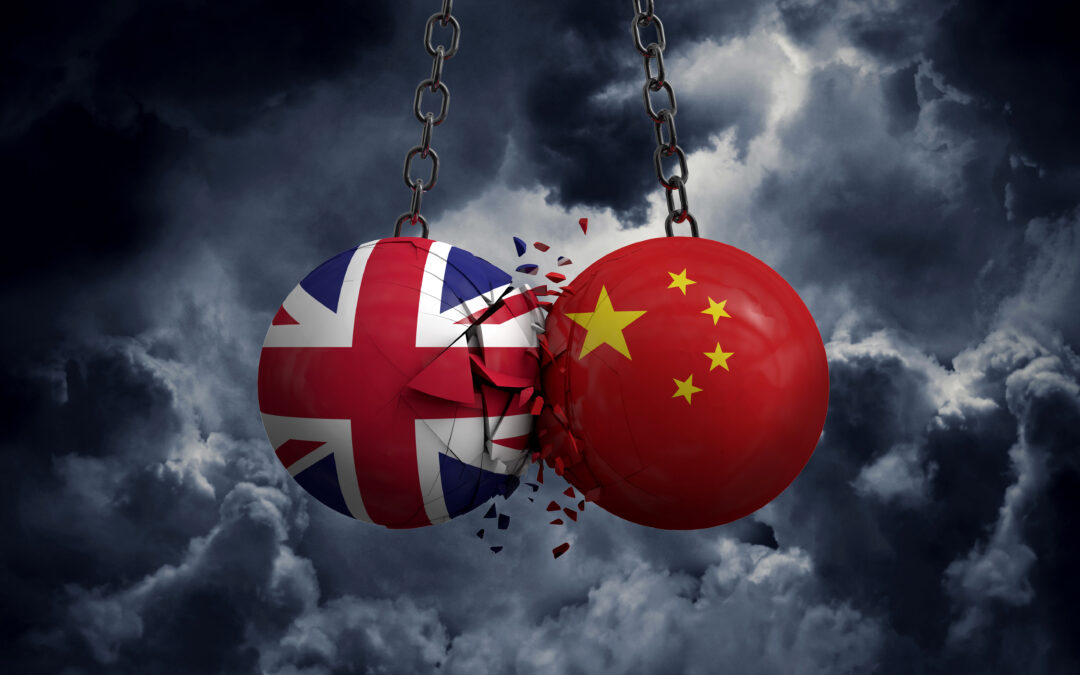
BBC World News, the international news and current affairs television channel, has been banned from broadcasting in the People’s Republic of China. China’s National Radio and Television Administration, the country’s media regulator that is under the direct control of the State Council, made the announcement on Thursday 11 February.

According to media reports, the regulator said that reports carried on BBC World News had “violated requirements that news should be truthful and fair”. The Administration said that the broadcasts had harmed the country’s interests and undermined national unity. It provided no evidence to support the claims.

The Chinese government has accused the BBC of reporting “fake news”, in particular around the country’s response to the coronavirus pandemic and treatment of the Uighur minority.

British Foreign Secretary, Dominic Raab, called the decision “an unacceptable curtailing of media freedom”.

“China has some of the most severe restrictions on media and internet freedoms across the globe, and this latest step will only damage China’s reputation in the eyes of the world,” he said.

In its daily press briefing, US State Department spokesman Ned Price answering a question on the ban, said: “We absolutely condemn the PRC’s decision to ban BBC World News. The PRC maintains one of the most controlled, most oppressive, least free information spaces in the world. It’s troubling that as the PRC restricts outlets and platforms from operating freely in China, Beijing’s leaders use free and open media environments overseas to promote misinformation. We call on the PRC and other nations with authoritarian controls over their population to allow their full access to the internet and media.

“Media freedom, as we’ve said, is an important right, and it’s key to ensuring an informed citizenry, an informed citizenry that can share their ideas freely amongst themselves and with their leaders.”

The BBC said that it is “disappointed” by the ban. “The BBC is the world’s most trusted international news broadcaster and reports on stories from around the world fairly, impartially and without fear or favour,” it said.

AIB condemns the ban

The Association for International Broadcasting has condemned the move by the Chinese authorities. “The ban on BBC World News in China is an egregious act that has no place in the international rules-based system,” said AIB chief executive, Simon Spanswick. “China has for decades sought to restrict access by Chinese citizens to information from outside the country. It has consistently jammed Mandarin-language programming from overseas, and frequently interfered with English-language broadcasts. It has never permitted international news channels to be broadcast freely across the country. The Association for International Broadcasting calls on the Chinese government to allow BBC World News to broadcast in the country with immediate effect.”

The AIB is lodging a protest with the Chinese Ambassador in the United Kingdom and will raise the matter within the Advisory Network of the intergovernmental Media Freedom Coalition.

Chinese citizens prevented from accessing international news

It is notable that BBC World News, like all other international news services, has never been available to all Chinese citizens. Instead, distribution has been limited to international hotels and to compounds housing expatriates. Programming from the BBC’s Mandarin-language service has been prevented from reaching audiences in the country by the “Great Firewall of China” that restricts access to many websites from outside China, and to a range of social media platforms.

Programmes from western broadcasters directed towards China have repeatedly suffered from jamming by the Chinese government. The BBC’s Mandarin-language service no longer broadcasts towards China on shortwave.

Shortly after the ban was announced, RTHK – Hong Kong’s public broadcaster – announced that it was ceasing relays of BBC radio services. This caused concern in the former British colony, with the head of the University of Hong Kong’s journalism and media studies centre, Keith Richburg, saying it’s “surprising” that RTHK has pulled the plug on its live relay of BBC World Service. His remarks were quoted on RTHK here.

BBC Global News is a Member of the Association for International Broadcasting

BBC News restructures

BBC News restructures

BBC News restructures

Director of BBC News Fran Unsworth has announced a restructure of the BBC News Board to deliver more value for audiences and better reflect the way BBC News will work in future. These changes are part of an ongoing restructure.

Five posts will be closed, and there will be three new roles:

Jonathan Munro will become Senior Controller, News Content and Deputy Director of News: responsible for the production of the journalism that supports the BBC’s news programmes and platforms. This includes the new multi-skilled Story Teams at the heart of the new operating model. Jonathan will also deputise for the Director of News and Current Affairs on all editorial issues.

Jamie Angus will become Senior Controller, News Output and Commissioning: responsible for the commissioning and delivery of news and current affairs output across TV and radio. This will include news output for BBC World News and World Service English.

A further role will be advertised shortly – Senior Controller, News International Services: responsible for our global strategy, World Service Languages, BBC Monitoring and BBC Media Action. Mary Hockaday, currently Controller of World Service English, will fill this role in the interim.

Overall, Board membership has been reduced from eleven to eight people. The remaining Board members are: Fran Unsworth (Director), Naja Nielsen (Digital Director), Alan Dickson (Chief Financial and Operating Officer), Kirsty Lee (interim HR Director) and Sarah Ward-Lilley (Managing Editor).

The changes announced today will come into effect in March.

They form part of the plans to modernise BBC News first set out last year – to respond to changing audience behaviour, increase the impact of BBC journalism and meet the BBC’s savings targets. A further update on the wider plans will be announced soon.

Source: BBC press release

Myanmar coup demonstrates fragility of reliance on the Internet

Myanmar coup demonstrates fragility of reliance on the Internet

Myanmar coup demonstrates fragility of reliance on the Internet

The International Telecommunication Union estimates that 53.6% of the world’s 7.75billion population are users of the Internet. The internet is inextricably linked to the lives of many of these four billion plus people. They rely on it for communication, entertainment and information. It provides a window on the world. That frightens some governments and so the Internet becomes vulnerable to being the first “off switch” that authoritarian regimes reach for at times of crisis.

That is exactly what happened in Myanmar as the military coup unfolded at the start of February 2021. Telecommunication connections were disrupted from around 0300 local time in the country on 1 February. By 0800, according to Netblocks, national connectivity fell to around 50% of usual levels. By midday on 1 February, connectivity had increased to around 75% of normal levels.

On 3 February, users of state-owned provider MPT found that access to Facebook, Instagram, Messenger and in part WhatsApp was restricted. On competing Telenor, restrictions on Facebook were more limited. On the evening of 4 February, Facebook was curtailed on most major telecom operators in the country, ranging from restricted access to the Facebook website to blocking the entire suite of Facebook products and mobile applications.

At the weekend, connectivity fell across Myanmar with users of major networks in the country reporting difficulty getting online. This increased level of restrictions came as protests against the military coup gathered pace across the country. By the afternoon of Saturday 6 February, the Internet was almost entirely shut down.

Telling the story is a challenge

The restrictions made reporting from Myanmar challenging for broadcasters, with limited access to pictures and reports as the Internet shutdown continued. Via the AIB, pooling of resources started to be discussed as rivalries between channels were put aside in an effort to report about developments in the country to the world.

Berlin-based news agency Ruptly says that it has provided a range of coverage from Myanmar since the coup. The agency has two producers on the ground in the country and is also sourcing and verifying UGC to offer the most complete coverage it can aim for. The agency says that its live coverage at the beginning had to be covert, filmed from within the crowds of protesters.

For continuing coverage, Ruptly says that it aims to provide live transmissions every day as further crackdowns against protesters loom. Both its producers on the ground are active and are following events. Ruptly’s Video Unit team is collecting a portfolio of sources among protesters and will try to uncover “side stories including small experiences that reveal bigger impact”.

Reaching audiences in the country

For broadcasters trying to serve audiences in Myanmar, the challenge of Internet restrictions is a major headache. With international broadcasters now relying heavily on social media platforms and their own websites to reach audiences, a shutdown such as the one imposed in Myanmar means significant potential reductions in impact in the country. Shortwave broadcasts do remain on the air in the Burmese language from the BBC, Radio Free Asia, NHK World and Voice of America, alongside religious broadcasters Adventist World Radio and Trans World Radio. However, shortwave has fallen out of fashion in Myanmar just as it has in the rest of the world, so its reach is limited compared to the immense potential audience that exists in the online world.

Broadcasters aiming programmes to Myanmar are encouraging audiences to use VPNs to access services. The use of VPNs has increased dramatically since the coup with some reports estimating that requests for VPNs from people in the country have increased by 4,600%. Specialist peer-to-peer services such as BriarOuinetNewNodeQaul.net, and Ayanda promoted by the US-based not-for-profit Open Technology Fund allow users to potentially circumvent national restrictions to access Facebook and similar social media platforms. Other services include Psiphon, Lantern, FreeBrowser and the Tor Browser.

Meanwhile Norway’s Telenor – which operates Telenor Myanmar – says that since restrictions were imposed in certain regions in the country in June 2019, it “has been advocating for the restoration of services and emphasised that freedom of expression through access to telecoms services should be maintained for humanitarian purposes”.

It is unclear when the restrictions on Internet access and social platforms will be lifted in Myanmar. It is worth noting that even in Myanmar, pressure delivered by social media on the military has been effective. Freedom House reports that after a video showing abuse at a military academy went viral in Myanmar, public outrage forced the military to launch a high-level investigation, something that Freedom House says was an unprecedented gesture toward accountability from the country’s most untouchable institution. Perhaps there is hope that the current shutdown will be relatively short-lived.


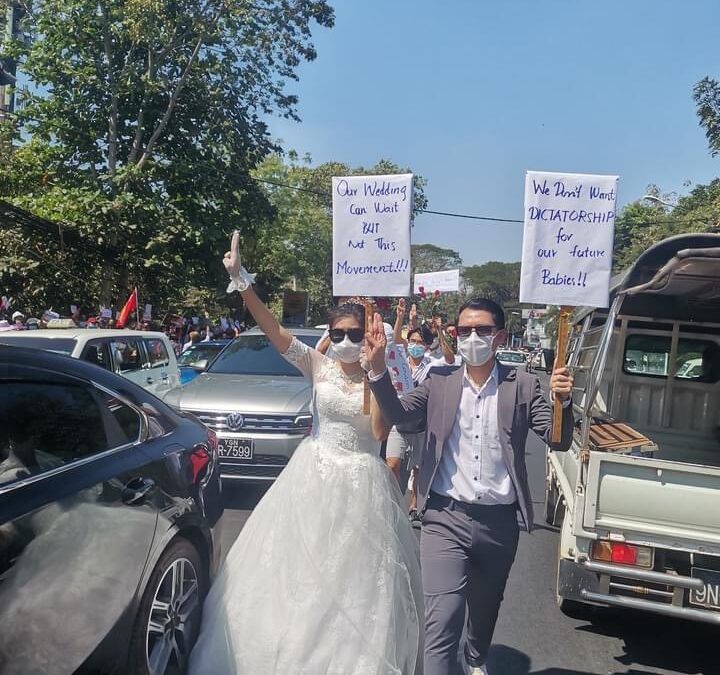
Photo: A couple interrupt their wedding in Myanmar to join protesters against the military coup TWITTER/@KhinGantgawKyaw


Al Jazeera’s Mahmoud Hussein released from jail in Egypt

Al Jazeera’s Mahmoud Hussein released from jail in Egypt

Al Jazeera’s Mahmoud Hussein released from jail in Egypt

After more than four years in detention without trial, Al Jazeera journalist Mahmoud Hussein has been released by Egypt. 

According to Al Jazeera, Hussein, an Egyptian national held under preventive detention since December 2016, was released from jail on 6 February 2021.

In a statement, Mostefa Souag, acting director-general of the Al Jazeera Media Network, said the release of Hussein was “a moment of truth and an inspiring milestone towards press freedom”.

“Al Jazeera Media Network welcomes the news of Mahmoud’s freedom and believes that no journalist should ever be subjected to what Mahmoud has suffered for the past four years for merely carrying out his profession.

​“Today, we are pleased he is finally reunited with his family, after being robbed four years from his life and deprived of his fundamental rights. We wish Mahmoud a speedy recovery and hope he will be able to overcome this past ordeal and start a new chapter in his distinguished career.”

The 54-year-old was arrested in Cairo on December 23, 2016, while visiting his family for a holiday. He was interrogated for more than 15 hours without a lawyer present, before being released and then arrested again days later.

Egypt’s Ministry of Interior publicly accused him of “disseminating false news and receiving monetary funds from foreign authorities in order to defame the state’s reputation”, but no charges were ever formally brought against him. Hussein and Al Jazeera consistently denied the allegations.

Shortly after his arrest, Al Jazeera launched a worldwide media campaign calling for Hussein’s release. The AIB supported this campaign.

Egyptian authorities, however, extended Hussein’s detention more than a dozen times, far surpassing the country’s maximum period for pre-trial detention in violation of both Egyptian and international law.

During his time in jail, Hussein suffered physically and psychologically. He was held for long periods in solitary confinement and denied proper medical treatment when he broke his arm in 2017.

In January 2018, the United Nations Working Group on Arbitrary Detention concluded that the conditions of Hussein’s imprisonment amounted to “cruel, inhuman and degrading treatment”.

New leaders at US international broadcasters

New leaders at US international broadcasters

New leaders at US international broadcasters

​The United States Agency for Global Media (USAGM) Acting Chief Executive Officer Kelu Chao has replaced the heads of the three U.S.-funded international broadcasting grantees. Radio Free Europe/Radio Liberty (RFE/RL), Radio Free Asia (RFA) and the Middle East Broadcasting Networks (MBN) now have leadership that will promote democracy and other American values abroad.

“I have great faith in these leaders in ensuring the highest standards of independent, objective, and professional journalism,” said Acting CEO Chao.

In addition, Acting CEO Chao named new corporate board directors for the three grantees, replacing the board directors named by former CEO Michael Pack just days before he resigned at President Biden’s request on January 20. The new directors are Ambassador Karen Kornbluh (chair), Ambassador Ryan Crocker, and Michael Kempner.

“Now more than ever,” said Kornbluh, “U.S. international media must serve as an accurate, reliable source of news and information in places where illuminating truth is needed the most.”

The new leaders at the three grantees are now:

  • Daisy Sindelar as Acting RFE/RL President, replacing Ted Lipien; a permanent president will be named shortly.
  • Bay Fang returns to her post as RFA President, replacing Stephen Yates.
  • Kelley Sullivan as Acting MBN President, replacing Victoria Coates.

President Joseph R. Biden named Chao as Acting CEO on January 20, 2021.

Dozens of Al Jazeera journalists targeted in phone hacking

Dozens of Al Jazeera journalists targeted in phone hacking

Dozens of Al Jazeera journalists targeted in phone hacking

Dozens of journalists working for Al Jazeera are reported to have been targeted by spyware that appears to have been deployed by the governments of Saudi Arabia and the United Arab Emirates.

A report published by the Citizen Lab of the University of Toronto on 20 December details how the mobile phones of 36 journalists, producers, presenters and executives at the Qatar-based broadcaster were infected by the Pegasus software developed by Israel’s NSO Group. 

The attack – which also targeted the personal phone of a London-based Al Araby TV journalist – is now being investigated by Apple whose phones were affected by the hacking attack. 

According to a report by Al Jazeera, investigative reporter Tamer Almisshal was one of those targeted with death threats received on a phone used to call UAE ministries during research for a story. 

“They threatened to make me the new Jamal Khashoggi,” said Almisshal, referring to the death threats received. “Based on this, we handed the phone to Citizen Lab, who found that the phone was hacked by spyware called Pegasus, which is developed by NSO, an Israeli company.”

“This hacking was done by a so-called zero-click technique where they can access cameras and track the device. They also found that operators in the UAE and Saudi Arabia were behind this hacking.

“We tracked the spyware for six months and found that at least 36 Al Jazeera staffers were hacked. They have used some of the content they stole from the phones to blackmail journalists, by posting private photos on the internet,” he added.

In its report Citizen Lab says that NSO Group’s Pegasus spyware is a mobile phone surveillance solution that enables customers to remotely exploit and monitor devices. The company is a prolific seller of surveillance technology to governments around the world, and its products have been regularly linked to surveillance abuses.

“This attack on journalists and others working for Al Jazeera and Al Araby is insidious and worrying,” says AIB chief executive Simon Spanswick. “It appears that hacking software is becoming constantly more sophisticated through the development of so-called ‘zero-click’ attacks. It’s vital that all those using mobile devices for investigative research have the most up-to-date operating system installed. In many cases, it is preferable to have a separate phone and SIM card used exclusively for researching a story to mitigate the risks of infection of their everyday phone.”

The Pegasus software has been used by authoritarian governments to spy on lawyers, human rights activists, dissidents and journalists around the world. 

“This latest incident is another way in which journalists are being intimidated as they work to hold power to account,” continues Spanswick. “It demonstrates that the need to promote and protect media freedom remains extraordinarily high as it seems that nation states are increasing their efforts to suppress journalism and journalists, in many cases using commercially-developed tools.”

As well as the use of separate ‘disposable’ phones, it is recommended that all iPhone users ensure that they have the latest iOS installed as it appears that the vulnerabilities exploited by the Pegasus software have been closed in iOS 14. 

The AIB will raise this issue within the Advisory Network of the intergovernmental Media Freedom Coalition. It will also ensure that the AIB Member Cyber Security Working Group is fully briefed about this case.