DW’s TV highlights in August

DW’s TV highlights in August

DW’s TV highlights in August

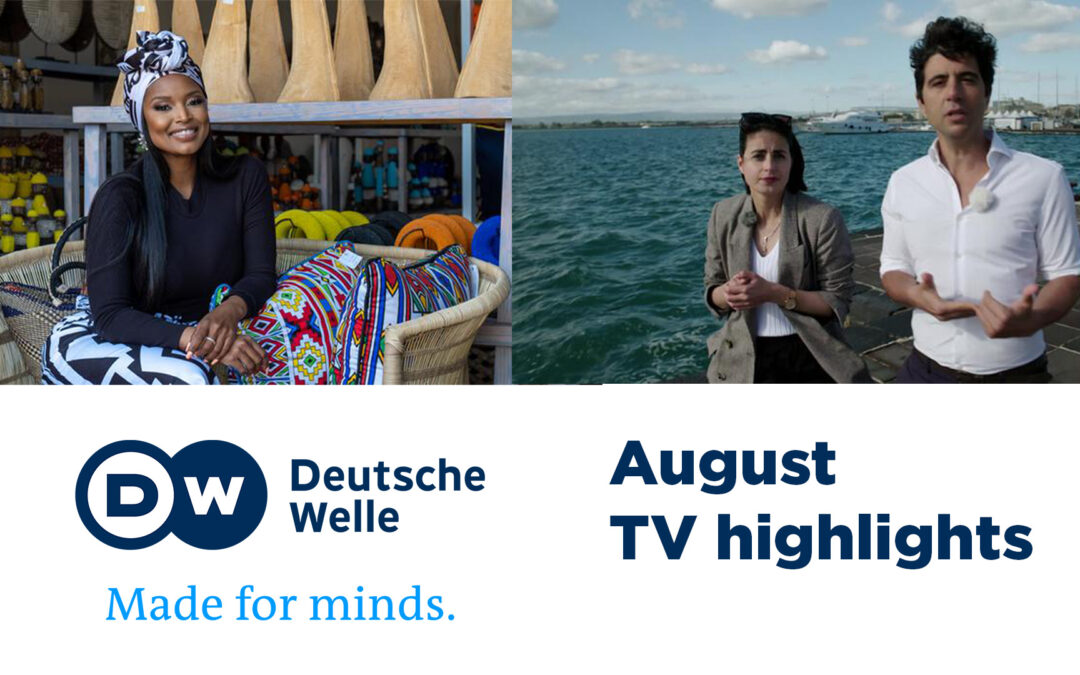
DW’s high-summer TV highlights includes top documentary picks, plus the latest Bundesliga news from “Kick off!” and three upcoming shows to look out for soon.


Afrimaxx

Premiere | August 5

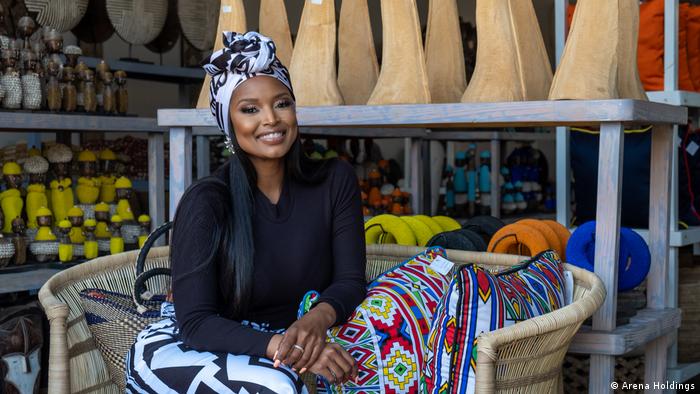
DW is set to roll out the new format “Afrimaxx” on August 5. An African adaptation of the popular DW lifestyle magazine “Euromaxx”, the format promises an eclectic line-up of episodes featuring the continent’s most-inspiring and character-driven creatives from the world of fashion and design through to architecture, art, food and travel. With South African host Ayanda Thabethe keeping a keen eye on current trends, the show follows updates on everything game-changing in Africa and charts the hotspots and latest arrivistes on Africa’s lifestyle scene, from under-the-radar start-ups to well-known brand names. Released every Friday.

Mahatma Gandhi’s Legacy – Where Is India Headed?

Premiere | August 6

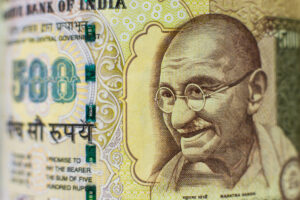
Ahead of India’s 75th year of independence, DW presents a two-parter that explores Gandhi’s special brand of non-violent resistance that paved the way for India’s independence from British colonial rule in 1947. The documentary reveals more about the religious pluralism espoused by Gandhi that shifted power dynamics in the country, and how fast forward to today, the political narrative moves tentatively towards an India fuelled by Hindu nationalism. What lessons can be drawn from Gandhi’s legacy that could help reshape modern-day India? Stay tuned.

Kick off!

DW Magazine | August 9

August is a big month for the Bundesliga fans, as the 2022/23 Bundesliga campaign kicks off August 5 and clubs across Germany begin their pre-season preparations. DW’s magazine “Kick off!” has the low-down on the latest outgoing and new-coming stars and returnees. It also features what’s in store for this year’s Berlin derby and why this special Bundesliga fixture goes deeper than a footballing rivalry.

Thirst – When the Wells Run Dry

Documentary | August 10, 17, 24

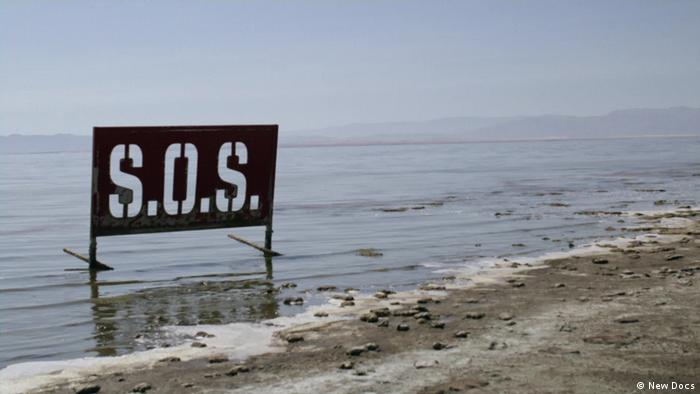
For fans of everything life-science related, here’s a documentary that presents an ominous follow-up to the July news of Europe’s heatwave and Italy’s drought-hit Po River. “Thirst” is a timely documentary that tackles one of the hottest political and scientific topics: the prospect of drought and water scarcity as climate changes. The three-parter packs a powerful punch: the world is on track to blaze, the planet is going to run out of water, and we need to act on climate change. The glimmer of good news is luckily delivered on the third subtitle, exploring “The Last Resources”. Out on Wednesdays starting August 10.

A Mediterranean Journey

Premiere | Aug 14, 21, 28

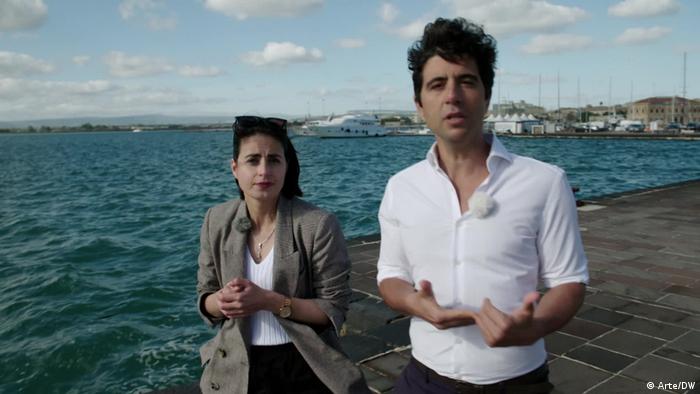
Sineb El Masrar and Jaafar Abdul Karim pack their bags for DW’s latest TV jaunt “A Mediterranean Journey”. Visiting Middle Eastern countries which have recently witnessed major geopolitical shifts, the duo kick off their travels in the bustling capital, Beirut, exploring the city by bike before ending the first leg of their trip and traveling solo to separate destinations. Sineb embarks on a thrilling road trip across Israel for the first time, getting a glimpse into the world of this multi-faith and multicultural society. Jaafar visits Egypt and crosses the Suez Canal by boat, delving into the history of the site. Two years in the making, our August offering journeys to three out of ten countries everyone’s talking about. You won’t want to miss on these TV moments. Catch on-demand starting August 14.


DW Russian marks 60th anniversary

DW Russian marks 60th anniversary

DW Russian marks 60th anniversary

From radio jamming to partnerships and back again

As DW’s Russian service celebrates its 60th anniversary, its news offer remains blocked in Russia. First introduced during the Cold War, Russia’s renewed attempt at censorship has so far failed.
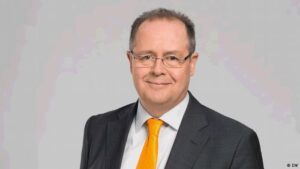
February and March 2022 saw Moscow bureau shuttered, staff accreditations annulled, website blocked and DW declared a “foreign agent”: the 60th anniversary of DW’s Russian Service marks the return to the Cold War era. “Without our studio in Moscow work has become more difficult for us. There’ s no way to sugarcoat it either. But we have found a way to continue to provide our audiences in Russia with authentic information from and about their country,” says Christian F. Trippe, Director of Programs for Russia, Ukraine and Eastern Europe (pictured).

In response to censorship, the team relocated to Riga, under the direction of Juri Rescheto, and reinforced DW’s Russian-language content, recently offering two new podcasts, DW Novosti Show and Geofaktor. Both multiplatform broadcasts are available online and on medium-wave frequencies (MW). In a way, DW’s Russian Service is back to its roots, having set up its first radio broadcast in August 1962 and its last in 2011.

From the Cuban missile crisis to the war in Ukraine

Operating amid rising East-West tensions is not new to the journalists of “Nemezkaja wolna” (Deutsche Welle), as DW has been known in Russian for decades.

A year into the construction of the Berlin Wall and shortly before the Cuban missile crisis in the fall of 1962, the then Cologne-based DW produced its first broadcasts in Russian. The recent turning point in relations between Russia and the West, caused by the Russian invasion of Ukraine on February 24, 2022, is sometimes compared to the Cuban missile crisis.
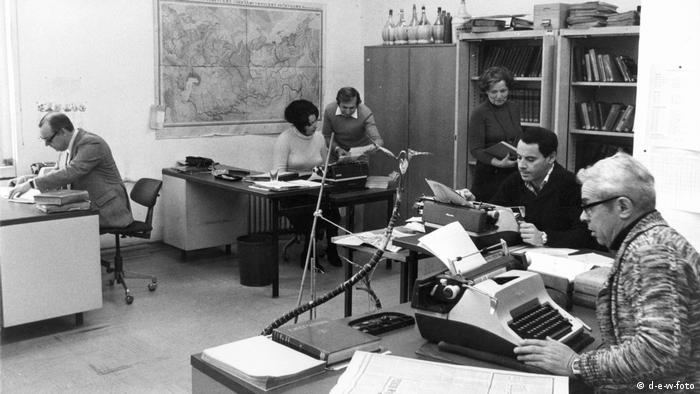
DW Russian editorial team pictured in 1978

Soviet emigrants worked in the Russian service, reporting to listeners across the Soviet Union on life in the Federal Republic of Germany and the German view of current affairs. In 1974, DW was the first Western radio station to broadcast chapter after chapter of Alexander Solzhenitsyn’s “The Gulag Archipelago,” a three-volume book banned in the USSR.

“Not emigrants, but bridge builders”

DW’s Russian Service as well as other western broadcasters were varyingly jammed in the Soviet Union. The jamming of the signal, which were used until the late 1980s, was never totally effective and could often be circumvented by changing the frequencies.

After the collapse of the USSR, new staff joined DW. Radio programming became broader, more compact and dynamic, and the advent of the Internet offered audiences a fuller multimedia online content. In post-Soviet Russia and other republics, distribution partnerships were gradually established with regional FM networks.

“I have fond memories working at the Welle in the ’90s. The newsroom was changing rapidly: reading before a microphone gave way to live reports and live broadcasts, with the fresh arrival of relatively young journalists from the new Russia,” says economist Andrey Gurkov, one of the “veterans” of the newsroom. “We didn’t think of ourselves as emigrants; rather, we saw ourselves as bridge-builders, contributing to the rapprochement between Russia, the post-Soviet region, and Europe, the West, through in-depth reporting on the epochal scale of change in politics that was underway.”

“Exemplary editorial response to major journalistic situations”

With the onset of the Russian war on Ukraine, the bridges that DW staff tried to build collapsed, Gurkov said. His colleague Anastasia Arinushkina, who joined the service in 2017, says, “In Germany, we are safe: no one will come to my house at six in the morning with a search warrant. They won’t throw me in jail either, just because I refer to the war against Ukraine as war and not as a ‘special military operation,’ as they have to do in Russia.” The journalist sees this as a special responsibility: “Since we are in such a privileged position and can work according to journalistic standards, we have to do this even better and more thoroughly,” she adds.

Christian Trippe: “Blocking our website in Russia has not resulted in a loss of reach. Quite the opposite: we have gained more users on all our Russian-language platforms. In short, the attempt to silence us has not been successful. This technical censorship doesn’t work in Russia any more than it does in other unfree countries.”

The viewing records has shown that from January to June 2022, DW Russian’s online output has reached roughly 125 million monthly multiplatform users in Russia (having beaten the 49 million monthly record set in the previous six months) – an uptick of more than 250 percent. On Facebook alone, DW Russian reached more than 34 million monthly video views in the first half of 2022, mainly by users in Ukraine. On YouTube, according to MAI, there were roughly 48 million monthly views, with the largest share coming from Russia.

Given the balance of six months of work since the start of the war, Trippe is optimistic: “In my eyes, it is exemplary how quickly and competently the entire editorial team for online, video and social media is able to react to major journalistic situations and expand the program offerings on the spot. We have demonstrated that most recently on February 24.” His core message on the 60th anniversary of the DW Russian: “If a new curtain, this time in terms of media and not iron, were to seal off Russia from the rest of the continent, we know how to breach it: with unbiased information.”

RFE/RL President & CEO Jamie Fly meets with staff, officials during Ukraine visit

RFE/RL President & CEO Jamie Fly meets with staff, officials during Ukraine visit

RFE/RL President & CEO Jamie Fly meets with staff, officials during Ukraine visit

During a visit to the Ukrainian capital of Kyiv last week, Radio Free Europe/Radio Liberty (RFE/RL) President & CEO Jamie Fly met with top Ukrainian officials and RFE/RL journalists who have been reporting on the frontlines of Russia’s invasion of Ukraine.

Fly spent time with journalists from RFE/RL’s Ukrainian Service, who have put their lives on the line to deliver trustworthy, independent news to Ukrainian and international audiences. They have documented Russian war crimes, exposed the human cost of Russia’s attacks, and broken story after story about the Kremlin’s unjustified invasion.

“Russia’s illegal invasion of Ukraine has not stopped our brave journalists from delivering vitally important, independent news every day,” said RFE/RL President & CEO Jamie Fly. “From Kyiv to Crimea, RFE/RL journalists are risking their lives to show Ukrainians, and the world, the true horror of this inhumane and unjustified war.”

On April 29, RFE/RL journalist Vira Hyrych was killed in Kyiv after a Russian missile strike hit the residential building where she lived. In June, Hyrych and other journalists killed during the war were posthumously recognised by Ukrainian President Volodymyr Zelenskyy. Fly met with Hyrych’s parents and son and visited her gravesite.

During his visit, Fly also met with Ukrainian officials, including Andrii Yermak, Head of the Office of the President of Ukraine, First Deputy Foreign Minister Emine Dzhaparova, Minister of Culture and Information Policy Oleksandr Tkachenko, members of Parliament, and representatives of civil society groups and independent media outlets. Fly discussed RFE/RL’s efforts to provide truthful reporting about the war, as well as work to reach audiences inside Russia and newly-occupied areas of Ukraine.

He also raised the case of RFE/RL contributor Vladyslav Yesypenko, who was sentenced to six years in prison on February 16, 2022 by a Russian-controlled court in occupied Crimea. Detained by Russia’s Federal Security Service in Simferopol on March 10, 2021, he was eventually charged with possession and transport of explosives, a charge he denies. Yesypenko is the recipient of the 2022 PEN/Barbey Freedom to Write Award.

RFE/RL’s Ukrainian Service sets a standard in the Ukrainian media market for independence, professionalism, and innovation. Since the beginning of Russia’s war against Ukraine on February 24, Ukrainian Service videos have been viewed over 111 million times on YouTube alone. The service’s comprehensive coverage includes the award-winning reporting of its Donbas Realities and Crimea Realities websites and “Schemes” investigative reporting team.

BBC News Arabic reveal findings from major MENA survey

BBC News Arabic reveal findings from major MENA survey

BBC News Arabic reveal findings from major MENA survey

BBC News Arabic has revealed the latest results from one of the largest surveys carried out in the Middle East and North Africa.

Nearly 23,000 people across nine countries and the Palestinian territories were interviewed for The Arab World Survey 2021/2022 for BBC News Arabic. The findings provide a unique insight into the contemporary lives of Arabs.

Participants, who were selected at random to fairly represent their communities, were surveyed on a wide range of topics, including democracy, women’s rights, economy, and race. This is the first time a major survey has comprehensively captured people’s attitudes on racial issues in Arabic-speaking places in the region.

Between October 2021 and April 2022, face-to-face interviews were conducted with people living in Egypt, Iraq, Jordan, Lebanon, Libya, Mauritania, Morocco, Palestinian territories, Sudan, and Tunisia.

The survey was carried out for BBC News Arabic by Arab Barometer, a research network based at Princeton University. The last survey was conducted in 2018/2019.

This year’s findings indicate that:

  • Attitudes towards the role of women are slowly becoming more progressive in places surveyed, apart from Morocco. But more than a third of people, in seven out of ten places, surveyed say violence against women has increased. Most people interviewed say men are better at political leadership, but compared to the 2018/2019 findings, the numbers that support this view has declined in most places. Notably, in Tunisia 40 percent of people agree, a drop of 16 percentage points since 2018/2019, and in Lebanon 36 percent agree, a decrease of 14-points. Morocco is the only place where attitudes to women are going in the opposite direction to the last survey. In 2018/2019, Morocco was the most supportive of women’s participation in the decision-making process in the public and private arenas. Thirty five percent of Moroccans said men are better at political leadership. But in the 2021/2022 findings this has risen to nearly one in two people (49 percent). Within the country, 62 percent of men and 36 percent of women agree with the statement. Over a third of people in seven of the 10 surveyed places say they think violence against women has increased in the past year. Most notably, 61 percent of people in Tunisia say this; 54 percent in Palestinian territories, 52 percent in Iraq, and 51 percent in Jordan. Nearly seven in 10 (69 percent) women in Tunisia agree with this statement, the highest number of women in the surveyed places.
  • US President Joe Biden’s MENA policies are viewed as not much better than Trump’s, but the United States’ pull out from Afghanistan is widely supported in surveyed places. Mr Biden’s policies towards MENA are viewed to be the same or as worse as former US President Donald Trump’s. More than three quarters of people in Lebanon (76 percent) and the Palestinian territories (77 percent) believe this. However, the pull out of the US from Afghanistan is backed by more than half in all places surveyed. Eighty percent of those surveyed in the Palestinian territories support it and more than half of people do in Jordan (80 percent), Mauritania (72 percent), Morocco (68 percent), Libya (66 percent), Sudan (65 percent), Lebanon (65 percent), Iraq (59 percent), and Tunisia (54 percent).
  • In the surveyed places, people appear to be finding their faith again, particularly young people, but trust in religious leaders continues to dwindle except in Mauritania. Apart from Iraq and Lebanon, all places surveyed saw a decline in people who described themselves as not religious. Mauritania (88 percent) and Sudan (57 percent) have the highest increase of people saying they are religious. In 2018/2019, 37 percent of Sudanese citizens said they were. [1]
  • Among the under 30s, in seven out of nine places there has been a decline in those describing themselves as not religious.[1] Tunisia saw the largest decline. Today, about a third of Tunisian youth describe themselves as not religious; in 2018/2019 it was almost half the young population. But in Lebanon and Sudan there has been a significant increase in people saying they do not have any trust in religious leaders. Forty seven percent of Lebanese citizens say this, an increase of 20 points from 2018/2019. In Sudan, 31 percent say this, an increase of 15 points from 2018/2019. Trust in religious leaders is significantly higher in Mauritania (74 percent) than in the other surveyed places.
  • Across surveyed places faith in democracy is in decline and there is broad support for leaders that bend the rules: Half or more people in Tunisia, Sudan, Jordan, Lebanon, Iraq, Libya, and the Palestinian territories say under a democratic system their country’s economy is weak. Iraq had the highest number of people who appear to have lost faith in democracy, with 72 percent of Iraqis agreeing with the statement. In every place surveyed in both 2018/2019 and 2021/2022, there has been an increase in the number of people who agree with the statement. [1] Jordan saw the biggest change from 24 percent of citizens saying this in 2018/2019 to 57 percent in 2021/2022. But a majority of people in all places surveyed, believe that while democracies may have problems, they are better than other political systems. In Mauritania, Tunisia, Libya, Sudan, Lebanon, Jordan, Iraq, and the Palestinian territories, more than half of people agreed with the statement that their country needs a leader who can bend the rules if necessary to get things done.
  • There is a widespread acknowledgment of racial discrimination in Iraq, Jordan, Lebanon, the Palestinian territories, Sudan, and Tunisia: [2] A third or more of people in all places except Egypt agree that racial discrimination is a problem. Tunisia had the highest number of people agreeing with this, at 80 percent. But 82 percent of Egyptians say that there is no racial discrimination at all against black people.

Findings from The Arab World Survey 2021/2022 also suggest:

  • Desire to emigrate has not risen in the surveyed places: Egypt saw the largest decline. In 2018/2019, just over one in four people (28%) wanted to leave Egypt, in the latest findings it is just over one in ten (13%). Jordan has the highest proportion of people who want to emigrate, at 48%. Notably, in Tunisia, Lebanon, Sudan, and Jordan, over half of under 30s want to emigrate. Top destination countries are the United States, Canada, Saudi Arabia, France, Italy, and Germany. The United Kingdom is lower down as a preferred destination, ranking in the top 5 preferred countries in only two places.
  • People believe economic conditions are worsening: Over half of those surveyed in all places say the economic situation in their country is bad or very bad. Further, in most places surveyed, a majority have experienced food insecurity and scarcity and say often or sometimes they did not have money to buy more.
  • People feel there is growing authoritarianism and declining civil liberties: Relatively few people say that their civil liberties are guaranteed. Compared to 2018/2019 people in Egypt, Jordan, and the Palestinian territories believe there has been a steep decline of civil liberties. The percentage of citizens reporting they have guaranteed civil liberties are highest in Lebanon, Mauritania, Morocco, and Tunisia.
  • Turkish President Recep Tayyip Erdogan still towers above international leaders: In these latest findings, Mr Erdogan’s policies remain popular in places surveyed, with six places putting his policies on top.[5]

Sam Farah, Head of BBC News Arabic, says: “The Arab World Survey 2021/2022 is vital in helping us to understand what people living in the Middle East and North Africa think about the pressing issues affecting their lives.”

NHK WORLD-JAPAN launches its first 24-hour English language TV service in South Africa

NHK WORLD-JAPAN launches its first 24-hour English language TV service in South Africa

NHK WORLD-JAPAN launches its first 24-hour English language TV service in South Africa

NHK WORLD-JAPAN has announced the commencement of its first round-the-clock broadcast in the Republic of South Africa.

Beginning on July 1, NHK WORLD-JAPAN expanded its cooperation with MultiChoice Group, Africa’s leading video entertainment provider, and joined its Southern African line-up on DStv channel 431.

In addition to those already subscribed to DStv’s Sub-Saharan African offering, a direct-to-home (DTH) service via the Eutelsat-36B, now approximately 8 million more DStv subscribers will have access to the channel’s exciting content via the Intelsat-20.

With this launch, viewers on all DStv packages throughout the continent can watch NHK WORLD-JAPAN’s unique and diverse blend of programming, featuring hourly live international news, along with arts and culture, dramas, anime, food, travel, technology, documentaries, and much more.

 
“We are excited to bring this channel to our DStv subscribers, we are focused on offering the best of local and international content and this channel’s unique content offering aims to do just that,” says Gideon Khobane, Group Executive for General Entertainment at MultiChoice Group. “NHK WORLD-JAPAN will give our DStv viewers a chance to explore international culture through entertainment.”
 
Jun Takao, President and CEO of Japan International Broadcasting, the NHK subsidiary responsible for the worldwide distribution of NHK WORLD-JAPAN, says “We are delighted to offer the content of NHK WORLD-JAPAN to the people of South Africa for the first time. It has been our long-awaited desire to distribute our programmes in this region.”
 
[Source: NHK WORLD press release]
ABU seeks new Secretary-General

ABU seeks new Secretary-General

ABU seeks new Secretary-General

The ABU is inviting applications for the post of Secretary-General, Asia-Pacific Broadcasting Union-ABU

The present Secretary-General will be leading the Secretariat up to the end of December 2022. The ABU is therefore seeking to recruit a high-calibre professional as Secretary-General. The Secretary-General Designate will start working at the ABU Secretariat once the formalities for visa and work permit are completed.

Applications are invited from suitably qualified persons to fill the important position of the ABU Secretary-General.

The Secretary-General is the administrative head, editorial and creative leader of the Asia-Pacific Broadcasting Union’s Secretariat, reporting to the ABU President, and responsible for leading and managing the ABU Secretariat located in Kuala Lumpur, Malaysia, and implementing the decisions of the ABU Administrative Council and General Assembly. 

The key responsibilities of the Secretary-General are to:

  • Develop and implement strategic initiatives to achieve the Union’s vision, mission and objectives as stated in the ABU Statutes.
  • Promote and project a positive image of the ABU globally by nurturing fruitful partnerships and cooperation with other international organisations.
  • Provide leadership to and oversee the operations of the ABU’s Secretariat and all its departments to ensure that they provide quality and timely services to members.
  • Manage the finances of the Secretariat, control the assets and funds of the ABU, and oversee the preparation of budgets, operational expenses and financial reports.

The successful candidate will be appointed for a three-year term, with a possible three-year extension.

APPLICATIONS:

Applications should be accompanied by a detailed CV and work history, a covering letter of a maximum of 1,000 words outlining why the candidate believes he or she could successfully fill this role, details of current salary and allowances, the period of notice to be given to the applicant’s existing employer, and a passport size photograph. The age of applicants may preferably be less than 60 years. Candidates up to 62 years old will also be included in the selection by the Recruitment Task Group.

Applicants are also invited to nominate 4 referees (2 bosses, 1 colleague and 1 subordinate). 

Applications should be sent by email to the following 3 addresses: 

Mr. HASHIMOTO Akinori,

Executive Controller, General Media Admin., NHK (Japan Broadcasting Corp.)

hashimoto.a-gy@nhk.or.jp          main

CC: kuroiwa.m-fy@nhk.or.jp        backup

CC: DQG10121@nifty.ne.jp          backup

For your reference, the postal address and telephone number are shown as follows.

Postal Address:         Mr. HASHIMOTO Akinori

                                    Global Strategy Division, NHK WORLD Department,

     2-2-1, Jinnan, Shibuya-ku, Tokyo, 1508001, JAPAN

Telephone number:   +81-3-5455-7754

FAX number:               +81-3-5478-6557

The closing date for the submission of applications will be 31st July 2022.

Candidates will be assessed against the following selection criteria:

  1. Proven track record of leadership and management in a broadcasting or similar media organisation as Chief Executive Officer, Director-General or similar very senior management position.
  2. Demonstrated strong inter-cultural and inter-personal skills with the ability to generate consensus and influence outcomes among people of diverse backgrounds, cultures and nationalities.

            iii.         Minimum 5 years of experience in planning and implementing strategic media initiatives in an international broadcasting context.

  1. High-level financial management experience including the preparation of budgets and financial reports.
  2. Excellent working knowledge of media and broadcasting issues in the Asia-Pacific region and familiarity with and understanding of the work of the ABU and its membership.
  3. Ability to promote and project a positive image of the ABU and to build fruitful relationships with other international organisations.

          vii.         Very high-level writing and communication skills in English are a pre-requisite, but a working knowledge of other languages in the region would be an advantage.

        viii.         Knowledge about new technology, multiplatform delivery systems, UHD 4K& 8K, cybersecurity / IP-based media network, VR, AR and MR Technologies in broadcasting, big data and AI Technologies and 5G Technology.

  1. Proficiency and self-sufficiency with use of IT and new media
  2. A Master’s university degree in a relevant discipline will be an added value.
  3. Applicants must be citizens of a country within the Asia-Pacific region.