BBC News Ukraine marks 30th anniversary amid Russian invasion

BBC News Ukraine marks 30th anniversary amid Russian invasion

BBC News Ukraine marks 30th anniversary amid Russian invasion

As Russia’s war on Ukraine continues to hold the global centre stage, the BBC is marking 30 years of serving its Ukrainian-speaking audience. 

On 1 June 1992, the BBC started short- and medium-wave radio broadcasts for then newly independent Ukraine.  Today, BBC News Ukraine – BBC News Україна – is serving its audience via the website bbc.ua, its YouTube channel, Facebook, Twitter, Instagram, Telegram, TikTok and Viber.  The BBC News Ukraine Monday to Friday TV news programme is rebroadcast by Ukraine’s national TV channels Espreso, Priamyj and 5 Kanal. 

The Ukrainian service was the BBC’s first non-Russian language service for the post-Soviet states.  First based in London, with correspondents in Ukraine, the service then moved to digital platforms, primarily delivered from Kyiv.  Its TV news programme is produced in and presented from London. 

Senior Controller of BBC News International Services and Director of BBC World Service, Liliane Landor, says: “The excellent work of the BBC’s Ukrainian service has gone from strength to strength over the decades.  Their coverage of the war really showcases their outstanding and often selfless professionalism, as demonstrated by each and everyone in the team.  Their journalism has been crucial, both for their direct audience and for the BBC’s UK and global audiences.”

As Russia launched its assault on Ukraine in the early hours of 24 February 2022, the BBC News Ukraine website bbc.ua started its live coverage, Russia’s war against Ukraine. Published as the first explosions shook Kyiv, the live page, maintained by contributions from every member of the team, hasn’t stopped its flow of comprehensive reporting and analysis. 

Since 24 February, the BBC News Ukraine TV news bulletin has been extended from 15 to 30 minutes.  During the first two weeks of the war, to keep the viewers abreast of the fast-moving developments, the TV team produced a second daily 30-minute edition while also contributing to the BBC’s English-language news coverage.  Weekly channel viewing on YouTube grew tenfold compared to the pre-war period.  Since 11 May, two more national TV channels, Priamyj and 5 Kanal, have been rebroadcasting the BBC News Ukraine TV programme.   

BBC News Ukraine Editor, Marta Shokalo, comments: “While each of us, be it in Kyiv or London, has been personally affected by the life-shattering developments, our work as journalists has continued. From the very first day we were fully aware – also on a personal level – how crucial trusted information was when life-and-death decisions had to be made.  Those of us in Ukraine learned that we can work anywhere, even in a bomb-shelter.  I’ll always remember the relief after morning and evening rollcalls confirming every member of the team was accounted for and safe.  And the unwavering support of the BBC colleagues in London and around the world.”    

On the first week of the Russia invasion, BBC News Ukraine reached a record 5.6 million people across the website bbc.ua and social platforms. Over the following two months, the service has maintained a weekly digital audience that is more than double its average for previous years.  Among the service’s popular content, Albiy Shudrya’s piece from the trenches in the Donetsk region about the contents of the Ukrainian army fighter’s dry ration has clocked 1.4 million views on YouTube and 2.8 million views on the service’s newly launched TikTok channel.

Alongside bringing the BBC’s global news coverage to Ukrainian audiences, BBC News Ukraine continues to be a crucial part of bringing Ukraine to international audiences.  And even as the service’s resources are dedicated to the all-consuming war coverage, Viktoriia Zhuhan’s documentary about the Eurovision winners, Kalush Orchestra, provided the BBC’s UK and international audiences with exclusive access to the group, following them from the war-torn outskirts of Kyiv to their triumph in Turin.

As it delivers the BBC’s global news coverage to Ukrainian audiences, BBC News Ukraine continues to be a crucial part of bringing Ukraine to international audiences, with correspondents appearing across the BBC, helping shape the BBC storytelling with expert voices and analysis.

BBC News Ukraine is part of BBC World Service.

BBC Swahili celebrates 65 years for its Blue Sapphire anniversary

BBC Swahili celebrates 65 years for its Blue Sapphire anniversary

BBC Swahili celebrates 65 years for its Blue Sapphire anniversary

BBC Swahili launched on 27th June 1957 and is celebrating its 65th anniversary. Special programming will be available throughout the anniversary week to recognise this impressive milestone.

“This is London. Today, for the first time ever, BBC London sends greetings to all the residents of East Africa, in their own language. Asalaam Aleikum,” presenter Oscar Kambona said in the first broadcast.

From then on, the Swahili Service, initially primarily a radio service, went on to become a source of dependable news for millions of listeners across East and Central Africa.

In recent years, the service has evolved as the media environment changed, spawning a TV service, digital offer and engaging audiences on various platforms including social media.

During the anniversary week, in a series of special programming, the Swahili Service will broadcast live from various locations including from DR Congo, Rwanda, and Zanzibar. It will explore key issues that matter to our audiences in the region – cost of living, climate change, security, health, politics, culture, among others. The broadcasts will also feature Deputy Prime Minister of DR Congo Eva Busaiza, Vice President of Zanzibar, Othman Masoud Sharif, and other key news makers.

Audiences can follow the action by visiting online, Twitter and Instagram using #bbcswahilli65

In DRC, highlights of the coverage will focus on:

  • A look at an initiative to counter misinformation known as Kijiji cha Amani, in Bukavu, formed to counter fake news and how successful it has been
  • A discussion with women leaders on politics and development in the DRC with an Interview with the first female Deputy Prime Minister in the country , Eva Basaiza, about her achievements & challenges

In Zanzibar, the highlight will be an hour-long debate on Thursday 30 June focusing on The Role of Swahili in today’s digital world translated to Je! Upi mchango wa lugha ya Kiswahili katika dunia ya leo?

The Editor of BBC Swahili, Caroline Karobia, says: “The blue Sapphire anniversary for Swahili service is being celebrated at a time that evolving technology has had a great influence on media and broadcasting. We are excited to be at the heart of these changes which have revolutionised our engagement with audiences in radio, TV and digital platforms.”

Director of BBC World Service, Liliane Landor says: “This is a Service which has remained a trusted source of news for millions in the region and the diaspora. 65 years is an impressive milestone. It is also a moment to reflect on the rapidly evolving media environment and audiences demands. BBC Swahili will continue to tell important, original and impactful stories that matter to our audience and I’m hugely proud of all its achievements.’’

About BBC Swahili Service

Swahili Service is one of 42 language services operated by the BBC World Service/International Services, reaching 24.9 million people every week.

It broadcast two radio programmes each day – Amka na BBC and Dira ya Dunia.; digital services and one current affairs television programme.

Since its launch, the Swahili Service has covered major events in the eastern Africa region including the independence struggles in (then) Tanganyika, Uganda, Kenya, DR Congo, Rwanda and Burundi; Rwanda genocide, DR Congo wars, evolution of political freedoms in the region and others.

USAGM condemns censorship by Turkish broadcasting authority

USAGM condemns censorship by Turkish broadcasting authority

USAGM condemns censorship by Turkish broadcasting authority

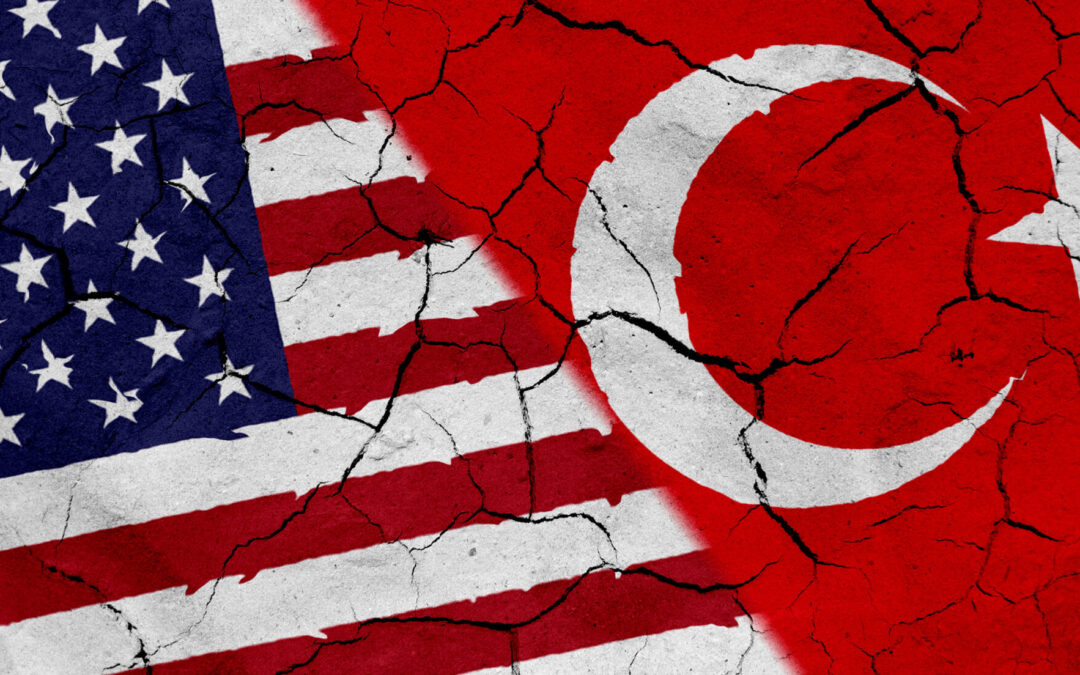
USAGM Acting CEO Kelu Chao spoke out against the Turkish government’s June 30 blocking of online news by international broadcasters including Voice of America.

VOA’s Turkish programming, and all of 32 language services of German international broadcaster Deutsche Welle, were censored on Thursday when the Turkish authority responsible for media control RTÜK restricted access to their websites.
 
“With the attempted blocking of Voice of America and Deutsche Welle, RTÜK has made an alarming choice to pave the way for internet censorship. Audiences in Turkey deserve access to fact-based news about the world around them. Despite this latest attack on press freedom, USAGM will not be deterred in its mission to support the free flow of information to people in Turkey and across the globe,” said Kelu Chao, USAGM’s Acting CEO.
 
“We oppose this move as a thinly veiled effort to censor unfavourable press coverage,” said Acting VOA Director Yolanda López. “Upon learning that our site is now blocked, we firmly object to this latest action in Turkey’s efforts to restrict VOA’s ability to deliver accurate and objective news to its Turkish-speaking audience. Through circumvention tools and other means, VOA will not be deterred.” 
 
In February 2022, RTÜK had called on VOA to obtain a license that would have allowed the Turkish government to censor editorial content.  
 
News of Turkey’s actions spread quickly on social media in Turkey yesterday. Options to circumvent this censorship are in place and related information is available to audiences on social media.

Women: a new radio show from BBC News Afghan

Women: a new radio show from BBC News Afghan

Women: a new radio show from BBC News Afghan

BBC News Afghanistan in Pashto and Dari has launched a weekly radio programme, Women (Mermen in Pashto, and Zan in Dari). The 30-minute show will go on air at 19:00 Kabul Time in Dari and at 20:00 in Pashto (14:30 and 15:30 GMT) every Friday.

Presented by Shazia Haya in Pashto and Aalia Farzan in Dari, the programme is aimed at women and girls – especially those in rural areas – in Afghanistan and Pakistan. Alongside offering them a platform to voice their views and questions, the new show will also deliver content that informs and educates, empowering the listeners to make informed decisions and choices.

The programme, which talks about women’s rights, healthcare, education, household economy, parenting, children’s health, as well as entertainment, sports and politics, opens with women-focused news from around the world. It discusses with experts the week’s main subject item and includes permanent slots on motherhood and childcare; inspiring stories about successful women from Afghanistan and around the world; and an arts & culture section dedicated to latest works by female writers, artists and musicians.

Shazia Haya and Aalia Farzan are BBC journalists who moved to the UK following the Taliban takeover of Afghanistan. Shazia says: “This programme for me means giving a voice to the voiceless. I hope Mermen will help empower the Afghan women to have better lives – and I feel really privileged to be part of such a journey.”

Aalia adds: “I want our new radio show, Zan, to serve as a window to every Afghan woman’s home. A window which opens every week to bring her the kind of knowledge that is really useful for her, and also to invite her to speak out about the things that worry or frustrate her.”

The new radio programme will be available via FM and shortwave frequencies across Afghanistan and will be available on demand via the websites bbc.com/pashto and bbc.com/persian/afghanistan, and the BBC News Pashto and BBC News Dari channels on Facebook.

BBC News Afghanistan service in Dari and Pashto is part of BBC World Service.

DW’s Limbourg: Diversity is one of strengths of DW’s Global Media Forum

DW’s Limbourg: Diversity is one of strengths of DW’s Global Media Forum

DW’s Limbourg: Diversity is one of strengths of DW’s Global Media Forum

Global Media Forum 2022 in Bonn concludes with the attendance of global media leaders: Maria Ressa, Leonid Volkov, Timothy Snyder, David Beasley, Paul Ronzheimer, Barkha Dutt, Audrey Tang, Ulrik Haagerup, Bernhard Pörksen and Gwen Lister.

The two-day Deutsche Welle (DW) media conference, titled “Shaping tomorrow now,” covered hybrid topics on-site in Bonn and online, including journalism education, climate change, digital activism, and war and pandemic reporting.

In his closing remarks, DW Director General Peter Limbourg emphasised the strength of DW’s Global Media Forum in bringing even people from countries in conflict with each other into conversation and constructive debate. “The diversity, reflected in the presence of journalists from Russia, Ukraine, Israel and the Palestinian Territories, was the strength of DW’s Global Media Forum,” he said. “We can ask critical questions. We can address everything. I’m really happy that we had these two days in Bonn.”

A highlight of the event was the keynote of Philippine journalist and Nobel Prize laureate Maria Ressa. “If you don’t have facts, you don’t have truth; if you don’t have truth, you don’t have trust,” Ressa said in her keynote. Fact-based journalism, she said, can restore the trust that has been lost to illiberal governments. A second Nobel Prize laureate, David Beasley, executive director of the World Food Programme, also attended this year’s media conference.

Peter Limbourg similarly addressed the loss of media credibility: “We are confronted with a storm of disinformation, propaganda and censorship. When the free and independent voices work together, we can withstand this storm and make a difference.” 

In an emotional ceremony Monday evening, DW honoured Ukrainian photojournalists Mstyslav Chernov and Evgeniy Maloletka with the Freedom of Speech Award in recognition of their courageous reporting of the Russian attacks on the Ukrainian city of Mariupol in February and March. Jodie Ginsberg, president of the Committee to Protect Journalists (CPJ), delivered the laudatory speech. Ensaf Haidar, wife of Saudi blogger Raif Badawi who received the first Freedom of Speech Award in 2015 while in prison for ten years, read a welcoming speech. 

Reporting from the frontlines and combating disinformation

BILD Deputy Editor-in-chief Paul Ronzheimer reported from Ukraine on his war experiences: “Many journalists died in this war and that’s something you can’t get out of your head,” he said. In another panel discussion, Taiwan’s Digital Minister Audrey Tang and Russian opposition politician Leonid Volkov debated the threat of online censorship and methods to combat disinformation. “It is no coincidence that Putin and the Kremlin shut down all independent media in Russia on the first day of the war,” Volkov said. “They know full well that the media is part of the war effort.”

In his closing speech “Media Coverage in Times of Crisis,” U.S. historian Timothy Snyder drew a parallel between the famine in Soviet Ukraine in 1932-33 and the current Russian war in Ukraine: “Stalin took a particular political decision to blame the Ukrainians,” he said. “As with Stalin, so with Putin. This is a political decision with perfectly predictable consequences.”

On Tuesday afternoon, the ARD.ZDF Media Academy honoured three female graduates with the “Women and Media Technology” award for their work in the field of audio-visual media production and distribution. The award winners (first to third place): Katharina Greiner, Janine Jensch and Wiebke Middelberg.

The participants of the conference in Bonn were able to experience live broadcasts of the DW programs “JaafarTalk” and “Arts.21.” In addition, the 15th GMF offered numerous online events covering topics such as Internet censorship, fact-checking and reporting on the Ukraine war.

The DW Global Media Forum is Germany’s only international conference for representatives of the media from all over the world. Together with its main partners, the German Federal Foreign Office, the State of North Rhine-Westphalia, the Foundation for International Dialogue of the Savings Bank in Bonn, the Federal ministry for Economic Cooperation and Development and the City of Bonn, DW offers media professionals a unique opportunity for interdisciplinary discussions with opinion-leaders from different fields around the pressing issues of our time.  

NZ government boosts RNZ Pacific capabilities

NZ government boosts RNZ Pacific capabilities

NZ government boosts RNZ Pacific capabilities

New Zealand’s government has announced an NZ$4.4 million capital grant for RNZ Pacific

The grant is to provide capital funding for a new shortwave transmitter for New Zealand’s international broadcasts to the Pacific. RNZ Chief Executive and Editor-in-Chief Paul Thompson has welcomed the budget investment in RNZ Pacific shortwave transmitters.

RNZ Pacific broadcasts into the wider Pacific on shortwave 24 hours a day, collaborating with 22 broadcasting partners across the region. Its current primary transmitter is nearing end of life, and its other transmitter has in effect already been retired (it is mothballed, for use in the event of the failure of the main transmitter).

“The value of the RNZ Pacific service can’t be underestimated. Our voice reaches all parts of the Pacific, at times with critical information such as cyclone warnings. During the Tonga eruption, when the undersea cable was cut, RNZ Pacific short wave was a lifeline source of information,” said Thompson.

This investment secures a productive future for our unique voice. The attraction of the shortwave service is its robustness, and the ability to have the signal travel great distances, and achieve good audiences,” he said.

RNZ Pacific broadcasts enhance the Government’s Pacific strategy as we share our history, culture, politics and demographics. The strategy is underpinned by the building of deeper, more mature partnerships with Pacific Island countries, and by supporting their independence and sustainable social and economic resilience.

Since the ABC ceased its shortwave broadcasting the only other shortwave broadcaster in the region is China Radio International. Thompson says RNZ can now start work on its infrastructure development with a new transmitter likely to take approximately 12 months to get in place, subject to further project planning.

The current primary transmitter is a 100kW DRM-capable shortwave transmitter, operating from the Rangitaiki transmitting station on New Zealand’s North Island (176 25’ 47.02” E 38 50’ 33.35” S). The transmitter, manufactured by Thomson Broadcast, was installed in 2005. The site is fed by a digital link from the Wellington headquarters of RNZ, 400km south of the transmitting site. The site has antennae manufactured by TCI. Read more at https://www.rnz.co.nz/international/technical