#HoldTheLine campaign supporting Maria Ressa launched

#HoldTheLine campaign supporting Maria Ressa launched
#HoldTheLine campaign supporting Maria Ressa launched

Sixty press freedom groups and civil society organisations, journalism institutions, filmmakers, and other supporters have formed a coalition in support of Maria Ressa and independent media in the Philippines, united around the call to #HoldTheLine.

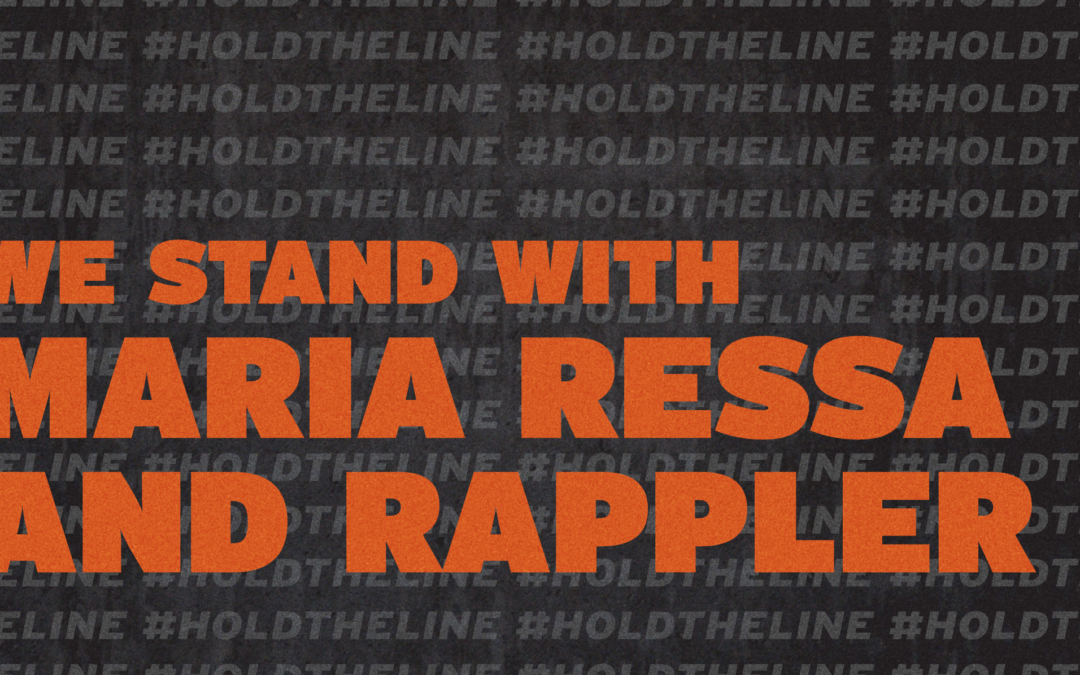
Today the Committee to Protect Journalists (CPJ), the International Center for Journalists (ICFJ), and Reporters Without Borders (RSF) announced the launch of the #HoldTheLine campaign in support of journalist Maria Ressa and independent media under attack in the Philippines. Acting in coordination with Ressa and her legal team, representatives from the three groups form the steering committee, working alongside dozens of partners on the global campaign and reporting initiatives. The campaign takes its name from Ressa’s commitment to ‘hold the line’ in response to sustained state harassment and prolific online violence.

An internationally celebrated Filipino-American journalist, Ressa is best known for two decades covering South East Asia for CNN and founding the multi-award winning Philippines news website Rappler. On 15 June 2020, she was convicted of “cyber-libel,” alongside former Rappler colleague Reynaldo Santos Jr — a criminal charge for which they face up to six years in prison. The conviction relates to a story about corruption from 2012 – before the law was even enacted – and hung on the correction of a typo.

Ressa and Santos both posted bail, but could be imprisoned if the case is not overturned on appeal. Ressa is facing at least six other cases and charges. Guilty verdicts in all of them could result in her spending nearly a century in jail. Rappler is also implicated in most of these cases, with several involving criminal charges related to libel, foreign ownership, and taxes. The convictions are the latest offense in the Duterte government’s wider campaign to stifle independent reporting, including the recent shutdown of the main national broadcaster ABS-CBN.

“I am moved by the incredible outpouring of support we’ve received from around the globe for our campaign to #HoldTheLine against tyranny – even as President Duterte continues his public attacks on me, the legal harassment escalates, and the state-licenced and Facebook-fuelled online violence rages on. We can’t stay silent because silence is consent,” Ressa said. “We need to be outraged, to fight back with journalism. If we don’t use our rights, we will lose them. Please stand with us!”

Those interested in showing support and helping to #HoldTheLine can take two immediate steps in the run-up to Ressa’s next hearing scheduled on 22 July:

  1. Join the #HoldTheLine coalition by getting in touch via the contacts
  2. Sign and share this petition calling for the Philippine government to drop all charges and cases against Ressa, Santos and Rappler, and end pressure on independent media in the

The 60 founding members of the #HoldTheLine Coalition are:

The Committee to Protect Journalists (CPJ), the International Center for Journalists (ICFJ) and Reporters Without Borders (RSF), which form the steering committee; African Media Initiative; Association for International Broadcasting (AIB); Alliance for Journalists’ Freedom; Amnesty International; ARTICLE 19; Association of Caribbean Media Workers; Canadian Journalism Forum on Violence and Trauma; Centre for Freedom of the Media (CFOM); Centre for Law and Democracy; CineDiaz; The Coalition For Women In Journalism; Community Media Forum Europe (CMFE); The Daphne Caruana Galizia Foundation; DART Asia Pacific; Dart Center; Doc Society; English PEN; European Journalism Centre; First Look Media; Free Press Unlimited; Global Alliance on Media and Gender (GAMAG); Global Forum for Media Development (GFMD); Global Voices;  Graduate School of Journalism, Columbia University; Index on Censorship; Institute for Regional Media and Information (IRMI); International Media Support (IMS); International Association of Women in Radio  and Television (IAWRT); International News Safety Institute (INSI); International Press Institute (IPI); International Women’s Media Foundation (IWMF); James W. Foley Legacy Foundation; Judith Neilson Institute; Justice for Journalists Foundation; Media Association for Peace (MAP); Media Development Investment Fund (MDIF); Namibia Media Trust (NMT); National Union of Journalists of the Philippines (NUJP); Pakistan Press Foundation; Panos Institute Southern Africa; PEN America; Philippine Center for Investigative Journalism (PCIJ); Press Freedom Defence Fund; Project Syndicate; Public Media Alliance; Pulitzer Center on Crisis Reporting; Rappler; Rory Peck Trust; Rural Media Network Pakistan; South African National Editors’ Forum (SANEF); Storyhunter; The Signals Network; Tanzania Media Practitioners Association; Union of Journalists in Finland; World Association of Newspapers and News Publishers (WAN-IFRA); and World Editors Forum.
AIB history brief – jamming

AIB history brief – jamming

AIB history brief – jamming

They spent more on jamming than the broadcasts cost to produce. That’s the theory around the jamming of western radio broadcasters by the Soviet Bloc during the Cold War years.

Leaders of the communist states were determined to keep control of the information flow to their citizens, fearing that news from abroad would lead to the undermining of their totalitarian regimes.

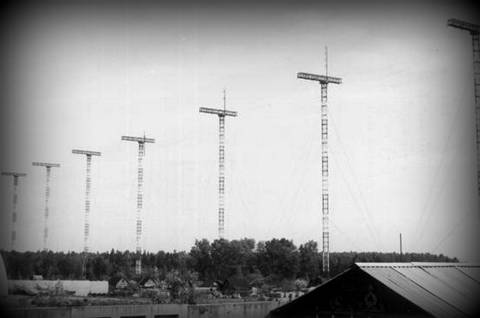
Immense shortwave transmitting stations were constructed across eastern Europe, from the Baltics to the Balkans, not to serve audiences but to hinder them. They were not listed in the International Telecommunication Union’s registers of transmitters in the “white book”, the hugely detailed dataset of the world’s shortwave broadcasting. They were, essentially, transmitters that everyone knew existed yet were maintained “off the books” as state secrets.

As jamming became ever more prevalent – aimed principally at the BBC External Services [now BBC World Service]; Deutsche Welle; Radio Free Europe/Radio Liberty; Voice of America – western broadcasters had to invest more in building ever greater numbers of high powered shortwave transmitters to ensure that their signals reached their listeners across eastern Europe.

If you tuned across the shortwave radio bands in the 1960s, 70s and 80s, you would have heard a cacophony of sound. Over-modulated speech, distorted music – anything that could have the effect of making the original programme all but impossible to hear was used to stop reception.

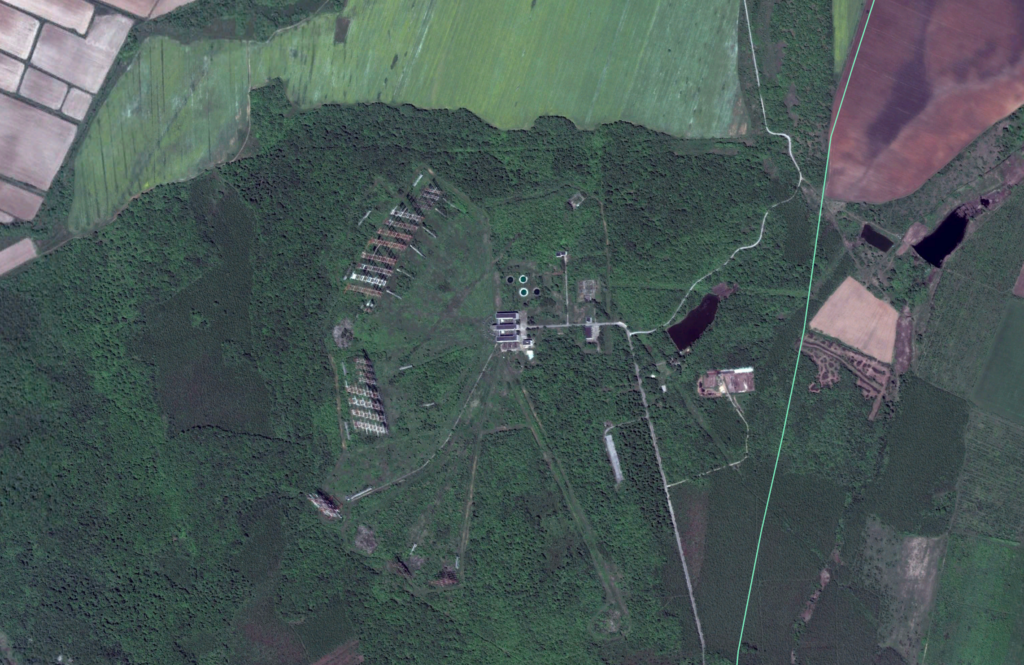
To understand the scale of the operation, it’s worth watching a video produced by RFE/RL about the Padorska jamming station (2012 aerial shot from Google Earth pictured) in central Bulgaria. The immense site is now in ruins, with the antennas removed in the last few years (although Google Maps has a Street View image from 2012 in which the site’s antennas are visible in the distance). One of the technicians who started working at the site in the late 1980s, shortly before the Iron Curtain was lifted, explains how the station operated.
There are a good number of anecdotes concerning jamming. One from 1985 when many BBC employees went on strike and programmes were replaced with music on World Service English and most of the language services. The Soviet jammers had a day off – at least until someone in Bush House, then the home to BBC World Service, decided to play “Back in the USSR” by the Beatles. Within minutes the jammers leapt into life, simply to drown out what was clearly thought to be decadent anti-Soviet music.

The end of the Cold War did not mark the cessation of jamming. It’s continued on shortwave over the past 30 years. At the time of the first Gulf War, Iraq jammed the BBC’s services in the Middle East and more recently North Korea has jammed the signals of Radio Free Asia.

Jamming continues from time to time today. As shortwave broadcasting has slowly faded away, satellites have become the target. Ethiopia has jammed satellites carrying opposition TV channels and Iran regularly jams satellites with Persian-language programmes from abroad. There are no longer immense jamming stations seeking to interfere with programmes from around the world; today’s satellite jammers can use commercially available uplink equipment to try and take out transponders on satellites. The satellite industry has responded, and now far greater levels of security exist that prevent almost all attempts to stop TV and radio signals from reaching their intended audiences.

This does not mean that the free flow of information across borders is guaranteed today. Some governments continue to try to restrict the work of international broadcasters, using tactics instead of wholesale jamming of the airwaves. It’s why the AIB continues to work on media freedom to try to ensure that everyone can access the information they want or need.

Additional resources:

http://www.antentop.org/008/files/jamm008.pdf

https://criticaldistance.blogspot.com/2012/04/jamming-hell-out-of-west.html


UN launches Pause campaign to halt disinformation

UN launches Pause campaign to halt disinformation

UN launches Pause campaign to halt disinformation

The United Nations has launched a new initiative to foster behaviour change and counter the growing threat of misinformation online. The campaign, called Pause, asks digital users to take the time to think about what they share before posting it online.

“Misinformation is spreading faster than the virus itself, and is seriously disrupting public health efforts by dangerously distorting sound scientific guidance. It is designed to exploit our emotions and biases at a time of heightened fear,” said UN Secretary-General António Guterres. “But there are ways users can learn to recognize bad information and slow the spread. We are aiming to have the phrase, ‘Pause, take care before you share,’ become a new public norm.”

A range of media companies around the world, including AIB Members Al Jazeera, Deutsche Welle and France Médias Monde, are distributing Pause content on TV channels, online and via SMS.

Major social media platforms, including Facebook, Twitter, Google (YouTube) and TikTok, have also committed to promoting Pause, while indicating a willingness to scale up their ongoing efforts to suppress the circulation of misinformation.

“It is encouraging to see steps already taken by social media platforms, such as swiftly removing misinformation surrounding COVID-19, flagging harmful content, questioning  sharing intentions and also promoting sound health advice, including from the World Health Organization (WHO),” said Melissa Fleming, UN Under-Secretary-General for Global Communications.

“Just as social distancing slows the spread of the virus, behaviour changes around sharing will go a long way to slow the spread of misinformation. But it can only be meaningfully halted if there is no place for misinformation on social media platforms.”

Pause draws on research from psychologists, neuroscientists and behavioural scientists whose studies indicate that pausing to reflect before sharing can significantly help reduce the spread of unverified and misleading information. The campaign will challenge people to break the habit of sharing shocking or emotive content impulsively and without questioning its accuracy.

The campaign, launched on World Social Media Day (30 June), is part of a larger UN initiative called Verified aimed at increasing the volume and reach of trusted, engaging and accurate information, including with the help of more than 10,000 information volunteers who have already signed on to the effort.

Following its launch in May, Verified has received strong support from governments. In mid-June, more than 130 UN Member States issued a statement on the need to address the “infodemic” related to COVID-19, while welcoming the UN’s pandemic response and the Verified initiative.

Verified is a collaboration between the UN Department of Global Communications and Purpose, one of the world’s leading social mobilisation organisations, in partnership with UN agencies and country teams as well as influencers, civil society and businesses.

Media Freedom Coalition speaks out on Yemen

Media Freedom Coalition speaks out on Yemen

Media Freedom Coalition speaks out on Yemen

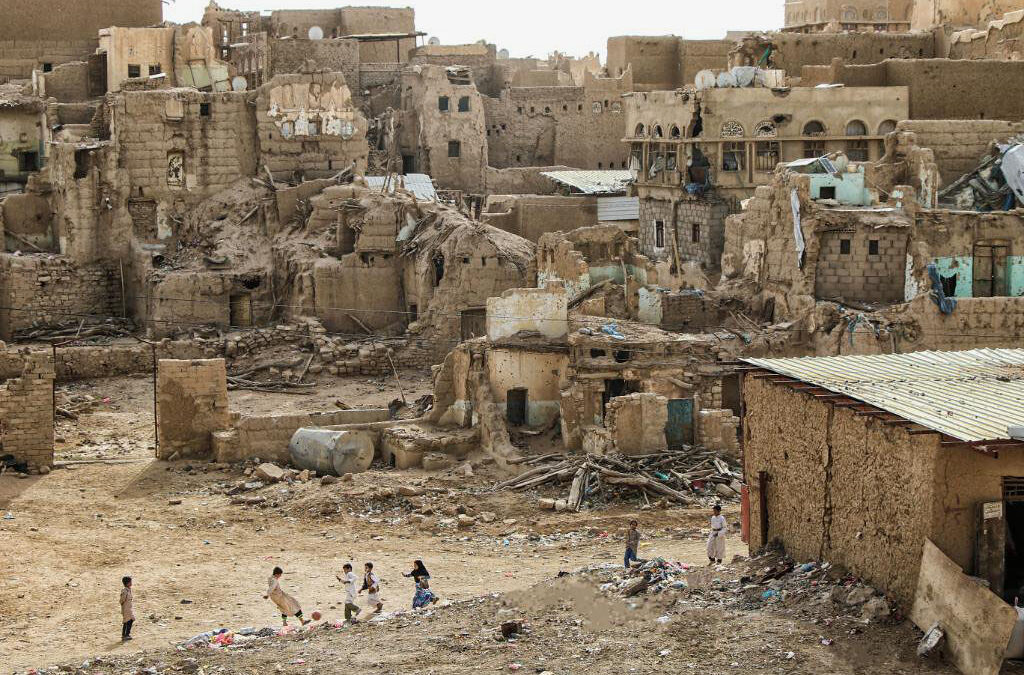
Six members of the Media Freedom Coalition’s Executive Group have expressed their growing concern about the Houthis’ attacks on media freedom in Yemen, where their continued detention of Yemeni journalists is troubling evidence of serious abuses of the right to freedom of expression.

In particular, the Group has condemned the Houthis’ decision to put four Yemeni journalists to death for their reporting, an alarming situation that constitutes a blatant disregard for human rights.

Attacks on media freedom are attacks on human rights, and the protection of journalists and other media workers is critical to the success of any peace-building efforts undertaken in Yemen.

The Executive Group calls on all parties to guarantee the safety of journalists and to respect human rights and international humanitarian law, so that they can carry out their work without fear of detention, reprisals or restrictions  inconsistent with the right to freedom of expression.

The Executive Group also call on the Houthis, to:

  • immediately disavow their decision to put to death the journalists Abdulkhaleq Ahmed Amran, Akram Saleh Al-Walidi, Al-Hareth Saleh Hamid and Tawfiq Mohammed Al-Mansouri and release them
  • immediately release journalists Hisham Ahmed Tarmoom, Hisham Abdulmalik Al-Yousefi, Haitham Abdulrahman Al-Shihab, Essam Amin Balgheeth, and Hassan Abdullah Annab.
  • immediately free all other detained Yemeni journalists and disavow any intention to punish or harm them, and account for those journalists who are missing
  • Refrain from undermining the exercise of the right to freedom of expression by all Yemeni journalists and media workers t in the pursuit of their essential work—without being subjected to further punishment

The Media Freedom Coalition Executive Group members issuing this statement are: Canada, Germany, Latvia, the Netherlands, the United Kingdom and the United States of America.

The Association for International Broadcasting is committed to the principle of media freedom and is a member of the Media Freedom Coalition Advisory Network, representing the interests of broadcasters and news organisations across the world.

Image: Felton Davis/Flickr

France Télévisions Group hit by cyber attack

France Télévisions Group hit by cyber attack

France Télévisions Group hit by cyber attack

France Télévisions Group has been hit by a cyber attack that has impacted one of the Group’s websites although has not, apparently, caused programming to fall off the air.

The story, reported by Le Monde newspaper and confirmed in a press release issued by France Télévisions Group, reveals that although transmissions were not affected, the Group moved the output of France 3 to the headquarters building in Issy-les-Moulineaux and activated the broadcaster’s emergency backup centre.

The attack comes five years after French international broadcaster TV5 Monde was hit by a major cyber attack that affected the broadcaster’s output and its online presence. That attack took many months to fully recover from and cost the broadcaster significant sums to recover data and ensure that its systems were made more secure from attack.

The AIB instigated its Cyber Security Working Group as a result of the attack on TV5 and on Sony, bringing together our global membership to share intelligence and develop systems to help protect broadcasters from attack. The AIB is currently developing a broadcasting cyber security research project with the globally renowned Information Security department at Royal Holloway University of London.

Image of France Télévisions: Angel James de Ocampo/Flickr

Attacks on journalists in US – AIB writes to Attorney General

Attacks on journalists in US – AIB writes to Attorney General

Attacks on journalists in US – AIB writes to Attorney General

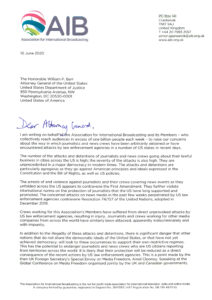
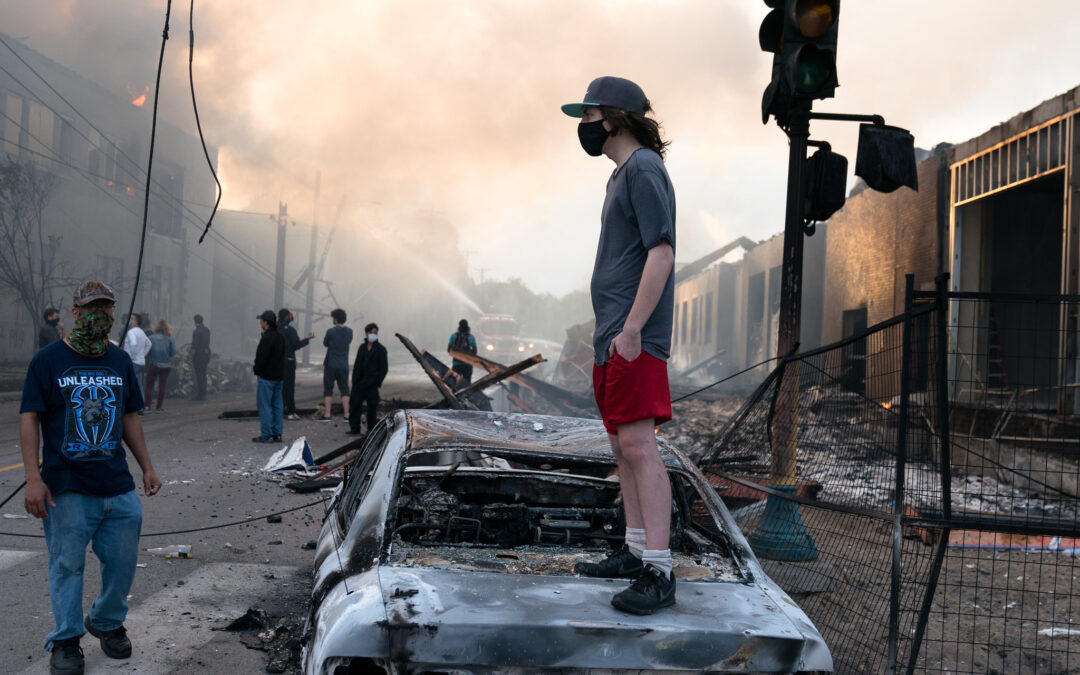
Following the attacks on, and detention of, journalists covering the protests across the US that erupted after the death of George Floyd, the Association for International Broadcasting wrote to the US Attorney General William Barr.

Journalists and news crews from a number of AIB Member companies suffered attacks at the hand of US law enforcement officers, including injuries sustained from rubber bullets that were used against protestors in cities across the US.

The letter called on the Attorney General to respect the rights of journalists and news crews to work without hindrance. It highlighted the leadership role that the United States has in promoting democratic ideals across the world that the widespread incidents affecting the news media in the US have potentially damaged.

The AIB also wrote to the US Secretary of State Mike Pompeo, pointing out that the unlawful acts against journalists and news crews working in the US has the potential to endanger US journalists working in territories around the world as authoritarian governments use the example of the US to restrict media freedom.

“Journalists and news crews working for Al Jazeera, the BBC, CBC, Deutsche Welle and TRT WORLD among the AIB Membership suffered at the hands of US law enforcement agents,” said Simon Spanswick, AIB Chief Executive. “The attacks are unlawful, and the sheer volume is deeply troubling. We have called on the US to ensure that those responsible for the attacks are held to account for their actions.”

Photo: Lorie Shaull/www.lorieshaull.com