Al Jazeera’s Mahmoud Hussein released from jail in Egypt

Al Jazeera’s Mahmoud Hussein released from jail in Egypt

Al Jazeera’s Mahmoud Hussein released from jail in Egypt

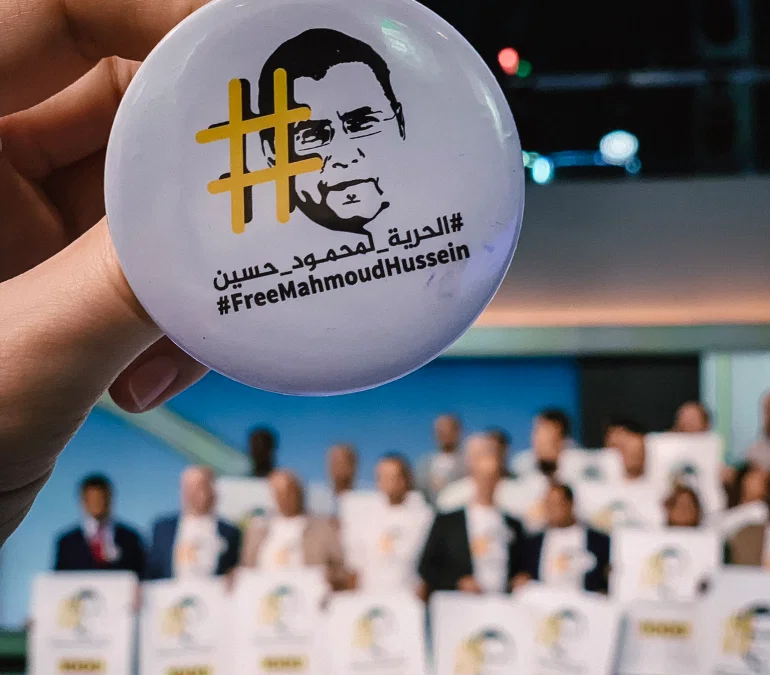
After more than four years in detention without trial, Al Jazeera journalist Mahmoud Hussein has been released by Egypt. 

According to Al Jazeera, Hussein, an Egyptian national held under preventive detention since December 2016, was released from jail on 6 February 2021.

In a statement, Mostefa Souag, acting director-general of the Al Jazeera Media Network, said the release of Hussein was “a moment of truth and an inspiring milestone towards press freedom”.

“Al Jazeera Media Network welcomes the news of Mahmoud’s freedom and believes that no journalist should ever be subjected to what Mahmoud has suffered for the past four years for merely carrying out his profession.

​“Today, we are pleased he is finally reunited with his family, after being robbed four years from his life and deprived of his fundamental rights. We wish Mahmoud a speedy recovery and hope he will be able to overcome this past ordeal and start a new chapter in his distinguished career.”

The 54-year-old was arrested in Cairo on December 23, 2016, while visiting his family for a holiday. He was interrogated for more than 15 hours without a lawyer present, before being released and then arrested again days later.

Egypt’s Ministry of Interior publicly accused him of “disseminating false news and receiving monetary funds from foreign authorities in order to defame the state’s reputation”, but no charges were ever formally brought against him. Hussein and Al Jazeera consistently denied the allegations.

Shortly after his arrest, Al Jazeera launched a worldwide media campaign calling for Hussein’s release. The AIB supported this campaign.

Egyptian authorities, however, extended Hussein’s detention more than a dozen times, far surpassing the country’s maximum period for pre-trial detention in violation of both Egyptian and international law.

During his time in jail, Hussein suffered physically and psychologically. He was held for long periods in solitary confinement and denied proper medical treatment when he broke his arm in 2017.

In January 2018, the United Nations Working Group on Arbitrary Detention concluded that the conditions of Hussein’s imprisonment amounted to “cruel, inhuman and degrading treatment”.

AIB Annual Review 2020 published

AIB Annual Review 2020 published

AIB Annual Review 2020 published

The Association for International Broadcasting has published its 2020 Annual Review

The Annual Review reports on the work of the AIB during 2020 and explains how the Association has worked to maintain its services to Members around the world during the pandemic. In spite of the restrictions imposed, the AIB continued to work on areas as diverse as media freedom, cyber security, regulatory affairs, spectrum management and celebrating success in journalism and factual productions with the annual AIBs.

“It has been important for the AIB to continue to support and serve its international Membership,” says AIB Chief Executive Simon Spanswick. “This Annual Review explains how we tackled the challenges that everyone faced in 2020 and how we continued to deliver measurable impact in a wide range of areas. It was really ‘business as usual’ for the AIB, although of course we were unable to stage live events and visit our Members. We found ways to continue to operate our full complement of activities and indeed expanded the range of work to include pandemic-specific work. It’s testament to the dedication and flexibility of all the AIB’s staff.”

You can read the Annual Review online here.

AIB publishes last industry briefing of 2020

AIB publishes last industry briefing of 2020

AIB publishes last industry briefing of 2020

As the most extraordinary year in most people’s lives draws to a close, the Association for International Broadcasting has published the final industry briefing of 2020.

The briefing reaches the in boxes of media leaders, journalists, editors, producers, directors and executives in hundreds of countries globally, as well as parliamentarians, regulators, academics and other observers and influencers of the media industry.

Subscribe to the newsletter here to have it delivered to your in box, and read this latest issue here

Australian government accepts media freedom recommendations, more work needed

Australian government accepts media freedom recommendations, more work needed

Australian government accepts media freedom recommendations, more work needed

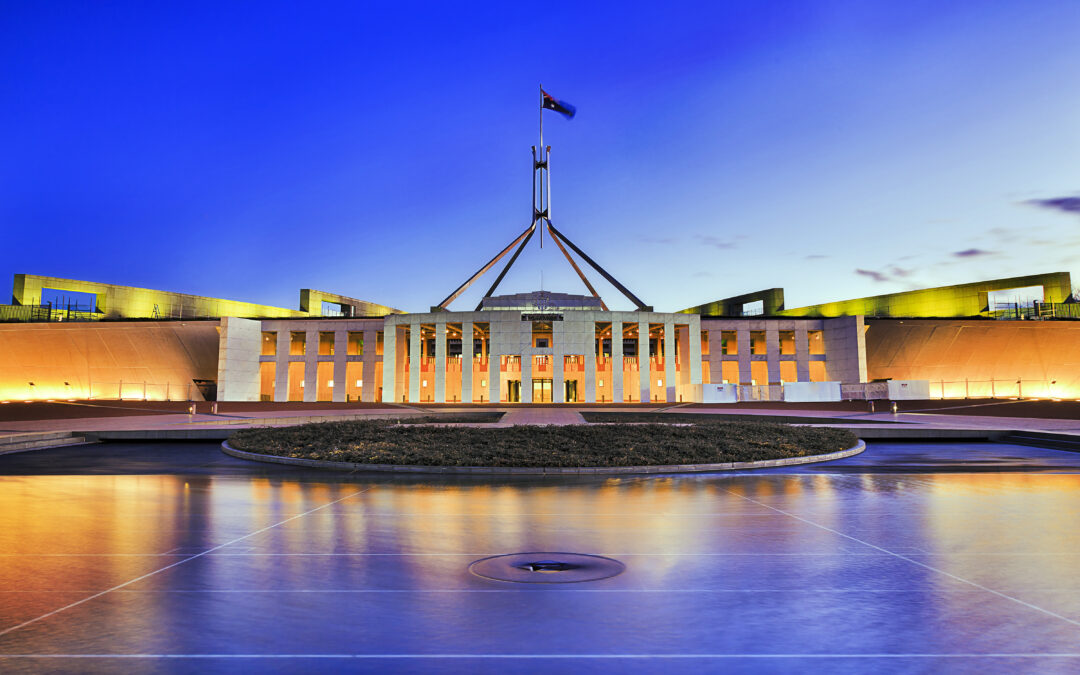
Australia’s government has accepted recommendations from the Parliamentary Joint Committee on Intelligence and Security following the Committee’s Inquiry into issues around freedom of the press.

The Inquiry – and one in the Australian Senate – took on added significance with the raids on News Corp journalist Annika Smethurst and the ABC News Room in Sydney. The unprecedented raids were criticised widely within and outside Australia with some civil society organisations saying that media freedom within the country had been seriously eroded.

The Government Response means that search warrants involving journalists and whistleblowers will need to be signed off by senior judges, offering some degree of protection for journalists and news organisations covering stories regarded as sensitive by government. 

Speaking to the ABC, the Corporation’s managing director David Anderson said that the response offered “some progress in meeting press freedom requirements”.

“The ABC remains concerned that police and other agencies can use warrants to investigate the work of journalists and whistleblowers, as we have seen in recent years,” Anderson said. 

“We look forward to working with the Government to ensure the implementation of reforms that protect journalists and their sources acting in the public interest and which bring Australia on par with similar standards in other Western democracies.”

The AIB – which responded to the Parliamentary and Senate Inquiries and gave in person evidence to the Senate – will continue to monitor the situation in Australia as part of its continuing media freedom workstream. 

AIB launches survey on media freedom awareness

AIB launches survey on media freedom awareness

As part of its continuing work on media freedom and in advance of its Symposium in late January 2021, the Association for International Broadcasting is undertaking a survey of editors, journalists and executives in news organisations globally to gauge the impact of the global Media Freedom Coalition.

The survey, that takes only a few minutes to complete, seeks responses to questions surrounding perceptions of the intergovernmental Media Freedom Coalition, responses to the international media freedom conferences that have taken place in the past few weeks, and more.

“It’s important to understand how the international media freedom work is understood and what impact it has,” says AIB chief executive Simon Spanswick. “As part of the AIB’s preparations for its own media freedom symposium that allows our Members to share experiences and explore collaboration on media freedom issues and infringements, we want to understand feelings across the global news industry. This survey is an important part of this work.”

The survey is available online at https://forms.gle/AhuJCKaDp9mcEXFq7 and in print format at http://cfb.d5c.myftpupload.com/Media-Freedom/Survey-Dec-20/AIB-Media-Freedom-Survey-Dec-2020.pdf.


AIB lodges protest with Uganda over CBC/Radio-Canada expulsions

AIB lodges protest with Uganda over CBC/Radio-Canada expulsions

AIB lodges protest with Uganda over CBC/Radio-Canada expulsions

Expulsion of CBC/Radio-Canada journalists by Uganda authorities against principles of media freedom

The Association for International Broadcasting has lodged a formal protest with the Ugandan High Commissions in Canada and the UK following the expulsion of three journalists by the Ugandan authorities. 

Margaret Evans, Jean-Francois Bisson and Lily Martin had been granted visas and media accreditation by the Uganda government and were working on stories in Kampala when they were told to leave the country. 

According to government spokesman Ofwono Opondo, the three journalists had failed to apply for a “journalist visa” – something that does not exist in Uganda. The correct procedure is to obtain an “ordinary visa” and then be accredited by the Uganda Media Centre – a government entity. The CBC/Radio-Canada team had followed these rules.

“It is lamentable that the Ugandan government chose to expel the CBC/Radio-Canada crew,” said Simon Spanswick, chief executive of the Association for International Broadcasting. “What is even more disturbing is that the Ugandan authorities appear to be spreading misinformation suggesting that the team did not follow the correct procedures to obtain authorisation to carry out journalistic work in the country. We expect the Ugandan authorities to issue an apology and to work to uphold media freedom in the country over the coming weeks and months.”