RFE/RL sanctioned by Government of Iran

RFE/RL sanctioned by Government of Iran
RFE/RL sanctioned by Government of Iran

Today, the government of Iran added RFE/RL’s Persian-language service, known locally as Radio Farda, to a list of individuals and organizations sanctioned for supporting international terrorism or inciting violence.

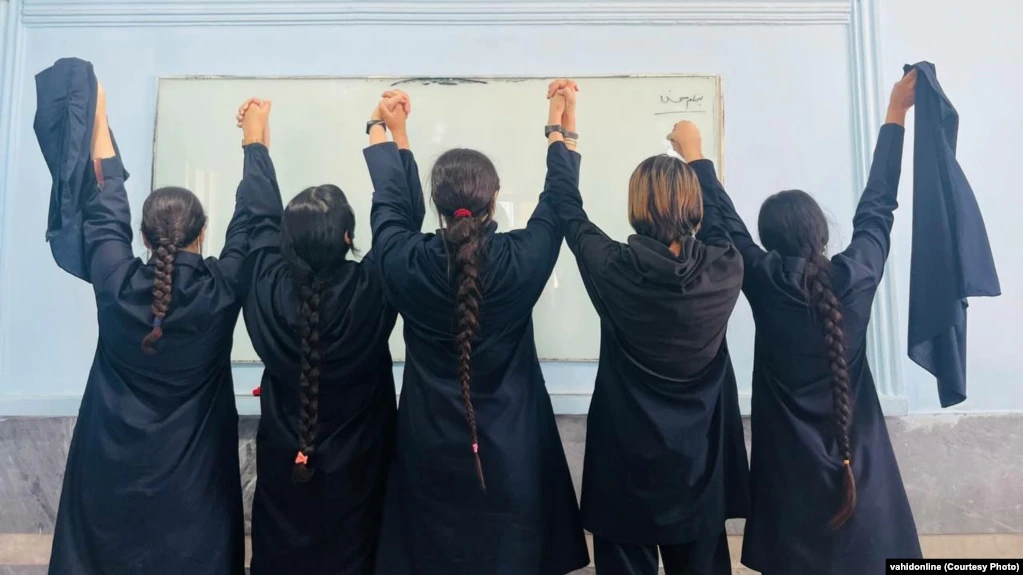
For over 12 weeks, Radio Farda has covered Iran’s historic demonstrations that began in the aftermath of Mahsa Amini’s death. Through deeply sourced investigative reporting, exclusive interviews with protesters’ families and friends, and verified user-generated content, RFE/RL journalists are documenting the truth about the regime’s victims — including their identities — despite the Iranian government’s ongoing campaign to deceive the public and intimidate minority communities.

“Today’s designation is an absurd manipulation of the truth, straight out of every authoritarian playbook,” said RFE/RL President and CEO Jamie Fly. “The reality is that each day, the Iranian regime kills men, women, and children protesting for a better future, blames the victims, and abuses their families. Through it all, Radio Farda is trusted by sources and audiences alike to report on what is really happening.”

Despite significant state censorship, Radio Farda’s audience is growing. From the start of the protests on September 16 through November 30, Radio Farda’s video views increased 408% on YouTube and 619% on Instagram, compared to the same period last year. Social media growth has been driven by coverage that has gone viral. Radio Farda is also accessible in Iran via shortwave radio, playing an essential role for Iranians during a crisis in which the regime has attempted at times to block or slow Internet access.

RFE/RL’s service for Iran is one of the most popular and trusted media outlets in Iran, providing award-winning uncensored Persian-language news. Radio Farda is known for its in-depth coverage of the Iranian regime and its innovative use of anti-censorship technologies to reach audiences. Farda has a growing digital presence with millions of video and page views on its websites, Facebook, Instagram, and YouTube.

[Source: RFE/RL press release; Image provided by RFE/RL/@vahidonline]
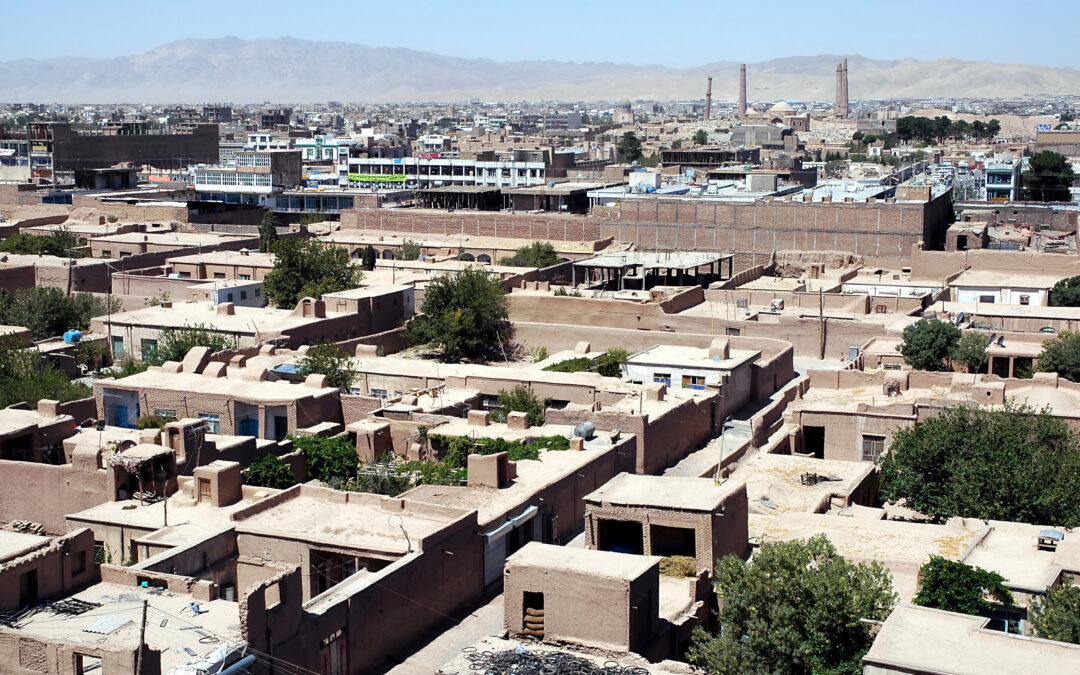
RFE/RL Condemns Taliban Move to Further Silence Independent Media​

RFE/RL Condemns Taliban Move to Further Silence Independent Media​

RFE/RL Condemns Taliban Move to Further Silence Independent Media​

The Taliban has removed Radio Free Europe/Radio Liberty’s (RFE/RL) award-winning programming from AM and FM radio transmission networks in Afghanistan.

“Azadi is a lifeline for tens of millions of Afghans, making the Taliban’s decision all the more tragic,” said RFE/RL President and CEO Jamie Fly, speaking on 1 December. “RFE/RL will not change our editorial line to accommodate Taliban demands in order to stay on the air. We know from experience that our audiences make great efforts to find us. The truth cannot be completely suppressed.”

For decades, RFE/RL’s Afghan Service, known locally as Azadi, has been a staple of everyday life in Afghanistan, commonly heard in public settings, from marketplaces to taxis. In a recent survey commissioned by the U.S. Agency for Global Media, half of Afghan adults surveyed use Azadi content weekly. Despite significant pressure from the Taliban, RFE/RL continues to provide bold coverage of stories suppressed by state media. Azadi has given a platform for the most vulnerable — women and girls, victims of violent extremism, the LGBTQI+ community, and youth — to share their experiences. Azadi has also informed Afghans about public health, provided school lessons for girls, exposed corruption, and helped the powerless find community and hope.      

In contrast to official Taliban claims, Afghans have again and again expressed their appreciation and gratitude to RFE/RL for providing a vital public service. RFE/RL will continue broadcasts from outside the country, and will expand options to reach its dedicated audience through other platforms.

RFE/RL’s Afghan Service is one of the most popular and trusted media outlets in Afghanistan, providing uncensored news in the Dari and Pashto languages. Following the Taliban takeover, RFE/RL closed its Kabul bureau, yet Azadi continues to cover events ignored by state media. In partnership with Learn Afghanistan, Azadi has also used innovative and accessible platforms to provide lessons for girls in grades 7-12 now barred from attending school. RFE/RL’s Afghan Service has a growing digital presence to reach younger audiences, with millions of video and page views on its websites, Facebook, Instagram, and YouTube.

Afghanistan is one of the most dangerous places in the world for journalists, and RFE/RL journalists have paid the ultimate price for their commitment to a free press. In 2018, three Radio Azadi journalists — Maharram Durrani, Abadullah Hananzai, and Sabawoon Kakar — were killed in a suicide bomb attack in Kabul. In 2020, Mohammad Ilyas Dayee was killed in a targeted bomb attack.

RFE/RL President & CEO Jamie Fly meets with staff, officials during Ukraine visit

RFE/RL President & CEO Jamie Fly meets with staff, officials during Ukraine visit

RFE/RL President & CEO Jamie Fly meets with staff, officials during Ukraine visit

During a visit to the Ukrainian capital of Kyiv last week, Radio Free Europe/Radio Liberty (RFE/RL) President & CEO Jamie Fly met with top Ukrainian officials and RFE/RL journalists who have been reporting on the frontlines of Russia’s invasion of Ukraine.

Fly spent time with journalists from RFE/RL’s Ukrainian Service, who have put their lives on the line to deliver trustworthy, independent news to Ukrainian and international audiences. They have documented Russian war crimes, exposed the human cost of Russia’s attacks, and broken story after story about the Kremlin’s unjustified invasion.

“Russia’s illegal invasion of Ukraine has not stopped our brave journalists from delivering vitally important, independent news every day,” said RFE/RL President & CEO Jamie Fly. “From Kyiv to Crimea, RFE/RL journalists are risking their lives to show Ukrainians, and the world, the true horror of this inhumane and unjustified war.”

On April 29, RFE/RL journalist Vira Hyrych was killed in Kyiv after a Russian missile strike hit the residential building where she lived. In June, Hyrych and other journalists killed during the war were posthumously recognised by Ukrainian President Volodymyr Zelenskyy. Fly met with Hyrych’s parents and son and visited her gravesite.

During his visit, Fly also met with Ukrainian officials, including Andrii Yermak, Head of the Office of the President of Ukraine, First Deputy Foreign Minister Emine Dzhaparova, Minister of Culture and Information Policy Oleksandr Tkachenko, members of Parliament, and representatives of civil society groups and independent media outlets. Fly discussed RFE/RL’s efforts to provide truthful reporting about the war, as well as work to reach audiences inside Russia and newly-occupied areas of Ukraine.

He also raised the case of RFE/RL contributor Vladyslav Yesypenko, who was sentenced to six years in prison on February 16, 2022 by a Russian-controlled court in occupied Crimea. Detained by Russia’s Federal Security Service in Simferopol on March 10, 2021, he was eventually charged with possession and transport of explosives, a charge he denies. Yesypenko is the recipient of the 2022 PEN/Barbey Freedom to Write Award.

RFE/RL’s Ukrainian Service sets a standard in the Ukrainian media market for independence, professionalism, and innovation. Since the beginning of Russia’s war against Ukraine on February 24, Ukrainian Service videos have been viewed over 111 million times on YouTube alone. The service’s comprehensive coverage includes the award-winning reporting of its Donbas Realities and Crimea Realities websites and “Schemes” investigative reporting team.

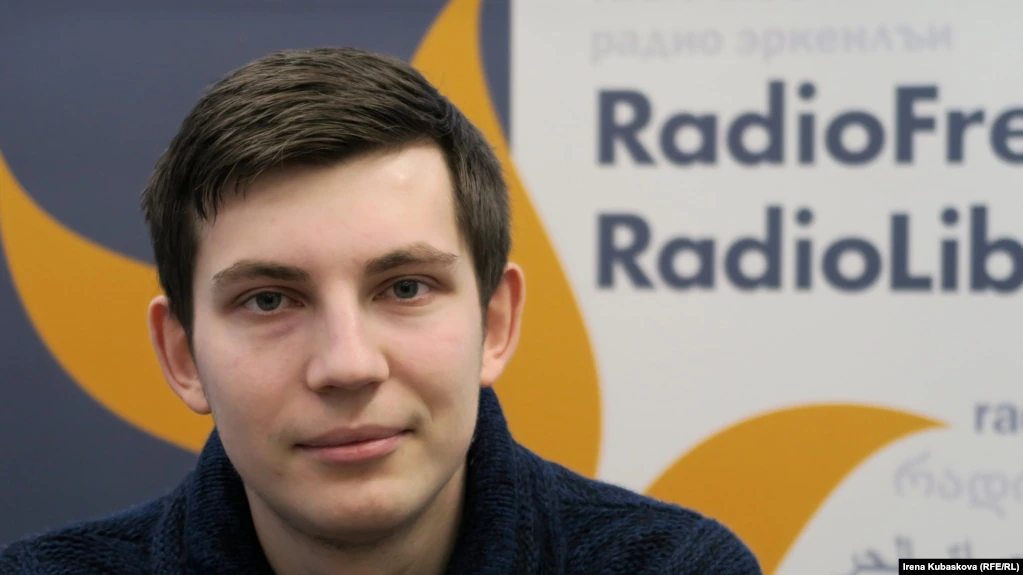
Critically acclaimed Current Time doco chronicles families divided by Russia’s war, disinformation

Critically acclaimed Current Time doco chronicles families divided by Russia’s war, disinformation

Critically acclaimed Current Time doco chronicles families divided by Russia’s war, disinformation

A new documentary produced by Current Time and directed by journalist and filmmaker Andrey Loshak, “Broken Ties,” has premiered to critical acclaim in Russia. The film shows the human cost for Russians themselves of Putin’s invasion of Ukraine, and ways Kremlin disinformation and state propaganda are tearing Russian families apart.

Filmed over a three-month period, “Broken Ties” follows seven Russian families as their relationships deteriorate in the months following the invasion. Among the subjects followed are: Renata, a pediatrician struggling to come to terms with her guilt over Russia’s involvement in the war, and her mother, Vinera, a fiercely patriotic schoolteacher; and Ekaterina and Artem, a Russian couple so deeply divided on the war that they may divorce. Loshak also interviews Vika, a survivor of Russia’s bombing of the Ukrainian city of Kharkiv, and her brother, Yakov, who dismisses Vika’s perspective on the war. As ideologies clash, communication becomes strained, and relationships begin to deteriorate. In time, any hope of finding common ground, understanding or reconciliation begins to vanish.

Kenan Aliyev, executive editor at Current Time and executive producer of the film said, “We are extremely proud of this latest collaboration with Andrey Loshak, and our ability to release this important documentary to Russian-speaking audiences – including in Ukraine – while the war rages on. This documentary shows the real, human costs for Russians themselves of Putin’s assault on media freedom and independent journalism.”

In one of the film’s most moving scenes, Natalya, a psychologist opposed to Russia’s invasion, recounts how she regularly talks with her mother Lyudmila for hours, refuting state propaganda. When asked if her daughter has managed to persuade her at all, Lyudmila answers, “No, of course not.”

“Broken Ties” first premiered for Russian-speaking audiences on Current Time on June 20. It is now available on YouTube, where it has been seen over 1.2 million times, generating significant positive audience engagement.

Ksenia Larina, a prominent Russian journalist and television critic, described the film as “astonishing” and “scary;” and Anton Dolin, a Russian film critic writing for Meduza, called the film, “a powerful antidote to what Russian television has become,” and, “made by one of the best representatives of a different kind of television…”

Andrey Loshak is an internationally recognized journalist, reporter, and filmmaker from Moscow. He has received the Russian TEFI award for “Best Reporter” and the Order “For Merit to the Fatherland” 1st class medal for his pioneering work in Russian national TV. Loshak’s previous work with Current Time includes “InterNYET,” a series covering the rise and fall of Russia’s internet, and “Let It All Burn,” a documentary about Russian rock band IC3PEAK’s fight with local authorities for its right to perform.

Watch “Broken Ties” with English subtitles here.

[Source: RFE/RL press release]

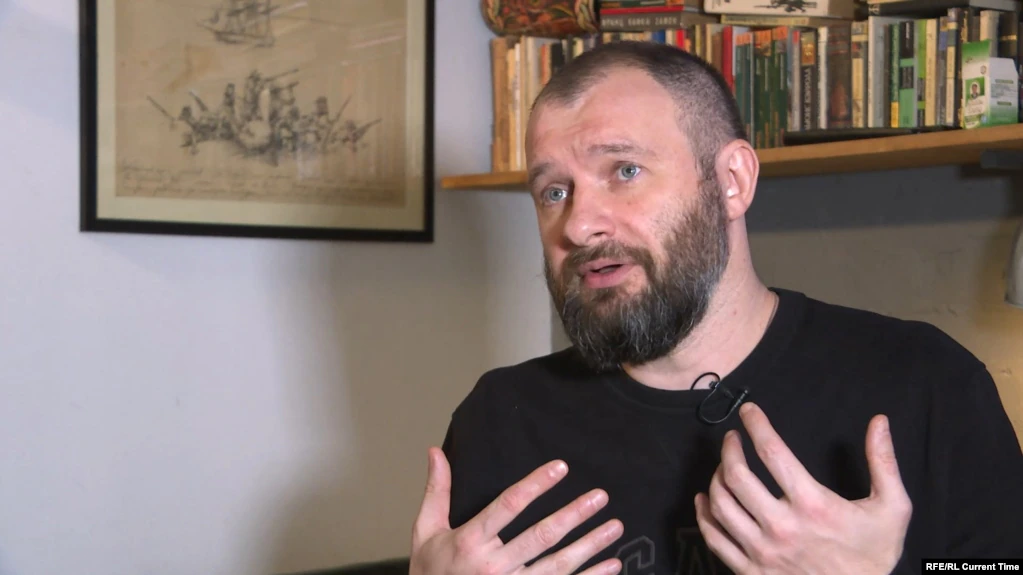
RFE/RL condemns Ihar Losik’s addition to Terrorist Watch Registry

RFE/RL condemns Ihar Losik’s addition to Terrorist Watch Registry

RFE/RL condemns Ihar Losik’s addition to Terrorist Watch Registry

Radio Free Europe/Radio Liberty (RFE/RL) condemns the Lukashenka regime’s addition of imprisoned RFE/RL Belarus Service journalist Ihar Losik to a terrorist watch list.

Losik was arrested by Belarusian agents in June 2020 and tried on fabricated charges including “organization and preparation of actions that grossly violate public order” and “preparation for participation in riots.” After a five-month trial held behind closed doors, Losik was found guilty and sentenced to 15 years in prison in December 2021. Since his arrest, Losik has faced severe physical and psychological pressures, and has undergone weeks of hunger strikes to protest his detention and charges.

“This escalation is an egregious abuse of the state’s authority and underlines the Lukashenka regime’s contempt for journalists who expose the truth,” said RFE/RL President and CEO Jamie Fly. “We continue to demand Ihar’s immediate release from prison so he can be reunited with his wife and daughter.”

Losik’s addition to Belarus’ terrorist watch list is the latest escalation in the country’s assault on free press in the region. Earlier this month, Andrey Kuznechyk, a journalist with RFE/RL’s Belarus Service was sentenced to six years in a maximum-security prison on the bogus charges of creating or participating in an “extremist organization.” Belarus Service journalist Aleh Hruzdzilovich also received a sentence of one and a half years in a penal labor colony in March for “taking part” in mass protests that he was covering on assignment.

Additionally, RFE/RL was added to Belarus’ registry of “extremist organizations” in December 2021, RFE/RL’s bureau in Minsk was raided and sealed by Belarusian security forces in July 2021, and numerous other journalists on assignment to report on the disputed August 2020 presidential election were harasseddetained, and stripped of their accreditations.

RFE/RL’s Belarus Service, known locally as Radio Svaboda, with a monthly average of over 33 million visits to its websites and 59 million page views, was first established in 1954 and is a leading provider of news in one of Europe’s most restrictive societies, defying the government’s virtual monopoly on domestic broadcast media.

[Source: RFE/RL press release]