RFE/RL President and CEO Jamie Fly to Depart

RFE/RL President and CEO Jamie Fly to Depart

RFE/RL President and CEO Jamie Fly to Depart

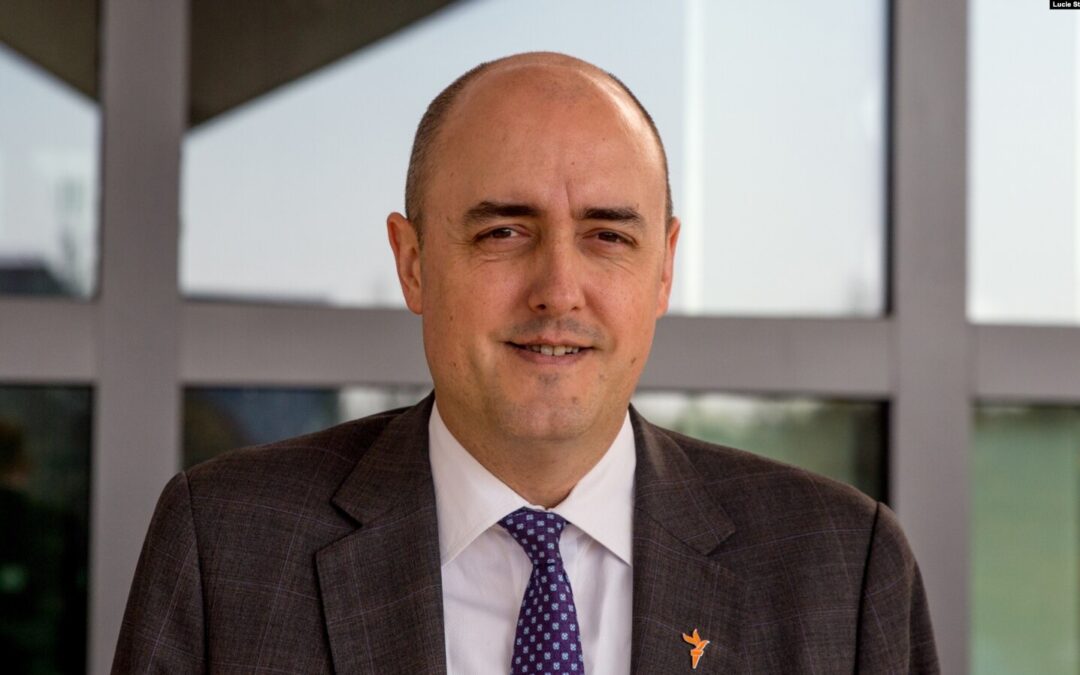
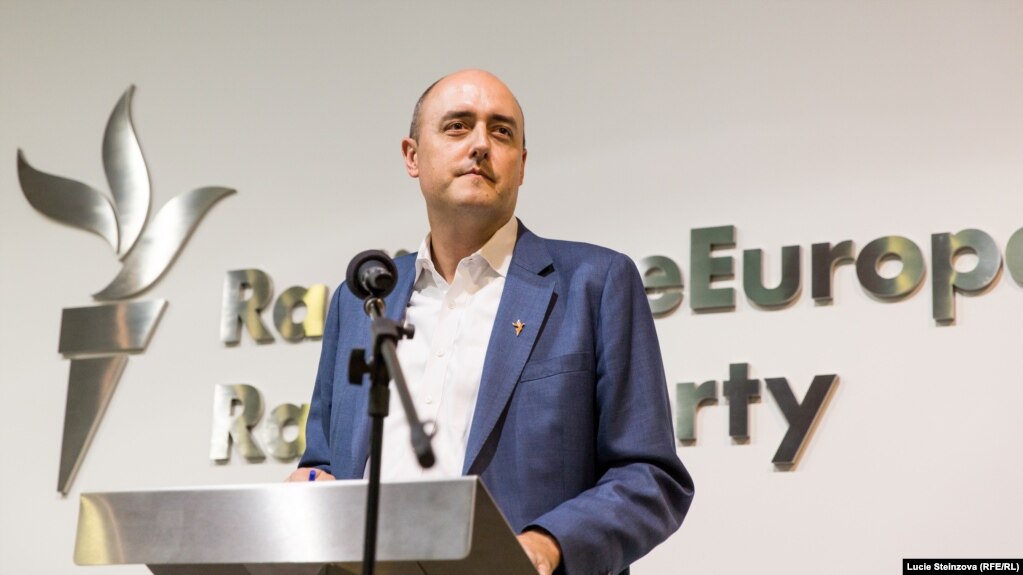
Radio Free Europe/Radio Liberty (RFE/RL) President and CEO Jamie Fly has announced his resignation, effective June 30, to move his family back to the United States and pursue an opportunity in the private sector. Former RFE/RL President and current board member Dr. Jeffrey Gedmin will serve as Interim President and CEO to provide steady and continued leadership as the RFE/RL Board of Directors carries out a search for a permanent President and CEO.

“I want to thank Jamie for his contributions to RFE/RL,” said Ambassador Karen Kornbluh, Chair of the RFE/RL Board of Directors. “As a result of his leadership and enduring strategic vision, RFE/RL is in a strong and stable position to carry out its mission, free from political interference, and reach growing audiences. He should be proud of this legacy.”

Fly was first named RFE/RL President and CEO in July 2019, and served until June 2020. After a brief period as a Senior Fellow and Senior Advisor to the President of the German Marshall Fund of the United States, he resumed leadership of RFE/RL in February 2021 following his reappointment by the Board of Directors.

Fly’s tenure prioritized RFE/RL’s response to Vladimir Putin’s unprovoked full-scale invasion of Ukraine through an expansion of RFE/RL’s operations in Ukraine and programming for Russian audiences. He also expanded RFE/RL’s focus on Chinese malign influence across Eurasia. He oversaw a digital transformation of a news division that is reaching ever-growing audiences, opening new bureaus, and responding strategically to authoritarian censorship. RFE/RL staff will remember Fly’s relentless advocacy on behalf of detained and imprisoned colleagues, and his resolve to secure their safe release to their families.

“I am honored to have been able to serve twice at the helm of this iconic institution, and to have spent time with the brave and talented journalists and support staff who make RFE/RL’s success possible,” said Fly. “I am optimistic that despite the authoritarian challenges we face, RFE/RL is well-positioned to excel in our markets and grow our audiences at a time when our independent reporting is needed more than ever.”

Fly led the development of RFE/RL’s comprehensive plans to counter Russian and Chinese disinformation and reach surging audiences with trusted news. As part of these strategies, RFE/RL established new bureaus in Riga and Vilnius to house exiled journalists and produce new content offerings. RFE/RL is launching a Digital Innovation Lab and Digital Forensic Unit to respond to censorship and disinformation narratives and is making greater investments in investigative journalism.  

Dr. Jeffrey Gedmin led RFE/RL from 2007 to 2011. He is the co-founder and editor-in-chief of American Purpose, and previously served as President and CEO of the Aspen Institute in Berlin, as Resident Scholar at the American Enterprise Institute in Washington, D.C., and as Executive Director of the New Atlantic Initiative. He is the author and editor of several books focused on Germany and European security, and is a member of the Council on Foreign Relations. Together with former U.S. Ambassador to the Czech Republic Norm Eisen, Dr. Gedmin is co-chair of the Transatlantic Democracy Working Group, hosted by the German Marshall Fund of the United States.

RFE/RL board members Margaret Hoover and Kristin Lord are leading the search process to select a permanent President and CEO. The Board of Directors has retained Russell Reynolds Associates to find a candidate who will build on Fly’s achievements and shepherd the organization into its next phase with continued bipartisan support from the U.S. Congress. Inquiries should be directed to RFERL.CEO@russellreynolds.com.

[Source: RFE/RL press release]
RFE/RL President and CEO Jamie Fly Visits Ukraine, Moldova as RFE/RL Expands Efforts to Counter Russian Disinformation

RFE/RL President and CEO Jamie Fly Visits Ukraine, Moldova as RFE/RL Expands Efforts to Counter Russian Disinformation

RFE/RL President and CEO Jamie Fly Visits Ukraine, Moldova as RFE/RL Expands Efforts to Counter Russian Disinformation

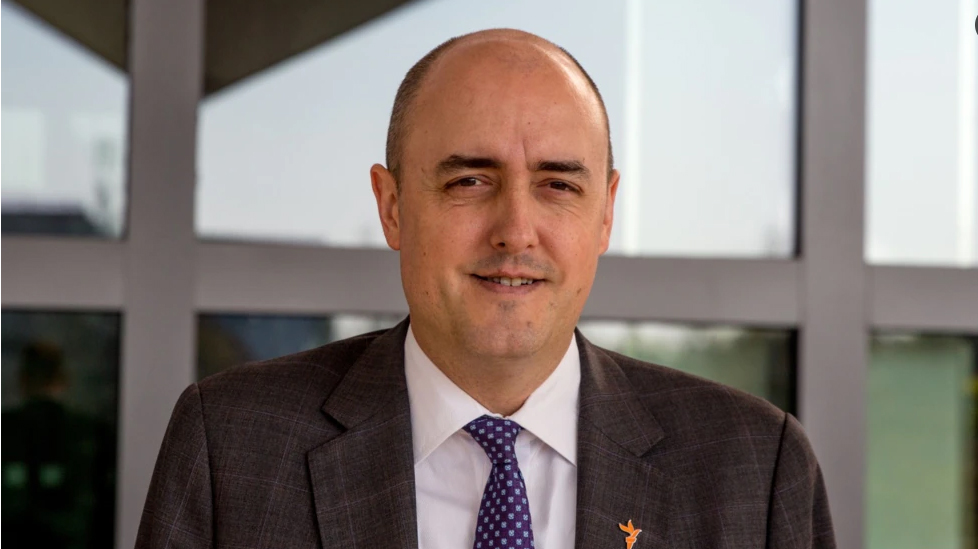
Radio Free Europe/Radio Liberty (RFE/RL) President and CEO Jamie Fly visited Moldova and Ukraine for meetings with senior officials, civil society groups, and the company’s journalists. His trip reinforced RFE/RL’s commitment to counter Russian malign influence, and to support media freedom in both countries.

“I am in awe of the professionalism and resilience shown by our incredible journalists reporting every day on Ukraine’s struggle to defend its freedom,” said Fly. “RFE/RL is committed to continuing to expand our reporting on this war as we grow our audiences in Russia, Ukraine, and across the region.”

Fly visited Ukraine as RFE/RL’s Ukrainian Service, known locally as Radio Svoboda, launched a new hour-long weekday morning show “Svoboda.Ranok” on YouTube from a new bureau in Lviv. The show recaps the latest news from the frontlines overnight, while giving Ukrainian audiences hope as they begin their day. RFE/RL also launched a new reporting project, “How Are You?” to cover the stories of the approximately thirteen million forced migrants displaced by Russian aggression.

During a visit to Odesa, Kyiv, and Lviv, Fly met with senior government officials including Deputy Prime Minister of Ukraine for Innovation, Education, Science, and Technology and Minister for Digital Transformation Mykhailo Fedorov; Minister for Culture and Information Policy Oleksandr Tkachenko; First Deputy Minister of Foreign Affairs Emine Dzheppar; Advisor to the Chief of Staff of President Zelenskyy Daria Zarivna; Kyiv Mayor Vitaliy Klitschko; Lviv Mayor Andriy Sadovyi; and members of parliament. Fly also met with representatives from other media outlets and civil society groups. In all discussions, Fly emphasized the importance of RFE/RL’s frontline reporting, its investigative work, and its ongoing role in creating a democratic culture with a vibrant free press. Fly also advocated for the release of imprisoned journalist Vladyslav Yesypenko, and thanked officials for their ongoing efforts to obtain his release.

As the Kremlin’s threats toward other countries in the region intensify, Fly also visited Chisinau, Moldova. In meetings with President Maia Sandu, Prime Minister Dorin Recean, and Foreign Minister Nicu Popescu, Fly reiterated RFE/RL’s commitment through its Moldovan Service and Russian-language services to produce content relevant for all Moldovans, including those subjected to Kremlin propaganda.

Since the start of Russia’s full-scale war over one year ago, RFE/RL journalists have provided audiences with award-winning reporting from the frontlines on the human toll and Ukraine’s response to the brutality. Journalists with the Ukrainian Service have uncovered mass burials in Mariupol, documented the search for Russian sailors killed in the sinking of the Moskva cruiser, and reported extensively on “filtration” and life under occupation. This thorough coverage has driven historic traffic increases among audiences in Russia.

On April 28, 2022, RFE/RL journalist Vira Hyrych was killed in Kyiv after a Russian missile strike hit the residential building where she lived. Prior to the full-scale invasion, Radio Svoboda contributor Vladyslav Yesypenko was unjustly sentenced to a six-year prison term (later reduced to five years) on fraudulent charges in Russian-occupied Crimea. Fly and members of the international community have called for Yesypenko’s immediate release.

RFE/RL’s Moldovan Service, known locally as Radio Europa Libera, is reaching Romanian and Russian-speaking audiences with objective reporting in a country with widespread disinformation. Following Russia’s full-scale invasion of Ukraine, Radio Europa Libera broke news about a bridge explosion at Moldova’s border, and later, errant missiles. The Service was also one of the first local outlets to report on refugees from Ukraine, and is covering Moldova’s ongoing economic hardship as a result of Russia’s war. Moldovan audiences also consume Russian-language reporting from RFE/RL’s Russian Service and 24/7 television and digital platform Current Time.

[Source: RFE/RL press release]

CEO Bennett condemns Iran’s sanctioning of RFE/RL president

CEO Bennett condemns Iran’s sanctioning of RFE/RL president

CEO Bennett condemns Iran’s sanctioning of RFE/RL president

U.S. Agency for Global Media CEO Amanda Bennett responded to the addition of Radio Free Europe/Radio Liberty (RFE/RL) President and Chief Executive Officer Jamie Fly to Iran’s sanctions list with a message of support for the people of Iran and a condemnation of the actions of their government.  

“This action by officials in Tehran is clearly part of their strategy to limit Iranian citizens’ access to uncensored information and intimidate those who seek the truth,” said Bennett. “The people of Iran have shown great courage in their fight for freedom. Despite the Iranian regime’s escalating attacks on the free press, independent journalists, and the open exchange of ideas, USAGM will not be deterred in our mission to provide audiences in Iran with independent, fact-based journalism.” 

These sanctions come in the wake of the Iranian government’s deadly crackdown on demonstrators protesting the death of 22-year-old Mahsa Amini, detained by Iran’s “morality police” for allegedly wearing a head scarf, or hijab, improperly, and follow a summer of unrest over poor living conditions and economic woes sparked by U.S. sanctions on Iran over its nuclear program. 

Fly is one of more than two dozen people and entities added to Iran’s sanctions list in response to new measures taken by the European Union and the United Kingdom against Tehran. RFE/RL’s Radio Farda was sanctioned in December 2022. The most recent sanctions ban those on the list from entering Iran and make it clear that their property and assets in Iran will be subject to seizure. The RFE/RL president described his inclusion on the sanctions list as “a badge of honor,” adding, “I am proud of the journalists at Radio Farda who are exposing government lies and cruelty, and reaching ever-growing audiences who want the truth. Nothing will halt our work.” 

According to a USAGM survey conducted in early 2021, RFE/RL and Voice of America together reached 19.0% of Iranian adults on a weekly basis across all languages and media platforms, with a measured unduplicated weekly audience of more than 12 million adults in Iran. 

Audiences in Iran continue to access RFE/RL and VOA programming, despite the government’s intensified efforts to block access to the internet, thanks to circumvention tools supported by the Open Technology Fund (OTF). Following the Mahsa Amini protests, the number of monthly active users of OTF-supported circumvention tools grew from 6 million to over 30 million users. That means 1-in-4 Iranians use these tools to access the internet and over 90% of USAGM’s Iranian audience uses OTF-supported Virtual Private Networks (VPNs) to access USAGM’s content. 

[Source: USAGM press release]

RFE/RL Expands Broadcasts to Afghanistan Despite Taliban Ban

RFE/RL Expands Broadcasts to Afghanistan Despite Taliban Ban

RFE/RL Expands Broadcasts to Afghanistan Despite Taliban Ban

Radio Free Europe/Radio Liberty’s (RFE/RL) award-winning programming is now available 24 hours a day for millions of Afghan listeners who have come to rely on the broadcaster in the last two decades. Two months after the Taliban removed RFE/RL from AM and FM radio transmitters in Afghanistan, Azadi, as RFE/RL is known locally, is doubling its time on air providing Afghans with independent news in the Dari and Pashto languages. From 6 p.m. to 6 a.m. local time Azadi is broadcasting on mediumwave on 1296 kHz, while during the second half of the day programming is available on shortwave.

This broadcasting milestone comes on Azadi’s 21st anniversary, and further solidifies RFE/RL’s role as a true public broadcaster – the only non-governmental radio broadcaster available 24/7 in Afghanistan. In the last two decades Azadi has become a staple of everyday life. Afghans frequently referred to Azadi as their “national broadcaster,” and its mix of news and information is commonly heard in public settings in the country, from marketplaces to taxis.

“Our expanded programming for Afghan audiences is indicative of the resilience and creativity of our team and their dedication to continue to reach our audiences in Afghanistan in the face of extreme Taliban pressure,” said RFE/RL President and CEO Jamie Fly. “Azadi will now be available for Afghans day and night to give them hope for a better future.”

Despite significant pressure from the Taliban, RFE/RL continues to provide bold coverage of stories suppressed by state media. Azadi has given a platform for the most vulnerable –  women and girlsvictims of violent extremism, the LGBTQI+ community, and youth — to share their experiences. At every step, Azadi has responded to the Taliban’s restrictive governance: when the Taliban forbade music, Azadi continued to play music on air; when the Taliban banned women from public life, Azadi gave women space to tell their stories; when the Taliban barred girls from attending school, Azadi and Learn Afghanistan provided a rigorous curriculum over the radio. For 21 years, Azadi has helped the powerless find community and hope.

In contrast to official Taliban claims, Afghans have again and again expressed their appreciation and gratitude to RFE/RL for providing a vital public service. RFE/RL will continue to find new and innovative ways to reach audiences.

Afghanistan is one of the most dangerous places in the world for journalists, and RFE/RL journalists have paid the ultimate price for their commitment to a free press. In 2018, three Radio Azadi journalists — Maharram Durrani, Abadullah Hananzai, and Sabawoon Kakar — were killed in a suicide bomb attack in Kabul. In 2020, Mohammad Ilyas Dayee was killed in a targeted bomb attack.

[Source: RFE/RL press release]

RFE/RL Opens New Offices in Vilnius and Riga to Reach Growing Audiences and Counter Disinformation

RFE/RL Opens New Offices in Vilnius and Riga to Reach Growing Audiences and Counter Disinformation

RFE/RL Opens New Offices in Vilnius and Riga to Reach Growing Audiences and Counter Disinformation

This week, Radio Free Europe/Radio Liberty (RFE/RL) opened new offices in Vilnius, Lithuania and Riga, Latvia. Announced in March 2022, these offices are critical parts of a comprehensive strategy to counter disinformation and reach new audiences in Belarus and Russia with trusted, independent news and information.

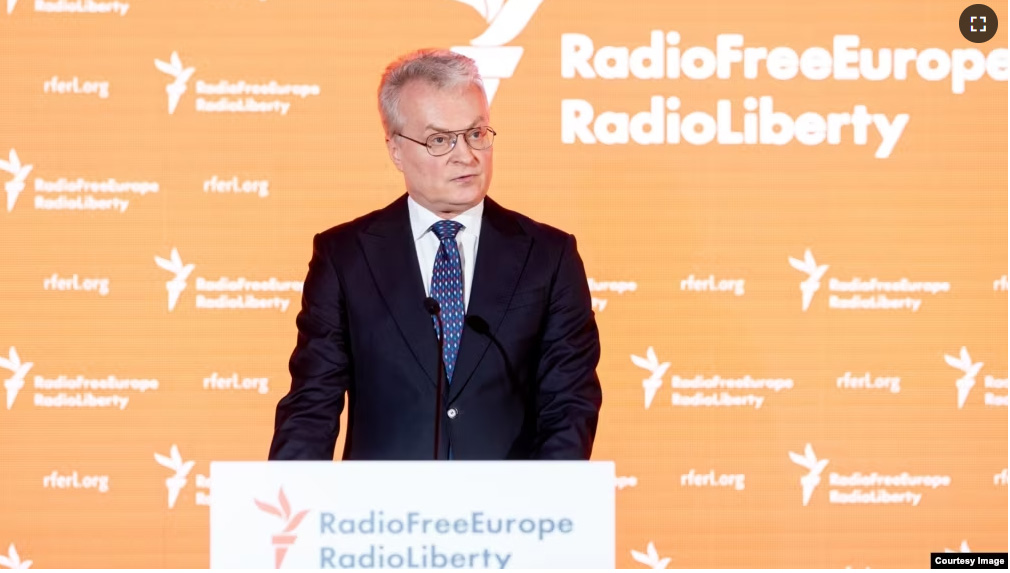
At an event commemorating the Vilnius launch, RFE/RL President and CEO Jamie Fly was joined by Lithuanian President Gitanas Nauseda, Speaker of the Parliament Viktorija Cmilyte-Nielsen, exiled Belarusian leader Svyatlana Tsikhanouskaya, U.S. Ambassador to Lithuania Robert S. Gilchrist, former RFE/RL president and member of the RFE/RL Board of Directors Dr. Jeffrey Gedmin, and other esteemed guests. At an event in Riga, Fly was joined by Latvian President Egils Levits, Latvian Minister of Culture Nauris Puntulis, U.S. Ambassador to Latvia John Carwile, members of Parliament, and media and civil society partners.

“I am honored that RFE/RL journalists have been welcomed in Riga and Vilnius by the Latvian and Lithuanian governments and local communities,” said Fly. “Having served Latvian and Lithuanian audiences during difficult periods in their histories, we are excited to be able to return now to work together to provide new generations who are still denied freedom with access to unbiased reporting.”

RFE/RL’s Riga office will become one of the company’s largest reporting hubs, with state-of-the-art facilities. It will host journalists from Current Time — a 24/7 Russian-language news platform — and the Russian Service who were forced out of Russia in March 2022, as well as new staff hired in Latvia. The office will produce Russian-language content offerings, including investigative journalism and non-news programming for RFE/RL’s soon-to-be-launched streaming platform Votvot. Current Time’s popular morning show, which frequently trends number one on Russian YouTube, will be produced from Riga, along with the Russian Service’s signature YouTube news shows.

In addition to meeting the demand for independent news within Russia, RFE/RL’s Riga office will produce Russian-language content for audiences in the Baltics, wider Europe, and beyond. A new daily news program will cover the Baltic region, providing an important counterpoint to disinformation about the three EU members and the freedoms enjoyed by their citizens.

A Digital Innovation Lab in the Riga office will develop new reporting tools, storytelling formats, and distribution processes that are replicable at RFE/RL and within the broader media community. In partnership with the Open Technology Fund, the Digital Innovation Lab will examine new ways to respond to Russian censorship and disinformation across RFE/RL’s markets.

RFE/RL’s new Vilnius office will host journalists exiled from Belarus in the aftermath of Alyaksandr Lukashenka’s fraudulent 2020 re-election. However, the Vilnius office is more than a haven. Current Time will create new video products from Vilnius for Russian-speaking audiences in Belarus as alternatives to Kremlin and other state propaganda. RFE/RL’s Minsk bureau was raided and sealed, and the Belarus Service’s websites were blocked in July 2021. In December 2021, RFE/RL was designated an “extremist organization,” a label that criminalized both the reporting and consumption of RFE/RL content. Two Belarus Service journalists – Ihar Losik and Andrey Kuznechyk – remain unjustly imprisoned by the Lukashenka regime.

While in Lithuania, Fly met with Speaker of Parliament Viktorija Cmilyte-Nielsen, Deputy Foreign Minister Mantas Adomenas, Deputy Chancellor of the Government Rolandas Krisciunas, Head of International Relations and EU Group Kestutis Vaskelevicius, and members of Belarusian civil society. In Latvia, Fly met with President Egils Levits, Prime Minister Krisjanis Karins, Foreign Minister Edgars Rinkevics, and other officials for productive discussions about challenges to media freedom in the region.

Since Russia’s invasion of Ukraine in February 2022, traffic to RFE/RL websites from within Russia has increased to record numbers despite significant Kremlin censorship. Both at the war’s start and at key moments, video views from within Russia surged, demonstrating the immense appetite of Russian-language audiences to know the truth. RFE/RL’s award-winning coverage is meeting this demand with extensive reporting on Russian atrocitiesconscription, and more.

For decades, the people of Latvia and Lithuania have been enthusiastic consumers of and contributors to RFE/RL’s reporting — both from RFE/RL’s Latvian and Lithuanian services, which operated from 1975 to 2004, and more recently from Current Time. These new offices mark RFE/RL’s physical return to Riga and Vilnius, where the services maintained bureaus from 1992 to 2004.

[Source: RFE/RL press release]