
26 June 2019
Text and video content from the BBC News Chinese website bbc.com/chinese now features on the popular Hong Kong news portal, Yahoo Hong Kong, and its mobile apps, Yahoo Hong Kong News and Yahoo TV.
Thanks to an agreement between BBC News and Yahoo Hong Kong, the BBC News Chinese content will be published as top stories on the Yahoo site. The Yahoo Hong Kong homepage now features a BBC News Chinese index.
Business Development Director, BBC World Service, Simon Kendall, says: “This is a great development for the BBC in Hong Kong where our news services in English, Cantonese and Mandarin reach a million people weekly. We have a strong and loyal audience on the audio platform, and with this partnership we will look to further enhance our engagement with digital audiences.”
Launched in 1999, Yahoo Hong Kong is one of the territory’s leading news portals. Rico Chan, Director of Yahoo Hong Kong, says: “Deeply rooted in Hong Kong, we have been serving it for two decades, and it is our ultimate goal to establish a high standard and trusted content platform by partnering with forward-thinking and pioneering media to catalyse the development of media industry. BBC News is one of the most valuable media brands globally, with positive and sharp ambitions. Our collaboration with BBC News Chinese strengthens our commitment to our users, allowing us to offer more abundant, premium, reliable content to millions in Hong Kong.”
The BBC’s recently launched Hong Kong bureau is home to journalists working on news in Mandarin, Cantonese and English, as well as to the commercial news operation, BBC Global News. The BBC also has an office for BBC Studios in Hong Kong, bringing world-class drama and entertainment programmes to Chinese audiences.
BBC News is available in Hong Kong on TV, via the BBC World News channel; online in English via bbc.com/news, and in simplified and traditional Chinese script, along with audio content in Cantonese and Mandarin, onbbc.com/chinese. The BBC News Chinese weekly hour-long radio programme in Cantonese, Newsweek, is broadcast on RTHK, along with the daily overnight broadcasts of BBC World Service radio in English. BBC Minute, a 60-second news bulletin in English, is carried by Hong Kong’s Metro Radio.
BBC News Chinese is part of BBC World Service which delivers news content around the world in English and 41 other language services, on radio, TV and digital. BBC World Service reaches a weekly audience of 319m. As part of BBC World Service, BBC Learning English teaches English to global audiences. BBC News attracts a weekly global audience of 394m people to its international services including BBC World Service, BBC World News television channel and bbc.com/news.
18 June 2019
More people around the world are tuning into the BBC than ever before, reaching a new high of 426m a week – an increase of 50m (13 percent) over the year, according to new figures released on 18 June 2019.
The Global Audience Measure (GAM) shows BBC News has an audience of 394m globally, a rise of 47m. The BBC World Service in English, and 42 languages, account for 319m of that figure – with an increase of 41m.
BBC World Service in English and the BBC World News TV channel have both achieved all-time record audiences of 97m and 101m respectively. BBC World Service’s 42 language services have climbed to 259m. BBC Global News, the commercial subsidiary of BBC News which operates the BBC World News channel and bbc.com, makes up most of the remainder and has seen increases across TV and digital of 6m, to 121m – another record high. Overall, BBC News has seen increases of 23m for TV (to 214m), 12m for audio (to 178m) and 18m for online (to 95m).
 BBC Director-General Tony Hall (pictured) says: “Every day our teams do an amazing job bringing independent, impartial news to audiences around the world, and today we can see just how much the BBC is valued. Thanks to Government investment we’ve been able to launch the biggest expansion of the World Service since the Second World War, and this shows how much the BBC can do for the UK.”
Jamie Angus, Director of the BBC World Service Group, says: “The BBC is on track to reach its audience target of 500m weekly, and has posted all-time record audiences for both World Service Radio and BBC World News. But most importantly we’re continuing to produce groundbreaking journalism that is attracting growing audiences, and making huge impact. From investigative journalism like Africa Eye to our work countering fake news and disinformation, the BBC is showing why it remains the world’s most trusted source of news.”
Three countries – India, Kenya and the USA – have seen the most impressive gains since 2018.
India, where BBC News now operates in nine languages, has seen a rise of 20m to 50m to become the top overseas market for BBC News. The USA becomes the third largest market overall with 38m, up 5m. The audience in Kenya has increased from 6m to 15m in the last year reaching 50 percent of the population. In Afghanistan, the BBC reaches 59 percent of the population. BBC News websites (World Service and bbc.com) have increased their combined reach by 6m to 51m globally, bucking wider trends for news sites.
The top 10 countries by BBC News audience are:
- India 50m
- Nigeria 41m
- USA 38m
- Kenya 15m
- Afghanistan 12m
- Bangladesh 12m
- Egypt 11m
- Iran 11m
- Tanzania 10m
- Pakistan 9m
Syndication of BBC content via partner television and radio stations around the world, and distribution via digital platforms like YouTube and Facebook, now add up to over 60 percent of audience reach.
Audio continues to be a major platform for the World Service, rising by 12.9m to 173m listeners worldwide. On all platforms, 30 percent of the audience is aged between 15-24 years.
Over the past two years new BBC News bureaux were opened in India, Kenya, Nigeria and South Korea, and 12 new language services were launched as part the largest expansion of the BBC World Service since the 1940s, funded by the UK government. The expansion has taken place against a background of rapid growth of rival international news services from Russia, China and the Middle East.

23 April 2019
Airing at 9pm, the studio based show focuses on the stories behind the news, with original storytelling and audience interaction via @GistNigeriaTV and its studio in Lagos.
Made by Channels Television and the BBC in Nigeria, this programme will be a weekly half hour for viewers in Nigeria, and is also screened on partner stations in Sierra Leone and Liberia.
Gist Nigeria offers in-depth reporting, focusing on the stories behind the news, its impact and how it affects the audience. It features analysis, studio discussions and hard-hitting interviews around the key issues that matter to Nigerians and West Africa. The programme will also feature stories covered by a selection of the BBC’s African services.
Broadcast from Channels Television’s new studios in Lagos, the programme will be produced to the same high standards of journalism and production that audiences around the world expect from the BBC and Channels Television.
Coverage of news will never be the same as the show’s talented duo, Wale Fakile and Ajoke Lijadu-Ulohotse aim to bring a new perspective to a younger audience.
Kingsley Uranta, Channels Television Assistant General Manager, Operations, says: “We look forward to our viewers enjoying the best of television programme production, crafted in the cherished tradition of Channels Television which is anchored on truth, balance, fairness and integrity. Of equal importance is showcasing the giant strides of our people around the world as well as highlighting those issues that demand attention on our journey to a better society.”
Nisha Kapur, BBC Commissioning Editor, Africa, says: “This partnership between the BBC and Nigeria’s leading TV channel goes beyond news coverage. It will tap into conversations going on in the country and track successful Nigerians living abroad. As we report and analyse regional and global news stories, Gist Nigeria wants to be free of clichés often associated with the news coverage of Africa. The programme will deliver BBC journalism in a dynamic and engaging style, based on our long-standing principles of independence, accuracy and unbiased reporting.”
Gist Nigeria will feature the following segments each week:
- Social Story
Exploring and showcasing what is trending on social media
- *360*
Comparing and examining how the issues raised are resolved in other countries
- Check Me Out
Featuring successful and inspirational stories of Nigerians in the diaspora.
The new co-production will air live on Channels Television in Nigeria and will also be available on Channels24 in the UK via Freesat and Sky.
4 March 2019

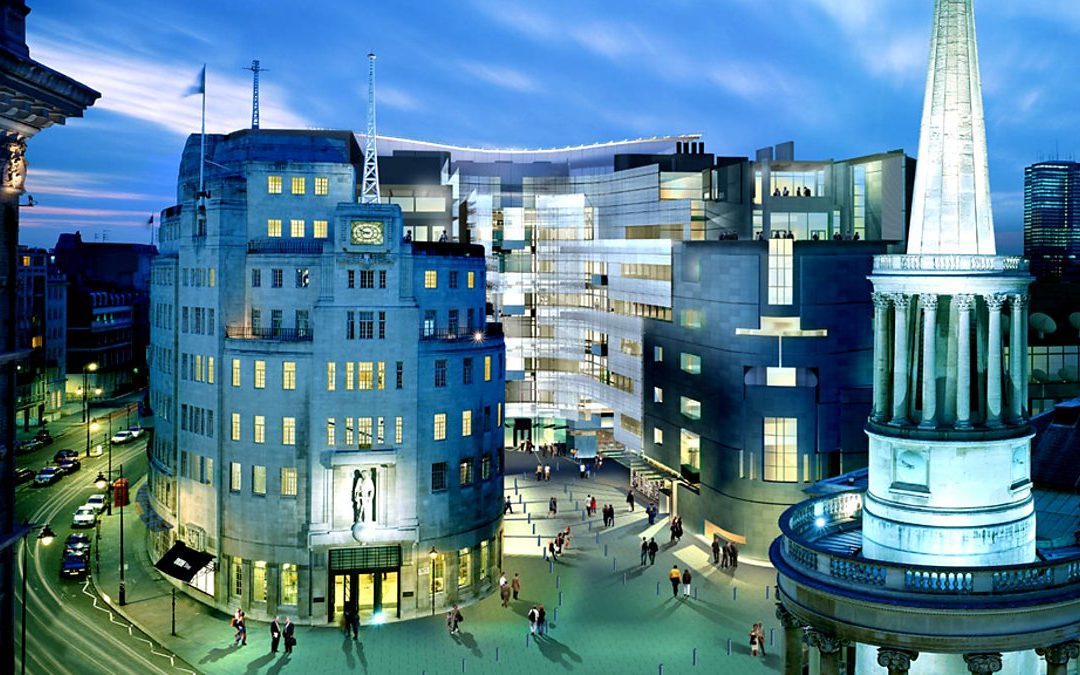
The BBC has launched an ambitious season of output that will be seen, heard and touched across all the Corporation’s channels, stations and platforms – and it all came from an elevator pitch, according to Director-General Tony Hall (pictured at the season launch in London).
It was in a lift (elevator) in Broadcasting House that season editor Emily Kasriel seized the opportunity to buttonhole the DG with the concept of what has become Crossing Divides, a multi-platform, multimedia season that explores how people can be brought together across lines that divide them in a fragmented world. And Hall says that it’s unlike anything the BBC has done before.
Crossing Divides will run across the year on TV, news, radio – national and local – and online starting on 4 March and it will bring people from conflicting sides together despite their differences – whether social, ethnic, political, religious, geographical or generational. The season will feature a broad range of programming, special reports and innovative events across the year, designed to reach audiences of all ages and create opportunities for new conversations.
 Emily Kasriel (pictured) has written a blog on the BBC website that we reproduce here:
Crossing Divides is an ambitious season. Throughout the BBC in 2019 we are exploring the power and possibilities of encountering people with conflicting opinions, across divisions of race, class, faith, politics and generation.
We’re tackling one of the biggest challenges of our age – polarisation and fragmentation – to support one of the BBC’s public purposes, contributing to social cohesion.
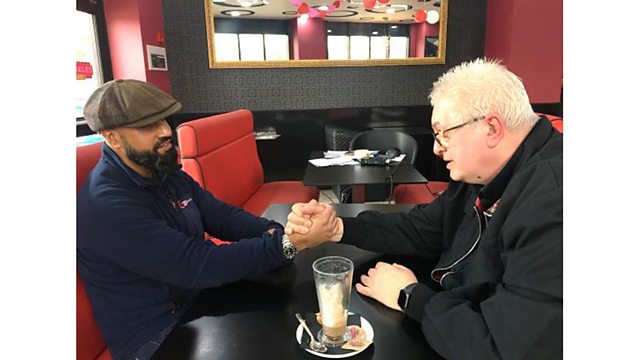
Recently, I was in Coventry with the BBC local radio team, who brought together Faisal, who drives a black cab, and Uber driver Barry. Before they met, the two drivers spoke of anger and fear about their livelihoods, the future and each other. It was moving to witness the moment Barry and Faisal began to recognise the common humanity across the table. There were even tears and a hug as Faisal left to take his next fare.
How will it work?
Psychologists have long known we harbour a deep need to be understood. Once we feel acknowledged, we may be more willing to lower our defensive walls, even by an inch, creating the space for us to hear, perhaps for the first time, an alternative perspective.
Faisal and Barry’s encounter for BBC Coventry & Warwickshire is part of a ground-breaking Crossing Divides project across all 39 BBC Local Radio stations. Each has identified three poignant and passionate local divisions, and will bring together individuals from either side. These 100-plus encounters will kick-start conversations and phone-ins across England.
It’s not just about talking
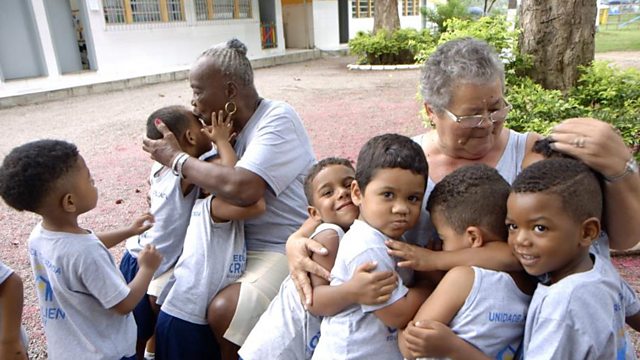
There are many ways to engage with people across the divide. Our Brazilian Service tells a story from the City of God, the violent Brazilian favela, where the very young and the very old lack affection and attention. They are crossing the generational divide by sharing capoeira lessons, acting classes, and hugs.
Our series on BBC Two, Pilgrimage, follows eight personalities with wildly different beliefs and faiths as they travel together on a demanding pilgrimage to see if they can understand each other better. BBC Monitoring discovers a dictionary enabling North and South Koreans to communicate, after decades of conflict caused their languages to grow apart.
Credit: BBC
Solutions-focused journalism
Crossing Divides has grown out of the BBC News Solutions-focused journalism project. Alongside reporting problems, journalists are encouraged to explore solutions – looking at limitations, seeing whether a solution can scale, and asking rigorous questions.
Crossing Divides isn’t all hugs and love-ins. We don’t expect people with vastly different outlooks to agree, or even get on. When they don’t, we tell that story too, like the encounter between an anti-fascist activist from Portland, Oregon, and a member of the all-male far right Proud Boys group. The men agree to sit across a table for an Our World Crossing Divides documentary, and there’s a tangible sense of danger, fury and contempt.

BBC’s Mike Wendling (centre) sits down with a Proud Boy (on the left) and an anti-facist activist. Credit: BBC.
Our Stories
We were encouraged to create this season across the BBC after the success of our week-long News pilot in 2018. Our Stories attracted more than 5m page views, and in excess of 300,000 comments, shares and likes on social media.
We broadcast the moving tale of Indonesian ex-child soldiers on opposite sides of a bloody conflict. Ronald Regang, a Christian, and Iskander Slameth, a Muslim, met after the end of the conflict at a trauma healing centre for child soldiers .
Once sent out to mutilate and murder others of a different faith, today they help keep a fragile peace on their island, Ambon. Following the BBC report, the two friends became national heroes, and a larger-than-life mural of the pair appeared in Ambon City, inspiring the community.
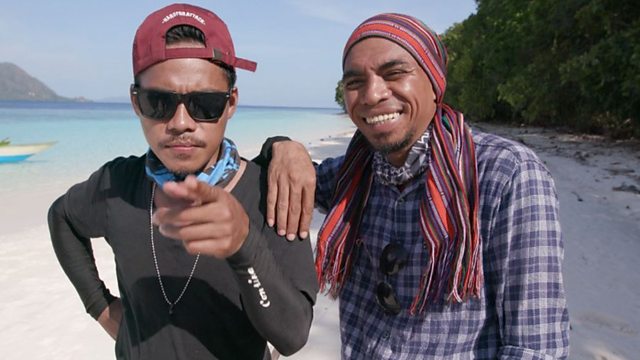
Ronald Regang and Iskander Slameth
Crossing Divides aims to spark a huge amount of conversations across divides. BBC News Labs and BBC World Service build on a successful pilot to create an interactive comic in which you can have a conversation with a virtual character who has different ideas about controversial topics such as Brexit, immigration or gun control.
One of the challenges of Crossing Divides is finding ways to help individuals and communities who share common spaces but rarely interact. We’re partnering with public transport companies across the UK for a Crossing Divides on the Move day in the summer, encouraging passengers to have conversations with strangers. Meanwhile, our BBC Radio 5 Live and BBC News Common Groundproject will pair up thousands of people with opposing political perspectives for face-to-face conversations.
We’re not endorsing particular solutions to fragmentation or implying that power relations can be equalised through an encounter. The ambition is to create more understanding. For each one of us, exposing ourselves to ideas which may challenge our core beliefs and the sense of who we are can feel like a risky endeavour – especially if we feel our community is under threat. But in doing so, we may discover our identities are more complex than we thought, with contradictions previously kept hidden, even from ourselves. We may realise we share beliefs, experiences and even values with enemies we feared or strangers we dismissed.
For this season, we have drawn on the work of Miles Hewstone, Julie Van de Vyvert, Libby Drury, the Behavioural Insights Team, British Future, More in Common, Conciliation Resources Jonathan Haidt as well as the Hedrodox Academy, Douglas Stone, Amanda Ripley, Solutions Journalism Network and Better Angels, who have a track record in negotiating successful conversations between Republicans and Democrats.
6 November 2018
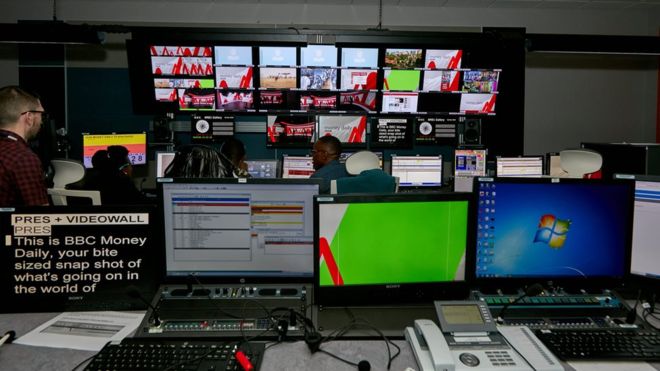
The BBC launched its largest bureau outside the UK in Kenya’s capital, Nairobi, on 5 November. Around 300 of the 600 BBC journalists working across Africa are based in the new, state-of-the-art facility.
“Our most important investment will be in training the next generation of African reporters and producers to world-class standards,” Francesca Unsworth, Director of BBC News, said.
The expansion is being funded by $376m (£289m) from the UK government and the production facilities at the bureau include a TV studio and two further live broadcast positions, two radio studios, two radio workspaces and five TV edit suites.
The Nairobi bureau follows the opening of another major hub in Nigeria’s commercial city of Lagos, where three new language services are based, while there has also been an expansion of the French service based in Senegal’s capital, Dakar.
“We are celebrating the African journalists and programme makers here today who will carry the torch of BBC professionalism, accuracy and impartiality into the future,” Rachael Akidi Okwir, Head of East Africa Languages for the BBC World Service said.
Nairobi-based BBC services: Afaan Oromo: Language of Ethiopia’s biggest ethnic group; Amharic: Ethiopia’s official language; Tigrinya: The main working language of Eritrea, along with Arabic. Also spoken in Ethiopia
Lagos-based BBC services: Igbo: An official Nigerian language. Also spoken in Equatorial Guinea; Yoruba: Spoken in south-western Nigeria and some other parts of West Africa, especially Benin and Togo; Pidgin: A creole version of English widely spoken in southern Nigeria, Ghana, Cameroon and Equatorial Guinea
Photo: Armstong Too/BBC
