BBC says some services may go dark as coronavirus crisis develops

BBC says some services may go dark as coronavirus crisis develops

BBC says some services may go dark as coronavirus crisis develops

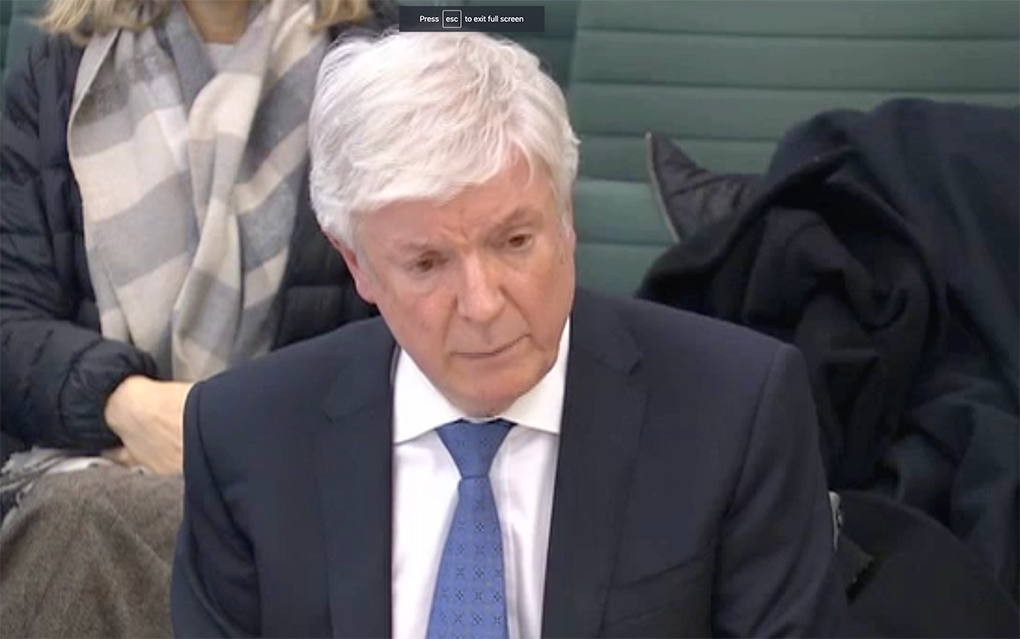
British MPs have been told by the BBC Director General, Tony Hall, that some services could be “out of action” if the corporation’s newsrooms are hit by large-scale outbreaks of the coronavirus. However, Lord Hall said that the BBC is “intent on keeping absolutely everything open”. 

Plans on how to copy with a service being out of action are under review, but the BBC is “gaming out” what would happen if large numbers of staff go sick or have to self-isolate. Hall said “you could imagine a local station or some other part of our news operation being out of action for a period.” 

The BBC’s local radio and TV services have far fewer staff than its national and international services and so have less capacity to cope with widespread sickness. Lord Hall told the MPs that  “at the moment we are intent on keeping absolutely everything open, all our networks going, because we know that globally, nationally and locally, people turn to us for information, as they did during the floods [that hit many parts of the UK in February and early March].”

Lord Hall’s remarks come as many broadcasters are tackling multiple issues, from what to do about cancelled sports events to how to keep operational areas clean and safe. One international broadcaster has reported that a member of staff has been identified as having coronavirus — but only after coming into contact with a number of staff and having used shared studio facilities. As the AIB noted in its coronavirus briefing to Members [https://aib.org.uk/Resources/Members/COVID-19/Coronavirus-AIB-briefing-020320.pdf] it is vital that shared equipment is kept rigorously clean with the use of anti-bacterial wipes on every piece of kit, from edit suite keyboards to headphones. The AIB will be updating its coronavirus briefing from time to time to reflect experiences of many AIB Members, and updated advice from governments around the world. 

BBC seeks to double global audience to one billion

BBC seeks to double global audience to one billion

BBC seeks to double global audience to one billion

BBC Director-General sets out vision for next seven years

  • Increasing reach of BBC News

  • Taking BBC Sounds app global

  • Story-led commissioning innovation in BBC News

  • Making Corporation carbon neutral

  • More staff away from London

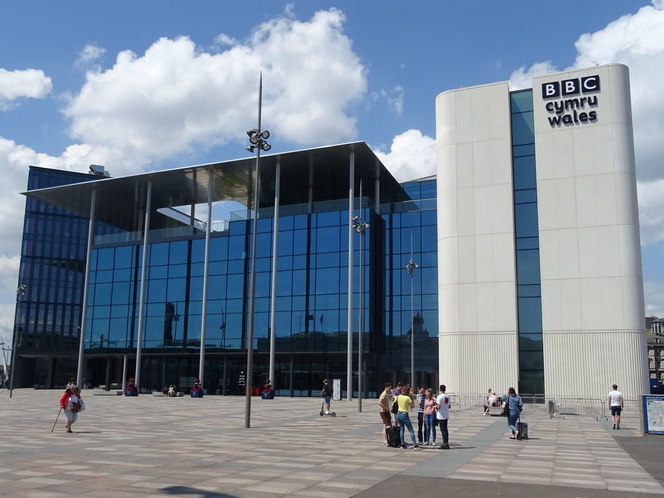
The BBC Director-General Lord Tony Hall gave a New Year’s address to staff from the new BBC broadcast centre in the Welsh capital, Cardiff, on 14 January.

In his wide-ranging speech – relayed to all BBC offices in the UK and abroad – Hall said that the plans he was announcing would set the Corporation up for the rest of the current Royal Charter period that runs until 2027.

Hall said that the BBC brand is “recognised, and at times revered”, all over the world, with 426 million people using BBC products every week. He praised the work of BBC Studios, the in-house production unit, highlighting the immense audience for the landmark “Planet” series produced by the BBC Natural History Unit. Alongside this, BBC News is growing as it gives “so many more people access to news and information they can trust”. He cited the example of India where the BBC is now reaching 50 million people, an increase of 70% in the last year.

Now Hall wants to build on these successes and double global reach to one billion people every week by the end of this decade. He praised the last UK government that provided new funding for BBC World Service and he said that he’s looking forward to working with Boris Johnson’s new government. In addition, Hall wants to develop the BBC global brand and associated revenues further, gaining additional revenue from outside the UK at the same time as reaching the one billion audience figure.

Hall said that Fran Unsworth, Director of BBC News, is looking at new ways of working, including how best to bring the diverse range of BBC News teams together and how they can best create impact among audiences, including making sure that all the Corporation’s audiences recognise that BBC News “is really for them”. There’s to be a new “story-led” approach to commissioning in News and more detail on this will be announced towards the end of January. “It’s not just about how we cover news, it’s about what we cover’” said Hall. Audiences have told the BBC that they want explanation and analysis that helps them explore solutions. During 2020 there will be a “major focus on big themes, the things that matter beyond the headlines and the immediate.”

Hall spoke of the new Cardiff headquarters for BBC Wales that uses the newest generation of broadcast technology, live IP. He said that the building in the centre of the Welsh capital is the “most connected and flexible media centre in the world,” that is also the “greenest and most sustainable broadcast centre in Europe and…the world’s most accessible building for neurodiversity.” The renowned school of journalism at Cardiff University has moved alongside the BBC in the city.

Outside Wales, a new BBC technology hub is being created in Newcastle-upon-Tyne in the north-east of England. This is where software engineers, designers, product developers and data scientists will be based, driving the BBC’s digital services for UK and international audiences.

The curation team of BBC Sounds – the digital app for audio content – will be based at Salford on the outskirts of Manchester in the north of England. Hall said that BBC Sounds will be opened up to new British creators and will bring the best podcasts to everyone – presumably meaning that the platform will be available to storytellers to use to reach larger audiences. The BBC Sounds app will become available globally later in 2020, taking live BBC content and archived material to international audiences.

Importantly in terms of sustainability, Hall said that he wants to see “what it would take to make the BBC’s operations carbon neutral in this Charter period.” The BBC created the Albert initiative that broadcasters and production companies can use to help them become more sustainable. The AIB has been working with Albert to take its message to broadcasters and producers internationally.

Reading between the lines, Hall’s speech was perhaps a message to the UK government that said: “we know what we need to do, and we’re doing it. Mess with the BBC at your peril.” For example, moving more teams to places across the UK can be seen as a hedging move, protecting the BBC from accusations of being too London-centric and making it harder for any future licence-fee settlement to shrink the BBC’s staff numbers if it poses a threat to regional jobs and economies. The fact that Hall cited the way other organisations are drawn to where the BBC is establishing or expanding bases demonstrates that the presence of the BBC is a local multiplier, helping to drive growth in the media and digital sectors where it operates.

There is more news to come from the BBC over the coming weeks. Broadcasters and media companies, both in the UK and around the world, as well as politicians will be looking at how the world’s largest publicly funded broadcaster is adapting to ever-increasing competition from streaming services, the challenges in the news sector and the problems associated with climate change.

Main image: JThomas / BBC Cymru Wales

BBC announces ‘Aim High’ – its new scheme for journalists with disabilities in Kenya

BBC announces ‘Aim High’ – its new scheme for journalists with disabilities in Kenya

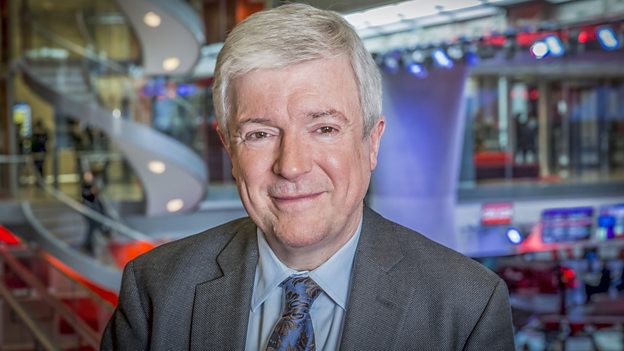
A new trainee scheme for journalists with disabilities in Kenya – Aim High – has been announced by BBC Director-General Tony Hall. The scheme is coming after development initiatives to train the next generation of African journalists and producers to world class standards.

Tony Hall, who is visiting the BBC bureau in Kenya, says the new initiative will offer three-month placements to three aspiring journalists with disabilities, starting from next April (2020). During the placement, they will spend their time at the Nairobi bureau working with news teams in different African languages and working on television programmes as well as digital production.

The placements will be open to anyone with a disability, hidden or visible, who is interested or experienced in journalism.

Tony Hall says: “The BBC has a long-standing commitment to Africa and telling African stories, reaching more than 100 million people every week. We want to develop independent journalism on the continent, and to support those whose voices often don’t get heard. We know it’s hard for people with disabilities to get opportunities in journalism. Aim High will give aspiring journalists with disabilities hands on experience, bespoke training and mentoring, and I urge people to apply.”

Further details of how to apply will be announced shortly.

Tony Hall is in Kenya to celebrate the BBC’s success in Africa. The broadcaster operates in 13 languages across the continent and has launched more than 20 new television programmes over the last 18 months, from sport to business to the award-winning investigative programme Africa Eye.  The BBC’s bureau in Nairobi is now its biggest outside the UK.

Tony Hall will announce the launch of BBC’s first co-production in Kenya. Kenya Connects, produced in partnership with KTN, is a current affairs programme aimed at young people.

He will also celebrate the winner of the Komla Dumor award, announced earlier this week. Solomon Serwanjja, from Uganda, will spend time at the BBC HQ in London before producing a special report on a subject of his choice from Africa.

(Source: BBC press release)

Sudan PM says international broadcasters welcome back in country

Sudan PM says international broadcasters welcome back in country

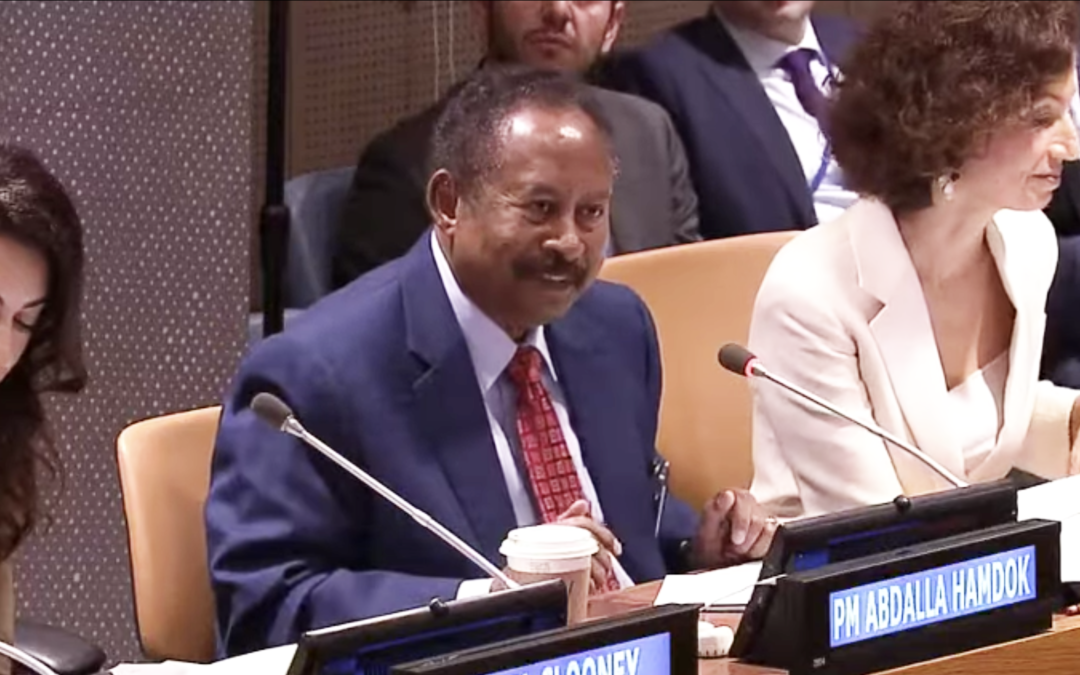
Sudan‘s newly appointed Prime Minister, Abdalla Hamdok, has told a meeting at the United Nations that international broadcasters are welcome back in the country to help build a democratic and free society.

At a UK-organised ministerial meeting on media freedom held at the UN headquarters in New York on 25 September, Hamdok said that he “grew up in Sudan in the 60s and 70s, where the BBC radio was probably the only source of international information for people. And the paradox, years after that, [is that the] BBC was prohibited from broadcasting from Sudan and people were not having access to it.”

He confirmed that the BBC was now allowed back onto FM in the country after an absence of a number of years. He also said that Monte Carlo Doualiya has been restored and that Al Jazeera which had also been banned was now back in the country. Not only were the broadcasters back on the air, but the country’s government is “very determined to create an environment that is open and allow journalists unfettered access to information but also to reporting, anywhere.

“This is actually not giving them any kind of privilege. It is good for our people. Free society, free people can only be productive, can be useful in their own lives but also for society. So I’m doing it precisely because of that.”

“The announcement by Sudan’s Prime Minister confirming the opening up of the country’s airwaves is highly positive,” said AIB Chief Executive Simon Spanswick. “It is good that AIB Members including the BBC, Al Jazeera and Monte Carlo Doualiya are now permitted to broadcast across the nation. The additional commitment to allowing journalists to report from the entire country is an immense step forward for the country and we look forward to supporting the Sudanese government and the international media community to develop Sudan’s media industry.”

The UN meeting, chaired by the UK’s special envoy on media freedom, Amal Clooney, also heard from Lord Ahmad, Foreign Office Minister, and Audrey Azoulay, UNESCO Director-General, all of whom spoke about the increasing need for media freedom globally and the Media Freedom Coalition to which 32 governments have agreed to join.

BBC News Chinese content live on Yahoo Hong Kong

BBC News Chinese content live on Yahoo Hong Kong

Text and video content from the BBC News Chinese website bbc.com/chinese now features on the popular Hong Kong news portal, Yahoo Hong Kong, and its mobile apps, Yahoo Hong Kong News and Yahoo TV.

Thanks to an agreement between BBC News and Yahoo Hong Kong, the BBC News Chinese content will be published as top stories on the Yahoo site. The Yahoo Hong Kong homepage now features a BBC News Chinese index.

Business Development Director, BBC World Service, Simon Kendall, says: “This is a great development for the BBC in Hong Kong where our news services in English, Cantonese and Mandarin reach a million people weekly. We have a strong and loyal audience on the audio platform, and with this partnership we will look to further enhance our engagement with digital audiences.”

Launched in 1999, Yahoo Hong Kong is one of the territory’s leading news portals. Rico Chan, Director of Yahoo Hong Kong, says: “Deeply rooted in Hong Kong, we have been serving it for two decades, and it is our ultimate goal to establish a high standard and trusted content platform by partnering with forward-thinking and pioneering media to catalyse the development of media industry.  BBC News is one of the most valuable media brands globally, with positive and sharp ambitions. Our collaboration with BBC News Chinese strengthens our commitment to our users, allowing us to offer more abundant, premium, reliable content to millions in Hong Kong.”

The BBC’s recently launched Hong Kong bureau is home to journalists working on news in Mandarin, Cantonese and English, as well as to the commercial news operation, BBC Global News. The BBC also has an office for BBC Studios in Hong Kong, bringing world-class drama and entertainment programmes to Chinese audiences.

BBC News is available in Hong Kong on TV, via the BBC World News channel; online in English via bbc.com/news, and in simplified and traditional Chinese script, along with audio content in Cantonese and Mandarin, onbbc.com/chinese. The BBC News Chinese weekly hour-long radio programme in Cantonese, Newsweek, is broadcast on RTHK, along with the daily overnight broadcasts of BBC World Service radio in English. BBC Minute, a 60-second news bulletin in English, is carried by Hong Kong’s Metro Radio.

BBC News Chinese is part of BBC World Service which delivers news content around the world in English and 41 other language services, on radio, TV and digital. BBC World Service reaches a weekly audience of 319m. As part of BBC World Service, BBC Learning English teaches English to global audiences. BBC News attracts a weekly global audience of 394m people to its international services including BBC World Service, BBC World News television channel and bbc.com/news.