16 July 2018
BBC international services reach record audience
“Reflecting the United Kingdom, its culture and values to the world”
The BBC has just published its Annual Report and Accounts 2017/18. The 270-page document gives a detailed account of the BBC’s international services, radio, television, online and social media as well as their reach and their total international weekly audience which now exceeds 345 million for all services.
The success of these services is certainly the result of a long tradition anchored when the Empire Service of the BBC, precursor of the BBC World Service, was established in 1932 by the first director general of the BBC (1927-1938) John Reith.
As Gavyn Davies, Chairman of the BBC Board of Governors, explained in a 2003 speech, when, Reith launched the service “he had a remarkable insight. The BBC’s foreign services, he said, must not be used as a propaganda weapon to spread the views of the British government, but must be seen as an independent voice, seeking only to speak the truth to its listeners.”
The following are excerpts of the BBC 2017/2018 report that give details of the BBC’s international services activities and expansion in the past year. The report says that the BBC plays and essential role carrying the distinctive culture, voice and values of the UK to the world
BBC global reach, news offer more important than ever
“Once again, the past year has highlighted the fact that, in many parts of the world,” the report says, “the media is less free than it was ten years ago. There has been the continued growth of big state-sponsored news organisations and from news aggregated by digital platforms. Al Jazeera, China Central Television (CCTV) and RT (formerly Russia Today) can command vast resources and, while the services offered by these organisations can be of high quality production, they also reflect a particular world-view and the agenda of their backers. With the possibility of state services from less free countries influencing global debate and news provision, the value to democracy and liberty of the BBC’s global reach is higher than ever.”
One of the UK’s most important cultural exports
The former UN Secretary General Kofi Annan once described the BBC World Service as quite possibly “Britain’s greatest gift to the world in the 20th century.”
The report says that it “inspires and illuminates the lives of millions around the world, helping them make sense of the world they live in. (…) The BBC’s two commercially funded international news services, BBC World News and bbc.com, continue to provide consumers with news from one of the most trusted and reliable news providers in the world. Meanwhile, BBC Worldwide – now part of the newly merged BBC Studios – invests in, commercialises and showcases content from the BBC around the world, to build the reach and reputation of the BBC brand overseas, champion British creativity and at the same time deliver commercial returns to the BBC to invest in public service content.
Record international audience
“The BBC once again attracted record audiences internationally, with the latest figures, the Global Audience Measure, revealing a total weekly audience of 376 million [taking into account de-duplication, i.e. ensuring that a person who consumes multiple BBC services or platforms or on multiple devices, is not counted many times in the top-level totals.]
“This includes all international content. This year has been a remarkable one for the BBC World Service, as it saw us carry out our biggest expansion since the 1940s, thanks to a £85 million investment during the year from the UK Government. This expansion is enabling us to bring trusted news to more parts of the world, including those in which access to free and impartial information is severely limited,” the report says.
Now available in more than 40 languages, increased international impact
The BBC World Service is “now operating in more than 40 languages around the world, from Pidgin to Korean, with new Government investment to increase the international impact and reach of the BBC.” As part of the expansion the BBC has opened new and expanded bureaux “in locations such as Dhaka, Mumbai, Nairobi, Delhi, Seoul, Bangkok, Yangon, Tunis, Cairo, Beirut and Belgrade and employed more than 1,000 new staff across the world. (…) This not only enhances our coverage for audiences abroad but also gives our UK news audiences a more in-depth view of areas that have traditionally received less coverage.”
“Having more journalists on the ground also means that we’re able to cover more under-reported areas and improve our offer to UK audiences. The BBC World Service saw its audience grow from 269 million to 279 million.”
Safeguarding World Service for future generations
“We’re aiming our international news at a new generation of users, to safeguard the World Service for future generations,” the report says, adding “this means focusing on new formats and new audiences. It is clear, for instance, that shortwave radio listening has declined rapidly again this year, and research has shown that with the increased global availability of cheap smartphones, audiences continue to switch to digital platforms for news. BBC World Service continues to do well with younger audiences internationally – a quarter of our weekly global audience is aged between 15-24.
Online offer proving an international success
The BBC’s “global commercial news website, bbc.com, continued to bring both news and features to a huge international audience. The audience for bbc.com is growing within the USA, the world’s largest media market. We have restructured our business to merge BBC Advertising with BBC Global News Ltd, the commercial subsidiary which runs both BBC World News and bbc.com. This means that the new single integrated business can develop our news content commercially,” the report says.
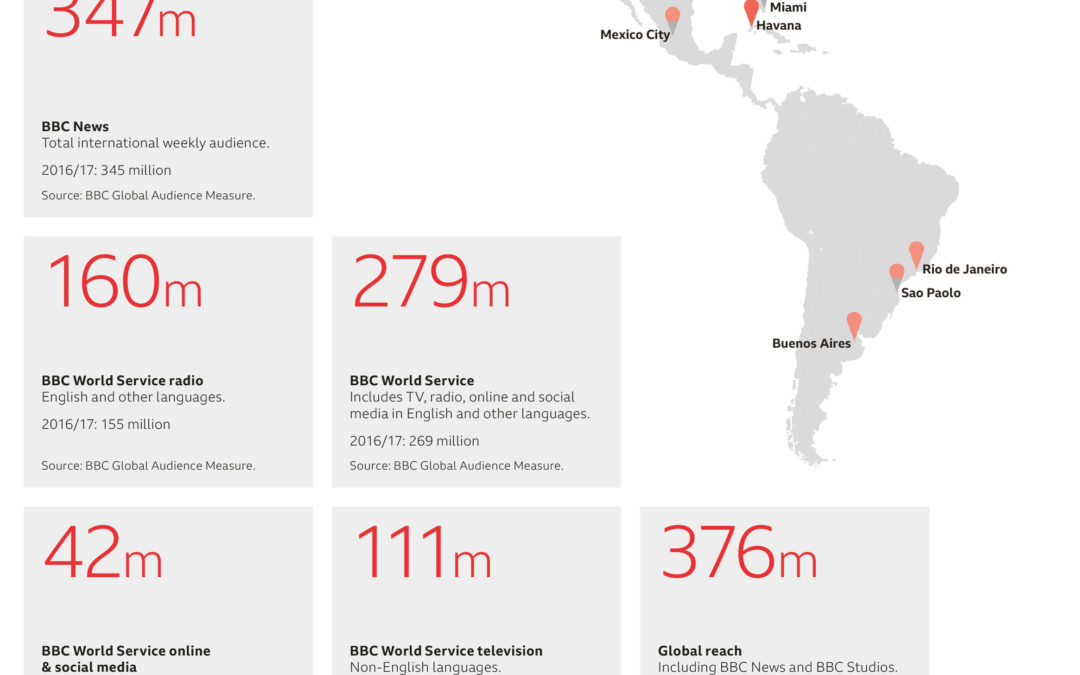
Global Audience Measure 2017/2018 (2016/2017) – details
347m: BBC News (Total international weekly audience – 2016/2017: 345m)
160m: BBC WS radio (English & other languages – 2016/2017: 155m)
279m: BBC WS (includes TV, radio online and social media in English and other languages – 2016/2017: 269m)
42m: BBC WS online and social media (2016/2017: 17.39m)
111m: BBC WS television non-English languages (2016/2017: 110m)
95m: BBC World News TV channel (English language global news channel 2016/2017: 99m)
37m: bbc.com (International English language) and social media
376m: Global reach, Including BBC News and BBC Studios
Note: The Global Audience Measure is an annual update of how many people are consuming the BBC weekly for all services in all countries across all platforms (television, radio, website and social media). Key to this is de-duplication i.e. ensuring that a person who consumes multiple BBC services or platforms or on multiple devices, is not counted many times in the top-level totals. For example, BBC World Service television, radio and online audience is less than the sum of its parts to ensure we do not count people more than once when looking at the total World Service audience.
59 % of foreign audience agree the BBC helps them to gain a more in-depth understanding of the news. Source: BBC Brand Tracker 2017 (not UK).
BBC is ranked No.1 for: Trust Independence Reliability (Source: BBC Brand Tracker 2017 (not UK).
2 July 2018
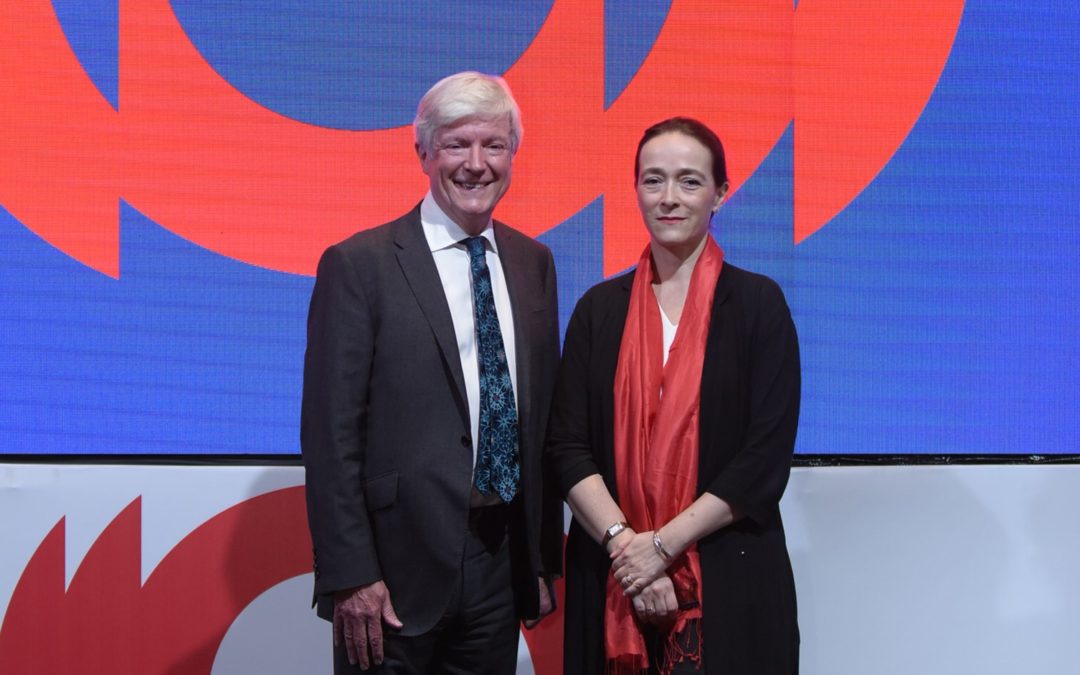
The European Broadcasting Union (EBU) has elected BBC Director General Tony Hall as its new President, and France Télévisions CEO Delphine Ernotte Cunci to serve as EBU Vice-President.
Both were elected by absolute majority at the EBU’s 80th General Assembly in Tirana on 29 June.
They will succeed outgoing President Jean-Paul Philippot, General Administrator of the Radio Télévision Belge de la Communauté Française (RTBF), who has served as EBU President since 2009, and RAI (Radiotelevisione Italiana) President Monica Maggioni, EBU Vice-President since 2015.
Hall and Ernotte Cunci will take up their new roles from 1st January 2019 for a two-year period. Since they are not already members of the EBU Executive Board, they shall each assume non-voting Observer status on the Board until their term of office begins. The EBU Executive Board is made up of 11 members.
Following EBU procedure for nominations on the Executive Board, the President and the Vice-President elected for the next term co-opt a third person chosen for having experience in how the EBU operates. Together, they constitute the Board Nomination Committee, which will draw up a list of candidacies for a seat on the Board; these candidacies must be received no less than 10 weeks before the General Assembly Winter Session.
The Board Nomination Committee sends the list to all EBU Active Members for comments.
After receiving these the Committee sends “to all Active Members its list of nine candidates, which shall be balanced and include persons from the main contributors to the Union and from other categories of Members, reflecting the geographical and cultural diversity of the Union.”
The nine members who will serve on the Board, with the President and Vice-President, are all senior representatives of EBU Active Member organizations and are elected by the General Assembly at its winter session for a two-year tenure.
The Executive Board meets around seven times a year.
The EBU has 73 Members in 56 countries from Europe and beyond
19 February 2018
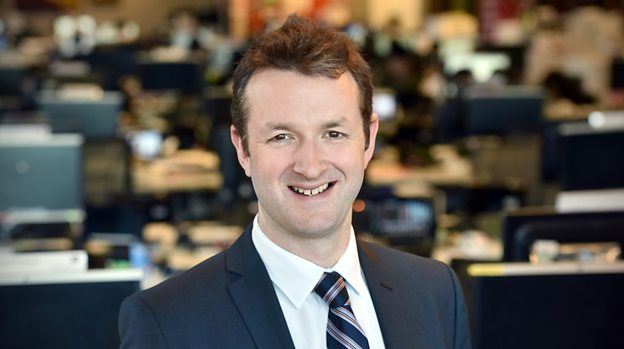
Jamie is currently Deputy Director of the World Service Group and Editorial Director of BBC Global News Ltd (GNL). He has been Acting Director of the World Service Group since the beginning of this year.
As Director, Jamie will lead the BBC’s global news services – BBC World Service, BBC World News and BBC.com – as well as BBC Monitoring. The BBC’s global news services have a weekly audience of 346m and the BBC World Service is currently undergoing its biggest expansion since the 1940s.
Director of BBC News and Current Affairs Francesca Unsworth says: “The BBC’s international news services are more important than ever, and Jamie brings huge editorial and leadership expertise to the Director role. He has a clear and strategic vision for the future of the World Service Group – both editorially and for our commercial services.
“The BBC World Service plays a unique role for the BBC, for Britain, and across the world, and I am confident it has an exciting future under Jamie’s direction.”
Jamie Angus says: “It’s a great honour to be appointed as World Service Director. There’s never been a greater need globally for the BBC’s independent, creative and engaging news services. With the expansion to 41 language services, we are already reaching new audiences everywhere; our English services on TV radio and online remain the gold standard for international news.
“With global concern growing about disinformation, ‘fake news’ and media literacy, the World Service Group has never been in a stronger position to show the way forward. We spot the stories, see the patterns and make sense of the world for our audiences. I’m very pleased to be able to lead that mission in the coming years.”
Jamie was previously the editor of Radio 4’s Today programme, covering high profile stories including the 2015 UK General Election, Scottish Independence referendum and the EU referendum. Under his leadership Today reached record audience figures of 7.4m and won an ARIA Radio Academy gold award for best National Speech Breakfast Programme.
Jamie joined the BBC in 1999 and was previously acting editor of Newsnight, editor of World At One and The World This Weekend, and editor of Daily News Programmes on World Service radio. He worked for the World Service Group in 2010-12 where he commissioned and launched new language TV bulletins in Urdu, Hindi and Swahili and the daily Focus on Africa TV bulletin, and worked on attachment as head of the World News newsroom.
His appointment follows a competitive recruitment process. Jamie replaces Francesca Unsworth, now Director of News and Current Affairs.
30 January 2018
The review, which covers correspondents, presenters and on-air editors in news and news-related areas, found no evidence of gender bias in pay decision-making, but identified a number of issues in relation to pay which have resulted in anomalies that need addressing, including:
- Too many pay decisions being made at local levels because of the absence of clear pay frameworks.
- A lack of clarity and openness about the basis for pay decisions because of the absence of pay ranges for on-air roles.
- A slower rate of pay progression for both men and women over the past decade because of a period of significant pay restraint.
PwC makes a number of recommendations including a clear pay framework, narrower pay ranges, simpler contracts and allowances and improved transparency. The BBC wants a fair, equal and transparent pay framework for the future, so we will now consult our presenters on this to help ensure we get it right.
On-Air Review
BBC Management Response
The plan unveiled by the BBC today means:
- Substantial pay cuts for some men and increases for some male and female presenters – prominent men in BBC News have already accepted pay cuts. We have already addressed close to half of the 230 cases raised of pay unfairness and equality by women and men – on and off air. We aim to conclude the rest by the summer.
- A new on-air framework for determining the pay of people on air – an equal, fair and transparent structure for the future. We will have narrower pay bands because they have become too wide; cut the number of contracts and allowances to be simpler and fairer; and have clear criteria for how pay reflects skills, experience and audience impact. We will fully consult on this to make sure we get it right.
- Greater pay transparency – we aim to be the most transparent organisation when it comes to pay. When our reforms are complete, everyone will be able to see the pay range for virtually every job in the BBC. Where there are more than 20 people in a job, staff will also be able to see where everyone else is positioned. We will do more to explain the pay of each presenter paid over £150,000, especially where they do more than one role.
- Review of career progression and working practices for women – we will look at what more we can do to make the BBC a better place for women to work. We already, for example, allow and encourage job shares and other flexible forms of working. We will review what we do to ensure we have the best in class processes and opportunities. We want to help more women progress more quickly at the BBC.
- We will also accelerate our work to achieve 50:50 representation across the BBC by 2020. Through the year we will continue to make changes to our on-air line-ups at a faster rate.
The BBC is committed to equal pay and will not discriminate on the basis of gender, race, disability, social background or any other characteristic. But, as in any organisation, that does not mean everyone is paid the same. People bring different skills and experience, and take on different responsibilities or risks. But we must apply those factors fairly, transparently and without discrimination.
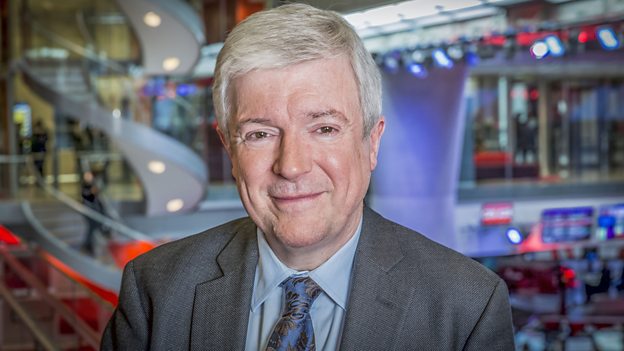
Director-General Tony Hall says: “The BBC believes in equality. No one should be paid differently because of their gender. The BBC has a special role representing Britain. That is why we need to be and want to be an exemplar on gender pay, and equal pay.
“Today’s report does not find evidence of gender bias in decision-making, but it shows that we have real and important issues to tackle, particularly in some areas of news and current affairs, and I’m determined to get it right. The plans we’re setting out today go further and are more important steps in modernising the BBC and making it fairer.
“We’ve already made an important start. We’re addressing unfairness in individuals’ pay and want to close the gender pay gap and have women in half of our on-air roles by 2020. Those are big, bold commitments I’m really serious about.
“We are clear we’re going to tackle this and change for the better, and I hope other organisations take the same approach. The BBC can and must lead the way. I am determined that we will.”
The report by PwC covers around 800 on-air roles. It makes a series of recommendations, which form the basis of a proposed new pay framework.
PwC’s recommendations are: proposing a grading structure for the on-air group; using narrow pay ranges; addressing outliers both above and below the pay ranges; publishing pay ranges; reviewing the current approach to contracting; simplifying allowances; creating an on-air talent team to help manage the governance for this population; conducting regular reviews; reporting regularly; and continuing to improve diverse representation.
In October we published an equal pay audit of around 18,000 staff which concluded there was no systemic discrimination against women at the BBC. We also published our audited gender pay gap report, which shows the gender pay gap is 9.3 percent against a national average of 18.1 percent.
At the same time we set out a range of actions we were taking including access for staff to specialist advice if people have questions about pay, ensuring managers review pay in their team every six months to ensure fairness, and ending single-sex panels for job interviews, as well as striving for diverse shortlists for jobs.
Notes to Editors
- The PwC review covers around 800 individuals consisting of Presenters, On-Air Editors and Correspondents. These individuals work within one of the following areas: Network News, Radio Continuous Programmes, Nations, English Regions, World Service or Sport. The review is published here
- The BBC’s response is available here
- The BBC has already published an equal pay audit of the majority of its workforce here. Our gender pay gap report is also available here
Below is the BBC’s performance against a range of gender and diversity targets:
- 48% of staff are women (2020 target 50%)
- 42% of leadership are women (2020 target 50%)
- Target for 50:50 gender split in lead roles on air across all genres by 2020.
- 14.5% of staff are BAME (2020 target 15%)
- 10.3% leadership are BAME (2020 target 15%)
- Target for 15% BAME on screen, on air and in lead roles across all genres by 2020.
- 10.2% staff are disabled (target 8%)
- 9.6% leadership are disabled (target 8%)
- Target for 8% disabled people on screen and on-air including some lead roles by 2020.
- Tony Hall has also committed to closing the gender pay gap by 2020.
(Source: BBC press release)
15 December 2017
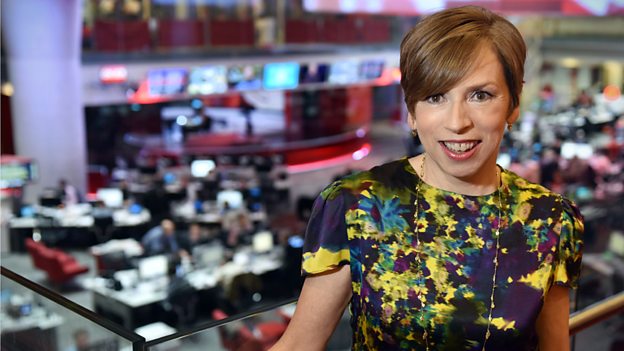
The BBC has announced that Fran Unsworth is to be the new Head of News and Current Affairs.
Fran Unsworth is currently Director, BBC World Service Group and deputy director of News and Current Affairs. In her new post she will be responsible for all the BBC’s domestic and international news services.
Fran joined the BBC in local radio before moving to London and the Newsbeat programme on the pop music station Radio 1. She spent some time as a network radio producer in Washington DC, and later joined Radio 4’s The World At One and PM. Fran was appointed the BBC’s Home News Editor and then, in 2001, Head of Political Programmes. In 2005 she became Head of Newsgathering, running one of the world’s largest newsgathering operations with bureaux across the world.
For periods between November 2012 and June 2013, Fran was the BBC’s Acting Director of News and Current Affairs. Fran Unsworth was made Director of the BBC World Service Group in December 2014. In this role she led the BBC’s global news services – BBC World Service, BBC World News and BBC.com/news – as well as BBC Monitoring. Prior to her appointment to the World Service Group, she was Deputy Director of BBC News and Current Affairs.
Tony Hall, Director-General of the BBC, says “The Director of News and Current Affairs is one of the most demanding of any in broadcasting.
“News is at the very heart of the BBC. I am delighted Fran Unsworth is taking up the role. She brings a combination of excellent news judgement, authority, management knowhow, and the trust of her colleagues both in news and across the BBC.”
Fran Unsworth says: “I am delighted to lead BBC News and Current Affairs. We are living through a period of significant change at home and abroad. In a complex world, the BBC’s journalism matters more than ever. I am proud to lead a team of such dedicated and talented people.”
Fran takes up her post early in the New Year.
