

Vatican launches Latin-language radio

Vatican launches Latin-language radio

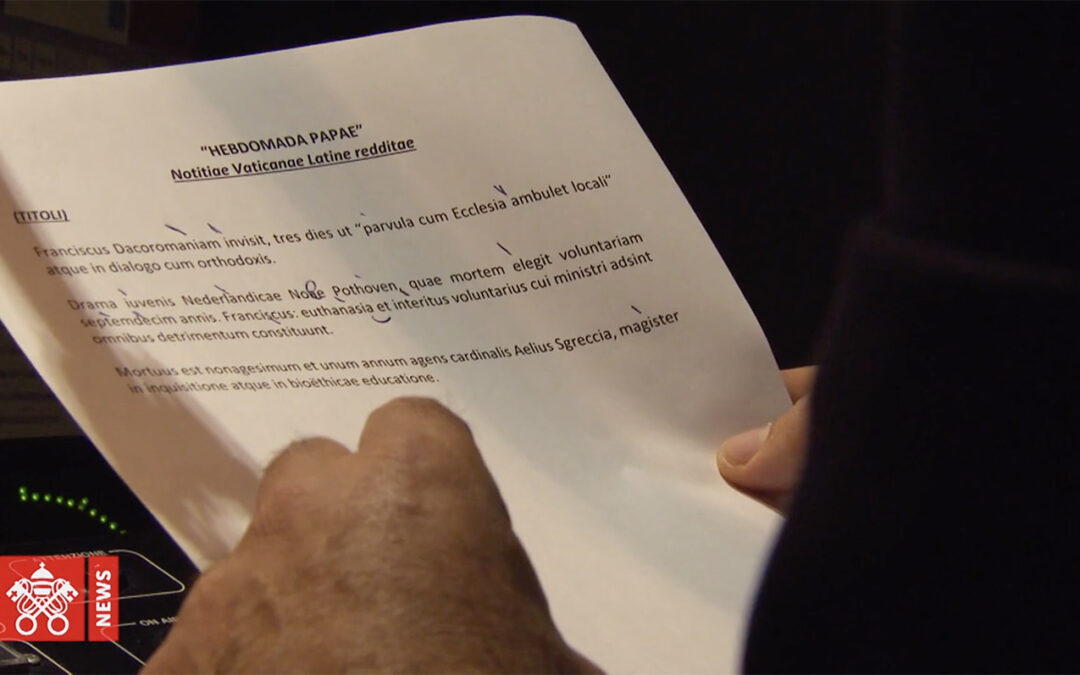
Vatican Radio has launched a weekly five-minute news bulletin – in Latin. Harnessing the resources of the Vatican’s Latin Letters Office – a department of the Secretariat of State where Church documents are written in or translated into Latin – the programme is described by Vatican Radio’s Editorial Director Andrea Tornielli as “a real, informative news bulletin”/ According to Tornielli, the programme was not conceived “with a nostalgic look to the past, but as a challenge for the future”.

The weekly bulletin is titled Hebdomada Papae, notitiae vaticanae latine redditae or The Pope’s week – Vatican news in Latin. There are very real challenges, however, in using a dead language to report on modern day life. According to a report in the UK Daily Telegraph, Vatican translators have had to come up with some ingenious ways of communicating contemporary concepts into Latin. A suicide bomber, for instance, is rendered as voluntarius suis interromptor while xenofobia is exterarum gentium odium. Latin equivalents of modern terms are often tongue-twisters, such as Certaminibus Mundialibus Sphaeromachiae for the football World Cup, or follis canistrīque ludus for basketball. Much of the Latin in use today has been invented by contemporary scholars and would not have been known to the Romans. There is a word, for instance, for popcorn – máizae grana tosta, or toasted maize grains.

Despite the fanfare for the new weekly programme that went to air on 8m June, Vatican Radio is not the only – nor the first – broadcaster to air programmes in Latin. Finland’s public broadcaster YLE has aired a weekly news bulletin in Latin for many years, under the title Nuntii Latini.

UK media regulator chief leaves to become chair of major retailer

UK media regulator chief leaves to become chair of major retailer

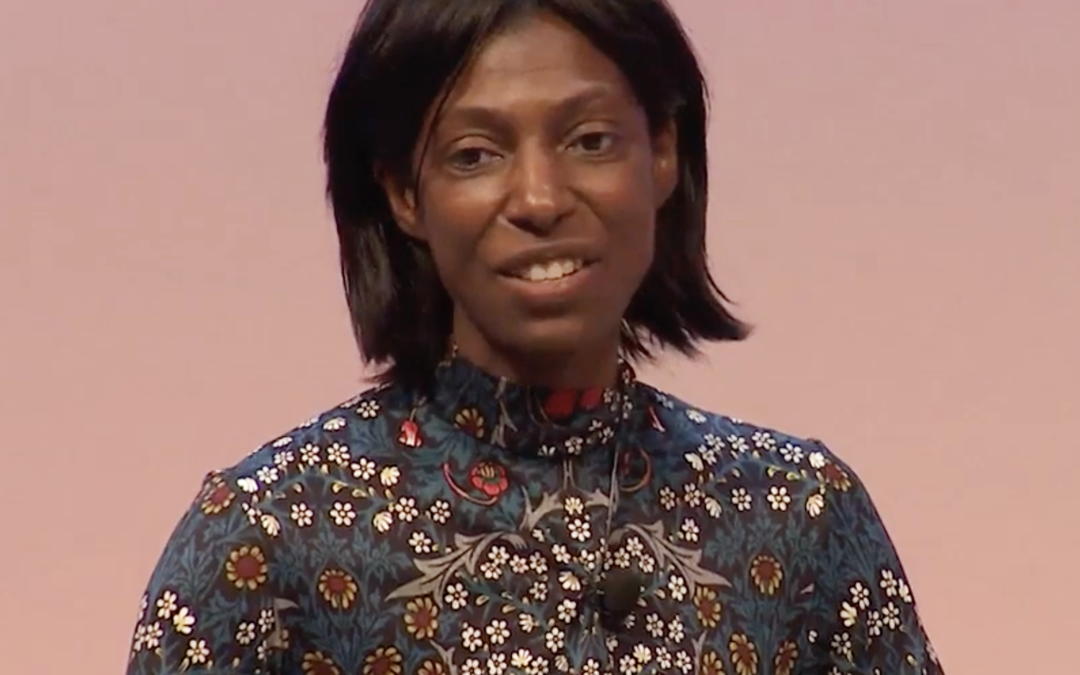
Sharon White, the Chief Executive of the UK media and telco regulator Ofcom, has announced she is leaving to become the Chairman of major UK retailer John Lewis. John Lewis also also owns the UK Waitrose supermarket brand. (she has insisted retaining the Chairman title)

Ms White has run Ofcom for the last four years. During her time at Ofcom she has dealt with some critical issues including the consideration of breaking up British Telecom (BT) and taking on the responsibility for regulation of the BBC from the BBC Trust. She has also started the work for preparing the regulator to take on a major role in regulating online content because of the increased political pressure on large technology companies.

At John Lewis Ms White will replace Charlie Mayfield who steps down in early 2020. She is reported to be receiving a salary of £990,000 and she will be only the sixth chair of the John Lewis partnership and the first woman to hold the position – and reportedly insisted on keeping the title chairman, rather than changing the job to a gender-neutral title.

Prior to her taking up the Ofcom role Ms. White, an economist by training, was permanent secretary to the UK treasury where she was responsible for overseeing public finances. She also held roles at the UK Ministry of Defence and The World Bank, and was a policy advisor at 10 Downing Street.

She joined the board of house builder, Barratt Developments, as a non-executive director in January 2018.

Ms. White joins John Lewis at an interesting time with falling profits and many fellow high street stores suffering severe trading issues. Her appointment has been met with surprise in some corners because of her lack of retail experience.

“I readily recognise that Sharon is not the conventional retail choice. But these are not conventional retail times, nor is the partnership a conventional company,” said Sir Charlie, who has led the retailer since 2007.

Ms White said her experience at Ofcom would help in her new job. “In my current role, my vision has been to ensure that consumers in fast-moving markets get high-quality, reliable services at fair prices, from thriving businesses they can trust,” she said in a statement.

The AIB has worked closely with Sharon and her teams and we wish her well in her new position.

ABC chair statement on raid and media freedom

ABC chair statement on raid and media freedom

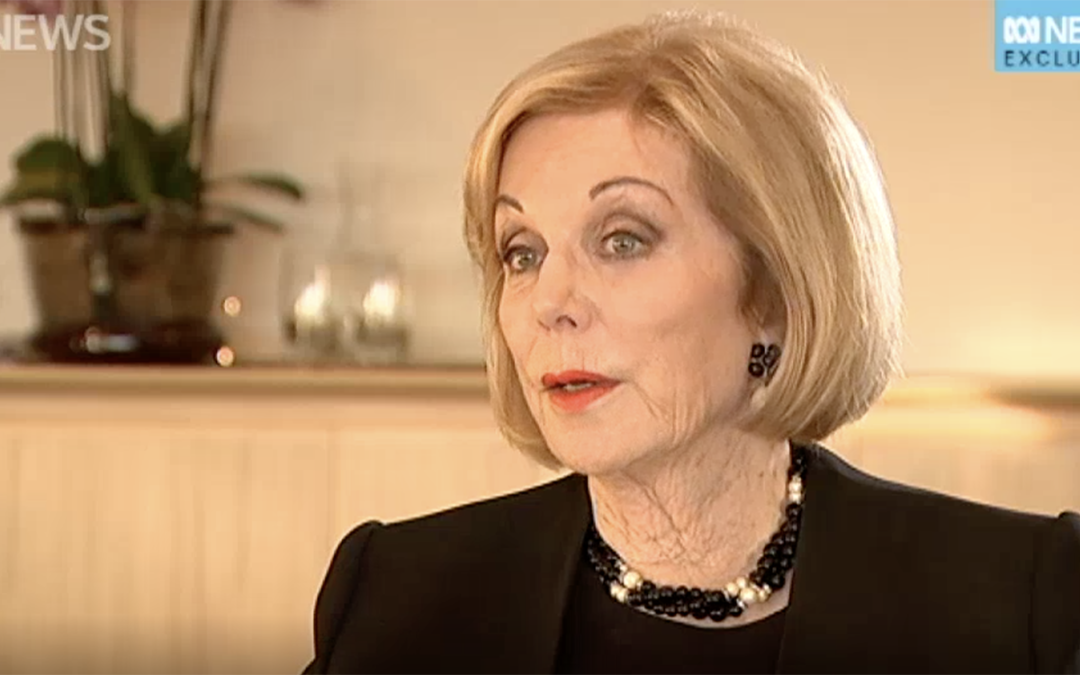
Following the raid on the ABC, the Corporation’s chair Ita Buttrose issued this statement:

On behalf of the ABC, I have registered with the Federal Government my grave concern over this week’s raid by the federal police on the national broadcaster.

An untrammelled media is important to the public discourse and to democracy. It is the way in which Australian citizens are kept informed about the world and its impact on their daily lives.

Observance of this basic tenet of the community’s right to know has driven my involvement in public life and my career in journalism for almost five decades.

The raid is unprecedented – both to the ABC and to me.

In a frank conversation with the Minister for Communications, Cyber Safety and the Arts, Paul Fletcher, yesterday, I said the raid, in its very public form and in the sweeping nature of the information sought, was clearly designed to intimidate.

It is impossible to ignore the seismic nature of this week’s events: raids on two separate media outfits on consecutive days is a blunt signal of adverse consequences for news organisations who make life uncomfortable for policy makers and regulators by shining lights in dark corners and holding the powerful to account.

I also asked for assurances that the ABC not be subject to future raids of this sort. Mr Fletcher declined to provide such assurances, while noting the “substantial concern” registered by the Corporation.

There has been much reference in recent days to the need to observe the rule of law.

While there are legitimate matters of national security that the ABC will always respect, the ABC Act and Charter are explicit about the importance of an independent public broadcaster to Australian culture and democracy.

Public interest is best served by the ABC doing its job, asking difficult questions and dealing with genuine whistle-blowers who risk their livelihoods and reputations to bring matters of grave import to the surface. Neither the journalists nor their sources should be treated as criminals.

In my view, legitimate journalistic endeavours that expose flawed decision-making or matters that policy makers and public servants would simply prefer were secret, should not automatically and conveniently be classed as issues of national security.

The onus must always be on the public’s right to know. If that is not reflected sufficiently in current law, then it must be corrected.

As ABC Chair, I will fight any attempts to muzzle the national broadcaster or interfere with its obligations to the Australian public. Independence is not exercised by degrees. It is absolute.


CommunicAsia 2019 – SatADSL to Extend its cloud-based service delivery platform to Asia-Pacific Market for first time

CommunicAsia 2019 – SatADSL to Extend its cloud-based service delivery platform to Asia-Pacific Market for first time

Meet with SatADSL to receive exclusive insight into how its Cloud-based Service Delivery Platform will be launched into Asia to reveal accessible, value-added services for operators

SatADSL, a provider of professional VSAT services via satellite, will attend CommunicAsia 2019 to discuss how its innovative satellite networking solutions, including the Cloud-based Service Delivery Platform (C-SDP), will be extended to cover Asia for the very first time.

As a first-of-its-kind solution, C-SDP provides teleport operators with a unique way to outsource their satellite services, reducing the cost of ubiquitous connectivity. This addresses challenges such as low Average Revenue Per User (ARPU) in rural areas. Providing a complete OSS/BSS, carrier-grade, fully redundant platform, the C-SDP enables, via the cloud, satellite services over any frequency band, bringing significant advantages such as fast time-to-market, flexible operation and future-proof services.

At CommunicAsia 2019, hear more details about how these value-added services will be enabled and how SatADSL intends to extend the reach of its C-SDP further into the region.

A one-to-one briefing can be arranged with one of the following SatADSL representatives:

Michel Dothey – Co-Founder & CCO
Caroline De Vos – Co-Founder & COO
Thierry Eltges – Co-Founder & CEO
Fulvio Sansone – Founding Partner and CTO

Various times are available between Tuesday, 18 June and Thursday, 20 June.

Please contact Caroline De Vos to arrange a meeting, at caroline.devos@satadsl.net.
CommunicAsia
Marina Bay Sands Singapore, Singapore

UK Foreign Secretary: Media Freedom is key to holding political leaders to account

UK Foreign Secretary: Media Freedom is key to holding political leaders to account

UK Foreign Secretary: Media Freedom is key to holding political leaders to account

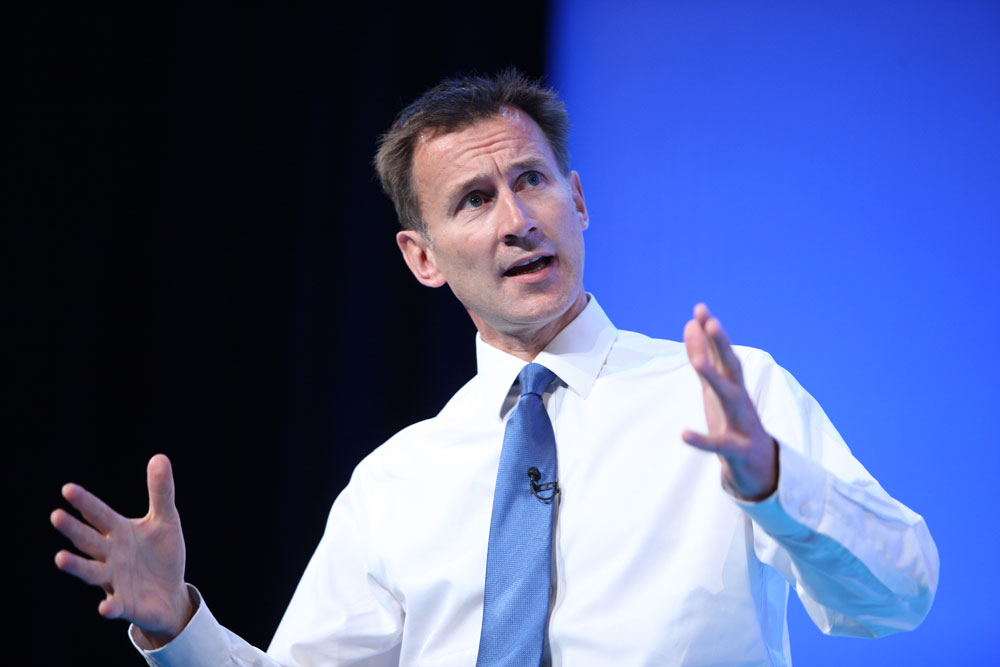
Speaking at the71st World News Media Congress in Glasgow on 1 June 2019, the UK Foreign Secretary Jeremy Hunt will argue that a free media is not a “Western” value but instead forms a pillar of a thriving society, benefiting people around the world.

Mr Hunt will say that media freedom is crucial to holding political leaders to account.

He will say:

“Democracy and freedom of expression mean nothing unless independent journalists are able to scrutinise the powerful – and discover the stubborn facts – however inconvenient this might sometimes be for politicians on the receiving end.

“If we want to embrace the opportunities of a free society, encourage the open exchange of ideas, and pass informed judgement on our leaders peacefully through the ballot box, then we must defend the institution which enables all of this.”

Mr Hunt will highlight the dangerous global climate for journalists and warn against complacency in the UK. He will say:

“Last year, 99 journalists were killed and another 348 locked up by governments.

“In April, Lyra McKee was murdered by dissident republicans in Northern Ireland. 

“The senseless killing of a talented young journalist showed that here in the United Kingdom, we have no cause for complacency.”

Speaking ahead of the Global Conference for Media Freedom in London in July, the Foreign Secretary will highlight the power that the international community wields in holding those who act against journalists to account. He will say:

“We cannot physically stop journalists from being locked up for doing their jobs.

“But we can alert global public opinion and make sure the diplomatic price is too high.”  

Highlighting the international support for Burmese journalists Wa Lone and Kyaw Soe Oo, who reported a massacre in Rakhine State for Reuters News Agency he will say:

“From their cells, Wa Lone and Kyaw Soe Oo won the Pulitzer Prize for International Reporting in April.

“Then, last month, they were freed after the President of Burma granted a pardon and the country’s civilian leaders wisely acted to correct a grave failure of due process.

“The generals gained nothing from their actions because the facts emerged anyway.”

The Foreign Secretary will host a major conference on 10-11 July to bring together global leaders, shine a spotlight on media repression, and build a coalition of governments committed to a stronger diplomatic response when media freedom is curtailed.

Image: Flickr under a Creative Commons license
From AI to politics, 2,500 delegates meet at DW Global Media Forum

From AI to politics, 2,500 delegates meet at DW Global Media Forum

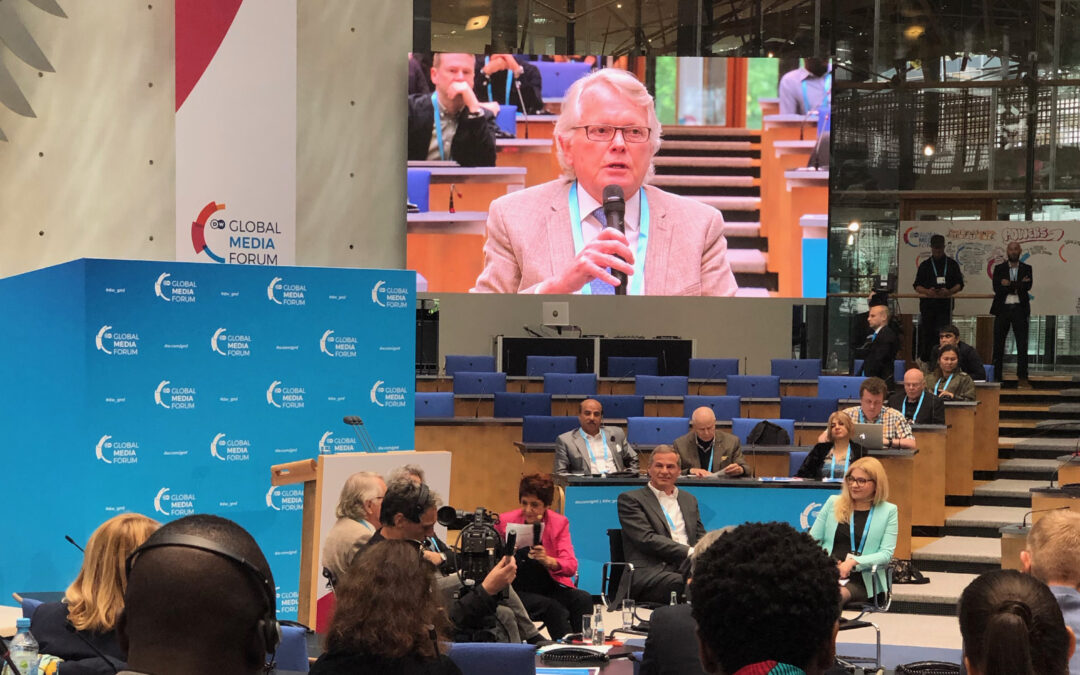
The 12th annual Global Media Forum took place in Bonn on 27-28 May, organised by Germany’s international broadcaster DW.
Bringing together more 2,000 delegates from all parts of the world, the lively conference examined everything from AI to the future of local journalism under the title Shifting Powers.
Pointing to one potential future, a robot was in conversation with DW executive Guido Baumhauer (pictured left) while the relationship between media and politics was examined by a panel including Lord Michael Dobbs, the British politician who wrote the original House of Cards novel (photo above).
With lively conversation and debate, and the unique opportunity to meet journalists and media executives from some of the most hard-to-reach places on the planet, DW’s Director-General Peter Limbourg says that the Global Media Forum is being positioned to become the media equivalent of the Munich Security Conference. A bold ambition – and it’s one that’s quite likely to be achieved.