
30 May 2019
Members of the Association for International Broadcasting have written to key suppliers to the broadcasting industry urging greater engagement over cyber security. The letter calls on suppliers to broadcasters to ensure that their products – which form critical parts of the broadcast chain – have high-levels of robust security that will help to mitigate the effects of cyber attacks.
The letter is a result of work by the AIB Cyber Security Working Group to identify key issues of concern within Members of the Association for International Broadcasting about the current state of security provided within equipment. The Working Group has been active for the past four years, drawing together the Chief Information Security Officers and Chief Technology Officers across a wide range of AIB Members. Its purpose is to share intelligence about threats and to share knowledge about ways to mitigate attacks on broadcasters.
“The number of attempts to breach the security of broadcasting networks is constantly increasing,” says AIB Cyber Security Working Group chairman and CISO at Arqiva, Denis Onuoha. “Yet the supply side of the industry is not accelerating its work on developing robust security at the same rate. This disconnect is something that the AIB – and other industry associations – is striving to end. We want suppliers to the broadcasting industry to understand the concerns and the needs of broadcasters across the world and to work across the sector to improve security.”
Not every cyber attack is successful. However, the high-profile attacks that have been revealed clearly demonstrate the havoc that can be wreaked when defences are breached. The costs involved in recovering a broadcasting operation following a successful attack run into tens of millions of dollars, while the reputational damage is potentially even more damaging.
“As a global trade association, it is in our DNA to support Members in dealing with challenging subjects, such as cyber security,” comments AIB chief executive, Simon Spanswick. “There is often a reluctance to discuss cyber security, or a hope that an attack ‘won’t happen to me’. This is misguided as it is only through collaboration that the questions that the industry faces can be successfully navigated. The AIB wants to ensure that none of its Members have to deal with the aftermath of a cyber attack and that is why the Association is calling on the supply side of the industry to engage.”
Through its Working Group, the AIB is now in regular contact with the national security services in a number of countries in order to share knowledge and expertise. The Association is developing plans for the creation of a broadcast cyber security research unit within the information security department of a major UK university that will develop a live broadcast production and transmission laboratory where undergraduate and postgraduate research into security of equipment will be undertaken in conjunction with industry.
“All the work that the AIB undertakes on cyber security is of benefit both to Members and the wider industry,” continues Spanswick. “That’s why we’re encouraging the active and supportive involvement by the supply side in our cyber security initiatives. It’s only by working together that the industry can combat the very real threats that exist.”

29 May 2019

London 29 May 2019
Viewsat, one of the fastest-growing operators within the global broadcast and transmission services industry, today announced that it is joining the Association for International Broadcasting (AIB).
As a truly global player, Viewsat is showing its support for the international broadcasting media by becoming an active member of this unique business community.
“Becoming a Member of the AIB comes at an exciting time for Viewsat, as we recently announced expansion in two business areas: fully managed playout and delivery to any platform anywhere. We want to play a more active role in the broadcast community and the AIB membership gives us precisely that,” commented Sandra Squire, Viewsat Business Development Director.
Viewsat’s Chief Executive Officer, Awaes Jaswal, added “As we continue to expand our reach and services across the globe, Viewsat is pleased to show our support for the vital industry we are part of by becoming an active member of the AIB. At a time of great market change, organisations like the AIB are important for bringing businesses together to share experiences and create collaborations.”
“We are pleased to welcome Viewsat, as a Member of the Association for International Broadcasting,” said Simon Spanswick, AIB chief executive. “As part of the AIB ‘family’ Viewsat will benefit from the expertise and knowledge that the Association has developed over the past quarter century and will bring new service opportunities to their fellow members.”
About Viewsat
Viewsat was founded in 2006 with one aim in mind: “To empower broadcasters of all sizes across the globe by delivering television and radio content without compromise.”
Viewsat delivers excellence to clients through its managed playout and broadcast satellite services. With satellite platforms and fibre networks, which are augmented through strategic partnerships, its facilities provide access for downlink, uplink or turnaround services to customers across the world.
Viewsat has established a comprehensive global communication delivery network to enable programming to be backhauled and distributed to almost every corner of the globe, it currently has over 170 services on air, including satellite broadcasting services across its satellite network, OTT services, and managed playout & pop up channel services
About the AIB
The Association for International Broadcasting – AIB – is a non-profit, non-government, industry association founded in 1993 to represent, promote and assist its members. It currently has a membership of over 60 companies in around 30 countries, including major broadcasters serving audiences of hundreds of millions of people each week.
With a reach of over 27,000 communicators and media professionals, AIB is a unique centre of information about international broadcasting, covering TV, radio, online and mobile. AIB researches regular market intelligence briefings for its members and provides client-specific consultancy and project support. Members receive an extensive package of services throughout the year.
Specialist AIB Member Working Groups provide support in areas such as cyber security, sustainability and audience research.
The Association’s annual awards for factual content – the AIBs – reward the best productions across video, audio and online. Now in their 15th year, the AIBs attract entries from broadcasters and production companies in around 40 countries.
24 May 2019
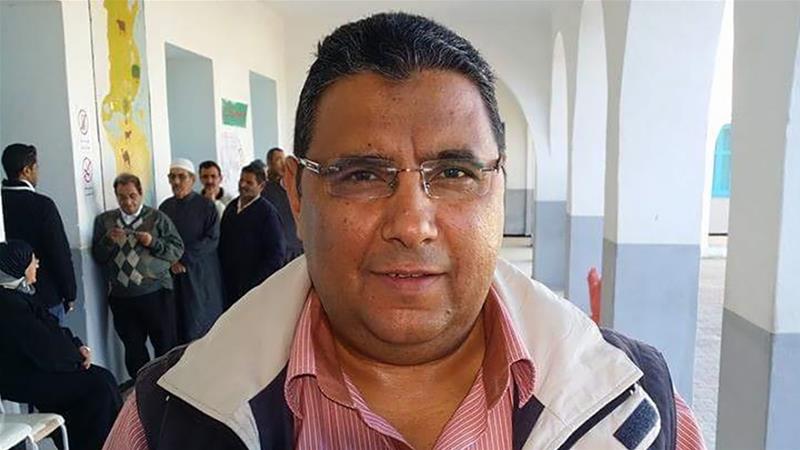
A court in Egypt has ordered the release from prison of Al Jazeera journalist Mahmoud Hussein. He has been held for almost two and a half years.
The court ordered his release on Tuesday 21 May, with a different court hearing an appeal by the prosecution on Thursday 23 May. This second court upheld the earlier decision to release him.
According to a report by Al Jazeera, Hussein’s lawyer Taher Abul Nasr said his release “is expected to take place within days”.
Az-Zahra Hussein, his daughter, said in a Facebook post her father will be released “with precautionary measures”, and will soon be transferred to a police station from the prison.
Gamal Eid, the executive director of the Arabic Network for Human Rights Information, said under Egyptian law Hussein must be freed within 24 hours.
“This is a final court ruling but the problem is that security forces tend to delay releases when they do not like those freed,” said Eid, adding in some previous cases the execution of the release order took several months.
The journalist has been in custody since 2016 without formal charges, trial or conviction.
Hussein was accused of “incitement against state institutions and broadcasting false news with the aim of spreading chaos”, allegations he and Al Jazeera Media Network deny.
21 May 2019
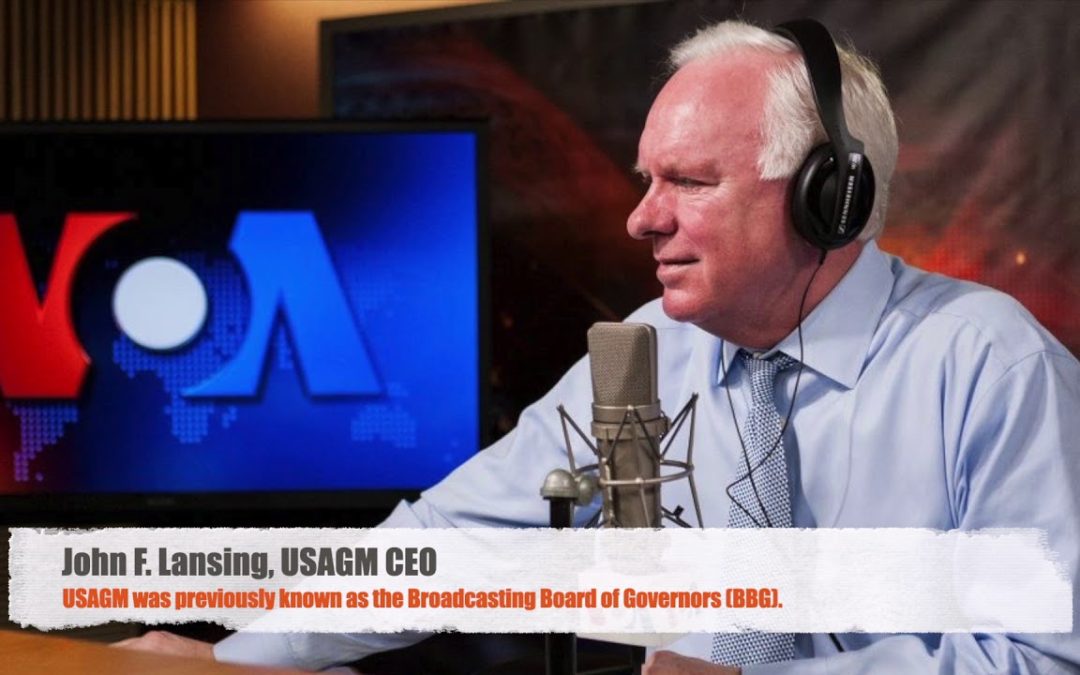
CEO John F. Lansing issued the following statement:
The U.S. Agency for Global Media (USAGM) and its networks are mandated by law to abide by “the highest professional standards of broadcast journalism” (22 USC 6202). All of its networks, including the Office of Cuba Broadcasting (OCB), support the Agency’s mission of informing, engaging, and connecting people around the world in support of freedom and democracy. Adhering at all times to the journalistic values of accuracy, fairness, and balance is fundamental to that mission.
In May 2018, OCB aired a blatantly anti-Semitic video segment about George Soros that was deeply offensive and wholly inconsistent with USAGM’s professional standards and ethics. Upon learning of the situation in October, I ordered a thorough and multi-faceted review of OCB content, operations, and personnel.
As part of this wholesale review, a panel of independent experts examined an extensive sample of OCB content to identify and address any patterns of unethical, unprofessional, biased, or sub-standard journalism. The results of that panel are presented in this report.
In addition, the Agency internally reviewed OCB’s journalistic standards, editorial processes, and personnel practices. Furthermore, a comprehensive human resources investigation of the incident was completed and the agency has terminated, or is in the process of disciplinary action against, employees and contractors who have been deemed responsible. Collectively, these reviews highlight some urgent needs at OCB – particularly in shoring up journalistic principles and practices.
With reform in mind, I have assembled a joint USAGM-OCB working group to take up and carry out the recommendations from these reviews. To start, the working group will focus on five areas:
- Updating journalistic standards, reinforcing editorial processes, and producing relevant; engaging and balanced journalism consistent with the legislative mandate;
- Clarifying strategy and strengthening leadership;
- Bolstering workforce planning and personnel management;
- Ensuring the right balance of media platforms and effective distribution of content into Cuba; and
- Deepening coordination and collaboration with USAGM and its other networks.
We commit to making this process collaborative and transparent. We will be reaching out to stakeholders to solicit their input and will report out our progress and next steps at quarterly intervals.
These efforts are part of a longer arc of modernization and reform at OCB. In June 2018, Tomás Regalado was appointed as Director of OCB. Tomás brings to this leadership position an impressive journalism career and a history of public service, having served as City Commissioner and two-term Mayor of Miami. Since day one, Tomás has led on an ambitious program of revitalization for OCB, and he will remain a key driver of these continued reform efforts.
In addition, OCB appointed a new Central News Director to lead the newsroom in reinforcing editorial and ethical standards and implementing long-term newsgathering strategies. USAGM has also initiated the search for a Standards and Best Practices Editor, a new position at OCB, to provide oversight of OCB’s editorial and journalistic processes.
In the interim, the Voice of America (VOA), which operates as a separate news operation but is also under the USAGM umbrella, has sent their Editor for News Standards and Best Practices to Miami to conduct mandatory training for all OCB employees involved in content and programming. VOA is required by law to produce fair and unbiased journalism. It has a rigorous set of standards for stories and social media, and has established editing and production practices that enforce these standards. Additional training covering fairness, objectivity, balance and bias in coverage will be required for all OCB employees going forward; the Anti-Defamation League has already provided training for staff.
I know that the path ahead will not be easy, but I – and all of USAGM – stand committed to the challenge. OCB is at all times required to adhere to the highest standards of professional journalism and any deviation from that is unacceptable. Our audience in Cuba has an urgent need for news that is representative of the highest professional standards, and we will not let them down.
(Source: USAGM press release)
14 May 2019
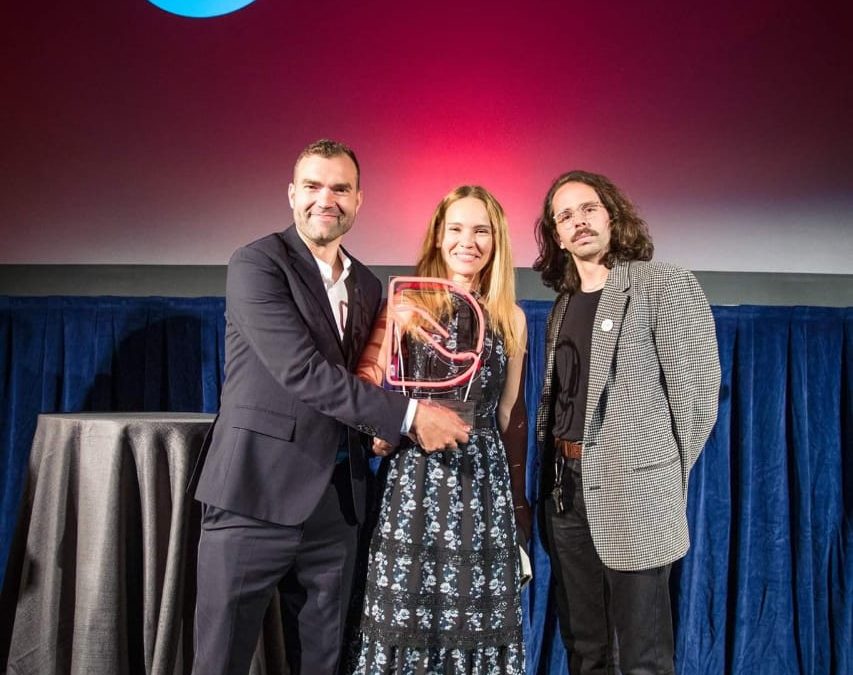
Ruptly’s innovative live platform, Ruptly Live, has received a top prize in the Best Use of Live category (re-ordered sentence) at the Digiday Awards Europe.
Dmitry Keshishev, Chief Digital Officer, said: “this award is testament to our commitment to developing accessible ways of sourcing and delivering live content in a way that resonates with a real demand for innovation among media publishers.”
Ruptly Live is a live distribution platform designed for broadcasters and publishers, as well as individual bloggers, empowering them to broadcast ground-breaking moments directly as they are taking place. Users of Ruptly Live are able to stream up to 9 simultaneous live events, including those covered in 360 degrees, from Ruptly’s platform direct to social media in just three clicks.
The platform enables access to world events on an array of topics, from breaking news to entertainment and sports, with a possibility to feature simultaneous translations to multiple languages. Ruptly’s Live coverage, distributed through the platform, received Gold distinction in Live News Coverage by The Shorty Awards and is recognised by the The Drum Online Media Awards as a finalist of the Breaking News Story of the Year.
The award ceremony took place in London, on 9th May. Other finalists for Best Use of Live were Hearst UK & The Laughing Cow (Good Housekeeping), Singular.Live (The Kick Off) and TheNewsMarket (PwC’s 21st Annual Global CEO Survey).
7 May 2019
Two Reuters journalists who had been jailed for their reporting on the Rohingya crisis in Myanmar walked out of prison on 7 May 2019, freed in a presidential amnesty after a global campaign for their release.
According to the AFP news agency, Wa Lone and Kyaw Soe Oo were mobbed by media as they stepped out of Yangon’s notorious Insein prison after their lengthy detention.
Their December 2017 arrests made them an international cause célèbre and a sign of Myanmar’s deteriorating press freedoms under Nobel laureate and civilian leader Aung San Suu Kyi.
Wa Lone, 33, thanked people from “around the world” for advocating for their release and vowed he would return to work.
“I can’t wait to go to my newsroom,” he said. “I am a journalist and I am going to continue.”
Reuters editor-in-chief Stephen Adler said: “We are enormously pleased that Myanmar has released our courageous reporters”.
“Since their arrests 511 days ago, they have become symbols of the importance of press freedom around the world. We welcome their return.”
The two men waved and smiled broadly as they walked out of the jail.
The pair were convicted on charges of violating the official secrets act and sentenced to seven years each.
At the time of their arrest they had been reporting on a September 2017 massacre of 10 Rohingya Muslims in conflict-hit Rakhine state, where the Myanmar army forced some 740,000 of the stateless minority to flee over the border to Bangladesh.
The case prompted an outcry around the world and crushed what was left of Suu Kyi’s legacy as a rights defender.
Reuters has said the two were imprisoned in retaliation for their expose.
The army convicted soldiers for the massacre in a rare response to allegations of atrocities.
While inside, the duo missed numerous family milestones, including the birth of Wa Lone’s daughter.
But they were also showered with numerous awards and honours in response to their work.
Last month, Wa Lone and Kyaw Soe Oo won the prestigious Pulitzer prize.
 They were also featured earlier on the cover of TIME magazine as part of its person of the year coverage featuring journalists targeted for their reporting.
The case against them become a byword for the war against press freedom and prompted an international campaign that attracted the support of prominent rights lawyer Amal Clooney.
Rights groups and legal experts say the case against the reporters was riddled with irregularities.
A whistleblowing police officer testified during their trial that his superior had ordered his team to trap the reporters in a sting — testimony the judge chose to ignore.
Suu Kyi led her National League for Democracy party to victory in historic 2015 polls, ending decades of military-backed rule.
But the dreams of a new day for Myanmar were short-lived after the army’s campaign against the Rohingya in Rakhine state, which UN investigators have said amounted to genocide.
Myanmar has denied the charges and said it was defending itself against Rohingya militants, who attacked and killed police officers in August 2017.
The Association for International Broadcasting lodged a protest with the Myanmar authorities at the time of the conviction of the two journalists.
