22 November 2019
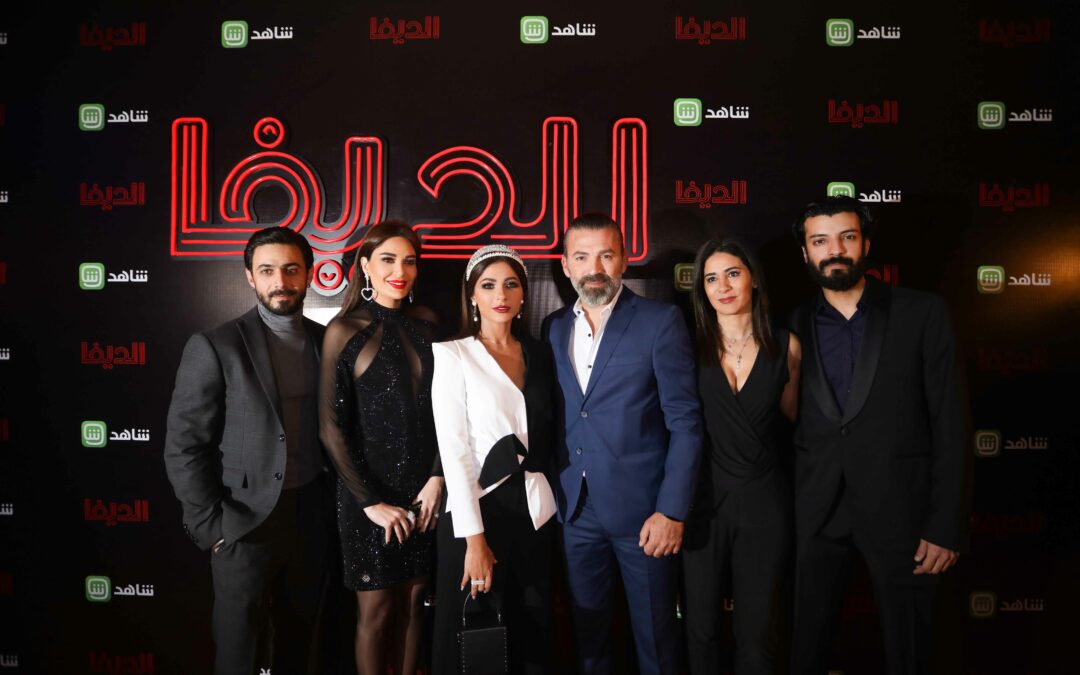
MBC Group’s Video On Demand (VOD) platform, SHAHID has announced the launch of its first-ever original production. Titled ‘ElDiva’, the drama series stars the superstar Cyrine Abdel Nour in the lead role, alongside actor Yacob Alfarhan, and the Egyptian folk singer and actress, Bosy. The production is expected to launch on SHAHID on 27 November.
The title was launched in a press preview evening attended by the stars of the show. During the preview, Abdel Nour expressed her joy at being involved in the project, touching upon how it is a “natural progression” for her journey with MBC, following on from her critically-acclaimed drama, ‘Ruby’ that was first aired in 2012, up to last Ramadan’s ‘Al Hayba: Al Hasad’, released in May of this year.
‘ElDiva’ marks a shift in traditional drama productions, inspired by real events and fiction; complemented by the experiences of MBC’s producers involved in producing various talent-spotting TV shows.
Alex Meouchy, MBC’s Senior Regional Manager of Content commented: “We have produced a large number of Arabic adaptations of global, top-rated talent-spotting TV shows. During work on these productions, the entire team encounter numerous situations that would be absolutely fascinating to watch as a fictional drama.” Meouchy concluded: “Viewers always want to know what happens when the cameras are turned off, and so this is how the idea of ‘ElDiva’ came about. Subsequently, SHAHID decided to introduce ’ElDiva’ as its first SHAHID ORIGINAL.”
Johannes Larcher, Managing Director, SHAHID said: “MBC was the first major media company in the region to launch a VOD platform. Year after year, it continues to cement its status as a leader in this vital sector. The launch of SHAHID’s first short-form original is in-line with the Group’s extensive five-year growth and expansion plan. Multinational drama productions are more popular than ever – and the best quality they have ever been – thanks to the introduction and growth of global digital platforms and VOD. Nearly all the international giants of entertainment have turned or are turning their attention to this type of ‘digital first’ content.Today, we launch our first title of short-form SHAHID ORIGINALS – and this is just the beginning. We promise viewers more premium content and quality productions with diverse storytelling in the coming period.”
Directed by Randa Alam, ‘ElDiva’ is a multinational production, with Lebanese and Egyptian scriptwriters involved in the creation of the story: Sarah Faraj, Hind Radwan, Sama Abdel Khalek, Engi Al-Qasim and Jad Khoury. Joining Cyrine Abdel Nour, Yacob Alfarhan and Bosy in the cast are Mahira Abdel Aziz, Wissam Fares, Dory Samarani, Stephanie Attalah, and Nibal Arakji.
Sponsors of ‘ElDiva’ include GMC (General Motors Overseas Distribution LLC); Mars (Mars GCC FZE); Samsung (Samsung Gulf Electronics), and Unilever (Unilever General Trading LLC & BINZAGR UNILEVER LTD).
[Source: MBC press release]
21 November 2019
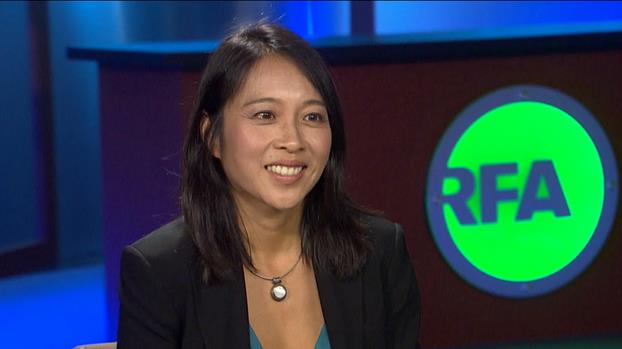
The U.S. Agency for Global Media’s (USAGM) Board of Governors announced that effective November 20, 2019, Bay Fang will serve as President of Radio Free Asia (RFA).
“We are thrilled to have Bay take the helm at RFA at such a critical time,” said USAGM CEO and Director Grant Turner. “Across Asia, press freedom continues to decline and the need for unbiased news and information is increasing. I am confident that Bay will provide excellent leadership and continue the unparalleled journalism RFA is known for.”
Bay most recently served as Executive Editor of RFA, supervising coverage across all of Asia. A longtime journalist and former diplomat, she first came to RFA as Managing Director for East Asia, overseeing the management and editorial content of RFA’s five East Asian language services. Her 20-year career in journalism includes serving as the Diplomatic Correspondent for the Chicago Tribune, and covering the wars in Afghanistan (2001-2002) and Iraq (2003-2004) for US News and World Report magazine. She started her career as the Beijing Bureau Chief for US News and World Report, where she won the Robert F. Kennedy journalism award for her story “China’s Stolen Wives.” Ms. Fang earned her undergraduate degree at Harvard University and was a visiting fellow at Oxford University and a Fulbright scholar in Hong Kong.
The RFA Board named Ms. Fang to serve for an interim period, upon the resignation of RFA President Libby Liu. Ms. Liu, who had served as RFA President since 2005, will continue in a leadership role in the USAGM family in a capacity to be formally announced soon. “Libby has been a tireless advocate for press freedom in Asia, and her impact on RFA is without question,” said CEO Turner. “She has been and will continue to be a powerful force in giving a voice to the voiceless.”
[Source: USAGM press release]
7 November 2019
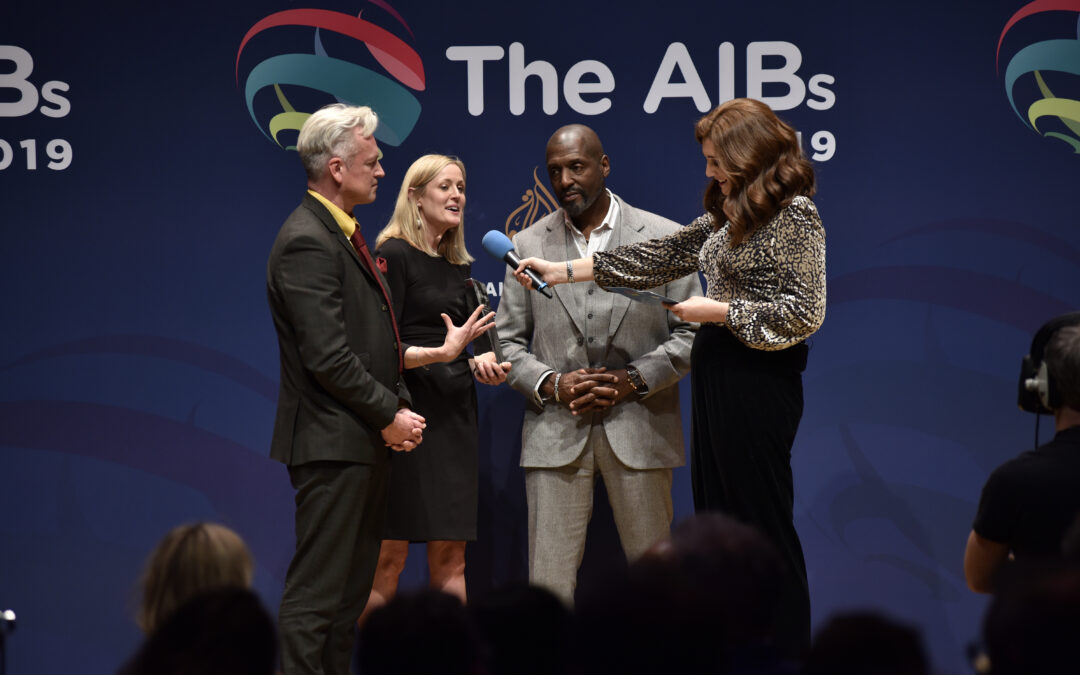
 In front of an international audience of 200 media professionals, the winners in the 19 categories of this year’s AIB International Media Awards – the AIBs – received their prizes on 6 November at a glittering awards gala in London’s iconic venue LSO St Luke’s.
The awards night was hosted by Caroline Hepker from Bloomberg TV and Rana Rahimpour from BBC Persian who was ‘In conversation’ with microsculptor Willard Wigan.
During the evening, clips from the more than 400 hours of content that had been entered for the AIBs 2019 were shown which demonstrated the depth and breadth of these international awards for factual content production.
Supporting the event were event partner Al Jazeera Media Network and Radio Taiwan International who sponsored the Science, Technology and Nature category.
You can see full details of the winners and highly commended entries here.
31 October 2019
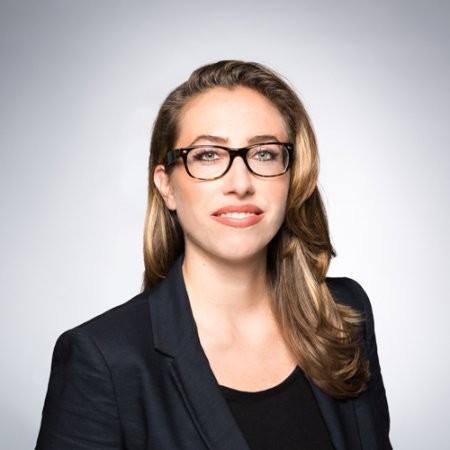
Zahra Nedjabat will take over responsibility for International Relations and Diversity at Deutsche Welle on 1 November. She succeeds Klaus Bergmann who is retiring after 28 years at DW.
From now on, DW’s International Relations department will also include Diversity.
DW director Peter Limbourg said Zahra was the ideal fit for this role: “As a multi-lingual and cosmopolitan personality, she will promote our internationality and diversity both internally and externally.”
Limbourg thanked outgoing Head of International Relations Klaus Bergmann for his work, saying that he acted as an accomplished and much appreciated DW ambassador on the international stage.
Nedjabat studied Comparative Literature, Islamic Studies, Philosophy and History in Bonn and Paris. Prior to joining DW, she worked as an editor and PR project manager at media.net berlinbrandenburg and as head of corporate communications at TRIAD Berlin. Nedjabat gained journalistic experience at BBC World and the radio station RC 93.9 FM Paris. Since 2014 she has been organising the Vienna International Christian-Islamic Summer University.
(Source: DW press release)
30 October 2019
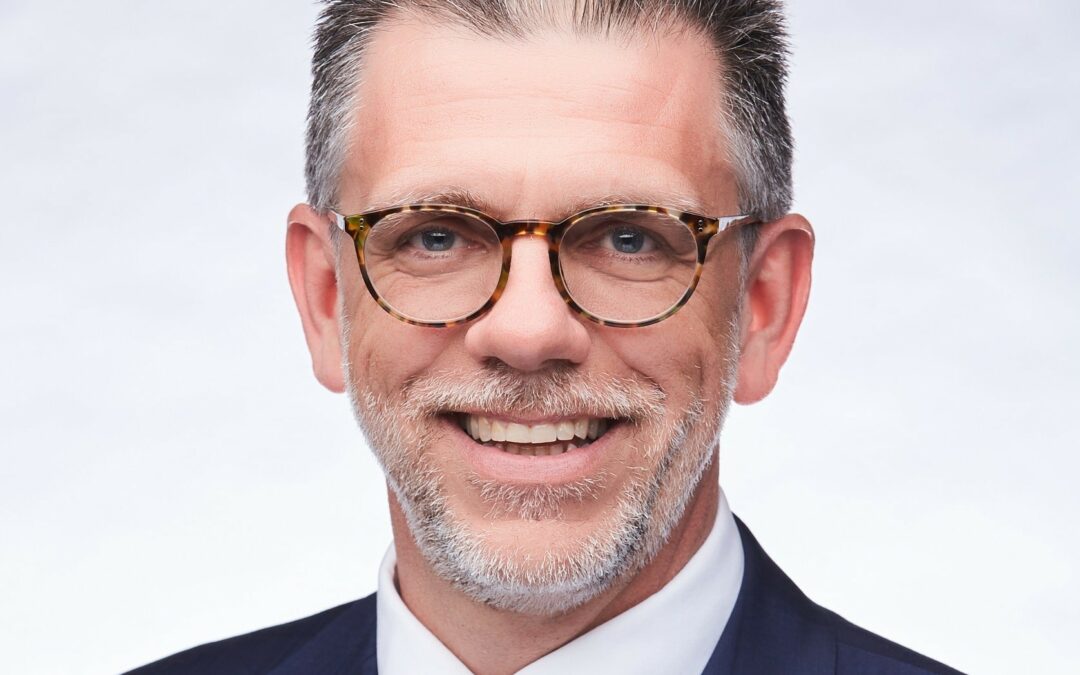
Barbara Williams, Executive Vice-President of CBC, and Michel Bissonnette, Executive Vice-President of Radio-Canada, today announced the arrival of Donald Lizotte as General Manager and Chief Revenue Officer, CBC & Radio-Canada Media Solutions. He will take over from Jean Mongeau effective February 24, 2020.
Mr. Lizotte comes with over 25 years’ experience in the telecommunications, retail, food and media sectors, including 14 years as an executive with Quebecor. He was previously Executive Vice-President, Advertising Network, and Vice-President, Sales and Media Creativity, for TVA Group, as well as President, Le SuperClub Vidéotron, and Vice-President, Sales, Consumer Division, with Videotron.
“We’re excited to welcome Donald to the CBC/Radio-Canada family and we will undoubtedly benefit from his extensive experience within the industry, ” said Barbara Williams. In his new role, Mr. Lizotte will oversee all teams associated with CBC/Radio-Canada’s self-generated revenue, including the advertising, distribution and content-licensing streams.
“Known for his leadership and strategic insight, Donald will be joining the Media Solutions team in an advisory capacity starting November 19 to ensure a smooth transition. His focus will be on identifying new revenue sources and implementing innovative ways of doing business,” added Michel Bissonnette.
9 October 2019
As part of its continuing international media freedom initiative, the AIB is hosting a meeting in London on 7 November 2019 to bring together AIB Members and the wider media industry to discuss this crucially important subject.
The event is designed to allow participants to share information and experiences regarding challenges to media freedom, and to contribute to the AIB media freedom initiative work plan. There will be the opportunity to talk with a senior representative of the UK Foreign & Commonwealth Office that co-hosted the Global Conference on Media Freedom with Canada in July and hear plans for the continuing UK campaign.
The meeting is taking place at the kind invitation of Doughty Street Chambers and is supported by Al Jazeera Media Network. The outline agenda appears below, and you can apply to attend at: https://forms.gle/KMMTdjNxYmior3BG8.
Contact the AIB Secretariat for any additional information.
Media Freedom Meeting | 7 November 2019
Doughty Street Chambers, 54 Doughty Street, London WC1N 2LS
Outline agenda
1030 Arrival, networking coffee
1100 Introductions and outline of objectives
- Doughty Street Chambers
- Association for International Broadcasting
- Al Jazeera Media Network
1120 Media Freedom Global Brief – current challenges, notable improvements
- BBC Monitoring – the disinformation sphere and the world’s most hostile media freedom territories
1215 In perspective – real cases
The AIB work plan is based on a very real need to develop awareness of the importance of media freedom amongst the public in territories worldwide. But it’s an abstract notion – and it’s abstract even for those working in media organisations. This session will hear testimony from people who have been directly impacted by attempts to stifle media freedom.
Speakers include: John Battle, Head of Compliance, ITN (UK)
1315 Buffet lunch and networking
1410 The international campaign for media freedom – achievements; next steps
- Mohammed Shokat, Co-ordinator, Media Freedom, UK Foreign & Commonwealth Office
- Canada Foreign Affairs representative
1445 The work of the AIB and its Members
- Introduction of the Steering Group
- Summary of the AIB’s work plan and achievements to date
- Opportunities for collaboration and development
- Timetable for continuing work
- Involving other organisations and sectors – opportunities with the ad sector, etc.
1500 Discussion, next steps and round up
1545 Close; tea and networking
