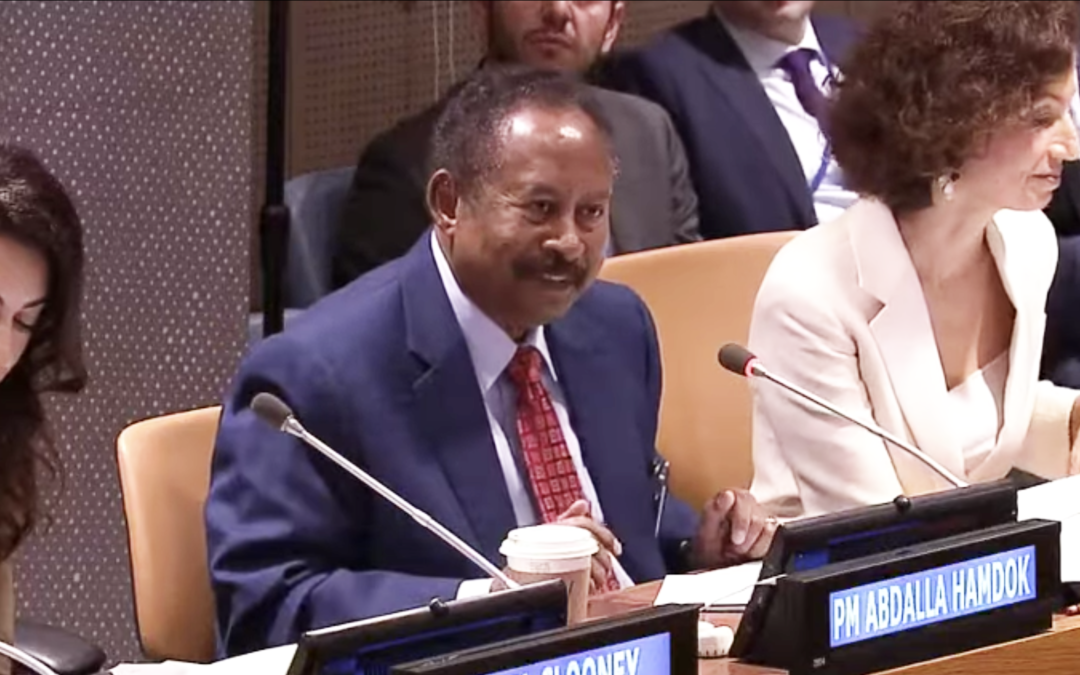
Sudan‘s newly appointed Prime Minister, Abdalla Hamdok, has told a meeting at the United Nations that international broadcasters are welcome back in the country to help build a democratic and free society.
At a UK-organised ministerial meeting on media freedom held at the UN headquarters in New York on 25 September, Hamdok said that he “grew up in Sudan in the 60s and 70s, where the BBC radio was probably the only source of international information for people. And the paradox, years after that, [is that the] BBC was prohibited from broadcasting from Sudan and people were not having access to it.”
He confirmed that the BBC was now allowed back onto FM in the country after an absence of a number of years. He also said that Monte Carlo Doualiya has been restored and that Al Jazeera which had also been banned was now back in the country. Not only were the broadcasters back on the air, but the country’s government is “very determined to create an environment that is open and allow journalists unfettered access to information but also to reporting, anywhere.
“This is actually not giving them any kind of privilege. It is good for our people. Free society, free people can only be productive, can be useful in their own lives but also for society. So I’m doing it precisely because of that.”
“The announcement by Sudan’s Prime Minister confirming the opening up of the country’s airwaves is highly positive,” said AIB Chief Executive Simon Spanswick. “It is good that AIB Members including the BBC, Al Jazeera and Monte Carlo Doualiya are now permitted to broadcast across the nation. The additional commitment to allowing journalists to report from the entire country is an immense step forward for the country and we look forward to supporting the Sudanese government and the international media community to develop Sudan’s media industry.”
The UN meeting, chaired by the UK’s special envoy on media freedom, Amal Clooney, also heard from Lord Ahmad, Foreign Office Minister, and Audrey Azoulay, UNESCO Director-General, all of whom spoke about the increasing need for media freedom globally and the Media Freedom Coalition to which 32 governments have agreed to join.
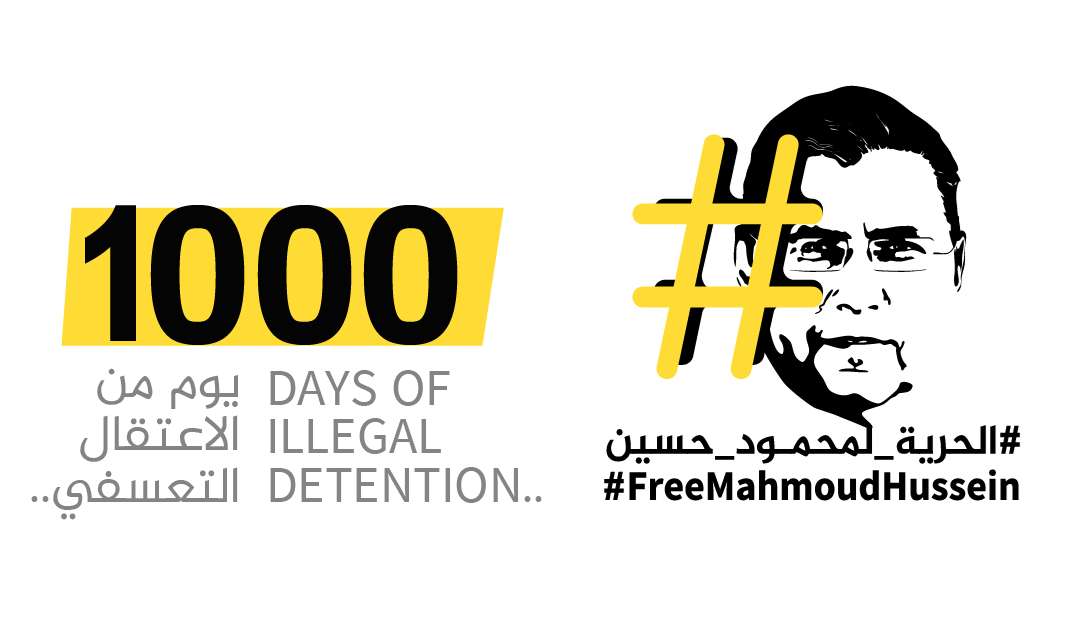
19 September will be the 1,000th day that Al Jazeera journalistMahmoud Hussein has spent behind bars after being detained by Egyptian authorities while visiting his family in December 2016.
NC1362
Al Jazeera Media Network has renewed its call for the immediate release of Mahmoud Hussein. On 23 May 2019, a court in Egypt rejected the appeal by the prosecutor for the continued detention of Mahmoud and ordered his release from prison. However, in defiance of the court order, the authorities opened a new investigation against him with unspecified charges and has returned him to prison. The Network strongly condemns the Egyptian authorities’ decision to return Mahmoud Hussein to Tora prison despite the court ruling he be released. Mahmoud is being detained by the Egyptian government in flagrant violation of international law and an infringement of his fundamental rights.
The Association for International Broadcasting joins with Al Jazeera and other media organisations in calling on the Egyptian authorities to release Mahmoud Hussein immediately.
Egypt continues its crackdown on media freedom. The country has the greatest number of journalists detained in any country in the world. Mahmoud Hussein has been robbed from 1000 days of his life with no end in sight, all without legal justification. Al Jazeera continues to strongly condemn this and refutes all charges against him and calls on the international community, media professionals, and human rights advocates to raise awareness and demand his immediate freedom.
On Thursday 19 September 2019 Al Jazeera Media Network is launching a solidarity campaign coinciding with the 1000 days of detention of Mahmoud Hussein. The campaign aims to focus on publicising the inhumane conditions he endures under detention, and to mobilise support and shed light on his case and call for his immediate release. As part of the campaign an online petition demanding his immediate release has been launched, and it can be accessed at www.FreeMahmoudHussein.com.
View a short report on Mahmoud Hussein’s detention and the international solidarity campaign here:
Viewsat, an established operator in the global media broadcast industry, announced its new name – Viewmedia – to reflect the expansion of their portfolio in order to service the requirements of broadcasters worldwide, the company announced at IBC (12 September 2019).
To facilitate this new development, the company has been rolling out a range of new services across the past six months including:
the launch of media and OTT services globally, including social media streaming
the launch of extended platform delivery with managed services to any platform anywhere
the launch of VS play, the company’s Playout solution which is seamlessly integrated with Phoenix 7
In addition to the above developments, Viewmedia will expand its satellite services.
CEO, Awaes Jaswal said: “For 13 years, our company has been passionate about finding solutions in delivering our clients’ content, while offering affordable broadcast services and world class customer care. We are now expanding the options to continue to meet our customers’ requirements.”
“Our service is flexible and tailored to suit each client and their business needs, and we are delighted that our new name now clearly reflects our portfolio of services.” Added Sandra Squire, Business Development Director.
Viewsat was founded in 2006 with clients predominantly in the Middle East and sub-Saharan Africa. Today, it provides broadcast services to 150 customers ranging from entertainment to news channels.
BBC World Service has extended output on shortwave radio in Indian-administered Kashmir to provide reliable news and information.
Director of the BBC World Service, Jamie Angus (pictured), said: “The provision of independent and trusted news in places of conflict and tension is one of the core purposes of the World Service. Given the shutdown of digital services and phone lines in the region, it’s right for us to try and increase the provision of news on our short wave radio services. Audiences in both India and Pakistan trust the BBC to speak with an independent voice, and we know that our reporting through several moments of crisis this year has been popular and valued by audiences who turn to us when tensions are highest.”
BBC News Hindi radio output (9515 and 11995kHz) will be extended by 30 minutes from Friday 16 August. The full one hour news programme will be on air from 19:30 to 20:30 local time.
On Monday 19 August, BBC News Urdu will launch a 15-minute daily programme, Neemroz. Broadcast at 12.30 local time on 15310kHz and 13650kHz, the programme will focus on news coming from Kashmir and the developments around the issue, and include global news roundup tailored for audiences in Kashmir.
BBC World Service English broadcasts (11795kHz, 9670kHz, 9580kHz, 7345kHz, 6040kHz) will be expanded, with the morning programming extended by an hour, ending at 08.30 local time; and the afternoon and evening programming starting an hour earlier, at 16.30 local time.
The shutdown has left people with very few options for accessing news at this time. However, news services from the BBC continue to be available in the region – through shortwave radio transmissions in English, Urdu, Hindi, Dari and Pashto. As well as providing an important source of news to the region, the South Asian language services have brought added depth to the BBC’s coverage of the Kashmir story.
The recent introduction of four new languages services for India – Gujarati, Marathi, Punjabi and Telugu, following additional investment from the UK Government – has enabled the BBC to offer a wider portfolio of languages and distribution methods to a region that is geographically diverse as well as politically tense. This year’s Global Audience Measure for the BBC showed that India is now the World Service’s largest market, with a weekly audience of 50m.
The Voice of America’s Bangla language service has launched a five-day-a-week radio show in Rohingya, the language spoken by Muslim refugees who have fled Myanmar. More than 800,000 people have taken refuge at the Kutupalong camp, one of the world’s largest refugee camps at the Myanmar-Bangladesh border.
Titled Lifeline, the 30-minute radio show is transmitted via short and medium wave. The programme focuses on the lives and needs of the refugees, providing them with valuable information on security, family reunification, food rations, available shelter, education and health including vaccinations and water purification. In addition, a daily segment of the programme offers the refugees the opportunity to share their stories, extend greetings to their families and learn about the hazards of joining extremists groups. One overarching objective of the broadcast is to counter Muslim extremists’ narratives and recruitment efforts in the camps and inform the Rohingya about the US and the international community’s involvement in the crisis.
“After visiting Cox’s Bazaar and the Kutupalong refugee camp last year, it became obvious to me that we needed to address the informational needs of these people caught in the fastest growing refugee crisis in the world today,” said VOA Director Amanda Bennett. “Providing them with a reliable and authoritative source of news, as well as practical information that will improve their lives, is what the Voice of America does well in various hotspots around the world.”
Prior to launching the Rohingya language programme, a VOA Learning English team travelled to the Rohingya refugee camps in Cox’s Bazar, Bangladesh, in March of this year at the invitation of the United Nations High Commissioner for Refugees. The VOA instructors offered six days of intensive training on teaching techniques and methods for 100 selected English teachers. The teachers, in turn, will use their new skills to train a further 5,000 of their colleagues in the camps.
Ruptly, the award-winning global multimedia agency, has announced the launch of a dedicated Spanish version of its content platform.
Speaking about the launch, Dinara Toktosunova, CEO of Ruptly, said: “Ruptly’s new Spanish-language platform is another step forward as we strive to best meet the needs of our clients. This is the latest in our long list of product and service innovations, including the introduction of live streams accessible in just three clicks, and transformative pricing plans that are democratising content for media and individuals. We will continue to evolve our offering to reflect our growing international client base.”
This announcement follows another in March, made during a panel session at Cabsat Content Congress, that Ruptly will also be launching an Arabic version of its platform later this summer.
Carolina Velasco, Ruptly’s Iberia and LATAM Territory Manager, said:
“This is a fully-localised, Spanish website and live platform that will enable us to be more accessible to our Spanish language client base, as well as enabling us to provide more stories that are specific to the Iberian and LATAM regions.”
Amongst the clients to benefit from Ruptly’s Spanish platform are Jorge del Villar, Chief Content Officer at Cultura Colectiva, who looks to the agency for: “stories with value to stand out in a saturated media landscape”, and Sebastián Morales, Director of Digital at Publimetro, who said: “Ruptly has become an important partner within our ecosystem, providing ready-to-use material and increasing our video production.”
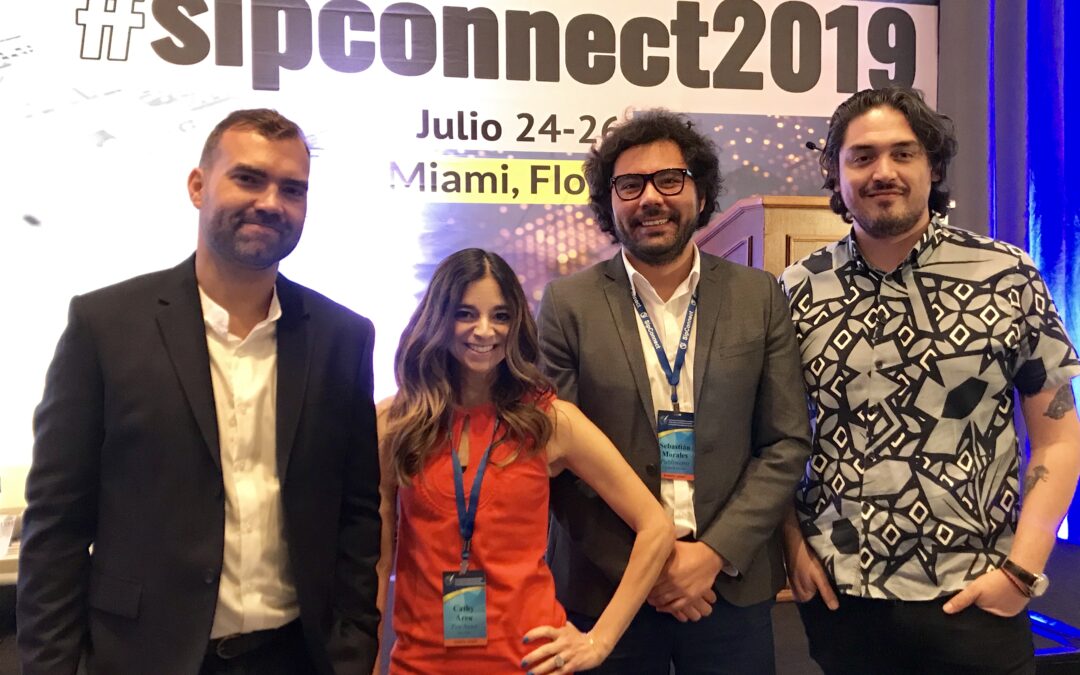
Mauro Torres, Ruptly’s Deputy Head of Planning and Head of Sports, discussed the new Spanish-language service, as part of a panel exploring how to engage users and audiences in a saturated media landscape at SIPConnect, an annual digital media and services conference in Miami, Florida. The panel was moderated by multimedia journalist, TV personality and author, Cathy Areu.




 CEO, Awaes Jaswal said: “For 13 years, our company has been passionate about finding solutions in delivering our clients’ content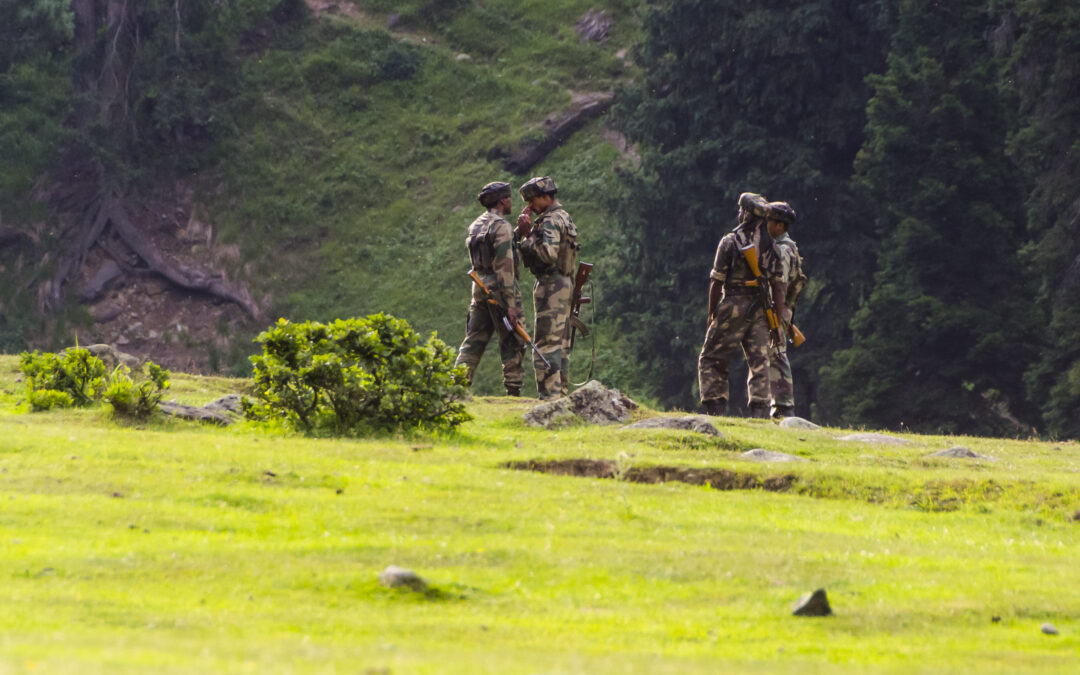
 Director of the BBC World Service, Jamie Angus (pictured), said: “The provision of independent and trusted news in places of conflict and tension is one of the core purposes of the World Service. Given the shutdown of digital services and phone lines in the region, it’s right for us to try and increase the provision of news on our short wave radio services. Audiences in both India and Pakistan trust the BBC to speak with an independent voice, and we know that our reporting through several moments of crisis this year has been popular and valued by audiences who turn to us when tensions are highest.”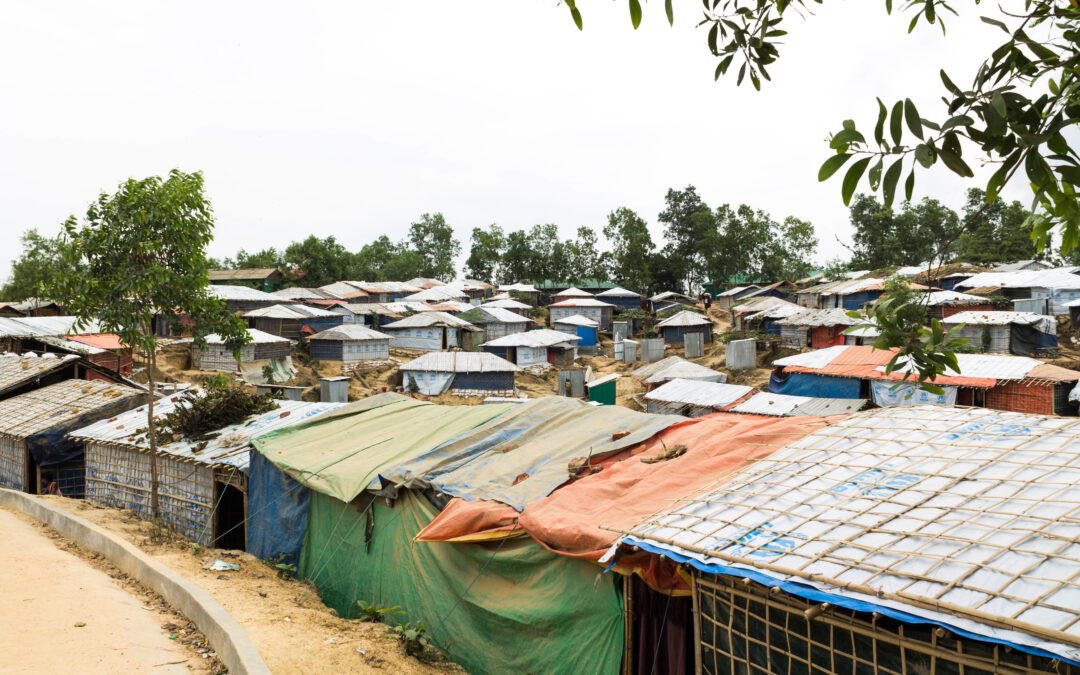
 “After visiting Cox’s Bazaar and the Kutupalong refugee camp last year, it became obvious to me that we needed to address the informational needs of these people caught in the fastest growing refugee crisis in the world today,” said VOA Director Amanda Bennett. “Providing them with a reliable and authoritative source of news, as well as practical information that will improve their lives, is what the Voice of America does well in various hotspots around the world.”