16 January 2020
BBC seeks to double global audience to one billion
BBC Director-General sets out vision for next seven years
-
Increasing reach of BBC News
-
Taking BBC Sounds app global
-
Story-led commissioning innovation in BBC News
-
Making Corporation carbon neutral
-
More staff away from London
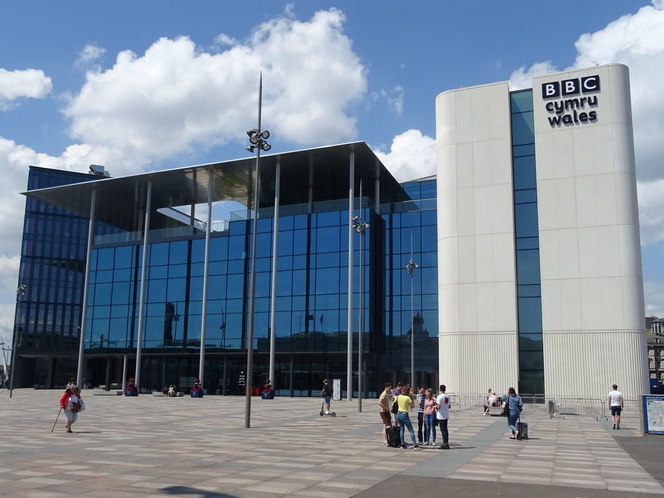
The BBC Director-General Lord Tony Hall gave a New Year’s address to staff from the new BBC broadcast centre in the Welsh capital, Cardiff, on 14 January.
In his wide-ranging speech – relayed to all BBC offices in the UK and abroad – Hall said that the plans he was announcing would set the Corporation up for the rest of the current Royal Charter period that runs until 2027.
Hall said that the BBC brand is “recognised, and at times revered”, all over the world, with 426 million people using BBC products every week. He praised the work of BBC Studios, the in-house production unit, highlighting the immense audience for the landmark “Planet” series produced by the BBC Natural History Unit. Alongside this, BBC News is growing as it gives “so many more people access to news and information they can trust”. He cited the example of India where the BBC is now reaching 50 million people, an increase of 70% in the last year.
Now Hall wants to build on these successes and double global reach to one billion people every week by the end of this decade. He praised the last UK government that provided new funding for BBC World Service and he said that he’s looking forward to working with Boris Johnson’s new government. In addition, Hall wants to develop the BBC global brand and associated revenues further, gaining additional revenue from outside the UK at the same time as reaching the one billion audience figure.
Hall said that Fran Unsworth, Director of BBC News, is looking at new ways of working, including how best to bring the diverse range of BBC News teams together and how they can best create impact among audiences, including making sure that all the Corporation’s audiences recognise that BBC News “is really for them”. There’s to be a new “story-led” approach to commissioning in News and more detail on this will be announced towards the end of January. “It’s not just about how we cover news, it’s about what we cover’” said Hall. Audiences have told the BBC that they want explanation and analysis that helps them explore solutions. During 2020 there will be a “major focus on big themes, the things that matter beyond the headlines and the immediate.”
Hall spoke of the new Cardiff headquarters for BBC Wales that uses the newest generation of broadcast technology, live IP. He said that the building in the centre of the Welsh capital is the “most connected and flexible media centre in the world,” that is also the “greenest and most sustainable broadcast centre in Europe and…the world’s most accessible building for neurodiversity.” The renowned school of journalism at Cardiff University has moved alongside the BBC in the city.
Outside Wales, a new BBC technology hub is being created in Newcastle-upon-Tyne in the north-east of England. This is where software engineers, designers, product developers and data scientists will be based, driving the BBC’s digital services for UK and international audiences.
The curation team of BBC Sounds – the digital app for audio content – will be based at Salford on the outskirts of Manchester in the north of England. Hall said that BBC Sounds will be opened up to new British creators and will bring the best podcasts to everyone – presumably meaning that the platform will be available to storytellers to use to reach larger audiences. The BBC Sounds app will become available globally later in 2020, taking live BBC content and archived material to international audiences.
Importantly in terms of sustainability, Hall said that he wants to see “what it would take to make the BBC’s operations carbon neutral in this Charter period.” The BBC created the Albert initiative that broadcasters and production companies can use to help them become more sustainable. The AIB has been working with Albert to take its message to broadcasters and producers internationally.
Reading between the lines, Hall’s speech was perhaps a message to the UK government that said: “we know what we need to do, and we’re doing it. Mess with the BBC at your peril.” For example, moving more teams to places across the UK can be seen as a hedging move, protecting the BBC from accusations of being too London-centric and making it harder for any future licence-fee settlement to shrink the BBC’s staff numbers if it poses a threat to regional jobs and economies. The fact that Hall cited the way other organisations are drawn to where the BBC is establishing or expanding bases demonstrates that the presence of the BBC is a local multiplier, helping to drive growth in the media and digital sectors where it operates.
There is more news to come from the BBC over the coming weeks. Broadcasters and media companies, both in the UK and around the world, as well as politicians will be looking at how the world’s largest publicly funded broadcaster is adapting to ever-increasing competition from streaming services, the challenges in the news sector and the problems associated with climate change.
Main image: JThomas / BBC Cymru Wales
2 October 2019
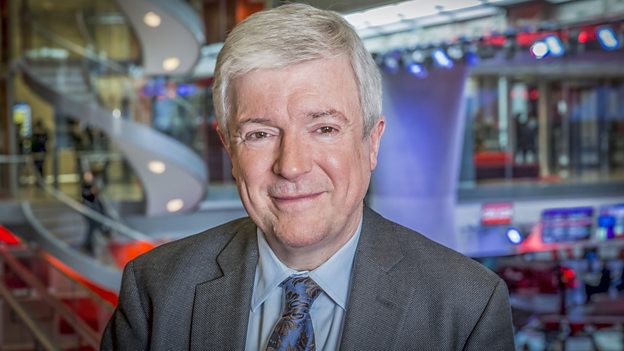
A new trainee scheme for journalists with disabilities in Kenya – Aim High – has been announced by BBC Director-General Tony Hall. The scheme is coming after development initiatives to train the next generation of African journalists and producers to world class standards.
Tony Hall, who is visiting the BBC bureau in Kenya, says the new initiative will offer three-month placements to three aspiring journalists with disabilities, starting from next April (2020). During the placement, they will spend their time at the Nairobi bureau working with news teams in different African languages and working on television programmes as well as digital production.
The placements will be open to anyone with a disability, hidden or visible, who is interested or experienced in journalism.
Tony Hall says: “The BBC has a long-standing commitment to Africa and telling African stories, reaching more than 100 million people every week. We want to develop independent journalism on the continent, and to support those whose voices often don’t get heard. We know it’s hard for people with disabilities to get opportunities in journalism. Aim High will give aspiring journalists with disabilities hands on experience, bespoke training and mentoring, and I urge people to apply.”
Further details of how to apply will be announced shortly.
Tony Hall is in Kenya to celebrate the BBC’s success in Africa. The broadcaster operates in 13 languages across the continent and has launched more than 20 new television programmes over the last 18 months, from sport to business to the award-winning investigative programme Africa Eye. The BBC’s bureau in Nairobi is now its biggest outside the UK.
Tony Hall will announce the launch of BBC’s first co-production in Kenya. Kenya Connects, produced in partnership with KTN, is a current affairs programme aimed at young people.
He will also celebrate the winner of the Komla Dumor award, announced earlier this week. Solomon Serwanjja, from Uganda, will spend time at the BBC HQ in London before producing a special report on a subject of his choice from Africa.
(Source: BBC press release)

18 June 2019
More people around the world are tuning into the BBC than ever before, reaching a new high of 426m a week – an increase of 50m (13 percent) over the year, according to new figures released on 18 June 2019.
The Global Audience Measure (GAM) shows BBC News has an audience of 394m globally, a rise of 47m. The BBC World Service in English, and 42 languages, account for 319m of that figure – with an increase of 41m.
BBC World Service in English and the BBC World News TV channel have both achieved all-time record audiences of 97m and 101m respectively. BBC World Service’s 42 language services have climbed to 259m. BBC Global News, the commercial subsidiary of BBC News which operates the BBC World News channel and bbc.com, makes up most of the remainder and has seen increases across TV and digital of 6m, to 121m – another record high. Overall, BBC News has seen increases of 23m for TV (to 214m), 12m for audio (to 178m) and 18m for online (to 95m).
 BBC Director-General Tony Hall (pictured) says: “Every day our teams do an amazing job bringing independent, impartial news to audiences around the world, and today we can see just how much the BBC is valued. Thanks to Government investment we’ve been able to launch the biggest expansion of the World Service since the Second World War, and this shows how much the BBC can do for the UK.”
Jamie Angus, Director of the BBC World Service Group, says: “The BBC is on track to reach its audience target of 500m weekly, and has posted all-time record audiences for both World Service Radio and BBC World News. But most importantly we’re continuing to produce groundbreaking journalism that is attracting growing audiences, and making huge impact. From investigative journalism like Africa Eye to our work countering fake news and disinformation, the BBC is showing why it remains the world’s most trusted source of news.”
Three countries – India, Kenya and the USA – have seen the most impressive gains since 2018.
India, where BBC News now operates in nine languages, has seen a rise of 20m to 50m to become the top overseas market for BBC News. The USA becomes the third largest market overall with 38m, up 5m. The audience in Kenya has increased from 6m to 15m in the last year reaching 50 percent of the population. In Afghanistan, the BBC reaches 59 percent of the population. BBC News websites (World Service and bbc.com) have increased their combined reach by 6m to 51m globally, bucking wider trends for news sites.
The top 10 countries by BBC News audience are:
- India 50m
- Nigeria 41m
- USA 38m
- Kenya 15m
- Afghanistan 12m
- Bangladesh 12m
- Egypt 11m
- Iran 11m
- Tanzania 10m
- Pakistan 9m
Syndication of BBC content via partner television and radio stations around the world, and distribution via digital platforms like YouTube and Facebook, now add up to over 60 percent of audience reach.
Audio continues to be a major platform for the World Service, rising by 12.9m to 173m listeners worldwide. On all platforms, 30 percent of the audience is aged between 15-24 years.
Over the past two years new BBC News bureaux were opened in India, Kenya, Nigeria and South Korea, and 12 new language services were launched as part the largest expansion of the BBC World Service since the 1940s, funded by the UK government. The expansion has taken place against a background of rapid growth of rival international news services from Russia, China and the Middle East.
2 July 2018
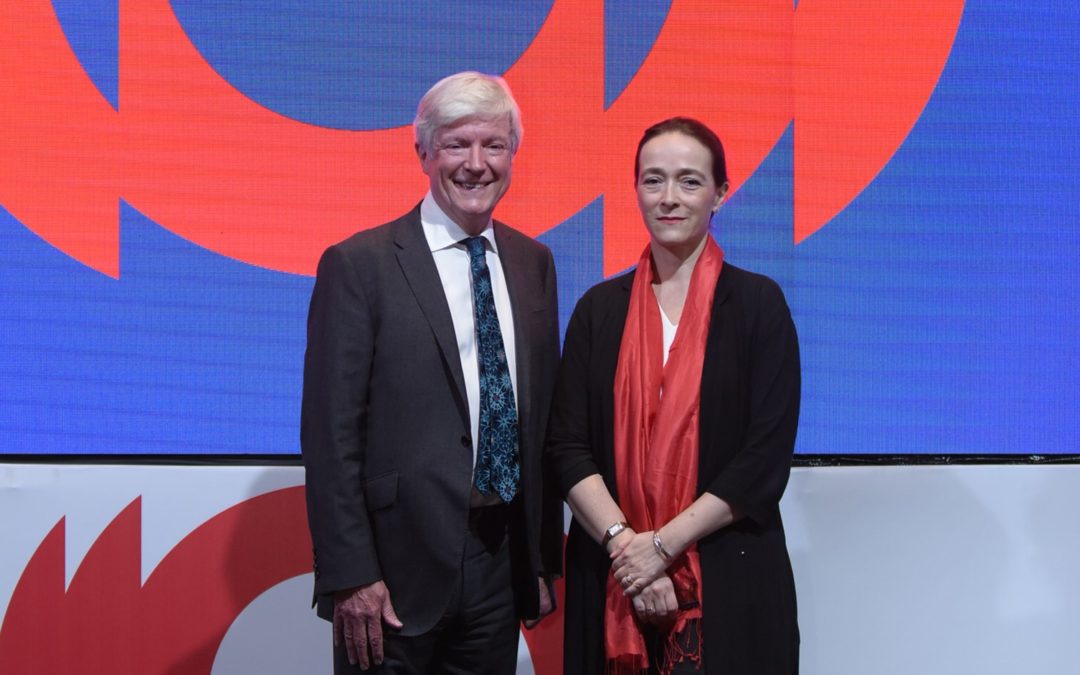
The European Broadcasting Union (EBU) has elected BBC Director General Tony Hall as its new President, and France Télévisions CEO Delphine Ernotte Cunci to serve as EBU Vice-President.
Both were elected by absolute majority at the EBU’s 80th General Assembly in Tirana on 29 June.
They will succeed outgoing President Jean-Paul Philippot, General Administrator of the Radio Télévision Belge de la Communauté Française (RTBF), who has served as EBU President since 2009, and RAI (Radiotelevisione Italiana) President Monica Maggioni, EBU Vice-President since 2015.
Hall and Ernotte Cunci will take up their new roles from 1st January 2019 for a two-year period. Since they are not already members of the EBU Executive Board, they shall each assume non-voting Observer status on the Board until their term of office begins. The EBU Executive Board is made up of 11 members.
Following EBU procedure for nominations on the Executive Board, the President and the Vice-President elected for the next term co-opt a third person chosen for having experience in how the EBU operates. Together, they constitute the Board Nomination Committee, which will draw up a list of candidacies for a seat on the Board; these candidacies must be received no less than 10 weeks before the General Assembly Winter Session.
The Board Nomination Committee sends the list to all EBU Active Members for comments.
After receiving these the Committee sends “to all Active Members its list of nine candidates, which shall be balanced and include persons from the main contributors to the Union and from other categories of Members, reflecting the geographical and cultural diversity of the Union.”
The nine members who will serve on the Board, with the President and Vice-President, are all senior representatives of EBU Active Member organizations and are elected by the General Assembly at its winter session for a two-year tenure.
The Executive Board meets around seven times a year.
The EBU has 73 Members in 56 countries from Europe and beyond
30 January 2018
The review, which covers correspondents, presenters and on-air editors in news and news-related areas, found no evidence of gender bias in pay decision-making, but identified a number of issues in relation to pay which have resulted in anomalies that need addressing, including:
- Too many pay decisions being made at local levels because of the absence of clear pay frameworks.
- A lack of clarity and openness about the basis for pay decisions because of the absence of pay ranges for on-air roles.
- A slower rate of pay progression for both men and women over the past decade because of a period of significant pay restraint.
PwC makes a number of recommendations including a clear pay framework, narrower pay ranges, simpler contracts and allowances and improved transparency. The BBC wants a fair, equal and transparent pay framework for the future, so we will now consult our presenters on this to help ensure we get it right.
On-Air Review
BBC Management Response
The plan unveiled by the BBC today means:
- Substantial pay cuts for some men and increases for some male and female presenters – prominent men in BBC News have already accepted pay cuts. We have already addressed close to half of the 230 cases raised of pay unfairness and equality by women and men – on and off air. We aim to conclude the rest by the summer.
- A new on-air framework for determining the pay of people on air – an equal, fair and transparent structure for the future. We will have narrower pay bands because they have become too wide; cut the number of contracts and allowances to be simpler and fairer; and have clear criteria for how pay reflects skills, experience and audience impact. We will fully consult on this to make sure we get it right.
- Greater pay transparency – we aim to be the most transparent organisation when it comes to pay. When our reforms are complete, everyone will be able to see the pay range for virtually every job in the BBC. Where there are more than 20 people in a job, staff will also be able to see where everyone else is positioned. We will do more to explain the pay of each presenter paid over £150,000, especially where they do more than one role.
- Review of career progression and working practices for women – we will look at what more we can do to make the BBC a better place for women to work. We already, for example, allow and encourage job shares and other flexible forms of working. We will review what we do to ensure we have the best in class processes and opportunities. We want to help more women progress more quickly at the BBC.
- We will also accelerate our work to achieve 50:50 representation across the BBC by 2020. Through the year we will continue to make changes to our on-air line-ups at a faster rate.
The BBC is committed to equal pay and will not discriminate on the basis of gender, race, disability, social background or any other characteristic. But, as in any organisation, that does not mean everyone is paid the same. People bring different skills and experience, and take on different responsibilities or risks. But we must apply those factors fairly, transparently and without discrimination.
Director-General Tony Hall says: “The BBC believes in equality. No one should be paid differently because of their gender. The BBC has a special role representing Britain. That is why we need to be and want to be an exemplar on gender pay, and equal pay.
“Today’s report does not find evidence of gender bias in decision-making, but it shows that we have real and important issues to tackle, particularly in some areas of news and current affairs, and I’m determined to get it right. The plans we’re setting out today go further and are more important steps in modernising the BBC and making it fairer.
“We’ve already made an important start. We’re addressing unfairness in individuals’ pay and want to close the gender pay gap and have women in half of our on-air roles by 2020. Those are big, bold commitments I’m really serious about.
“We are clear we’re going to tackle this and change for the better, and I hope other organisations take the same approach. The BBC can and must lead the way. I am determined that we will.”
The report by PwC covers around 800 on-air roles. It makes a series of recommendations, which form the basis of a proposed new pay framework.
PwC’s recommendations are: proposing a grading structure for the on-air group; using narrow pay ranges; addressing outliers both above and below the pay ranges; publishing pay ranges; reviewing the current approach to contracting; simplifying allowances; creating an on-air talent team to help manage the governance for this population; conducting regular reviews; reporting regularly; and continuing to improve diverse representation.
In October we published an equal pay audit of around 18,000 staff which concluded there was no systemic discrimination against women at the BBC. We also published our audited gender pay gap report, which shows the gender pay gap is 9.3 percent against a national average of 18.1 percent.
At the same time we set out a range of actions we were taking including access for staff to specialist advice if people have questions about pay, ensuring managers review pay in their team every six months to ensure fairness, and ending single-sex panels for job interviews, as well as striving for diverse shortlists for jobs.
Notes to Editors
- The PwC review covers around 800 individuals consisting of Presenters, On-Air Editors and Correspondents. These individuals work within one of the following areas: Network News, Radio Continuous Programmes, Nations, English Regions, World Service or Sport. The review is published here
- The BBC’s response is available here
- The BBC has already published an equal pay audit of the majority of its workforce here. Our gender pay gap report is also available here
Below is the BBC’s performance against a range of gender and diversity targets:
- 48% of staff are women (2020 target 50%)
- 42% of leadership are women (2020 target 50%)
- Target for 50:50 gender split in lead roles on air across all genres by 2020.
- 14.5% of staff are BAME (2020 target 15%)
- 10.3% leadership are BAME (2020 target 15%)
- Target for 15% BAME on screen, on air and in lead roles across all genres by 2020.
- 10.2% staff are disabled (target 8%)
- 9.6% leadership are disabled (target 8%)
- Target for 8% disabled people on screen and on-air including some lead roles by 2020.
- Tony Hall has also committed to closing the gender pay gap by 2020.
(Source: BBC press release)