Russians and Ukrainians beat blockages to access RFE/RL

Russians and Ukrainians beat blockages to access RFE/RL

Russians and Ukrainians beat blockages to access RFE/RL

Radio Free Europe/Radio Liberty (RFE/RL) has condemned the blocking of access within Russia to websites run by its Russian, Tatar-Bashkir, and North Caucasus services, including the Russian-language North.Realities, Siberia.Realities, Idel.Realities, and Caucasus.Realities sites. Access to the sites was blocked after RFE/RL refused to comply with demands to delete information about Russia’s invasion of Ukraine from Russian state media-monitoring agency Roskomnadzor.

RFE/RL President Jamie Fly said: “Putin is feeding Russians a steady diet of lies about the scope and costs of the war in Ukraine. RFE/RL refuses to censor our content at this critical moment for our Russian audiences. They deserve the truth and we will continue to provide them with factual information about their government’s actions and the consequences that they must now endure.”

A number of other Russian-language websites producing news content from outside of Russia were also blocked today, including the Latvia-based meduza.io, BBC, Deutsche Welle and Voice of America (VOA). Access was blocked on February 28 to the websites of RFE/RL’s Crimea.Realities and the Current Time digital and TV network led by RFE/RL in cooperation with VOA.

Since Russia began its invasion, Russian and Ukrainian audiences have been flocking to RFE/RL and its several Russian-language content platforms. On the first day of the invasion (February 24), 527% more Ukrainians and 275% more Russians viewed RFE/RL videos via You Tube. Across all digital platforms, Current Time has earned more than 240 million video views since the invasion, reflecting a nearly tenfold increase over the network’s average pre-war number of weekly video views. Page views by audiences in Russia to RFE/RL websites have nearly doubled in the week since the invasion to just over 2 million, while views to RFE/RL videos on YouTube grew by nearly five times to almost 15 million.

During the period February 23-March 1, audiences viewed RFE/RL videos 436.4 million times on Facebook, 305.4 million times on YouTube, and 83.2 million times on Instagram – reflecting increases of 265 percent, 406 percent, and 185 percent, respectively, over the previous week.

This surge in audience numbers is indicative of a region-wide demand for reliable and factual information, which RFE/RL provides through its network of reporters offering perspectives from Ukrainians and Russians affected by the war.

RFE/RL is also working with the U.S. Agency for Global Media (USAGM) to further expand its reach by providing its content to media outlets around the world. RFE/RL and Current Time continue to field numerous requests for their content and program distribution from news outlets in Bulgaria, Canada, Estonia, Latvia, Lithuania, Moldova and Romania, among others.

Audiences around the world are following RFE/RL’s reporting on the physical and human toll of the war. As the Kremlin and state media have refrained from disclosing details of the casualties Russia has incurred in its invasion of Ukraine, RFE/RL spoke to mothers of Russian soldiers who were shocked to learn their sons were fighting in Ukraine, after being told they were on training exercises.

Since before the war began, RFE/RL has been preparing for the eventuality that the Kremlin would act on its threats. RFE/RL’s Russian, North Caucasus, and Tatar-Bashkir services and Idel.Realities, Caucasus.Realities, Crimea.Realities, North.Realities, Siberia.Realities, and Current Time websites have been educating their audiences about how to continue to access their reporting in the event that their websites are blocked. Mirror sites – complete copies of each website located at a different online address – have been set up for all of the blocked websites, and their content can also be accessed using virtual public network (VPN) clients such as nThlink. Each of the affected websites also has a robust presence on popular social media platforms such as Telegram, YouTube, Twitter, Facebook, Instagram, TikTok and VKontakte, and offer mobile applications via Google Play and Apple’s App Store, which include a built-in VPN.

Current Time is a 24/7 Russian-language digital and TV network led by RFE/RL in cooperation with VOA. In addition to reporting uncensored news, it is the largest provider of independent, Russian-language films to its audiences. Broadcasters interested in picking up Current Time programming should contact Adam Gartner of USAGM’s Eurasia Marketing Office at atgartne@usagm.gov.

About RFE/RL
RFE/RL relies on its networks of local reporters to provide accurate news and information to more than 37 million people every week in 27 languages and 23 countries where media freedom is restricted, or where a professional press has not fully developed. Its videos were viewed 7 billion times on Facebook, YouTube, and Instagram/IGTV in FY2021. RFE/RL is an editorially independent media company funded by a grant from the U.S. Congress through the U.S. Agency for Global Media.
 

Audiences turn to RFE/RL for reporting about Russia’s invasion of Ukraine

Audiences turn to RFE/RL for reporting about Russia’s invasion of Ukraine

Audiences turn to RFE/RL for reporting about Russia’s invasion of Ukraine

As the world awoke to unprovoked war in Europe, audiences turned to Radio Free Europe/Radio Liberty (RFE/RL) for breaking news and analysis of the escalation. With journalists across the region and RFE/RL’s Ukrainian, Belarus, Russian, and Current Time networks providing on-the-ground coverage, RFE/RL is uniquely positioned to provide the facts to audiences across the region that are being bombarded by Kremlin disinformation.

  • RFE/RL’s networks recorded 13 million page views on their websites on February 24, representing a 159 percent increase over the previous day and a 248 percent increase over the same day one week before (February 17).
  • RFE/RL Ukrainian Service websites, which include content for audiences in Crimea and Donbas, alone recorded 4.7 million page views yesterday, a 313 percent increase over the previous day and 557 percent rise over the same day one week before.
  • Current Time’s live coverage of the early hours of the invasion was viewed more than 10 million times across social platforms, including YouTube and Facebook, reflecting a 25-fold increase over the same day the previous week for Current Time’s morning show.

Jamie Fly, President of RFE/RL, spoke of the importance of providing uncensored news and information and condemned Russia’s aggression: “With Russia’s illegal invasion of Ukraine, our mission to share the facts with audiences that are denied that truth by their governments or that need independent information during a crisis is more important than ever.”

“Vladimir Putin initiated an unprecedented act of war against Ukrainian democracy today, but he has been assaulting the rights of the Russian people and undermining democracies for decades. We will continue to report the truth about him and the Kremlin’s lies and fabrications to our audiences in Russia, Ukraine, Belarus, and throughout the region during this critical moment.”

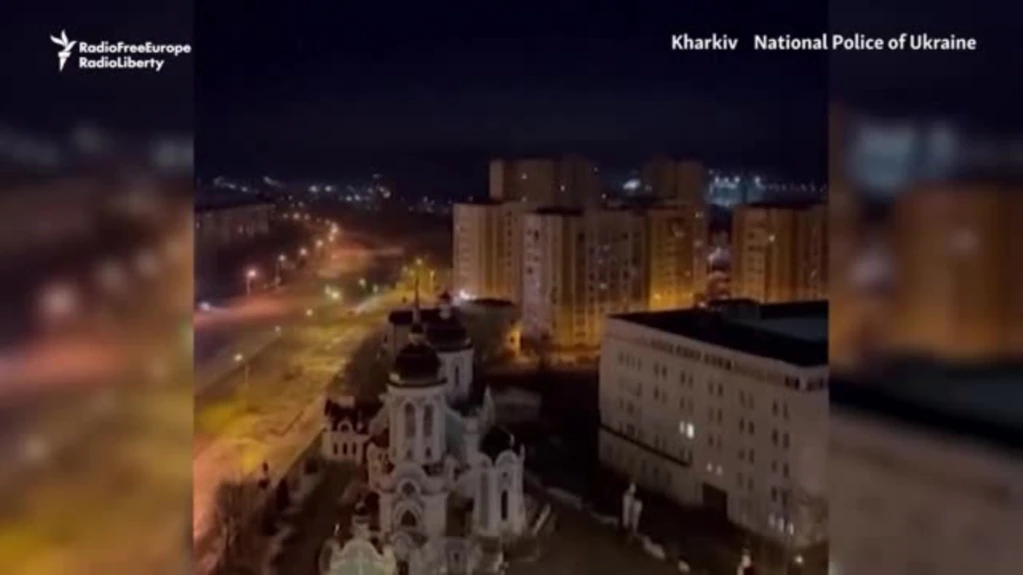
RFE/RL is staying close to the story, offering comprehensive, around-the-clock reporting from our journalists on all aspects affecting our audiences during this conflict. This includes coverage of events Russian authorities would rather ignore, such as the outbreak of anti-war protests across Russia, damage to civilian apartment buildings in Kharkiv as a result of Russian bombardment, and massive traffic jams caused by civilians trying to flee the attack on Ukraine’s capital, Kyiv. RFE/RL continues to counter Russian propaganda through our services’ live videos, in-depth reports and analysis, podcasts, photo galleries, maps, infographics and real-time blogging.

To stay up to date on the latest developments, follow RFE/RL’s Live Briefing: Ukraine Under Attack – updated throughout the day. Several RFE/RL services, including the Ukrainian, Belarusian, Russian and Current Time networks, are also live blogging the invasion, and RFE/RL has also created a list of its most relevant Twitter feeds.

In response to intensified attempts by Russia’s media monitoring agency Roskomnadzor to keep Russian audiences from accessing factual reporting on the invasion, RFE/RL’s Russian Service, Tatar-Bashkir Service, Crimea.Realities, and Current Time units are educating their audiences on a variety of means to bypass online censorship and safely access information. Such efforts to ensure access to RFE/RL content are especially relevant given Roskomnadzor’s recent attempts to force RFE/RL to take down content tied to corruption investigations by jailed opposition leader Aleksei Navalny’s team.

RFE/RL condemns six year sentence for Ukrainian Service journalist Vladyslav Yesypenko

RFE/RL condemns six year sentence for Ukrainian Service journalist Vladyslav Yesypenko

RFE/RL condemns six year sentence for Ukrainian Service journalist Vladyslav Yesypenko

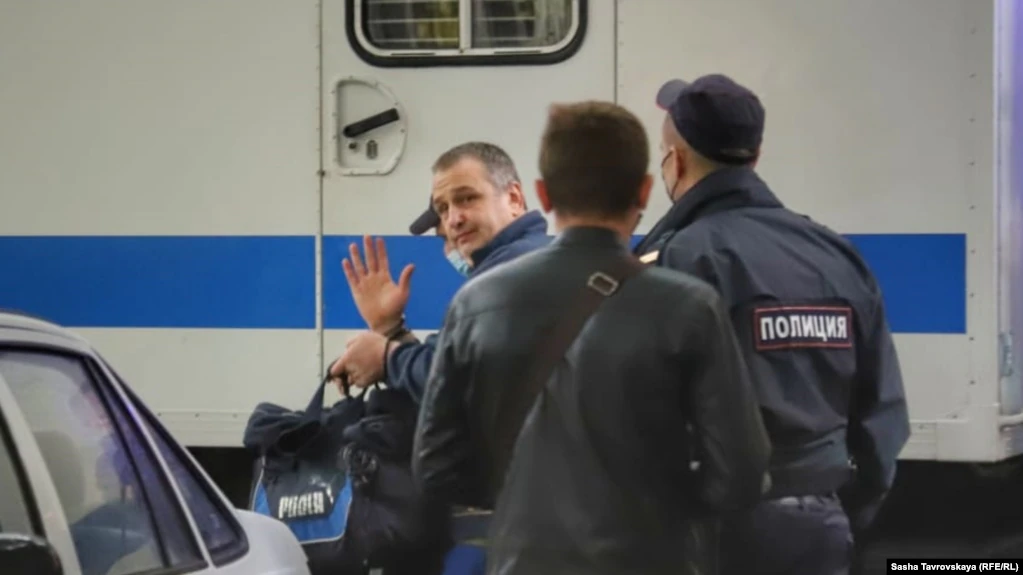
Radio Free Europe/Radio Liberty (RFE/RL) condemns today’s sentencing of RFE/RL freelance journalist Vladyslav Yesypenko to six years in prison by a Russian-controlled court in occupied Crimea.

Said RFE/RL President Jamie Fly, “This judgement against Vladyslav is a travesty. As a journalist doing nothing more than reporting the facts, he should never have been detained in the first place, much less put through the physical and mental torture that he has endured over the past eleven months. Vladyslav needs to be returned home to his wife and daughter immediately.”

Yesypenko, a dual Russian-Ukrainian citizen who contributes to Crimea.Realities, a regional news outlet of RFE/RL’s Ukrainian Service, was detained by Russia’s Federal Security Service (FSB) in Simferopol on March 10, 2021, on suspicion of collecting information for Ukrainian intelligence. Yesypenko left Crimea for mainland Ukraine with his wife, Kateryna, following the 2014 Russian annexation, where she gave birth to their daughter, Stephania; he would later return to Crimea periodically to report for RFE/RL on the social and environmental situation on the peninsula.

Following his detention, Yesypenko was brutally tortured by Russian FSB officers, to force him to make a false ‘confession’ on Russian television. Yesypenko was formally charged with possession and transport of explosives on July 15, 2021. He pleaded not guilty, facing up to 18 years in prison if convicted. The indictment made no mention of espionage or work for Ukrainian intelligence, as stated previously by the FSB.

Speaking at the Ukrainian Embassy in Washington on October 21, 2021, Yesypenko’s wife read out an appeal from her husband. In the letter dictated from his jail cell, Yesypenko called on U.S. President Joe Biden and U.S. lawmakers to do more to free the more than 100 political prisoners detained by the FSB over their activities in Crimea.

Sixteen Ukrainian human rights NGOs, Ukrainian Ombudswoman Lyudmyla Denisova, and the U.S. Embassy in Kyiv have denounced the verdict in online statements, as has Reporters Without Borders. In December 2021 Amnesty International launched an online petition demanding Yesypenko’s immediate release. Press-freedom advocates, including the Committee to Protect Journalists, along with Ukrainian Foreign Minister Dmytro Kuleba and the U.S. State Department, are among those who have called for the same in the absence of any evidence of wrongdoing.
[Source: RFE/RL press release]

RFE/RL condemns latest Kremlin threats as ‘Political Censorship’

RFE/RL condemns latest Kremlin threats as ‘Political Censorship’

RFE/RL condemns latest Kremlin threats as ‘Political Censorship’

Press release by Radio Free Europe/Radio Liberty (RFE/RL): Radio Free Europe/Radio Liberty (RFE/RL) strongly condemns a sharp escalation of intimidation tactics by Russian authorities, which saw state media-monitoring agency Roskomnadzor overnight threaten to block eight RFE/RL websites serving audiences in Russia, Ukraine, and Central Asia unless they pulled down articles tied to corruption investigations by jailed opposition leader Aleksei Navalny’s team.

RFE/RL will not comply with these demands. Said President and CEO Jamie Fly, “RFE/RL will not allow the Kremlin to dictate our editorial decisions. This is a blatant act of political censorship by a government apparently threatened by journalists who are merely reporting the truth.”

Roskomnadzor sent more than 60 e-mail notifications giving RFE/RL 24 hours to remove content related to Navalny investigations from its two largest websites for Russian audiences – Radio Liberty and Current Time – as well as RFE/RL’s Russian-language sites for Ukraine’s Crimean Peninsula, Kazakhstan, and Tajikistan, and local sites for Russia’s Siberian, Volga-Ural, and Northwestern regions.

More than a dozen Russian publications, including the newspaper Novaya gazeta, as well as Dozhd television channel and Ekho Moskvy radio station, have received similar notices in recent days. Several decided to comply with the demands and removed the content. The move is the latest in a series of attacks against RFE/RL and other independent media and comes as RFE/RL has been extensively covering the unprecedented Russian military buildup for its audiences in Russia, Ukraine, and Belarus, rebutting Kremlin disinformation and exposing malign Russian activities.

In the past year, Roskomnadzor has issued 1,040 violations against RFE/RL that will result in fines of more than $13.4 million for its refusal to submit to the unjust and invasive content labeling provisions of Russia’s “foreign agent” law. RFE/RL continues to fight these fines in Russian court and has also filed suit with the European Court of Human Rights (ECHR) over the law. In addition, 18 RFE/RL journalists have been designated as individual “foreign agents.”

On January 26, RFE/RL’s Russian Service was fined 3 million rubles ($39,000) for the alleged “public distribution of knowingly false information about the activities of the U.S.S.R. during World War II.” In fact, the existence of the published material is backed by documents from Russian archives – and RFE/RL is being held liable for actions that are not punishable under Russian law. RFE/RL is appealing the fine, not least to help defend Russia’s shrinking space for press freedom.

In a sign that the crackdown on press freedom may yet intensify, President Putin in late January issued an order calling for the creation of a new “register of toxic content.”

[Press release by RFE/RL]

RFE/RL experts available for interview on Ukraine/Russia crisis

RFE/RL experts available for interview on Ukraine/Russia crisis

RFE/RL experts available for interview on Ukraine/Russia crisis

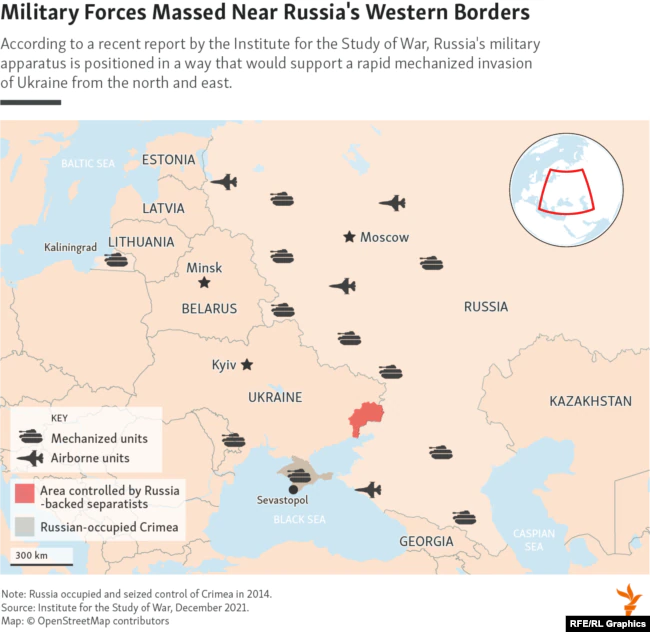
As Russian military forces and equipment continue to flood into Russian and Belarusian territories adjacent to those countries’ borders with Ukraine, Radio Free Europe/Radio Liberty’s (RFE/RL) Ukrainian, Russian and Belarus services and Current Time digital network are reporting the facts on the ground on either side of the Ukrainian frontier. RFE/RL has gathered the best of its company-wide coverage of the crisis in this English-language portal and Live Briefing: Ukraine in the Crosshairs.

RFE/RL experts are available for interview on TV, over the phone, or via email:

Ukrainian Service

  • Sashko Shevchenko, Correspondent, Radio Svoboda (Kyiv)
    English, Ukrainian, Russian
    Shevchenkoo-fl@rferl.org | mobile: +380.678.827.039 | Twitter: @radiosvoboda
  • Rostyslav Khotin, Senior Editor (Prague)
    English, Ukrainian, Russian
    khotinr@rferl.org | phone: +420.221.122.281 | mobile: +420.777.474.042
  • Maryana Drach, Director (Prague | Kyiv)
    English, Ukrainian, Russian
    drachm@rferl.org | phone: +420.221.122.296 | mobile: +420.602.612.714 | Twitter: @MaryanaDrach1

Russian Service

Belarus Service

  • Aliaksandra Dynko, Senior Editor (Kyiv)
    English, Belarusian, Russian
    dynkoa@rferl.org  | mobile: +380.956.925.085

Central News

  • Mike Eckel, Senior Correspondent (Kyiv)

English, Russian

eckelm@rferl.org | phone: +420.221.123.624 | Twitter: @Mike_Eckel
READ: How Long Could Ukraine Hold Out Against A New Russian Invasion?

—–

Find RFE/RL Experts at https://pressroom.rferl.org/experts

To schedule an interview with any of RFE/RL’s experts, contact Martins Zvaners in Washington (zvanersm@rferl.org; +1.202.457.6948) or Karin Maree in Prague (mareek@rferl.org; +420.221.122.074).

Follow the latest developments on RFERL.org.