Russian court fines RFE/RL over alleged “foreign-agent” violations

Russian court fines RFE/RL over alleged “foreign-agent” violations

US Department of State, Broadcasting Board of Governors, OSCE denounce the move

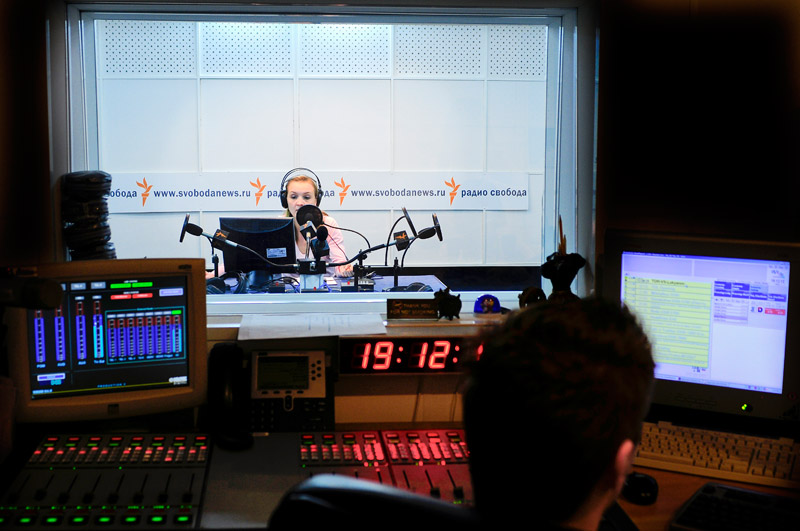
Radio Free Europe/Radio Liberty (RFE/RL) reported on 05 July that it had been fined by a Moscow district court for allegedly failing to comply with a Russian law regulating media outlets branded by the government as “foreign agents”.

The ruling comes seven months after the Russian Justice Ministry classified the following nine US international broadcasting and news services as “foreign agents”: Voice of America (VOA), RFE/RL, Current Time TV (the Russian-language TV network run by RFE/RL in cooperation with VOA), and six RFE/RL affiliated news services: the Tatar-Bashkir Service of RL (AzatliqRadiosi), Sibir.Realii, Idel.Realii, Faktograph, Kavkaz.Realii, Crimea.Realii.

“Sharp new escalation (…) worrying and unacceptable”

RFE/RL President Thomas Kent said the prosecution of RFE/RL was a “sharp new escalation in a series of Russian actions aimed at hamstringing the work of the company and at casting public suspicion on its Russian staff.”

John Lansing, CEO of the Broadcasting Board of Governors (BBG), the federal agency that oversees the five US international broadcasting networks, released a statement condemning the ruling. Lansing described it as “worrying and unacceptable,” saying it represented “an escalation in a targeted campaign against RFE/RL and VOA,” and added that it “will not deter us from our mission to inform and engage people – in Russia and around the world – in support of freedom and democracy.”

The US Department of State spokesperson issued a statement that said “we condemn the selective targeting of Radio Free Europe/Radio Liberty (RFE/RL) and Voice of America (VOA) under Russia’s law on ‘foreign agent’ media outlets.”

The statement further called “on the Russian government to uphold its commitments under the Helsinki Final Act and its obligations under the International Covenant on Civil and Political rights to respect the exercise of fundamental freedoms, including freedom of expression, in Russia.”

OSCE and CPJ denounce foreign agents branding

For his part the Organization for Security and Co-operation in Europe (OSCE) Representative on Freedom of the Media, Harlem Désir, “denounced the fine imposed on Radio Free Europe/Radio Liberty (RFE/RL) for not complying with a Russian law regulating the activities of media outlets branded by the authorities as ‘foreign agents’.”

The day the State Duma’s information and communication committee approved legislation that would allow authorities to label private persons as foreign agents, the Committee to Protect Journalists (CPJ) released a statement condemning the move as “the latest step in the Russian authorities’ systematic policy towards obstructing the free flow of news.”

“We call on Russian authorities to reverse course and allow its citizens to receive information and opinion from a wide range of sources,” said a CPJ official.

International broadcasts to Belarus – summary, April 2018

International broadcasts to Belarus – summary, April 2018

International broadcasts to Belarus – summary, April 2018

Prepared by AIB media analyst Morand Fachot

The media environment in Belarus is ranked as “Not Free” by independent media watchdogs, such as Freedom House or Reporters sans Frontières (RSF).

The Belarusian Association of Journalists (BAJ), a non-governmental, non-profit and non-partisan association of media workers reports that 69 fines were given to journalists in 2017 for working without accreditation for foreign media (mainly with Belsat TV), some 40 fines have been already given this year (as of 02 April 2018).

A number of foreign-based radio and TV services broadcast to Belarus. They include:

– Belsat TV, the Polish-based TV channel for Belarus, which will air BBC TV news content in Russian and BBC series; Belsat TV was formed in 2007 by a group of Belarusian and Polish journalists as part of Telewizja Polska S.A. in partnership with Poland’s Ministry of Foreign Affairs and several European governments. Itbroadcasts nearly 20 hours a day. Its original content is prepared by more than 100 associates from all over Belarus supported by around 80 editors, managers and technicians in Warsaw. Belsat TV has so far failed to register a bureau and obtain accreditation in Belarus. During British Prime Minister Theresa May visit to Poland in December 2017 it was reported that, in an effort to counter Russian propaganda, the UK planned to provide £5m ($7.1m) for the Belsat TV project, with Poland expected to contribute a similar amount.

– RFE/RL’s Radio Svaboda (Liberty), which was established in 1954, is based in Prague. It broadcasts 2.5 hours daily and is distributed via radio (mediumwave, satellite) as well as on Belsat TV (30 minutes weekly), Internet (website, mobile, YouTube, social media).

– In 2006, the EU launched European Radio for Belarus (Euroradio.fm). Euroradio’s programmes can be received on FM in some of Belarus’s border regions, via relays on stations in neighbouring countries, in Poland, Lithuania and Ukraine. Euroradio is available online and on the Astra 4A satellite.

– Polish radio external service Belarusian broadcasts are available on FM and on  mediumwave (Radio Baltic Waves, 1386 kHz) in border regions, as well as via satellite and online.

– Radio Racyja, which broadcasts from Bialystok, is funded and supported by Poland’s Ministry of Foreign Affairs, Polish aid agencies and NGOs, and the US embassy in Poland.

– Russia’s Sputnik has a Belarusian service, which offers online text and multimedia content, including audio.

It is worth noting too, that many Belarusians listen to, watch and consult Russian-language radio and TV broadcasts, and online content from all major international broadcasters (such as the BBC,  Deutsche WelleRFE/RLRFI or VOA), and naturally from Russian broadcasters and online media outlets as well.

Related story:

http://cfb.d5c.myftpupload.com/bbc-news-features-on-belsat-tv-at-prime-time/
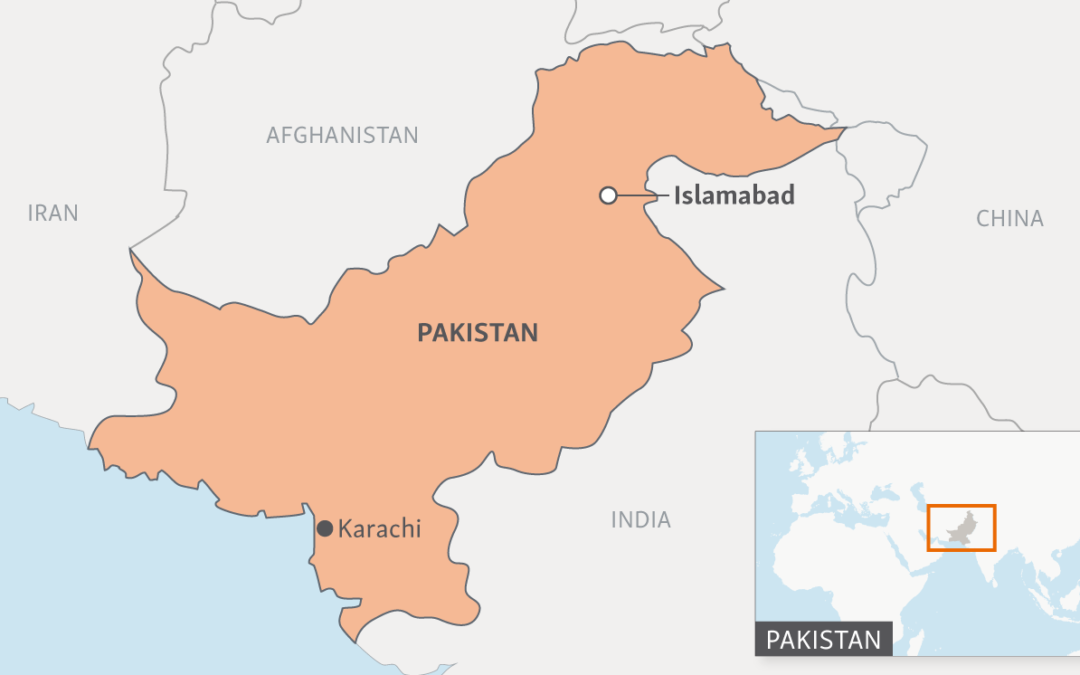
RFE/RL deplores closure of bureau in Pakistan

RFE/RL deplores closure of bureau in Pakistan

Radio Free Europe/Radio Liberty (RFE/RL) has deplored the closure by Pakistan’s Interior Ministry of its office in Islamabad, Pakistan, following accusations by the country’s Inter-Services Intelligence (ISI) agency that its programs are “against the interest of Pakistan” and “in line with [a] hostile intelligence agency’s agenda.”

Radio Mashaal serves no intelligence agency or government,” said RFE/RL President Thomas Kent, using the local name of RFE/RL’s Pashto-language service in Pakistan. “Our reporters are Pakistani citizens who are dedicated to their country and live and raise families in the villages in which they report.  We demand that their safety be ensured, and that they be permitted to resume their work without fear or delay.”

Interior Ministry officers arrived at the company’s Islamabad bureau on January 19 to present the closure order and clear and seal the premises. The order came amid deteriorating U.S.-Pakistan relations. Pakistan’s chief of army staff General Qamar Javed Bajwa stated on January 12 that Pakistan feels “betrayed” by U.S. criticism that it is not doing enough to fight terrorism and by Washington’s decision to suspend military aid for Islamabad.

RFE/RL, a private news organization supported by a U.S. congressional grant, has documented increasing threats against Mashaal journalists over the last two years as a result of their reporting. Freedom House has designated the country “not free,” and the Committee to Protect Journalists consistently ranks it among the most dangerous countries for the media.

Radio Mashaal was established in 2010 to provide an alternative to extremist propaganda in the tribal regions along Pakistan’s border with Afghanistan, reaching audiences that are otherwise subject to the “mullah” radio of Taliban extremists and the recruitment efforts of other militant groups.

Mashaal senior editor Daud Khattak spoke optimistically about the tribal regions recently. “Twenty years ago, people of [the tribal areas] saw weapons as a symbol of grandeur. Today, they want schools and colleges…[and] courts.”

While Mashaal continues to use radio to reach its audience, it also counts more than 1.6 million Facebook fans, and registered 81 million video views on Facebook and 10 million views on YouTube in 2017.
(Source: RFE/RL press release)

AIB archive | Prague 2004 conference highlights – still relevant today

AIB archive | Prague 2004 conference highlights – still relevant today

The Association for International Broadcasting has worked in the global media business for almost a quarter of a century. As the organisation moves towards its 25th anniversary in 2018, we’re making more of our archive of conversations, magazines and video footage available.

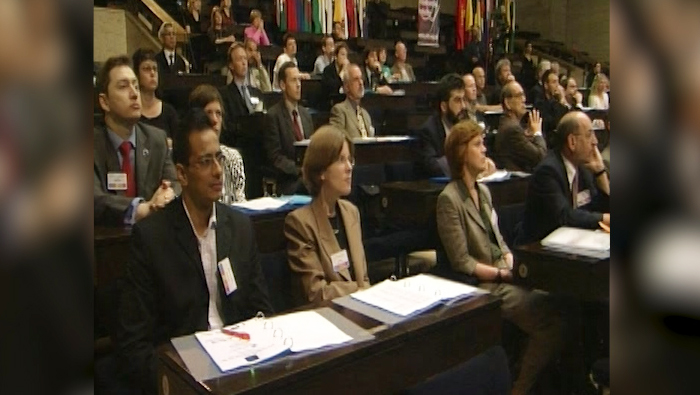
The latest video we have included in our conference archive includes highlights of the 2004 AIB Global Media Business conference in Prague. This was hosted at the then headquarters of Radio Free Europe/Radio Liberty which, before the fall of the Soviet Union, was the Czechoslovak parliament building. Guests attended from across the world, and the subjects under discussion ranged from “fake news” (before that name was coined), to the need for technology companies to adopt the mindset of broadcasters, through to media in the Arab World.

Looking back at this conference, it’s clear that the AIB brings together experts on subjects that are at the cutting edge of the global media industry. Have a look and see what you think – and you can read about the event in the conference report that we published in The Channel, our global media magazine.


Death threat to RFE/RL correspondent

Death threat to RFE/RL correspondent

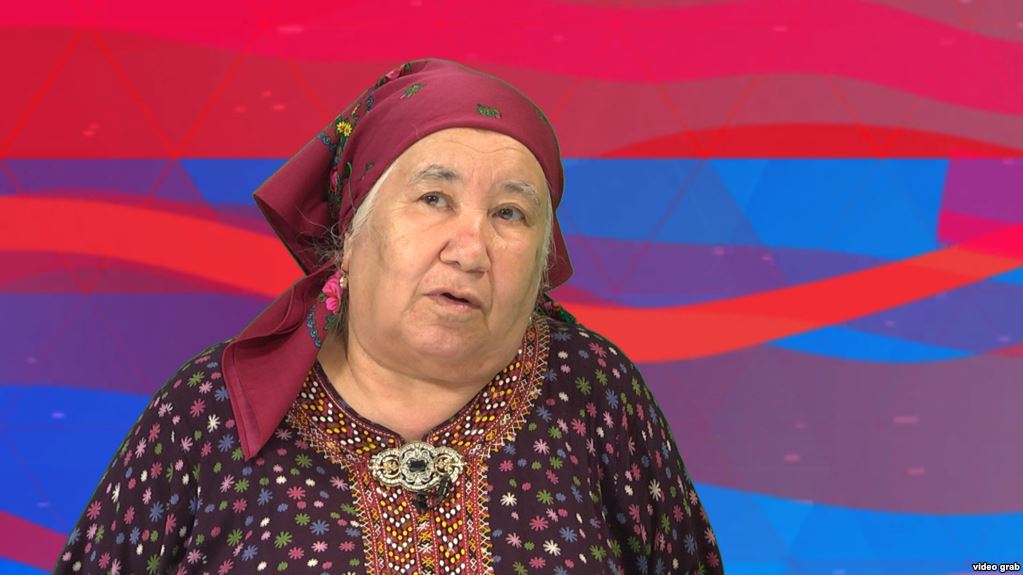
RFE/RL Turkmen correspondent Soltan Achilova has said that she was threatened with death on July 29, while en route to take photos documenting Turkmenistan’s “Day of Bicycles.” Achilova has also said that the man who made the original threat on 29 July identified himself to her as a police officer tasked to watch her wherever she goes, and again warned her against taking photos, or she will be “finished.” The threats follow an assault last week when a man tried to steal her cellphone as she was about to take a picture.

The recent attacks on Achilova, 68, resemble assaults she experienced in November 2016, when two women approached her, yelling “This is the one who takes pictures and pours dirt on Turkmenistan” in the cafeteria at a rehabilitation centre northeast of the capital, Ashgabat. This attack came one day after Human Rights Watch issued a statement decrying an October 25 assault on Achilova, saying “Achilova’s ordeal was clearly yet another orchestrated attempt to silence a critic.”

“Journalism is not a crime, in Turkmenistan or elsewhere in the modern world. Soltan’s life has now been explicitly threatened in an effort to stop her from doing her job in Turkmenistan,” said RFE/RL President Thomas Kent. “The Turkmen government must immediately put an end to the persecution of Soltan Achilova and assure her safety.”

Achilova’s reports appear regularly on the website of RFE/RL’s Turkmen Service, known locally as Azatlyk radiosy. According to Turkmen Service director Farruh Yusupov, she is one of the main contributors to the website of photos and videos from within Turkmenistan. Recently, the focus of her reporting has been the government’s preparations for the Asian Games, including a story on the removal of a statue of former Turkmen president Saparmurat Niyazov from a major thoroughfare in the capital, Ashgabat.

Attacks on RFE/RL contributors in Turkmenistan, one of the world’s most closed societies, have intensified over the past three years. Saparmamed Nepeskuliev, a video journalist who contributed to the Turkmen Service, disappeared more than two years ago, and is now in prison on narcotics charges that rights groups say were “trumped up” in retaliation for his reporting on decrepit infrastructure and economic inequality in the country’s western region. After filing video reports about local life in Turkmenistan’s northern Dashoguz province, correspondent Khudayberdy Allashov was taken into custody and severely beaten in December, 2016; he and his mother were subsequently jailed for three months on charges of possessing chewing tobacco, a product that is widely used in Turkmenistan and is not known to have led to any previous arrest. In December 2014, Achilova was questioned by unidentified men in civilian clothing, as she interviewed people waiting to purchase fresh meat that had suddenly became available in shops around the country.

The United States, the OSCE, and media advocacy organizations have expressed concern about Turkmenistan’s persecution of journalists.

Turkmenistan is ranked “not free” in Freedom House’s 2017 press freedom survey of 199 countries and territories, tied with North Korea at the bottom of the scale with 98 points out of 100.

Because of political conditions, RFE/RL has no bureau inside Turkmenistan, instead working through a local network of contributors to provide the country’s only Turkmen-language alternative to state-controlled media. Its Turkmen Service website logged a monthly average of 440,000 visits and 800,000 page views in 2016, and it has 175,000 followers on Facebook.