Deborah Turness appointed CEO, BBC News and Current Affairs

Deborah Turness appointed CEO, BBC News and Current Affairs

Deborah Turness appointed CEO, BBC News and Current Affairs

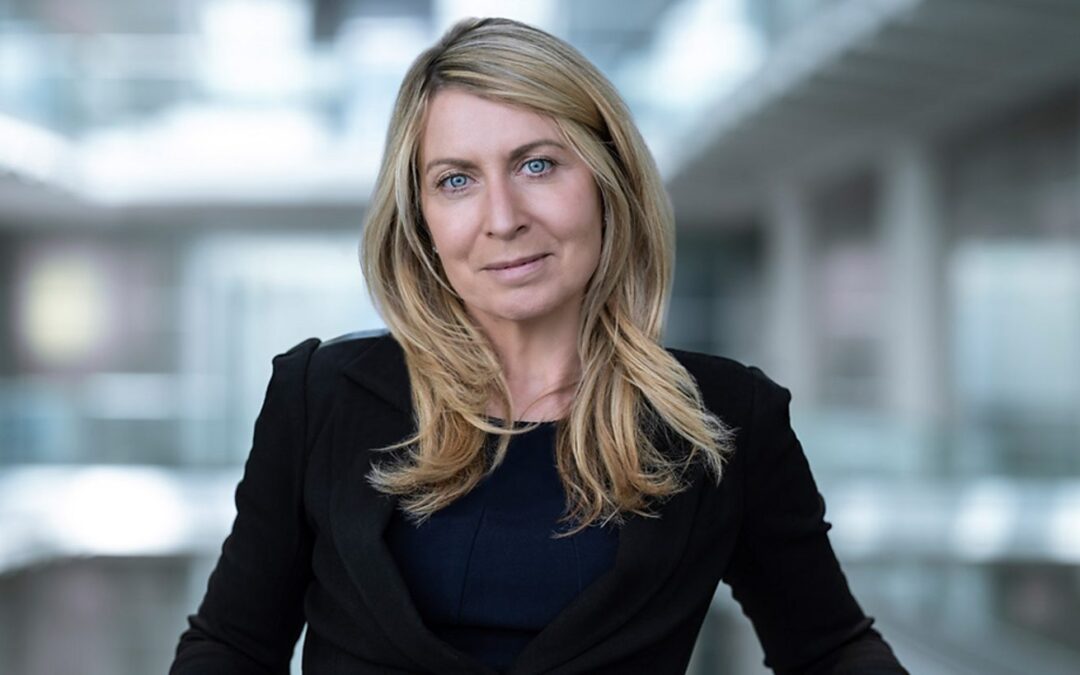
The BBC has announced that Deborah Turness has been appointed as CEO, BBC News and Current Affairs. Deborah will join the BBC from the UK’s ITN, where she is CEO.

Tim Davie, BBC Director-General, says: “I’m delighted Deborah Turness is joining the BBC as our CEO for BBC News and Current Affairs. Deborah brings a wealth of experience, insight, first-class editorial judgement, and a strong track record of delivery. She is a passionate advocate for the power of impartial journalism and a great believer in the BBC and the role we play, in the UK and globally. She will do a brilliant job of leading our news and current affairs as we deliver on the BBC’s public service mission in the digital age.”

Deborah Turness says: “In the UK and around the world there has never been a greater need for the BBC’s powerful brand of impartial, trusted journalism. It is a great privilege to be asked to lead and grow BBC News at a time of accelerated digital growth and innovation, when its content is reaching more global consumers on more platforms than ever before.”

As CEO of BBC News, Deborah will have responsibility for a team of around 6,000 people, broadcasting to almost half a billion people across the world in more than 40 languages. The BBC is consistently rated the world’s most trusted international news provider, and record numbers of people have turned to BBC News during the coronavirus pandemic. The latest figures show that eight out of ten UK adults use BBC News every week. 

Her title of CEO reflects the BBC’s ambition to continue to build the BBC’s global news brand and continue to grow its news services, which are now reaching a record 456 million people worldwide. Deborah will also be nominated to join the BBC Board.

Her appointment follows a competitive recruitment process. She replaces Fran Unsworth, who is retiring and leaves the BBC at the end of January.

BBC sets out modernisation plans

BBC sets out modernisation plans

BBC sets out modernisation plans

BBC News has set out an update on the plans it announced earlier this year to respond to changing audience needs.

The update addresses the BBC’s worsening financial position and draws on the experiences of operating during the Covid-19 crisis.

In January BBC News announced a series of modernisation proposals. Since then, faced with the Covid-19 crisis, BBC News has made huge operational changes to keep vital news services on air. During this time the proposals were paused, and will now be implemented in stages.

Director of BBC News and Current Affairs, Fran Unsworth, says: “Covid-19 has changed all of our lives. We are still covering the most challenging story of our lifetimes. During this crisis audiences have turned to BBC News in their millions and I’m incredibly proud of what we, as a team, have been able to achieve.

“But if we don’t make changes, we won’t be sustainable. This crisis has led us to re-evaluate exactly how we operate as an organisation.  And our operation has been underpinned by the principles we set out earlier this year – fewer stories, more targeted and with more impact. We’re aiming to reach everyone, every day. For BBC News to thrive, and for us to continue to serve all our audiences, we have to change.”

Alongside structural changes in some departments, updated plans set out today include:

  • Commissioning: the changes to working caused by the Covid-19 crisis mean it is not possible to go straight to the new way of working announced in January, but we will move towards it with a new commissioning group (made up of existing editors) to co-ordinate the biggest planned stories, avoid duplication and make BBC content go further
  • Newsgathering: BBC News will have fewer reporters overall; more correspondents will increasingly be asked to work across a range of content rather than be ‘owned’ by individual programmes. We will invest in new community affairs roles around the country, while reducing numbers in London
  • Digital: We want to ensure digital is at the heart of our journalism. A number of skilled digital journalists will move into the Newsgathering team and be deployed on stories. We will refocus the ‘rollout’ of our stories, so we break more stories in the morning when our digital audiences are highest
  • Original journalism: a new team, bringing together expertise from areas such as the Victoria Derbyshire programme and BBC Stories, will focus on under-reported ‘off diary’ stories, producing content for daily news programmes and online
  • TV political programming: Politics Live, currently airing on Wednesdays only, will return four days a week, Monday to Thursday
    BBC Parliament will focus on live and as-live coverage of the elected chambers across the UK and produce daily and weekly highlights programmes. We will no longer commission most of the other bespoke programmes we currently make for BBC Parliament, although we will continue to draw on our archive to broadcast our popular historical election coverage
  • News channels: We will preserve two clearly branded news channels (the BBC News channel in the UK and BBC World News globally) with a focus on live, breaking and developing stories but will retain some elements of shared output in the mornings and evenings
  • World Service English: we will make some of the current streamlined schedule changes permanent, including reductions in the duration of Newsday and The World This Week will be decommissioned. We will launch a new Africa-focused podcast
  • Business output: To increase the impact of business coverage we will integrate it more closely with the rest of the output, and will no longer run the Business Online live page. We will reduce separate business bulletins on the News channel and BBC World Service English
  • Radio: We will close In Business on BBC Radio 4 but continue long-form business content with The Bottom Line

Building on the lessons of operating during Covid-19, we will use fewer studios and make significant reductions to our operations staff.

The reduction in output means we will also reduce our pool of presenters.

The increased financial pressure on the BBC as a result of Covid-19 means the number of job losses in BBC News will rise to around 520, which is 70 more than the 450 announced in January. This will include senior management posts.

There will be a further update on plans later in the year.

Source: BBC Press Release

BBC News sets out its coronavirus output arrangements

BBC News sets out its coronavirus output arrangements

BBC News sets out its coronavirus output arrangements

BBC News has outlined its initial plans for how it will continue to offer its audiences trusted and accurate news throughout the Coronavirus crisis.

Director of News, Fran Unsworth (pictured), says: “These are unprecedented and difficult days. Trusted, accurate information is vital in a public health emergency and the BBC has a key role to play. We will continue offering our audience a continuous news service on TV, radio and online but this will look a bit different in the weeks ahead.

“Like many organisations we are unable to have all our staff on site due to the Coronavirus outbreak. We are therefore making some changes to what we do to streamline our output to ensure we can work with fewer people and protect the staff who are at work.”

Television

We will be making some visible changes to our output to focus on the latest news, information, live events and audience questions in the coming days. Breakfast, News At One, News At Six and News At Ten will continue to perform a vital role on BBC One, while we make some changes to support our continuous news channels.

We will be making some visible changes to our output to focus on the latest news, information, live events and audience questions in the coming days.

From tomorrow we will be moving to a core news service on the BBC News channel in the UK – with fewer branded programmes. This core service will replace some scheduled programmes on BBC Two including Politics Live and Victoria Derbyshire. We will be talking to these teams about how they can support the core operation, which will also provide live coverage of major news conferences and government briefings to BBC iPlayer, TV and News online.

There will also be a reduction in branded programmes on BBC World News – and more integrated working across live TV output behind the scenes. Some Persian TV programmes will be suspended.

Newsnight and The Andrew Marr Show will remain on air but will be operated by fewer technical staff; while The Andrew Neil Show, Newswatch and The Travel Show will be suspended. HARDtalk will also be suspended from next week.

Question Time will be broadcast at 8pm every Thursday without a studio audience for a period. From next Thursday it will be broadcast from a fixed location each week. Audiences will submit questions and we are particularly keen to hear from those in vulnerable groups.

Radio

We believe we can protect much of our regular, trusted output at this point – though we are keeping the situation under close review and will be making some initial changes.

On World Service English, The World This Week will be suspended from tomorrow, with World Update and Weekend suspended from next week.

In the UK, radio summaries on BBC Radio 2, 3, 4 and 5 live will be brought together into a single output from 1am on Friday, with 6 Music using the same script. There will be shared production and output on Asian Network and Newsbeat from tomorrow. The Week In Westminster on Radio 4 (Saturday mornings) will be suspended after 21 March. We are making some other changes to radio studio usage and working methods to protect our staff.

Digital

Over the last few weeks we have seen unprecedented use of our digital news services in the UK and around the world – with high consumption of our live pages, explanatory journalism and in-depth reporting. We will be making some changes to the way our teams are organised to sustain these vital services – and to ensure we can distribute important information via social media.

As a result of this we will be focusing content on the accounts that reach the widest number of people, drawing in effort from across the BBC to support our social media activity, and suspending posts on some smaller accounts over the coming days.

Podcasts

Newscast will change into a daily edition of The Coronavirus Podcast. Americast, Beyond Today and The Next Episode podcasts will be suspended.

Belgrade conference on challenges of fake news

Belgrade conference on challenges of fake news

Belgrade conference on challenges of fake news

BBC Director of News to host a conference in Belgrade on the challenges posed to elections by “fake news”

Director of BBC News and Current Affairs, Francesca Unsworth (pictured), will host the “Fake News” and Elections: Challenges for the Media and Audiences conference in Belgrade on 26 February.

The one-day conference will feature BBC journalists and experts from the UK, Serbia and across the Balkans to discuss the role “fake news” plays in general elections and the ways to tackle misinformation.  

Francesca Unsworth says:  “The BBC is committed to fighting ‘fake news’ and disinformation, and for this forum in Belgrade we are getting together with colleagues from the Balkans’ leading news media to have a conversation about the various forms disinformation can take, and to share our experience of dealing with it.  We’ll look at how we can help audiences navigate an incredibly complex flow of claims and counterclaims that we all face every day.”

The conference will discuss reporting the influence of closed social-media groups, the role of targeted political advertising, and the tools journalists can employ to monitor and counter the spread of misinformation.   

The BBC is part of an international effort to fight disinformation through the Trusted News Initiative (TNI) – a BBC-convened partnership linking media organisations and social-media platforms.  The TNI has developed a shared early-warning system to alert partners about disinformation that has the potential to become viral and cause significant harm to the integrity of elections. The TNI is also used for alerting partner media organisations of the misuse of trusted news brands. The partnership includes the BBC, Facebook, Microsoft, Google/YouTube, Twitter, The Wall St Journal, The Hindu, the EBU, the Financial Times, CBC/Radio Canada, AFP, Reuters, First Draft, and The Reuters Institute for the Study of  Journalism.

The BBC conducts media education via projects such as Young Reporter and My World, and exposes and debunks “fake news” through content such asReality Check and BBC Trending – drawing on open-source media insights provided by its specialist division, BBC Monitoring

BBC seeks to double global audience to one billion

BBC seeks to double global audience to one billion

BBC seeks to double global audience to one billion

BBC Director-General sets out vision for next seven years

  • Increasing reach of BBC News

  • Taking BBC Sounds app global

  • Story-led commissioning innovation in BBC News

  • Making Corporation carbon neutral

  • More staff away from London

The BBC Director-General Lord Tony Hall gave a New Year’s address to staff from the new BBC broadcast centre in the Welsh capital, Cardiff, on 14 January.

In his wide-ranging speech – relayed to all BBC offices in the UK and abroad – Hall said that the plans he was announcing would set the Corporation up for the rest of the current Royal Charter period that runs until 2027.

Hall said that the BBC brand is “recognised, and at times revered”, all over the world, with 426 million people using BBC products every week. He praised the work of BBC Studios, the in-house production unit, highlighting the immense audience for the landmark “Planet” series produced by the BBC Natural History Unit. Alongside this, BBC News is growing as it gives “so many more people access to news and information they can trust”. He cited the example of India where the BBC is now reaching 50 million people, an increase of 70% in the last year.

Now Hall wants to build on these successes and double global reach to one billion people every week by the end of this decade. He praised the last UK government that provided new funding for BBC World Service and he said that he’s looking forward to working with Boris Johnson’s new government. In addition, Hall wants to develop the BBC global brand and associated revenues further, gaining additional revenue from outside the UK at the same time as reaching the one billion audience figure.

Hall said that Fran Unsworth, Director of BBC News, is looking at new ways of working, including how best to bring the diverse range of BBC News teams together and how they can best create impact among audiences, including making sure that all the Corporation’s audiences recognise that BBC News “is really for them”. There’s to be a new “story-led” approach to commissioning in News and more detail on this will be announced towards the end of January. “It’s not just about how we cover news, it’s about what we cover’” said Hall. Audiences have told the BBC that they want explanation and analysis that helps them explore solutions. During 2020 there will be a “major focus on big themes, the things that matter beyond the headlines and the immediate.”

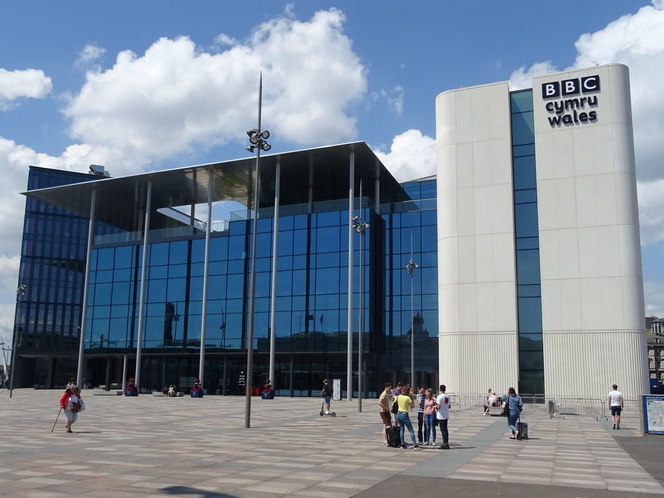
Hall spoke of the new Cardiff headquarters for BBC Wales that uses the newest generation of broadcast technology, live IP. He said that the building in the centre of the Welsh capital is the “most connected and flexible media centre in the world,” that is also the “greenest and most sustainable broadcast centre in Europe and…the world’s most accessible building for neurodiversity.” The renowned school of journalism at Cardiff University has moved alongside the BBC in the city.

Outside Wales, a new BBC technology hub is being created in Newcastle-upon-Tyne in the north-east of England. This is where software engineers, designers, product developers and data scientists will be based, driving the BBC’s digital services for UK and international audiences.

The curation team of BBC Sounds – the digital app for audio content – will be based at Salford on the outskirts of Manchester in the north of England. Hall said that BBC Sounds will be opened up to new British creators and will bring the best podcasts to everyone – presumably meaning that the platform will be available to storytellers to use to reach larger audiences. The BBC Sounds app will become available globally later in 2020, taking live BBC content and archived material to international audiences.

Importantly in terms of sustainability, Hall said that he wants to see “what it would take to make the BBC’s operations carbon neutral in this Charter period.” The BBC created the Albert initiative that broadcasters and production companies can use to help them become more sustainable. The AIB has been working with Albert to take its message to broadcasters and producers internationally.

Reading between the lines, Hall’s speech was perhaps a message to the UK government that said: “we know what we need to do, and we’re doing it. Mess with the BBC at your peril.” For example, moving more teams to places across the UK can be seen as a hedging move, protecting the BBC from accusations of being too London-centric and making it harder for any future licence-fee settlement to shrink the BBC’s staff numbers if it poses a threat to regional jobs and economies. The fact that Hall cited the way other organisations are drawn to where the BBC is establishing or expanding bases demonstrates that the presence of the BBC is a local multiplier, helping to drive growth in the media and digital sectors where it operates.

There is more news to come from the BBC over the coming weeks. Broadcasters and media companies, both in the UK and around the world, as well as politicians will be looking at how the world’s largest publicly funded broadcaster is adapting to ever-increasing competition from streaming services, the challenges in the news sector and the problems associated with climate change.

Main image: JThomas / BBC Cymru Wales