6 November 2018
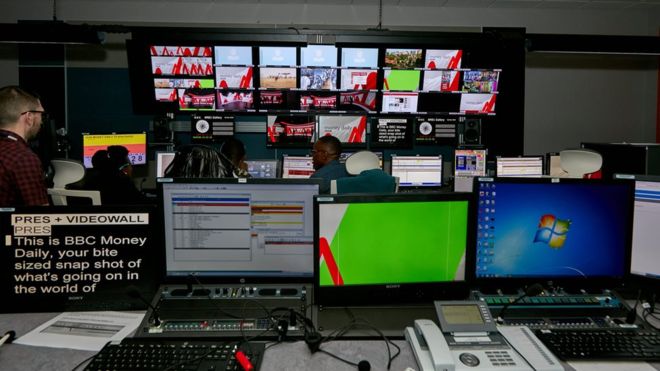
The BBC launched its largest bureau outside the UK in Kenya’s capital, Nairobi, on 5 November. Around 300 of the 600 BBC journalists working across Africa are based in the new, state-of-the-art facility.
“Our most important investment will be in training the next generation of African reporters and producers to world-class standards,” Francesca Unsworth, Director of BBC News, said.
The expansion is being funded by $376m (£289m) from the UK government and the production facilities at the bureau include a TV studio and two further live broadcast positions, two radio studios, two radio workspaces and five TV edit suites.
The Nairobi bureau follows the opening of another major hub in Nigeria’s commercial city of Lagos, where three new language services are based, while there has also been an expansion of the French service based in Senegal’s capital, Dakar.
“We are celebrating the African journalists and programme makers here today who will carry the torch of BBC professionalism, accuracy and impartiality into the future,” Rachael Akidi Okwir, Head of East Africa Languages for the BBC World Service said.
Nairobi-based BBC services: Afaan Oromo: Language of Ethiopia’s biggest ethnic group; Amharic: Ethiopia’s official language; Tigrinya: The main working language of Eritrea, along with Arabic. Also spoken in Ethiopia
Lagos-based BBC services: Igbo: An official Nigerian language. Also spoken in Equatorial Guinea; Yoruba: Spoken in south-western Nigeria and some other parts of West Africa, especially Benin and Togo; Pidgin: A creole version of English widely spoken in southern Nigeria, Ghana, Cameroon and Equatorial Guinea
Photo: Armstong Too/BBC
15 December 2017
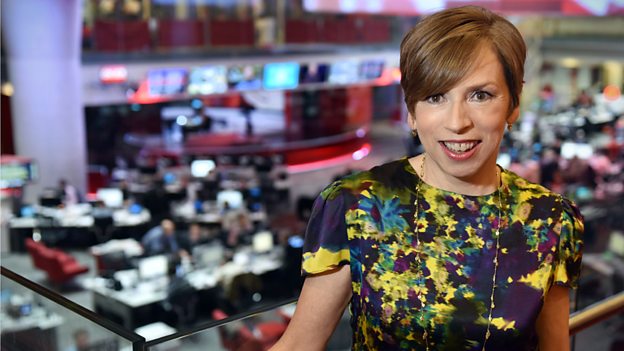
The BBC has announced that Fran Unsworth is to be the new Head of News and Current Affairs.
Fran Unsworth is currently Director, BBC World Service Group and deputy director of News and Current Affairs. In her new post she will be responsible for all the BBC’s domestic and international news services.
Fran joined the BBC in local radio before moving to London and the Newsbeat programme on the pop music station Radio 1. She spent some time as a network radio producer in Washington DC, and later joined Radio 4’s The World At One and PM. Fran was appointed the BBC’s Home News Editor and then, in 2001, Head of Political Programmes. In 2005 she became Head of Newsgathering, running one of the world’s largest newsgathering operations with bureaux across the world.
For periods between November 2012 and June 2013, Fran was the BBC’s Acting Director of News and Current Affairs. Fran Unsworth was made Director of the BBC World Service Group in December 2014. In this role she led the BBC’s global news services – BBC World Service, BBC World News and BBC.com/news – as well as BBC Monitoring. Prior to her appointment to the World Service Group, she was Deputy Director of BBC News and Current Affairs.
Tony Hall, Director-General of the BBC, says “The Director of News and Current Affairs is one of the most demanding of any in broadcasting.
“News is at the very heart of the BBC. I am delighted Fran Unsworth is taking up the role. She brings a combination of excellent news judgement, authority, management knowhow, and the trust of her colleagues both in news and across the BBC.”
Fran Unsworth says: “I am delighted to lead BBC News and Current Affairs. We are living through a period of significant change at home and abroad. In a complex world, the BBC’s journalism matters more than ever. I am proud to lead a team of such dedicated and talented people.”
Fran takes up her post early in the New Year.
31 March 2017
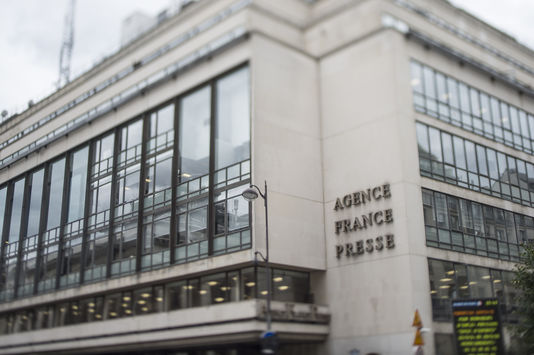
The BBC has selected AFPTV as a key supplier of English-language video news, significantly expanding its relationship with the Paris-headquartered international news agency AFP.
Under a multi-year agreement starting April 1 2017, the British broadcaster will receive edited and live video from AFPTV for use on all its platforms: television channels, websites and mobile applications, as well as radio for audio production. According to reports in the UK City AM newspaper, the AFP deal replaces the BBC’s longstanding contract with Associated Press. The paper says: “News staff have been informed that they will no longer be permitted to use AP video, pictures and wire copy from later this week. Fran Unsworth, head of the World Service, today told staff in an email that the BBC was instead starting a “new relationship” with Agence France Presse.”
AFPTV, the video news division of AFP, has developed over 15 years into a major international player with a monthly English-language production of 2,500 edited videos and 200 live videos from around the world. The BBC already receives AFP’s photo and English, French and Arabic text news services.
 Jonathan Munro (right), the BBC’s Head of Newsgathering, said: “We are delighted to be working even more closely with AFP in the years ahead. The BBC’s coverage of the world will benefit enormously from the growing firepower of AFP including its strengths in regions which are underserved by the mainstream media. We hope that the BBC’s new relationship with AFP will prove enduring and positive for both organisations.”
 Emmanuel Hoog (pictured), chairman and chief executive of AFP, described the partnership as “an emblematic recognition of everyone’s efforts to make video a top priority”. He added: “It encourages us in our long-term investment strategy to extend and consolidate AFPTV’s unique positioning in Europe and worldwide.”
According to the Paris-based agency, AFPTV has developed rapidly since its launch in France in 2002. It started international news production in 2007 and then began a process of substantial expansion on every continent from 2011. AFPTV is now at the forefront in covering top world news as well as offering its clients in-depth features, file images and stock shots in six languages. Since 2015, it has successfully developed live video production. Journalists working for AFPTV have notably won Rory Peck awards for coverage of the migrant crisis in Greece (Will Vassilopoulos – 2015-2016); rebel-held Aleppo (Zein Al-Rifai – 2014-15); and civil war in the Central African Republic (Pacome Pabandji – 2013-14). In addition to the BBC, AFPTV has some 300 clients, a number that is steadily increasing. The further development of AFPTV is a strategic priority for the agency.
21 May 2015
New figures unveiled today show the BBC has a weekly global audience of 308 million people. This represents the combined measured reach of international BBC content – both news and entertainment – for the year 2014/15 and is the first time this figure has ever been measured in this way.
In 2013 Tony Hall, Director General of the BBC, set a target of 500m for the BBC’s global reach for 2022.
The figures – the BBC Global Audience Measure (GAM) – reveal that the BBC’s weekly global news audience, which is measured each year, has increased by 18m people, or7% since last year, to a record-breaking 283 million. This means that one in every 16 adults around the world uses BBC News.
For the first time, television (148m) overtook radio (133m) as the most popular platform for BBC international news, and it is also the first time since we tracked audiences for all three platforms – radio, TV and online (55m) – in English and 28 other languages – that they’ve all grown in the same year.
The BBC World Service’s audience has increased by 10% in its first year of licence fee funding and now stands at 210m, with the biggest boost coming from new World Service TV news bulletins in languages other than English.
The biggest growth for a single service comes for BBC World Service English, which has its highest ever weekly reach ever with an audience of 52m, an increase of more than 25%. The countries where the audience increases for World Service English have been highest are Nigeria, USA, Pakistan and Tanzania.
BBC Global News Ltd’s audience has grown to 105million with BBC World News TV’s up by 12%, and bbc.com/news growing by 16%.
Fran Unsworth, Director of the BBC World Service Group, said: “These amazing figures demonstrate the importance and impact of the BBC around the world. In times of crisis and in countries lacking media freedom, people around the world turn to the BBC for trusted and accurate information. Thanks to our digital innovation we now have more ways than ever before of reaching our audience – from the Whatsapp Service we set up during the West Africa Ebola outbreak to our pop-up Thai news stream on Facebook following the military coup.”
Tim Davie, Director, Global and CEO, BBC Worldwide, said: “Today’s audience numbers show the global reach of the BBC to be strong and growing. The consumption of branded BBC services across TV, radio and digital platforms speaks to the international appetite for premium content across all the genres for which we are best known – primarily news, but increasingly for drama, factual and entertainment. Having a robust but prudent measurement system in place also helps increase our understanding of our audiences, enabling us to serve them to the very best of our ability in the future.”
Other points of interest are:
- The World Service Group is going from strength to strength in both developed and developing markets, with the single biggest audience for any country in the USA (30m), and with more than a third of the total audience on the African continent (100m), the biggest BBC audience ever seen on any continent.
- Digital innovations from the World Service Group over the past year have included a new Africa livepage on the BBC website; the Thai ‘pop up’ news stream on Facebook; the emergency Ebola service on Whatsapp in West Africa; chat app news services on Line, Mxit, WeChat and WhatsApp; and the move of all 27 language service websites plus News to fully responsive design, which means they can easily be read on mobile phones of all sizes and standards.
Notes to Editors
The Global Audience Measure (GAM) measures the combined reach of the BBC’s international news services – BBC World Service, BBC World News, bbc.com/news and BBC Media Action. It also includes the majority of BBC Worldwide’s BBC-branded direct to consumer services, where measurable and obtainable. It excludes audience for BBC programmes made or sold by BBC Worldwide to third party broadcasters and other platforms.
The BBC’s global news figures were previously measured by the Global Audience Estimate (GAE). This year, these news figures have been combined with BBC Worldwide measured audience figures for the first time.
The GAM shows combined figures, meaning if someone watches both BBC Worldwide content and BBC News, they are only counted once in the total figure. This year’s figures have also been adjusted downwards to avoid double counting people who use multiple devices, eg both a tablet and a smartphone.
Today’s figures include Facebook and YouTube reach for the first time (measuring engaged reach on Facebook which means counting people who interact with our news content.
World Service TV news content is now available in 12 languages. (Source: BBC press release)
20 April 2015
Director of BBC World Service Group, Fran Unsworth has announced the upcoming launch of a weekly BBC Bangla TV programme, BBC Probaho, on Bangladesh’s leading cable/satellite station, Channel-i. According to the contract signed today between BBC Bangla and Channel-i, the co-production between BBC Bangla and Channel-i, BBC Probaho, will go on air in June 2015.
The new weekly TV current-affairs show, BBC Probaho, will deliver in-depth reporting and live studio interviews, covering international and business stories. Presented by BBC Bangla’s Sharmin Rauma and co-produced with Channel-i, the programme will directly engage with the audiences. It will be broadcast live by Channel-i from its Dhaka studios.
Fran Unsworth is visiting Dhaka alongside the Controller of BBC World Service Languages Liliane Landor and Executive Director of the BBC’s international development charity, BBC Media Action, Caroline Nursey. Fran Unsworth said:
“I’m delighted to announce that we will be bringing BBC Probaho to Bengali TV screens via our partnership with Channel-i. BBC Probaho, hosted by Sharmin Rauma, will bring viewers hard-hitting interviews and analysis, and we’ll be actively encouraging audience interaction. For almost 10 years BBC Bangla and BBC Media Action have brought BBC Bangladesh Sanglap to Channel-i, and BBC Probaho sees our partnership going from strength to strength.”
This new partnership with Channel-i builds on the network’s decade-long collaboration with BBC Media Action and BBC Bangla. Channel-i has broadcast over 250 editions of the weekly television debate, BBC Bangladesh Sanglap, which is funded and managed by BBC Media Action. BBC Bangla provides key editorial support for the programme.
Shykh Seraj, Head of News of Channel-i, added: “Geographically the location of Bangladesh is predominantly important from a global perspective. The country has achieved remarkable social and economic progress since liberation. It has ensured free flow of information and transformed lives of many through the contribution from media. I firmly believe this partnership is certainly a milestone which will enrich the news and current affairs scenario and would also contribute to the democracy, politics and good governance in the region.”
The upcoming launch of the TV programme, BBC Probaho, adds to BBC’s strong presence in Bangladesh. BBC World Service’s radio programmes in Bangla and English are relayed on state broadcaster Bangladesh Betar’s FM frequencies in ten cities. While the website bbcbangla.com registers over a million unique visitors per month, the BBC Bangla Facebook page has over 4.7 million followers. BBC Bangla also offers a mobile news service, delivering 12 audio news and sports bulletins for mobile phone users in Bangladesh every day.
BBC Bangla is part of BBC World Service.
