Iran continues to harass BBC News Persian staff; raised at UNHRC event

Iran continues to harass BBC News Persian staff; raised at UNHRC event

Iran continues to harass BBC News Persian staff; raised at UNHRC event

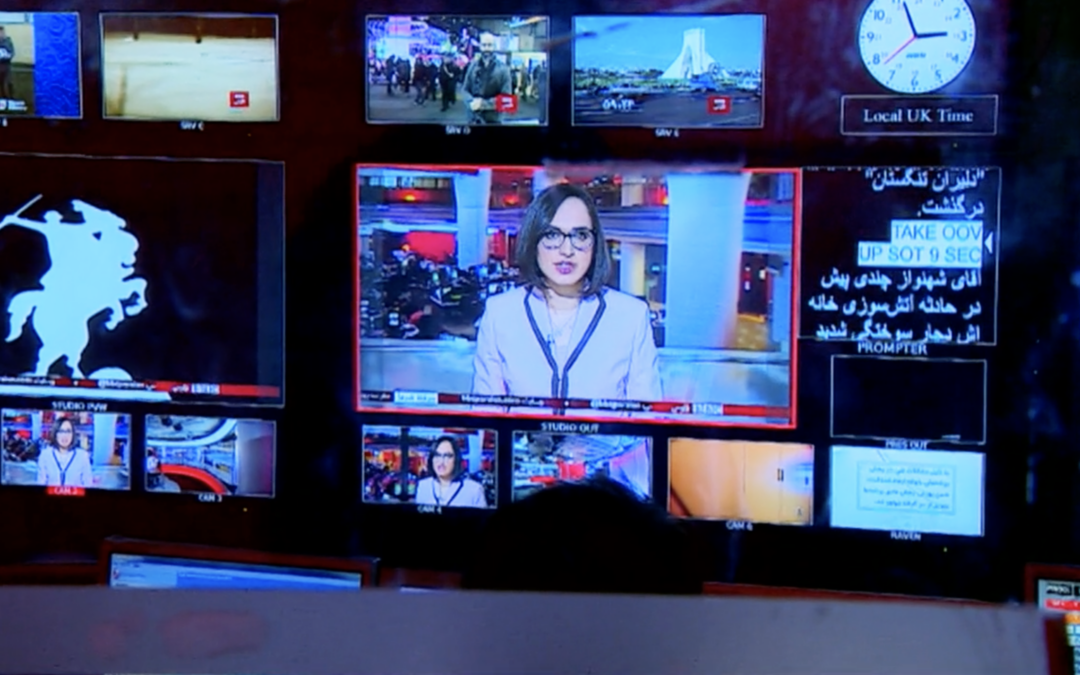
Iran’s escalating harassment of BBC News Persian journalists discussed at BBC and UN Human Rights Council virtual event

BBC World Service co-hosted a virtual “side-event” to coincide with the 47th session of the United Nations Human Rights Council (UNHRC) on 24 June. It was designed to raise concerns about the escalating cross-border harassment and threats from Iran towards BBC News Persian journalists and other Persian-language media. Alongside the BBC, the event was co-hosted by the International Federation of Journalists, National Union of Journalists and Doughty Street Chambers.

The virtual event was chaired by Deputy General Secretary at International Federation of Journalists, Jeremy Dear.

Speaking at the event, Ambassador Rita French, UK’s Deputy Permanent Representative to the United Nations in Geneva and International Ambassador for Human Rights, said: “It remains our desire to see Iran change tack, cease this abhorrent persecution against journalists and their families, and adhere to its international human-rights obligations. Until they do, the UK will continue to hold them to account, and seek to ensure media freedom is defended everywhere.”

Estonia will chair this year’s conference of the Media Freedom Coalition.  Ambassador Minna-Liina Lind, Estonian Ambassador at Large for Human Rights and Migration, said: “We really want to have some concrete deliverables from the conference hosted in Tallinn in December 2021.”  

Also on the panel was BBC News Persian journalist Kasra Naji who spoke about the campaign of vilification, threats and persecution endured by himself, his colleagues and their families, and BBC’s World Affairs Editor, John Simpson, who warned of the danger, that these policies that already have been in place for four years, will continue and intensify under Iran’s newly elected president Ebrahim Raisi, and called to protect and guard the BBC’s Persian service.

For many years, Iran has conducted a campaign of harassment and intimidation towards BBC News Persian journalists and their families in Iran. This has included death threats towards BBC journalists and their families in London, family members in Iran being brought in for interrogation and threats being made of cross-border operations to put BBC journalists in prison, online harassment and gendered attacks on women journalists, and a judiciary-imposed asset freeze on all assets of BBC News Persian staff in Iran. In some cases, family members were deprived of their liberty and held in degrading conditions, and ordered to tell their relatives to stop working for the BBC.

In response to this, the BBC initiated its first ever UN complaint in 2017 in relation to the protection of BBC journalists and has continued to engage with UN Special Mechanisms since. Concern has been raised about Iran’s treatment of BBC News Persian by the UN Secretary-General and successive UN Special Rapporteurs.

In March 2020, a group of UN experts made a joint statement condemning Iran’s harassment of BBC, raising concern of indications that:

… the Iranian authorities are prepared to use force extra-territorially, in violation of international law. Harassment, surveillance, death threats against journalists, within and outside domestic boundaries violate international human right law, including the right to physical integrity, the right to life and the right to freedom of expression.

The UN experts said that Iran’s acts towards BBC News Persian “violate international law regulating the use of force in times of peace” and “ultimately constitute serious threats to global security and thus demand strong reactions on the part of the Governments”.

In the past year, matters have escalated. Journalists and others perceived to be critics of the Iranian authorities have been abducted from other countries and returned to Iran, to be imprisoned and (in at least one case) to face the death penalty. Iran’s asset freeze has extended beyond BBC News Persian staff to some other international Persian-language outlets. Death threats have been made towards BBC News Persian staff in London, leading to police involvement and protection.

Tim Davie, BBC Director-General, said: “The treatment of the BBC News Persian journalists and their families by the Iranian authorities runs counter to the basic principles of human rights.  Our total support for our journalists doing their job is as strong as our determination to never succumb to these pressures and we demand that they stop.”

Caoilfhionn Gallagher QC and Jennifer Robinson, counsel for BBC World Service, said: “This week, the newly elected President of Iran has claimed he is a ‘defender of human rights’.  But the Iranian authorities’ cruel harassment and intimidation of BBC News Persian staff and their families violates the human rights of journalists and their families. Iran’s cross-border targeting of journalists is aimed at silencing voices Iranians are entitled to hear and also breaches the rights of the wider public. This is a sustained, pernicious attack on human rights by Iran. We urge UN experts to take action on this issue. The international community must condemn this in the strongest terms, and immediately take action to protect the integrity of journalists, their families and their profession.”

Simon Spanswick, chief executive of the Association for International Broadcasting, joined the event. During the session, he said:

I believe that it is essential that we harness not only diplomatic channels but also the media industry itself in calling out the Iranian authorities and their attempts to silence BBC Persian, Iran International and others. We need to encourage other media organisations to use the platforms they have – both on air, and at industry events – to ensure that the issue is kept at the forefront of people’s minds. At the AIB, we’re happy to use our events to tell this important story.”

BBC News Persian is a multimedia news and current-affairs service, with a weekly audience of around 18.3m (2020), delivering accurate and impartial news, information and analysis from a global perspective to Persian-speakers around the world. Available online via the websitebbc.com/persian, on TV and radio, BBC News Persian also connects with audiences on social media: Facebook, Instagram, Telegram and Twitter. BBC News Persian is part of BBC World Service.

Watch the latest video about the harassment of BBC Persian staff:
BBC News restructures

BBC News restructures

BBC News restructures

Director of BBC News Fran Unsworth has announced a restructure of the BBC News Board to deliver more value for audiences and better reflect the way BBC News will work in future. These changes are part of an ongoing restructure.

Five posts will be closed, and there will be three new roles:

Jonathan Munro will become Senior Controller, News Content and Deputy Director of News: responsible for the production of the journalism that supports the BBC’s news programmes and platforms. This includes the new multi-skilled Story Teams at the heart of the new operating model. Jonathan will also deputise for the Director of News and Current Affairs on all editorial issues.

Jamie Angus will become Senior Controller, News Output and Commissioning: responsible for the commissioning and delivery of news and current affairs output across TV and radio. This will include news output for BBC World News and World Service English.

A further role will be advertised shortly – Senior Controller, News International Services: responsible for our global strategy, World Service Languages, BBC Monitoring and BBC Media Action. Mary Hockaday, currently Controller of World Service English, will fill this role in the interim.

Overall, Board membership has been reduced from eleven to eight people. The remaining Board members are: Fran Unsworth (Director), Naja Nielsen (Digital Director), Alan Dickson (Chief Financial and Operating Officer), Kirsty Lee (interim HR Director) and Sarah Ward-Lilley (Managing Editor).

The changes announced today will come into effect in March.

They form part of the plans to modernise BBC News first set out last year – to respond to changing audience behaviour, increase the impact of BBC journalism and meet the BBC’s savings targets. A further update on the wider plans will be announced soon.

Source: BBC press release

BBC sets out modernisation plans

BBC sets out modernisation plans

BBC sets out modernisation plans

BBC News has set out an update on the plans it announced earlier this year to respond to changing audience needs.

The update addresses the BBC’s worsening financial position and draws on the experiences of operating during the Covid-19 crisis.

In January BBC News announced a series of modernisation proposals. Since then, faced with the Covid-19 crisis, BBC News has made huge operational changes to keep vital news services on air. During this time the proposals were paused, and will now be implemented in stages.

Director of BBC News and Current Affairs, Fran Unsworth, says: “Covid-19 has changed all of our lives. We are still covering the most challenging story of our lifetimes. During this crisis audiences have turned to BBC News in their millions and I’m incredibly proud of what we, as a team, have been able to achieve.

“But if we don’t make changes, we won’t be sustainable. This crisis has led us to re-evaluate exactly how we operate as an organisation.  And our operation has been underpinned by the principles we set out earlier this year – fewer stories, more targeted and with more impact. We’re aiming to reach everyone, every day. For BBC News to thrive, and for us to continue to serve all our audiences, we have to change.”

Alongside structural changes in some departments, updated plans set out today include:

  • Commissioning: the changes to working caused by the Covid-19 crisis mean it is not possible to go straight to the new way of working announced in January, but we will move towards it with a new commissioning group (made up of existing editors) to co-ordinate the biggest planned stories, avoid duplication and make BBC content go further
  • Newsgathering: BBC News will have fewer reporters overall; more correspondents will increasingly be asked to work across a range of content rather than be ‘owned’ by individual programmes. We will invest in new community affairs roles around the country, while reducing numbers in London
  • Digital: We want to ensure digital is at the heart of our journalism. A number of skilled digital journalists will move into the Newsgathering team and be deployed on stories. We will refocus the ‘rollout’ of our stories, so we break more stories in the morning when our digital audiences are highest
  • Original journalism: a new team, bringing together expertise from areas such as the Victoria Derbyshire programme and BBC Stories, will focus on under-reported ‘off diary’ stories, producing content for daily news programmes and online
  • TV political programming: Politics Live, currently airing on Wednesdays only, will return four days a week, Monday to Thursday
    BBC Parliament will focus on live and as-live coverage of the elected chambers across the UK and produce daily and weekly highlights programmes. We will no longer commission most of the other bespoke programmes we currently make for BBC Parliament, although we will continue to draw on our archive to broadcast our popular historical election coverage
  • News channels: We will preserve two clearly branded news channels (the BBC News channel in the UK and BBC World News globally) with a focus on live, breaking and developing stories but will retain some elements of shared output in the mornings and evenings
  • World Service English: we will make some of the current streamlined schedule changes permanent, including reductions in the duration of Newsday and The World This Week will be decommissioned. We will launch a new Africa-focused podcast
  • Business output: To increase the impact of business coverage we will integrate it more closely with the rest of the output, and will no longer run the Business Online live page. We will reduce separate business bulletins on the News channel and BBC World Service English
  • Radio: We will close In Business on BBC Radio 4 but continue long-form business content with The Bottom Line

Building on the lessons of operating during Covid-19, we will use fewer studios and make significant reductions to our operations staff.

The reduction in output means we will also reduce our pool of presenters.

The increased financial pressure on the BBC as a result of Covid-19 means the number of job losses in BBC News will rise to around 520, which is 70 more than the 450 announced in January. This will include senior management posts.

There will be a further update on plans later in the year.

Source: BBC Press Release

BBC News sets out its coronavirus output arrangements

BBC News sets out its coronavirus output arrangements

BBC News sets out its coronavirus output arrangements

BBC News has outlined its initial plans for how it will continue to offer its audiences trusted and accurate news throughout the Coronavirus crisis.

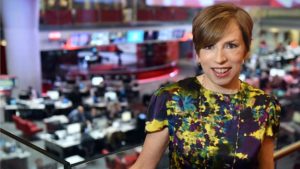
Director of News, Fran Unsworth (pictured), says: “These are unprecedented and difficult days. Trusted, accurate information is vital in a public health emergency and the BBC has a key role to play. We will continue offering our audience a continuous news service on TV, radio and online but this will look a bit different in the weeks ahead.

“Like many organisations we are unable to have all our staff on site due to the Coronavirus outbreak. We are therefore making some changes to what we do to streamline our output to ensure we can work with fewer people and protect the staff who are at work.”

Television

We will be making some visible changes to our output to focus on the latest news, information, live events and audience questions in the coming days. Breakfast, News At One, News At Six and News At Ten will continue to perform a vital role on BBC One, while we make some changes to support our continuous news channels.

We will be making some visible changes to our output to focus on the latest news, information, live events and audience questions in the coming days.

From tomorrow we will be moving to a core news service on the BBC News channel in the UK – with fewer branded programmes. This core service will replace some scheduled programmes on BBC Two including Politics Live and Victoria Derbyshire. We will be talking to these teams about how they can support the core operation, which will also provide live coverage of major news conferences and government briefings to BBC iPlayer, TV and News online.

There will also be a reduction in branded programmes on BBC World News – and more integrated working across live TV output behind the scenes. Some Persian TV programmes will be suspended.

Newsnight and The Andrew Marr Show will remain on air but will be operated by fewer technical staff; while The Andrew Neil Show, Newswatch and The Travel Show will be suspended. HARDtalk will also be suspended from next week.

Question Time will be broadcast at 8pm every Thursday without a studio audience for a period. From next Thursday it will be broadcast from a fixed location each week. Audiences will submit questions and we are particularly keen to hear from those in vulnerable groups.

Radio

We believe we can protect much of our regular, trusted output at this point – though we are keeping the situation under close review and will be making some initial changes.

On World Service English, The World This Week will be suspended from tomorrow, with World Update and Weekend suspended from next week.

In the UK, radio summaries on BBC Radio 2, 3, 4 and 5 live will be brought together into a single output from 1am on Friday, with 6 Music using the same script. There will be shared production and output on Asian Network and Newsbeat from tomorrow. The Week In Westminster on Radio 4 (Saturday mornings) will be suspended after 21 March. We are making some other changes to radio studio usage and working methods to protect our staff.

Digital

Over the last few weeks we have seen unprecedented use of our digital news services in the UK and around the world – with high consumption of our live pages, explanatory journalism and in-depth reporting. We will be making some changes to the way our teams are organised to sustain these vital services – and to ensure we can distribute important information via social media.

As a result of this we will be focusing content on the accounts that reach the widest number of people, drawing in effort from across the BBC to support our social media activity, and suspending posts on some smaller accounts over the coming days.

Podcasts

Newscast will change into a daily edition of The Coronavirus Podcast. Americast, Beyond Today and The Next Episode podcasts will be suspended.

Belgrade conference on challenges of fake news

Belgrade conference on challenges of fake news

Belgrade conference on challenges of fake news

BBC Director of News to host a conference in Belgrade on the challenges posed to elections by “fake news”

Director of BBC News and Current Affairs, Francesca Unsworth (pictured), will host the “Fake News” and Elections: Challenges for the Media and Audiences conference in Belgrade on 26 February.

The one-day conference will feature BBC journalists and experts from the UK, Serbia and across the Balkans to discuss the role “fake news” plays in general elections and the ways to tackle misinformation.  

Francesca Unsworth says:  “The BBC is committed to fighting ‘fake news’ and disinformation, and for this forum in Belgrade we are getting together with colleagues from the Balkans’ leading news media to have a conversation about the various forms disinformation can take, and to share our experience of dealing with it.  We’ll look at how we can help audiences navigate an incredibly complex flow of claims and counterclaims that we all face every day.”

The conference will discuss reporting the influence of closed social-media groups, the role of targeted political advertising, and the tools journalists can employ to monitor and counter the spread of misinformation.   

The BBC is part of an international effort to fight disinformation through the Trusted News Initiative (TNI) – a BBC-convened partnership linking media organisations and social-media platforms.  The TNI has developed a shared early-warning system to alert partners about disinformation that has the potential to become viral and cause significant harm to the integrity of elections. The TNI is also used for alerting partner media organisations of the misuse of trusted news brands. The partnership includes the BBC, Facebook, Microsoft, Google/YouTube, Twitter, The Wall St Journal, The Hindu, the EBU, the Financial Times, CBC/Radio Canada, AFP, Reuters, First Draft, and The Reuters Institute for the Study of  Journalism.

The BBC conducts media education via projects such as Young Reporter and My World, and exposes and debunks “fake news” through content such asReality Check and BBC Trending – drawing on open-source media insights provided by its specialist division, BBC Monitoring