BBC wins 11 awards at UK journalism awards

BBC wins 11 awards at UK journalism awards
BBC wins 11 awards at UK journalism awards

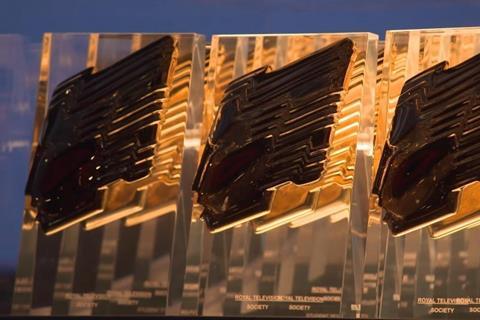
The UK Royal Television Society recognised BBC News for editorial excellence, investigative grit and creative innovation.

Of the BBC’s 11 wins, eight were for BBC News:

BBC News Arabic won the Current Affairs – International award for the excellent Under Poisoned Skies, described by judges as “An enterprising and original piece of journalism”.

BBC News at Ten, praised by judges for its “consistently high standard of reporting from an outstanding team of correspondents, on location and in its new studio” was crowned as Network Daily News Programme of the Year.

The Undercover Voters initiative, developed by BBC News Podcasts during last year’s US midterms for Americast and Newsnight, was successful in the Innovation category with judges saying that it “tackled a really important issue in an interesting and original way”.

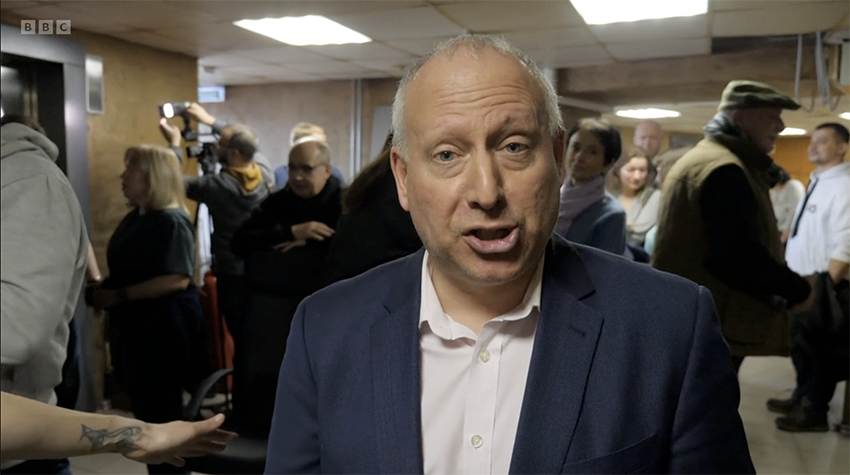
Steve Rosenberg’s exclusive interview with President Lukashenko of Belarus, that discussed the Belarus migrant crisis won the category of Network Interview of the Year with the judges praising the interview for being a “brave, exemplary, an electric piece of television, and a masterclass in interviewing a megalomaniac tyrant”

Network Presenter of the Year was given to Clive Myrie for his “ability to bring empathy as well as authority to his distinctive broadcasting” while “radiating dignity and calm under the most intense pressure”.

Our outstanding coverage of War in Ukraine was rightly successful in the News Coverage – International category. Judges described it as “vivid and brave frontline reporting with insightful coverage of the refugee problem and the politics driving the Ukraine conflict”.

Described by judges as “a journalist who has devoted several years to pursuing and exposing appalling failures which wrecked many lives” & “never loses his focus and clarity” – Michael Buchanan wins Specialist Journalist of the Year award for his Maternity Scandals: Fighting for the Truth programme.

We were also recognised, alongside our colleagues at ITN, PA and Sky News, with the RTS Special Award: which was awarded to the Cameras in Court campaign, which this year finally secured access to the Crown Courts.

BBC Nations and Regions were winners in three categories:

The iPlayer Shorts documentary Should I Tell You I’m Trans?, produced by BBC Scotland won the category for On-Demand Journalism.

The Nations and Regions Factual category was won by The Great Ferries Scandal, also by BBC Scotland.

And Colin Campbell from BBC South East Today was crowned as Nations and Regions Reporter of the Year.
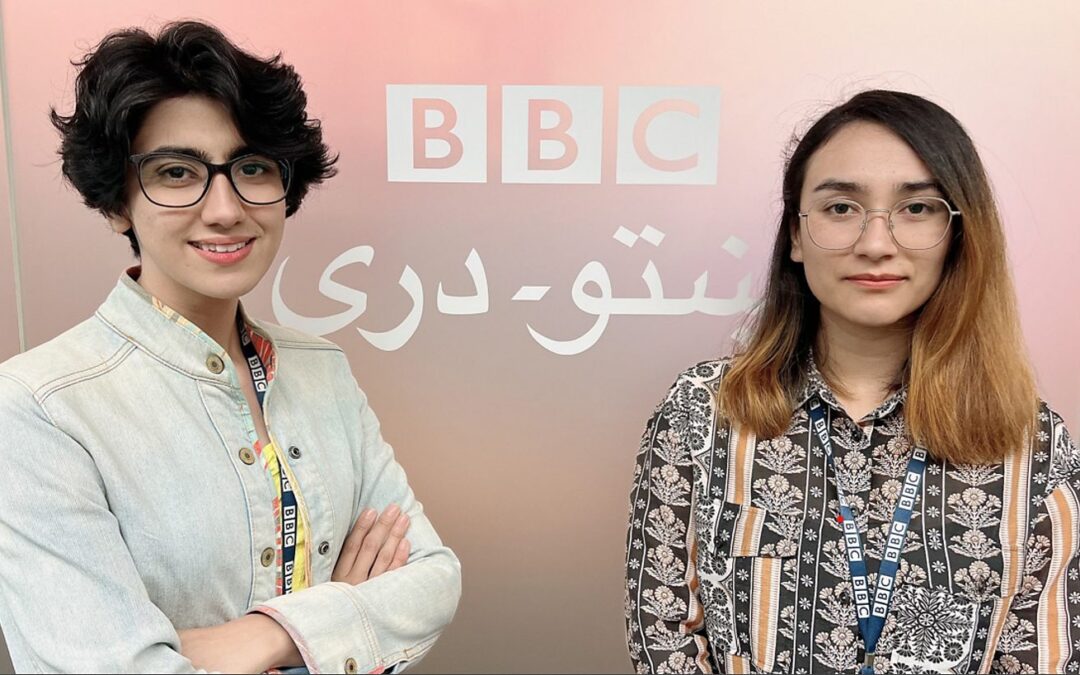
Women: a new radio show from BBC News Afghan

Women: a new radio show from BBC News Afghan

Women: a new radio show from BBC News Afghan

BBC News Afghanistan in Pashto and Dari has launched a weekly radio programme, Women (Mermen in Pashto, and Zan in Dari). The 30-minute show will go on air at 19:00 Kabul Time in Dari and at 20:00 in Pashto (14:30 and 15:30 GMT) every Friday.

Presented by Shazia Haya in Pashto and Aalia Farzan in Dari, the programme is aimed at women and girls – especially those in rural areas – in Afghanistan and Pakistan. Alongside offering them a platform to voice their views and questions, the new show will also deliver content that informs and educates, empowering the listeners to make informed decisions and choices.

The programme, which talks about women’s rights, healthcare, education, household economy, parenting, children’s health, as well as entertainment, sports and politics, opens with women-focused news from around the world. It discusses with experts the week’s main subject item and includes permanent slots on motherhood and childcare; inspiring stories about successful women from Afghanistan and around the world; and an arts & culture section dedicated to latest works by female writers, artists and musicians.

Shazia Haya and Aalia Farzan are BBC journalists who moved to the UK following the Taliban takeover of Afghanistan. Shazia says: “This programme for me means giving a voice to the voiceless. I hope Mermen will help empower the Afghan women to have better lives – and I feel really privileged to be part of such a journey.”

Aalia adds: “I want our new radio show, Zan, to serve as a window to every Afghan woman’s home. A window which opens every week to bring her the kind of knowledge that is really useful for her, and also to invite her to speak out about the things that worry or frustrate her.”

The new radio programme will be available via FM and shortwave frequencies across Afghanistan and will be available on demand via the websites bbc.com/pashto and bbc.com/persian/afghanistan, and the BBC News Pashto and BBC News Dari channels on Facebook.

BBC News Afghanistan service in Dari and Pashto is part of BBC World Service.

BBC increases access to news on Ukraine and Russia

BBC increases access to news on Ukraine and Russia

BBC increases access to news on Ukraine and Russia

BBC News is increasing access to its independent journalism on the invasion of Ukraine.

From today it will make a daily half hour news bulletin (broadcast at 2000 GMT) available free of charge to other broadcasters who are members of the European Broadcasting Union (EBU).

Audiences will get the chance to watch Outside Source, normally presented by Ros Atkins, from Monday to Thursday, and a BBC News bulletin from Friday to Sunday. Given the current news agenda we expect the news to focus on Ukraine and related stories.

BBC News is also launching Tik Tok accounts exclusively dedicated to videos about the war, in Russian and in English, from today. The handles are @bbcnews and @bbcnewsrussian. Tik Tok has fast become a crucial platform for information (and disinformation) about the war in Ukraine.

Although Tik Tok has suspended new content and livestreaming in Russia, we know that audiences find ways of getting to, and sharing, the content.

Jamie Angus, Senior Controller, News Output and Commissioning, says: “Access to trusted, impartial and independent news is never more crucial than in times of conflict. We are always looking to find ways to ensure our news is available to those who need it most, on the platforms where they are. We welcome trusted European public broadcasters who want access to this daily bulletin via our partners at the EBU.”

These moves come amid a large increase in audiences for BBC News. Audiences to the BBC News channel were up 57% last week (w/c 28 February, compared to an average week in 2021). 

Updated figures show that in the last week of February, 200 million people turned to the BBC World Service’s digital news in languages other than English. Reach on social media in Russian tripled (with the biggest gains on Facebook) and in Ukrainian more than tripled.

Access to news in Russia is becoming increasingly difficult, so the BBC is continuing to explore ways to make its trusted, impartial news and information available in as many ways as possible.

A guide to accessing BBC sites via circumvention is available here

[Source: BBC press release]

BBC temporarily suspends work of journalists in Russia

BBC temporarily suspends work of journalists in Russia

BBC temporarily suspends work of journalists in Russia

In an unprecedented move, the BBC has announced that it is temporarily suspending the work of its journalists in Russia. 

It follows the approval of a law in the lower chamber of the Russian parliament that allows the imposition of jail sentences up to 15 years for those convicted of spreading “fake” information.

Reacting to new legislation passed by the Russian authorities, BBC Director-General Tim Davie says:

“This legislation appears to criminalise the process of independent journalism. It leaves us no other option than to temporarily suspend the work of all BBC News journalists and their support staff within the Russian Federation while we assess the full implications of this unwelcome development.

“Our BBC News service in Russian will continue to operate from outside Russia.

“The safety of our staff is paramount and we are not prepared to expose them to the risk of criminal prosecution simply for doing their jobs. I’d like to pay tribute to all of them, for their bravery, determination and professionalism.

“We remain committed to making accurate, independent information available to audiences around the world, including the millions of Russians who use our news services. Our journalists in Ukraine and around the world will continue to report on the invasion of Ukraine.”

Picture: BBC Moscow correspondent Steve Rosenberg reporting on the closure of Ekho Moskvy radio

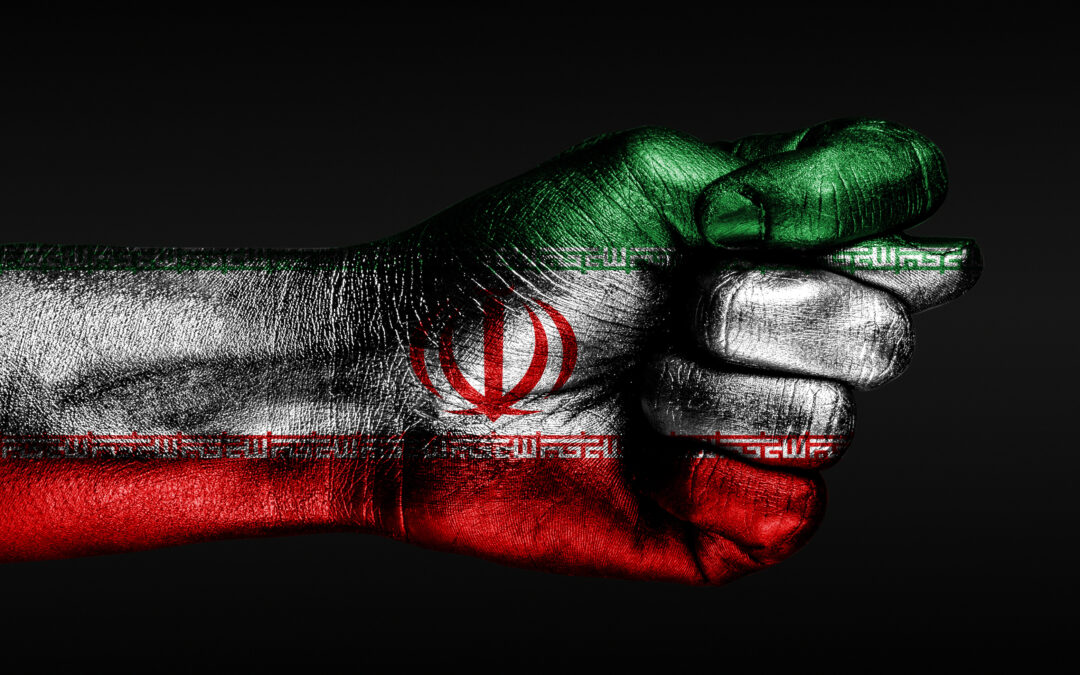
To mark Human Rights Day, the BBC calls on Iran to end harassment of BBC News Persian staff

To mark Human Rights Day, the BBC calls on Iran to end harassment of BBC News Persian staff

To mark Human Rights Day, the BBC calls on Iran to end harassment of BBC News Persian staff

The BBC has today (10 December) marked International Human Rights Day by calling upon Iran to end the escalating cross-border harassment and threats towards BBC News Persian journalists and staff.  The call to end the harassment of BBC News Persian journalists comes as the Nobel Peace Prize is awarded to journalists at risk, Maria Ressa and Dmitry Muratov, “for their efforts to safeguard freedom of expression, which is a precondition for democracy and lasting peace.”

For over a decade, Iran has conducted a campaign of harassment and intimidation towards BBC News Persian journalists and their families in Iran. This has included death threats towards BBC journalists and their families in London, an asset freeze, as well as online harassment and gendered attacks on women journalists. Their family members in Iran have been arbitrarily detained, held in degrading conditions, interrogated and ordered to tell their relatives to stop working for the BBC, and faced other forms of discrimination because their relatives work for the BBC.

In the past year, threats against BBC News Persian staff and Persian-speaking journalists outside Iran have escalated. Death threats and threats of extra-territorial harm have been made towards BBC News Persian staff in London, leading to police involvement and protection. Journalists working for other organisations, and others perceived to be critics of the Iranian authorities have been abducted from other countries and returned to Iran, to be imprisoned and (in at least one case) to face the death penalty.

Liliane Landor, Senior Controller of BBC News International Services and Director of BBC World Service, said:

“It was after the escalation of persecution in 2017, when the Iranian judiciary imposed a freeze on all assets of BBC News Persian staff in Iran, that the BBC initiated its first ever UN complaint in relation to the protection of BBC journalists, and has continued to engage with UN Special Mechanisms since. This asset freeze has served to deprive BBC News Persian staff and their families of property, including their ability to sell or rent assets. The asset freeze serves as a financial sanction and penalty on BBC News Persian staff for doing their journalistic work, and it also sanctions their families.”

Concern has been raised about Iran’s treatment of BBC News Persian by the UN Secretary-General and successive UN Special Rapporteurs. For example, in March 2020, a group of UN experts made a joint statement condemning Iran’s harassment of BBC, raising concern of indications that:

“… the Iranian authorities are prepared to use force extra-territorially, in violation of international law. Harassment, surveillance, death threats against journalists, within and outside domestic boundaries violate international human right law, including the right to physical integrity, the right to life and the right to freedom of expression.”

Caoilfhionn Gallagher QC and Jennifer Robinson (Doughty Street Chambers), Counsel for BBC World Service, said:

“Today marks a historic moment, with the Nobel Peace Prize being awarded to journalists for their work. Our clients from BBC News Persian receive threats of death and violence simply for doing their jobs, and we know from Iran’s past actions that it is willing to take cross-border and deadly action to silence journalists. Many more BBC News Persian journalists are enduring other forms of systematic harassment, including their families being targeted, their assets frozen, and abuse online. We call on the international community to take immediate, robust action to ensure Iran is held accountable, and BBC News Persian journalists can report without fear.”

Michelle Stanistreet, NUJ general secretary, said:

“The continuing campaign of harassment against journalists at BBC News Persian and their families by the Iranian authorities is despicable and must stop. It is not only completely unacceptable for them to face such vicious personal intimidation, it is also a direct attack on press freedom. Journalism is not a crime, and journalists must be free to do their jobs. This year the Nobel Prize committee singled out Maria Ressa and Dmitry Muratov for their courage, adding that they were representatives of all journalists, such as those working for BBC News Persian, who stand up for freedom and democracy.” 

BBC News Persian reaches a weekly global audience of nearly 22 million people, including around 13 million in Iran. It is part of BBC World Service which delivers news content in English and 41 other language services, on radio, TV and digital. The BBC attracts a weekly global audience of 489 million people to its services available internationally, including BBC World Service, BBC World News television channel, bbc.com/news, BBC Studios and the international charity, BBC Media Action.