Ukraine media companies offer free materials

Ukraine media companies offer free materials

Ukraine media companies offer free materials

Ukraine’s 1plus1 Media Group is making available to news organisations around the world footage and other material that may be of assistance in covering the situation in the country. The material is on a free-of-charge basis. We reproduce details below.

We are granting access for redistribution to news outlets worldwide and giving the right to archive the material.

  1. The technical parameters for broadcasting our TV-Channels are as follows: satellite Astra 4A at 4.8°E, transponder 12 130 (B22), polarisation vertical, frequency 27500, FEC ¾.


  1. UNIAN, an information agency, which is part of 1+1 media group, has the largest operational photo stock on news in Ukraine. Access to it is open to all media services, influencers and international media agencies. Thus, anyone who is to cover news in the media about Ukraine’s resistance to Russian aggression can use these photos for free.

The agency notes that all photo reporters are working on one and only topic in these crucial days for the country: red-flagging the aggressor country’s crimes and covering the courageous resistance of Ukraine.

All the photos are available in different resolutions, including the maximum one and with no registration needed. https://photo.unian.info/ (English)

  1. 1+1 media group is actively working on debunking fakes in the international media space and also interacting with foreign journalists to massively refute Russian lies, share key information with people all over the world and record the crimes, committed by the Russian Federation in Ukraine. In order to achieve that, TSN.ua news website (ТСН.ua), which is a part of 1+1 media, accumulates all information about military events in Ukraine in the website section “Materials for The Hague“.


  1. Also we have a Twitter account. Only truth, objectivity and breaking news from official sources and witnesses. Created and held by one of the biggest Ukrainian media groups — 1+1 media. https://twitter.com/truth_about_war.


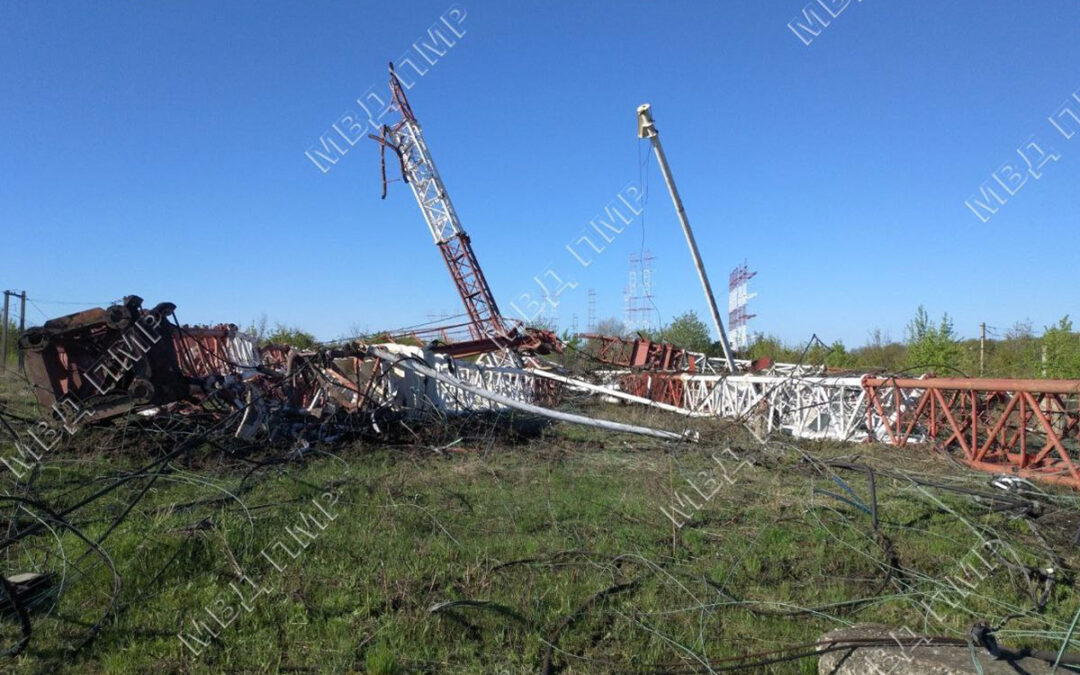
Photo: Marienko Andrii, Kharkiv

NHK WORLD programme highlights March

NHK WORLD programme highlights March

NHK WORLD programme highlights March

NHK WORLD has selected the following highlights from its March programming:

The Michinoku Coastal Trail reveals both the grand nature of Japan’s Tohoku region and the struggles of people to recover from the 2011 earthquake. The 1,000 kilometer path connects four prefectures along the Pacific coast, between Aomori and Fukushima. Join Canadian actor Kyle Card on a trek across the trail as he meets residents and ponders what the future may hold for the region and the country.

Isamu Noguchi is widely regarded as one of the twentieth century’s greatest sculptors. With a Japanese father and an American mother, he felt inspired to create a cenotaph in memory of the atomic bomb victims after World War II. The proposed site was in Hiroshima, but the design was rejected, allegedly because of his American nationality. This year, materials from the cenotaph project are featuring a retrospective of Noguchi’s work across Europe, creating opportunities to ponder the meaning of peace in a time of division and conflict. The program includes newly released audio recordings of Noguchi and perspectives on his struggles to serve as a bridge between the two countries.


Dining with the Chef

Tuesdays 1:30 / 6:30 / 12:30 / 17:30 / 22:30

Traditional techniques and resourceful recipes! Chefs Saito and Rika, present their unique approaches to cooking delicious Japanese food.


Trails to Oishii Tokyo

Wednesdays 14:30 / 20:30 / 3:30 / 9:30

Delicious food from Tokyo’s markets! Learn about the amazing ingredients which are sourced from across Japan and sold at Tokyo’s fresh food markets.

Audiences turn to RFE/RL for reporting about Russia’s invasion of Ukraine

Audiences turn to RFE/RL for reporting about Russia’s invasion of Ukraine

Audiences turn to RFE/RL for reporting about Russia’s invasion of Ukraine

As the world awoke to unprovoked war in Europe, audiences turned to Radio Free Europe/Radio Liberty (RFE/RL) for breaking news and analysis of the escalation. With journalists across the region and RFE/RL’s Ukrainian, Belarus, Russian, and Current Time networks providing on-the-ground coverage, RFE/RL is uniquely positioned to provide the facts to audiences across the region that are being bombarded by Kremlin disinformation.

  • RFE/RL’s networks recorded 13 million page views on their websites on February 24, representing a 159 percent increase over the previous day and a 248 percent increase over the same day one week before (February 17).
  • RFE/RL Ukrainian Service websites, which include content for audiences in Crimea and Donbas, alone recorded 4.7 million page views yesterday, a 313 percent increase over the previous day and 557 percent rise over the same day one week before.
  • Current Time’s live coverage of the early hours of the invasion was viewed more than 10 million times across social platforms, including YouTube and Facebook, reflecting a 25-fold increase over the same day the previous week for Current Time’s morning show.

Jamie Fly, President of RFE/RL, spoke of the importance of providing uncensored news and information and condemned Russia’s aggression: “With Russia’s illegal invasion of Ukraine, our mission to share the facts with audiences that are denied that truth by their governments or that need independent information during a crisis is more important than ever.”

“Vladimir Putin initiated an unprecedented act of war against Ukrainian democracy today, but he has been assaulting the rights of the Russian people and undermining democracies for decades. We will continue to report the truth about him and the Kremlin’s lies and fabrications to our audiences in Russia, Ukraine, Belarus, and throughout the region during this critical moment.”

RFE/RL is staying close to the story, offering comprehensive, around-the-clock reporting from our journalists on all aspects affecting our audiences during this conflict. This includes coverage of events Russian authorities would rather ignore, such as the outbreak of anti-war protests across Russia, damage to civilian apartment buildings in Kharkiv as a result of Russian bombardment, and massive traffic jams caused by civilians trying to flee the attack on Ukraine’s capital, Kyiv. RFE/RL continues to counter Russian propaganda through our services’ live videos, in-depth reports and analysis, podcasts, photo galleries, maps, infographics and real-time blogging.

To stay up to date on the latest developments, follow RFE/RL’s Live Briefing: Ukraine Under Attack – updated throughout the day. Several RFE/RL services, including the Ukrainian, Belarusian, Russian and Current Time networks, are also live blogging the invasion, and RFE/RL has also created a list of its most relevant Twitter feeds.

In response to intensified attempts by Russia’s media monitoring agency Roskomnadzor to keep Russian audiences from accessing factual reporting on the invasion, RFE/RL’s Russian Service, Tatar-Bashkir Service, Crimea.Realities, and Current Time units are educating their audiences on a variety of means to bypass online censorship and safely access information. Such efforts to ensure access to RFE/RL content are especially relevant given Roskomnadzor’s recent attempts to force RFE/RL to take down content tied to corruption investigations by jailed opposition leader Aleksei Navalny’s team.

DW says Turkey trying to stifle its online operation

DW says Turkey trying to stifle its online operation

DW says Turkey trying to stifle its online operation

Germany’s international broadcaster DW has responded to the Turkish media regulator’s call to apply for a licence for internet services.

In a statement, the German broadcaster said:

DW was given notice from Turkey’s media regulator RTUK on Monday [21 February] to obtain a broadcast license in Turkey within a period of 72 hours or have its online content (dw.com) blocked.

The Turkish media regulatory authority RTUK published a statement to this effect on its website on February 21, 2022.

DW Director General Peter Limbourg: “After having subjected the local media outlets in Turkey to such regulation, an attempt is now being made to restrict the reporting of international media services. This move does not relate to formal aspects of broadcasting, but to the journalistic content itself. It gives the Turkish authorities the option to block the entire service based on individual, critical reports unless these reports are deleted. This would open up the possibility of censorship. We will appeal against this decision and take legal action in the Turkish courts.”

DW, alongside other international broadcasters, is one of the few remaining news outlets from which people in Turkey can obtain independent information. In addition to DW, Voice of America and Euronews were also given notice to apply for a license.

DW had established a liaison office in Turkey in accordance with the 2019 law and has been registered with the relevant Turkish ministry since February 2020. This registration is independent of DW’s correspondent office in Istanbul.

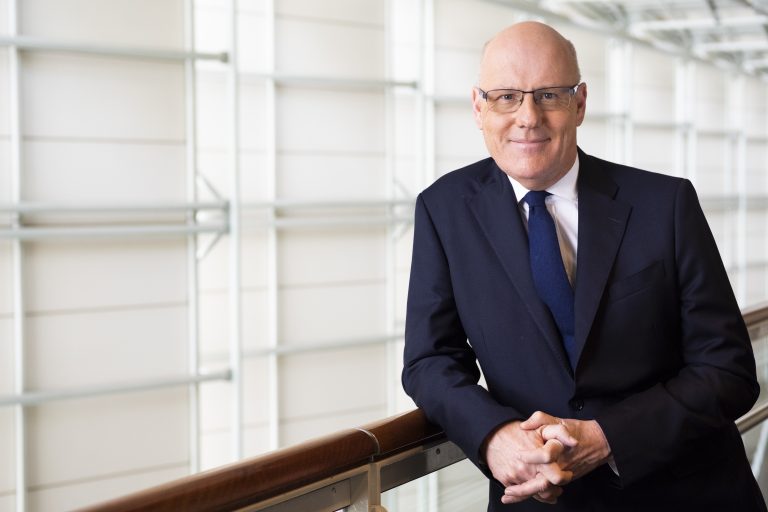
Commenting on the situation, AIB chief executive Simon Spanswick said: “At the AIB, we are extremely concerned about the demand by Turkey’s media regulator that two of our members – Deutsche Welle and Voice of America – must apply for a licence to deliver their Turkish language service online in the country. The decision by RTÜK appears arbitrary and out of step with other regulators in Europe (RTUK is a member of the European Platform of Regulatory Authorities). There is a real danger that the decision will deprive Turkish citizens of access to the important international news sources that DW and VoA provide.”


VoA responds to Turkish regulator threat over Internet services

VoA responds to Turkish regulator threat over Internet services

VoA responds to Turkish regulator threat over Internet services

Following the announcement by Turkish media regulator RTüK about its plans to force international broadcasters to apply for licences to operate Internet-delivered services in the country [read the story here], Voice of America has issued a statement setting out its position.

On Monday, February 21, Turkish media regulator RTUK posted an official notice that the VOA Turkish language website would be blocked in 72 hours if VOA does not begin the process of applying for an “Internet broadcasting license.”

Many media organizations within and outside of Turkey have expressed significant concern that this licensing requirement is designed to enable censorship of unfavorable press coverage.

Licensing is the norm for radio and TV broadcasting, because broadcast spectrum is a finite public resource, and governments have a recognized responsibility to regulate the spectrum to ensure it is used in the broader public’s interest. The internet, by contrast, is not a limited resource, and the only possible purpose of a licensing requirement for internet distribution is enabling censorship.

VOA is a public service international broadcaster, VOA is legally required to provide “accurate, objective, and comprehensive” news coverage to audiences in all of the countries it serves. Accordingly, VOA’s Charter prevents VOA from agreeing to or allowing its coverage to be censored in any way. Our editorial decisions are required to be governed at all times by the highest professional standards of journalism. So VOA could not comply with directives from a regulator to censor or remove content; nor then could VOA willingly agree to subject itself to such censorship.

“The threat to block the websites of the Voice of America, Deutsche Welle, or any other independent, public service, professional news service in Turkey is worrisome,” said Acting VOA Director Yolanda López. “Voice of America’s independent journalism cannot be subject to this or any government’s control which results either in censorship or even the perception of it.”

Accordingly, absent an alternative, VOA believes that it will be obliged to file an objection with Turkish regulators to the request to apply for a license.

Commenting on the situation, AIB chief executive Simon Spanswick said: “At the AIB, we are extremely concerned about the demand by Turkey’s media regulator that two of our members – Deutsche Welle and Voice of America – must apply for a licence to deliver their Turkish language service online in the country. The decision by RTÜK appears arbitrary and out of step with other regulators in Europe (RTUK is a member of the European Platform of Regulatory Authorities). There is a real danger that the decision will deprive Turkish citizens of access to the important international news sources that DW and VoA provide.”

AIB provides cyber security briefing to Members

AIB provides cyber security briefing to Members

AIB provides cyber security briefing to Members

With increasing numbers of cyber attacks on broadcasters and heightened geopolitical tension, the Association for International Broadcasting has issued a cyber essentials briefing deck to its members across the world.

The deck offers practical advice and reminders to chief information security officers, chief technology officers, strategists and others who are responsible for ensuring broadcasters and associated companies remain on the air and safe from cyber attack.

“This briefing deck is part of the AIB’s continuing work on cyber security on behalf of its members globally,” says AIB chief executive Simon Spanswick. “Many AIB members have extensive cyber experience and expertise. However it’s important that as an Association we work to ensure that all our members are protected as far as they can be against attack. Broadcasters are major targets for malign actors and need all the help that they can get to safely maintain operations. This briefing deck is a modest contribution to that work.”

The AIB has a Cyber Security Working Group that facilitates the exchange of intelligence and information about cyber issues. It is also working with Royal Holloway University of London on the creation of a Media Broadcast Security Centre that will test and evaluate equipment and systems deployed in broadcasters around the world. The AIB also liaises with national security agencies in key territories on cyber security for broadcasting and media. 

For more information about the AIB’s work in this mission critical area, contact the AIB Secretariat on +44 20 7993 2557.