
Weather Channel blows into Spanish-speaking communities

Weather Channel blows into Spanish-speaking communities
We all like talking about the weather (particularly Brits, we know!), and it seems that there’s a global appetite for watching the weather on TV.
The Allen Media Group television network The Weather Channel – which the company says is the #1 source for weather news and information on television – has launched a brand-new free television network The Weather Channel en Español. The company says this is the first 24/7 Spanish-language free-streaming weather news network in the United States. The Weather Channel en Español makes its debut on the 40th anniversary of the launch of The Weather Channel television network. The Weather Channel en Español has signed major sponsors including Ford, GEICO, General Motors, Toyota, Walmart among others.
The Weather Channel en Español features a variety of Spanish language weather content, including locally specific forecasting, storytelling that will help viewers understand the variation behind weather events, climate science, and its human impact. Also, the new free-streaming network will utilise the full resources of The Weather Channel. Viewers can expect the same exceptional quality and timely reporting they rely on from The Weather Channel, along with seamless collaboration among other Allen Media Group platforms such as Pattrn – The Weather Channel’s climate, environment and sustainability network.
“The Hispanic marketplace is indexing extremely well with streaming services and is severely underserved. Our launch of The Weather Channel en Español is historic, and is a recognition of the continued and significant growth of the U.S. Hispanic population and the constant need to keep the entire public informed and safe as multi-billion dollar weather disasters are on the rise – especially in communities where Spanish is spoken as both the primary and secondary language in millions of households throughout America,” said Byron Allen, Founder, Chairman and CEO of The Weather Channel parent company, Allen Media Group. “I am proud to say viewers of The Weather Channel en Español will be able to increase their safety and awareness of extreme weather events with the full support of the number one weather news network, and its vast resources, infrastructure, technology, and scientists.”
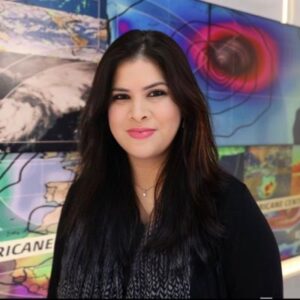 “I’m very proud to be a part of Allen Media Group’s significant investment in The Weather Channel en Español,” said Sussy Ruiz, Editor-in-Chief of The Weather Channel en Español (pictured). “The Weather Channel has been voted the most-trusted news brand in America for 11 consecutive years, and the fifth most-trusted brand overall. The full resources of The Weather Channel have been dedicated to ensure The Weather Channel en Español achieves The Weather Channel’s 40-year history of excellence.”
“The Weather Channel en Español represents the continued commitment of The Weather Channel to keep the entire public informed and safe when severe weather is about to strike,” said Nora Zimmett, President, News and Original Series for Weather Group. “In addition to vital weather and climate information, The Weather Channel en Español also provides cutting edge technology, comprehensive storytelling, plus compelling and engaging original programming.”
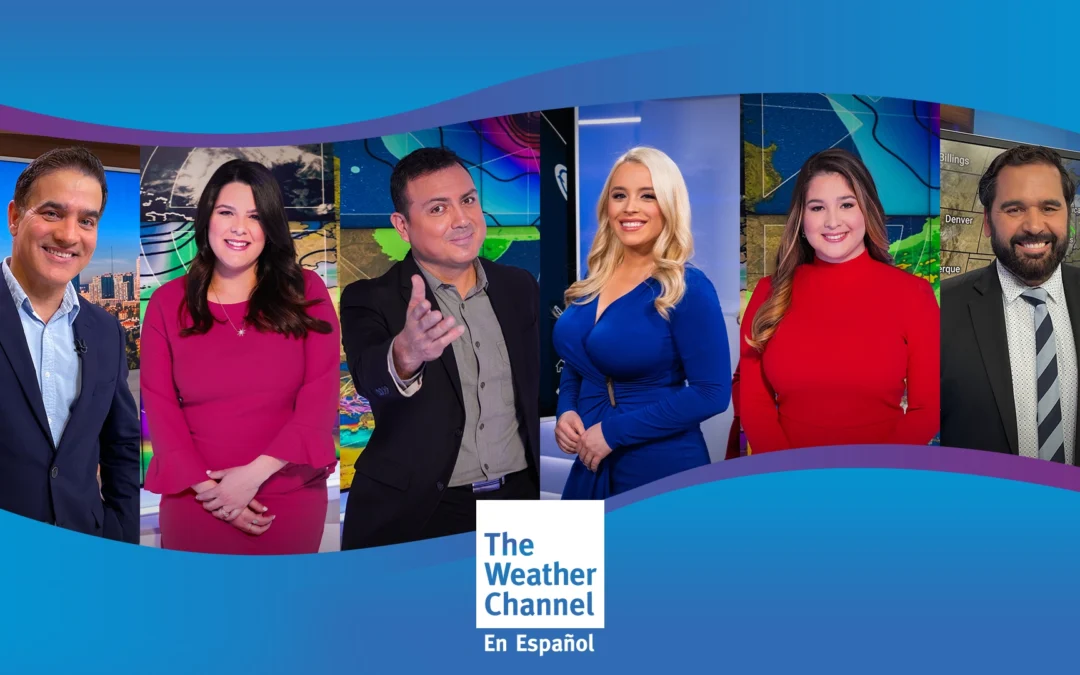
The first on-camera meteorologists to join The Weather Channel en Español are Albert Martinez, Henry Golac, Milmar Ramirez, Jessica Fernandez, Abel Hernandez and Lorena Lim.
- Martinez brings over 13 years of experience to The Weather Channel en Español and is known as one of the most trusted names in weather coverage, particularly among the Hispanic audience. He is a 13-time Emmy® award recipient, 5-time Telly award recipient and one of the highest rated meteorologists in the industry. His experience includes extensive live and field reporting of climate change, science, and astronomy. In his new role as Senior Meteorologist, Martinez will be responsible for directing and managing all aspects of weather content for The Weather Channel en Español, including integrating his previous experience in augmented and immersive mixed reality as a Max Reality Ambassador for The Weather Company (IBM). Prior to joining The Weather Channel en Español, Martinez anchored as Chief Meteorologist for Univision Network’s Despierta America, Edicion Digital, Noticiero Univision, and PrendeTV.
- Golac is an 11-time Emmy® award-winning meteorologist and is the 2021 Rocky Mountain Emmy® award recipient for Best Weather Anchor in Arizona. Most recently, Golac served as Chief Meteorologist at Telemundo in Arizona. Golac has also held various roles at Univision Orlando, Radio Exito 105.5 FM and America Teve Channel 41.
- Ramirez is also an Emmy® award-winning meteorologist with extensive experience in Spanish-language reporting. Previously, Ramirez was an anchor at Telemundo and Univision in Dallas, where she presented the weather forecast, as well as planned and coordinated severe weather coverage.
- Fernandez joins the network from Univision 23 Miami and previously held positions as a meteorologist at NBC KGNS 8 Gray Television in Laredo, Texas and WSVN Channel 7 Miami/Sunbeam Television. She earned a Professional Science Master’s Degree in Broadcast Meteorology from the University of Miami.
- Hernandez brings more than 20 years of experience as a weather presenter in major Hispanic markets like New York, Miami, Dallas, and San Antonio. Hernandez has won multiple Emmy® Awards in various categories such as, best weathercaster, best weather anchor during severe weather and best video journalist for an environmental report in Texas.
- Lim joins The Weather Channel en Español from Salt Lake City, Utah where she was a chief meteorologist for the Telemundo local station. Lim was responsible for forecasting and planning for significant weather events in the area, as well as coordinating and producing weather coverage for markets like Sacramento, Tampa, Denver, Las Vegas, and Arizona. Previously, she was the chief meteorologist at a local Oklahoma news station, and held roles as a forecaster and researcher at Cuba’s National Institute of Oceanography and the National Institute of Meteorology.
The Weather Channel en Español is 100% free and available across over-the-top streaming platforms and all mobile devices. The content is focused on the U.S., the Caribbean and Latin America. The Weather Channel en Español is also accessible via The Weather Channel app.


 Videos and pictures from the site showed the lower floors of the building heavily damaged. Cars in the area had their windows blown out.

 Peter Barakan meets with people in Okinawa, 50 years after its return to Japan from America following the postwar occupation. Residents worked tirelessly to heal the scars of war and reconstruct their heritage. That heritage is grounded in the Ryukyu Kingdom that Okinawa once was, surviving for 450 years as an independent entity between China and Japan. A Champuru ethos allowed the Kingdom to skillfully encounter and incorporate foreign influences, strategies that may be useful even today.
 International viewers can now enjoy one of Japan’s most popular TV dramas with the English-dubbed version of How to be Likeable in a Crisis made available by NHK Drama Showcase on NHK WORLD-JAPAN. The dark comedy revolves around Kanzaki Makoto, who works in public relations for a prestigious university.
 An engineer in southwestern Japan has dedicated his life to removing dud explosives from World War II that still lie buried. It will probably take 70 years to remove them all. We follow his challenge.
 The best of today’s sumo! Enjoy daily highlights of this dynamic sport with background info and play-by-play commentary adding to the excitement!