DW locates Moscow bureau to Latvia

DW locates Moscow bureau to Latvia

DW locates Moscow bureau to Latvia

Deutsche Welle (DW) is relocating the journalistic operations that were based in Moscow to Latvia following the closure of its Moscow studio and the withdrawal of its staff’s accreditation by the Russian government.

Infrastructure for DW’s broadcasting operations will be set up over the coming weeks in the capital city of Riga. Yuri Rescheto, previously DW Bureau Chief Moscow, will be head of DW’s new foreign location.

DW Director General Peter Limbourg: “We continue to take all the technical and organisational measures possible to provide our audience in Russia and around the world with critical information. We remain committed to providing independent and objective reporting. Even though our website and most social media channels have been blocked by the Putin government in recent days, people in Russia can find a variety of ways to circumvent censorship.”

DW Editor-in-Chief Manuela Kasper-Claridge: “From Germany, Ukraine, neighboring European countries and now soon also from Riga, we provide our audience in Russia with comprehensive and sustainable information about the war in Ukraine. Latvia offers geographical proximity to Russia, and the vibrant media landscape in the Baltic countries now creates optimal conditions for our team and reporting.”

On February 3, 2022, the Russian government banned DW from broadcasting in Russia, citing as a reason Germany’s ban on the German-language channel of Russian state TV network RT DE. The following day, staff at DW’s Moscow studio had to hand in their press accreditations. The Russian Foreign Ministry also announced an investigation into whether DW should be classified as a foreign agent.

BBC increases access to news on Ukraine and Russia

BBC increases access to news on Ukraine and Russia

BBC increases access to news on Ukraine and Russia

BBC News is increasing access to its independent journalism on the invasion of Ukraine.

From today it will make a daily half hour news bulletin (broadcast at 2000 GMT) available free of charge to other broadcasters who are members of the European Broadcasting Union (EBU).

Audiences will get the chance to watch Outside Source, normally presented by Ros Atkins, from Monday to Thursday, and a BBC News bulletin from Friday to Sunday. Given the current news agenda we expect the news to focus on Ukraine and related stories.

BBC News is also launching Tik Tok accounts exclusively dedicated to videos about the war, in Russian and in English, from today. The handles are @bbcnews and @bbcnewsrussian. Tik Tok has fast become a crucial platform for information (and disinformation) about the war in Ukraine.

Although Tik Tok has suspended new content and livestreaming in Russia, we know that audiences find ways of getting to, and sharing, the content.

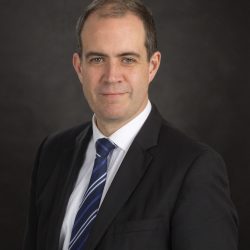
Jamie Angus, Senior Controller, News Output and Commissioning, says: “Access to trusted, impartial and independent news is never more crucial than in times of conflict. We are always looking to find ways to ensure our news is available to those who need it most, on the platforms where they are. We welcome trusted European public broadcasters who want access to this daily bulletin via our partners at the EBU.”

These moves come amid a large increase in audiences for BBC News. Audiences to the BBC News channel were up 57% last week (w/c 28 February, compared to an average week in 2021). 

Updated figures show that in the last week of February, 200 million people turned to the BBC World Service’s digital news in languages other than English. Reach on social media in Russian tripled (with the biggest gains on Facebook) and in Ukrainian more than tripled.

Access to news in Russia is becoming increasingly difficult, so the BBC is continuing to explore ways to make its trusted, impartial news and information available in as many ways as possible.

A guide to accessing BBC sites via circumvention is available here

[Source: BBC press release]

Second Ukraine TV tower hit; channels off the air

Second Ukraine TV tower hit; channels off the air

Second Ukraine TV tower hit; channels off the air

Reports from Ukraine say that the Russian invasion has targeted a second TV transmission tower. 

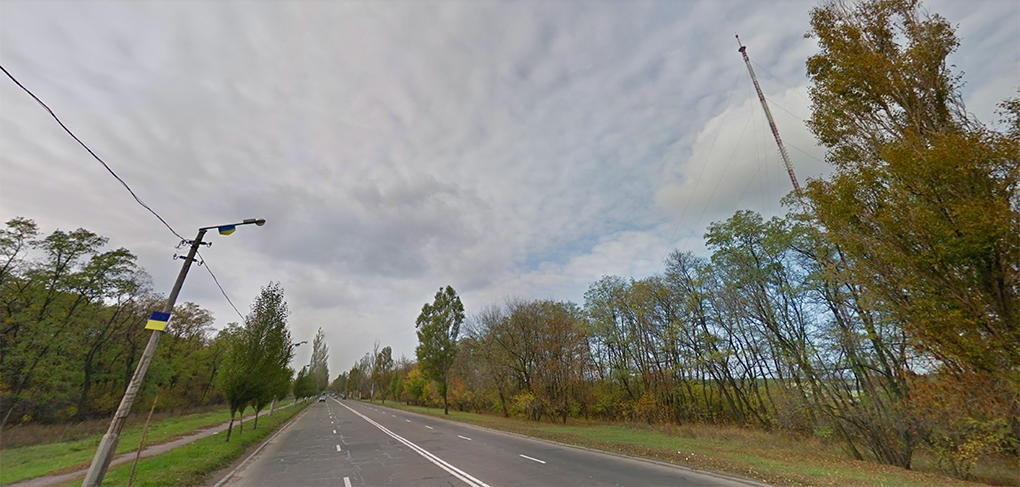
The TV tower in Kharkiv is reported to have been hit on Sunday 6 March, taking TV channels off the air. It appears that this is a new tactic by Russia as it attempts to restrict access to information for Ukrainian citizens in the country. 

Standing 240m high, the Kharkiv tower was constructed in 1981 and is believed to carry TV and radio signals to the city and surrounding area. 

RFE/RL suspends operations in Russia

RFE/RL suspends operations in Russia

RFE/RL suspends operations in Russia

Radio Free Europe/Radio Liberty (RFE/RL) has suspended its operations in Russia after local tax authorities initiated bankruptcy proceedings against RFE/RL’s Russian entity on March 4 and police intensified pressure on its journalists. These Kremlin attacks on RFE/RL’s ability to operate in Russia are the culmination of a years-long pressure campaign against RFE/RL, which has maintained a physical presence in Russia since 1991 when it established its Moscow bureau at the invitation of then-President Boris Yeltsin.

Also on March 4, Russian President Vladimir Putin signed a law that could subject any journalist who deviates from the Kremlin’s talking points on the Ukraine war to a 15-year prison sentence. Because RFE/RL journalists continue to tell the truth about Russia’s catastrophic invasion of its neighbour, the company plans to report about these developments from outside of Russia.

Said RFE/RL President & CEO Jamie Fly, “It is with the deepest regret that I announce the suspension of our physical operations in Moscow today. This is not a decision that RFE/RL has taken of its own accord, but one that has been forced upon us by the Putin regime’s assault on the truth. Following years of threats, intimidation and harassment of our journalists, the Kremlin, desperate to prevent Russian citizens from knowing the truth about its illegal war in Ukraine, is now branding honest journalists as traitors to the Russian state. We will continue to expand our reporting for Russian audiences and will use every platform possible to reach them at a time when they need our journalism more than ever. Despite this bleak moment, we know from our organisation’s 70-year history that one day, perhaps sooner than many think, we will be able to reopen a bureau in Russia. Time is on the side of liberty, even in Vladimir Putin’s Russia.”

Over the last week, nine of RFE/RL’s Russian language websites were blocked after RFE/RL refused to comply with the Russian government’s demands to delete information about Russia’s invasion of Ukraine. Overnight on March 3-4, Russian authorities blocked access within Russia to websites run by RFE/RL’s Russian, Tatar-Bashkir, and North Caucasus services, including the Russian-language North.Realities, Siberia.Realities, Idel.Realities, and Caucasus.Realities sites. On February 28, Russia blocked access to two other RFE/RL websites, including Current Time, the 24/7 digital and TV network led by RFE/RL in cooperation with VOA.

Since invading Ukraine, Russia has blocked a number of Russian-language websites producing news content from abroad, including Meduza, BBC, Deutsche Welle and Voice of America. The Kremlin has also blocked access to Facebook and Twitter.

The technical cause of the bankruptcy of RFE/RL’s Russian entity is its longstanding refusal to comply with Russia’s unlawful demand that every piece of RFE/RL’s Russian-language content—every video, every article, every tweet—be accompanied by a state-mandated warning that RFE/RL is a “foreign agent.” In the past year, Russia’s media regulator Roskomnadzor has issued 1,040 violations against RFE/RL that will result in fines of more than $13.4 million for its refusal to submit to this content-labeling regime. In addition, 18 RFE/RL journalists have been designated as individual “foreign agents.” On February 9, RFE/RL filed its final written submission with the European Court of Human Rights (ECtHR), asking for a hearing to consider the merits of the legal case it filed in May 2021 challenging Russia’s “foreign agent” laws.

RFE/RL has been broadcasting to Russian audiences since March 1, 1953, when the first programs of “Radio Liberation” were directed at audiences in the Soviet Union. Between November 1988 and August 1991, as Soviet leader Mikhail Gorbachev’s “glasnost” policies took hold, the Russian Service built up a network of as many as 400 people across the U.S.S.R. and over 40 people in Moscow. On August 27, 1991, Russian Federation President Boris Yeltsin issued a decree giving RFE/RL accreditation and allowing it to open a bureau in Moscow; the decree was revoked by Russian President Vladimir Putin in 2002.

RFE/RL’s Russian Service is a multi-platform alternative to Russian state-controlled media, providing audiences in the Russian Federation with informed and accurate news, analysis, and opinion. The Russian Service’s websites, including its regional reporting units Siberia.Realities and Northern.Realities, earned a monthly average of 12.7 million visits and 20.6 million page views in 2021, while 297 million Russian Service videos were viewed on YouTube, Facebook, and Instagram.

RFE/RL’s Tatar-Bashkir Service is the only major international news provider reporting in the Tatar and Bashkir languages to audiences in the Russian Federation’s multiethnic, Muslim-majority Volga-Ural region. Since 1953, the Service, known locally as Radio Azatliq, and its Russian-language reporting unit Idel.Realities, have provided an important and innovative alternative to government-controlled media.

RFE/RL’s North Caucasus Service is one of the few independent media outlets reporting in this predominantly Muslim region of the Russian Federation. Producing content in Chechen and Russian via its Caucasus.Realities unit, the service reports the news in one of the most violent and dangerous regions in the world.

Current Time is a 24/7 Russian-language digital and TV network led by RFE/RL in cooperation with VOA. In addition to reporting uncensored news, it is the largest provider of independent, Russian-language films to its audiences. Despite rising pressure on Current Time from the Russian government, Current Time videos were viewed over 1.3 billion times on YouTube, Facebook, and Instagram/IGTV in FY2021.


USAGM condemns Kremlin’s increasing censorship and responds to surge in demand for reporting from its networks

USAGM condemns Kremlin’s increasing censorship and responds to surge in demand for reporting from its networks

USAGM condemns Kremlin’s increasing censorship and responds to surge in demand for reporting from its networks

Despite the Russian government’s attempted censorship of Voice of America (VOA) and Radio Free Europe/Radio Liberty (RFE/RL), there has been a surge in demand for their content, including their collaborative 24/7 Russian-language channel Current Time. In response, USAGM is expanding program delivery and access with the addition of more affiliate stations in and around Russia and the help of the Open Technology Fund’s tools and resources to circumvent internet censorship.

“It is clear that by restricting access to RFE/RL and VOA’s fact-based reporting, the Kremlin hopes to keep its own citizens in the dark and to hide the truth,” said Kelu Chao, USAGM’s Acting CEO. “The people of Russia deserve to know the facts about their government’s attacks on Ukraine and how the world is reacting. USAGM will continue to use its resources to bring unbiased information to light at this crucial time.”

RFE/RL President Jamie Fly said, “RFE/RL journalists in Russia have been unfairly slurred as ‘foreign agents,’ detained, and now their accurate reporting about an unpopular war is being blocked. RFE/RL remains committed to delivering objective reporting from inside of Russia for the Russian people despite these outrageous attempts to censor the truth.”

Acting VOA Director Yolanda López said, “The recent threat by the Russian media regulator Roskomnadzor to block VOA and other independent media outlets now is a reality for many in our audience there. Our viewers and listeners in Russia deserve access to our factual news content at this critical time, not only about the ongoing war in Ukraine, but also about all vital global events that impact their lives and actions. VOA will continue to promote and support tools and resources that will allow our audiences to bypass any blocking efforts imposed on our sites in Russia. Our journalists will continue their reporting, an example of free press in action.”

Some radio, digital, and direct-to-home satellite transmissions continue to reach Russian audiences, and demand for VOA and RFE/RL’s coverage is intensifying. For example, between February 24 and March 3, Current Time videos were viewed more than 240 million times across digital platforms. In addition, since Russia’s invasion, demand for Current Time content has increased dramatically among broadcast partners in Russia, Ukraine, Moldova, Latvia, Estonia, and Bulgaria. With the increase over last week, there are 261 affiliates now distributing Current Time content. Between February 26 and March 5, Current Time videos have been viewed on Facebook 76 million times, while VOA’s Russian Service and RFE/RL’s Russian Service videos were each viewed about 8 million times.

From February 23 to March 2, VOA’s Russian Service reported nearly 17 million video views on social platforms, a 159% increase from the week before, while website traffic soared 146%. From February 23 to March 1, audiences viewed RFE/RL videos 436 million times on Facebook, 305 million times on YouTube, and 83 million times on Instagram – reflecting increases of 265%, 406%, and 185%, respectively, over the previous week.

[Source: USAGM press release; Image: AP Photo/Dmitri Lovetsky/Associated Press/Alamy Stock Photo]

BBC temporarily suspends work of journalists in Russia

BBC temporarily suspends work of journalists in Russia

BBC temporarily suspends work of journalists in Russia

In an unprecedented move, the BBC has announced that it is temporarily suspending the work of its journalists in Russia. 

It follows the approval of a law in the lower chamber of the Russian parliament that allows the imposition of jail sentences up to 15 years for those convicted of spreading “fake” information.

Reacting to new legislation passed by the Russian authorities, BBC Director-General Tim Davie says:

“This legislation appears to criminalise the process of independent journalism. It leaves us no other option than to temporarily suspend the work of all BBC News journalists and their support staff within the Russian Federation while we assess the full implications of this unwelcome development.

“Our BBC News service in Russian will continue to operate from outside Russia.

“The safety of our staff is paramount and we are not prepared to expose them to the risk of criminal prosecution simply for doing their jobs. I’d like to pay tribute to all of them, for their bravery, determination and professionalism.

“We remain committed to making accurate, independent information available to audiences around the world, including the millions of Russians who use our news services. Our journalists in Ukraine and around the world will continue to report on the invasion of Ukraine.”

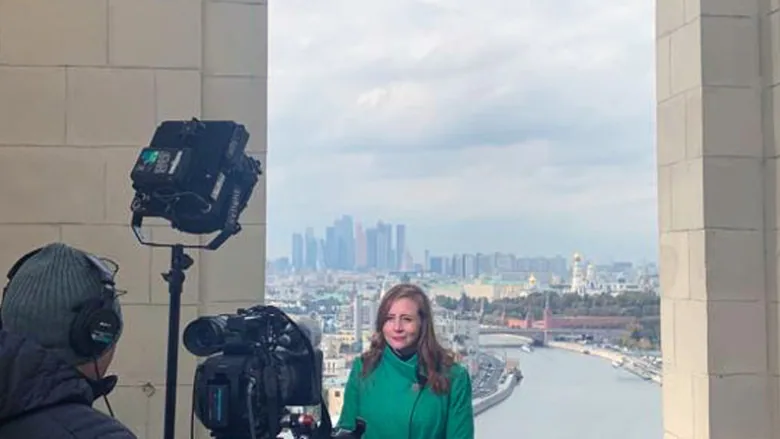
Picture: BBC Moscow correspondent Steve Rosenberg reporting on the closure of Ekho Moskvy radio