FRANCE 24 programme highlight | France/Portugal cultural season

FRANCE 24 programme highlight | France/Portugal cultural season

FRANCE 24 programme highlight | France/Portugal cultural season

FRANCE 24 programme highlight: Lisbon: How African music is breaking down racial barriers?

In February 2022, France and Portugal embarked upon a cultural season that will see nine months of arts events in both countries. To celebrate this international friendship, France 24 is exploring Portuguese culture in a special programme. The culture show Encore! is going on a musical journey to Lisbon to meet the country’s top artists.

This show zooms in on the new Afro-Portuguese scene, whose influences come from Portugal’s former colonies Angola, Cape Verde, Mozambique, Guinea-Bissau and Sao Tome and Principe.

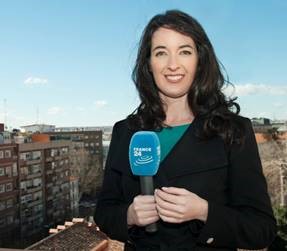
Presenter Eve Jackson meets award-winning Dino d’Santiago, a rising star of Portuguese music who mixes traditional and contemporary sounds. And DJ Marfox is in the mix, to explain how he brings new beats to the airwaves.

France 24’s team also takes part in a concert from the Batukadeiras Orquesta, a group of female drummers and Cape Verdean singers, specialising in Batuka – a rhythmic call-and-response style created in Cape Verde during the slave trade.

Watch on France 24 on Friday 13 May at 1015 GMT.

DW Freedom of Speech Award 2022 goes to Ukrainian journalists Mstyslav Chernov and Evgeniy Maloletka

DW Freedom of Speech Award 2022 goes to Ukrainian journalists Mstyslav Chernov and Evgeniy Maloletka

DW Freedom of Speech Award 2022 goes to Ukrainian journalists Mstyslav Chernov and Evgeniy Maloletka

Ukrainian visual journalist and novelist Mstyslav Chernov and photojournalist Evgeniy Maloletka are this year’s DW Freedom of Speech Award laureates. For the eighth consecutive year, Germany’s international broadcaster is awarding the prize. It recognizes outstanding promotion of human rights and freedom of expression.

“Mstyslav Chernov and Evgeniy Maloletka have a way of reporting that is painful to read and watch, but what really hurts is the truth that their reporting conveys: Russia brutally attacking Ukraine, and thereby Ukrainian civilians, under a fabricated pretence. While there are nuances to every story, there is no way facts can be negotiated. This is exactly what the Kremlin is doing: Distorting facts, spreading misinformation,” said DW Director General Peter Limbourg. “The Freedom of Speech Award for Mstyslav Chernov and Evgeniy Maloletka is to recognize their exceptional courage in standing up against propaganda and misinformation. It is to recognize that their fight for human rights and for the truth is a fight for democracy and free societies, for all of us, and it comes at a high price.”

The journalists, who both remain in Ukraine to continue their coverage of the war, welcomed the news about receiving the DW Freedom of Speech Award as an acknowledgment of their work.

The award ceremony will be held on June 20 as part of the DW Global Media Forum. 


Bringing atrocities in Mariupol to the world’s attention

AP journalist and novelist Mstyslav Chernov and freelance photojournalist Evgeniy Maloletka are both from eastern Ukraine. Previously, their reports and footage from the conflicts in Crimea and eastern Ukraine have been published in various international media, including BBC, Deutsche Welle, The New York Times, Washington Post, Der Spiegel and others. As a war reporter in several conflict zones such as Iraq or Syria, Chernov has been wounded multiple times. Before the war, Maloletka had also been working on a project about the Hutsul community in western Ukraine, their traditions and daily life, and on the impact of the conflict in Donbass.

The Freedom of Speech Award now honours the reporters’ coverage of the war in Ukraine started by Russia on February 24, 2022. The report “20 days in Mariupol: The team that documented city’s agony” offers a unique account of Mariupol under Russian siege, with Chernov and Maloletka being the last journalists in the city before their evacuation. They documented the city’s first deaths at the city hospital of Mariupol and the attack on the maternity ward with pregnant women and children in it, as well as numerous bombings. During this work, the journalists themselves were under constant attack and took great risks only to find a steady connection to upload their footage of the siege, bringing it to the attention of the international community. They were evacuated by Ukrainian soldiers to avoid them falling into the hands of Russians, who had been hunting them down.

AP Senior Vice President and Executive Editor Julie Pace: “Mstyslav and Evgeniy were the world’s eyes and ears in Mariupol, producing courageous and compelling reporting as the only international journalists inside the besieged city. The harrowing realities of Russia’s war would have remained unseen without their bravery. We are extremely proud of their work.”

Limbourg: “The war in Ukraine is a war on human rights and European values, but also a war on truth and facts. Our laureates this year have documented the atrocities committed in Mariupol and have themselves become eyewitnesses. It is thanks to them, and other journalists working in war zones, that the world gets to see what is happening on the ground. It is only then that crimes can be prosecuted, and perpetrators be held responsible. The kind of commitment and strength shown by war journalists is extremely valuable, the work is demanding and dangerous, and it is too seldomly given credit.” 


DW Freedom of Speech Award

Deutsche Welle provides independent news and information to people worldwide in 32 languages. DW promotes democratic values, human rights and the dialogue between different cultures. Since 2015, DW has been honoring individuals and organizations with the Freedom of Speech Award. The first laureate was Saudi blogger Raif Badawi, who had been jailed for ten years and was released in March this year. Other recipients include Mexican investigative journalist Annabel Hernández (2019), whose work focuses on corruption, impunity and drug cartels, and Nigerian investigative journalist Tobore Ovuorie (2021), who uncovered an international human trafficking ring.


Global Media Forum 2022: Hybrid event

The DW Freedom of Speech Award ceremony is the annual highlight of the Global Media Forum, Deutsche Welle’s international media conference. On June 20 and 21, 2022, media experts and politicians from around the world will convene at the World Conference Center Bonn in Germany to discuss this year’s theme “Shaping tomorrow, now.” Participants from all parts of the world can join in and be part of the numerous inclusive discussions, debates and workshops – in Bonn or online.

[Source: DW press release]

RFE/RL Journalist Dies In Russian Air Strikes On Kyiv

RFE/RL Journalist Dies In Russian Air Strikes On Kyiv

RFE/RL Journalist Dies In Russian Air Strikes On Kyiv

​RFE/RL journalist Vira Hyrych has died in Kyiv after a Russian air strike hit the residential building where she lived in the Ukrainian capital.

Hyrych’s body was found early in the morning on April 29 amid the wreckage of the building, which was hit by a Russian missile the night before, RFE/RL’s Ukrainian Service said.

UN Secretary-General Antonio Guterres was visiting Kyiv on April 28 as air strikes hit the capital, including the apartment block.


“We are deeply saddened by the death of our Ukrainian Service staffer Vira Hyrych in Kyiv overnight. We have lost a dear colleague who will be remembered for her professionalism and dedication to our mission,” RFE/RL President Jamie Fly said in a statement.

“We are shocked and angered by the senseless nature of her death at home in a country and city she loved. Her memory will inspire our work in Ukraine and beyond for years to come,” he added.

Videos and pictures from the site showed the lower floors of the building heavily damaged. Cars in the area had their windows blown out.

Russian Defence Ministry spokesman Igor Konashenkov claimed “long-range, high-precision” missiles had hit factory buildings in Kyiv of Ukrainian rocket manufacturer Artem on April 28.

Ukrainian officials have not commented on whether the factory had been hit during the attack.

Kyiv Mayor Vitali Klitschko said on Telegram on April 29 that one body had been retrieved from the rubble and another 10 people had been injured in the strikes. He gave no further details.

Hyrych, born in 1967, began working for RFE/RL in February 2018. Before that she worked at a leading television channel in Ukraine.

Source: RFE/RL; main photo: Facebook; Kyiv bomb damage photo: Aleksandr Sinitsa/UNIAN

Mali withdraws RFI and France 24 licences

Mali withdraws RFI and France 24 licences

Mali withdraws RFI and France 24 licences

The Malian government has withdrawn the operating licences of the international radio and TV services RFI and France 24.

The country’s High Authority of Communication said: “The licence granted to France Medias Monde [FMM] to establish and operate Radio France International, RFI, services in Mali under convention No. 055/HAC-MALI/2018 of 11 June 2018 is hereby permanently withdrawn.”

The ruling means that the two services cannot be carried by any Malian TV or radio distributor, and it also means that the online services of the broadcasters cannot be carried on Mali-based mobile phone operators.

Reacting, France Médias Monde condemned the move, saying: “France Médias Monde strongly contests such a measure and intends to appeal this decision. It will use all other possible means of appeal.

“We will continue to cover the news in Mali, which is of interest to the whole of Africa as well as the rest of the world. All technical solutions will be implemented to make our media accessible to Malians who wish to continue to receive free, expert information that is open to the world. FMM stresses its commitment to the independence and freedom of information.”

Update

Media watchdog RSF unblocks RFI and France 24 in Mali

29th April 2022

Reporters Without Borders (RSF) says it has unblocked French media outlets  in Mali  a day after the country’s military rulers revoked their operating licences.

RSF said in a tweet that RFI and France 24 were back online  as part of its Operation Collateral Freedom, which was launched in 2015 and “is currently enabling 47 websites in 24 countries (including eight sites in Russia) to circumvent censorship by their governments”.


NHK World Japan Monthly Focus May

NHK World Japan Monthly Focus May

NHK World Japan Monthly Focus May

The Power of Champuru

Barakan Discovers: OKINAWA

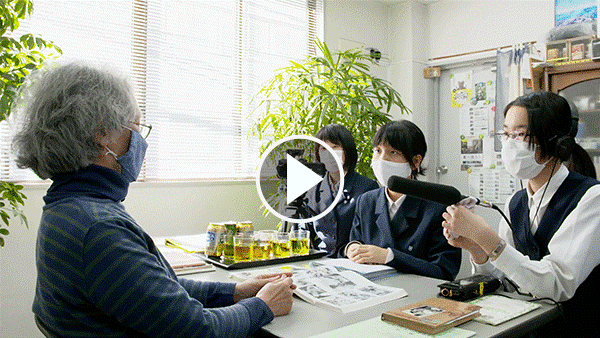
Peter Barakan meets with people in Okinawa, 50 years after its return to Japan from America following the postwar occupation. Residents worked tirelessly to heal the scars of war and reconstruct their heritage. That heritage is grounded in the Ryukyu Kingdom that Okinawa once was, surviving for 450 years as an independent entity between China and Japan. A Champuru ethos allowed the Kingdom to skillfully encounter and incorporate foreign influences, strategies that may be useful even today.

May 28 Sat.  0:10 / 6:10 / 12:10 / 18:10

How to be Likeable in a Crisis (Dubbed ver.)

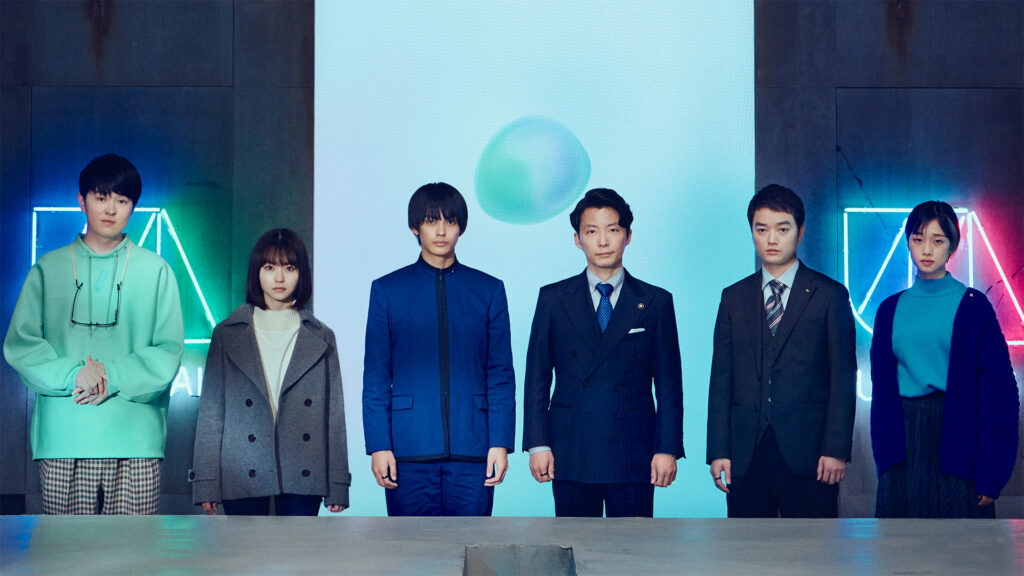
International viewers can now enjoy one of Japan’s most popular TV dramas with the English-dubbed version of How to be Likeable in a Crisis made available by NHK Drama Showcase on NHK WORLD-JAPAN. The dark comedy revolves around Kanzaki Makoto, who works in public relations for a prestigious university.
The screenplay was written by Watanabe Aya, who has been behind many hit shows. Award-winning actor Matsuzaka Tori depicts Makoto navigating the choppy waters of the workplace and his personal life in the series’ five episodes.

Ep 1~3 Available on VOD!
Ep 4 May 1 Sun.  0:10 / 18:10
Ep 5 May 8 Sun.  0:10 / 18:10

Hometown Stories:

Bomb Disposal Quest in Okinawa

An engineer in southwestern Japan has dedicated his life to removing dud explosives from World War II that still lie buried. It will probably take 70 years to remove them all. We follow his challenge.

May 15 Sun. 1:10 / 7:10 / 13:10 / 19:10

GRAND SUMO Highlights

DAILY DURING TOURNAMENTS

The best of today’s sumo! Enjoy daily highlights of this dynamic sport with background info and play-by-play commentary adding to the excitement!

[Source: NHK World Japan press release]

BBC publishes results of deprivation study

BBC publishes results of deprivation study

BBC publishes results of deprivation study

​The BBC has published the full findings of a “deprivation study” in which 80 homes had no access to any BBC content or services for nine days.

The results suggest many of those taking part underestimated the value their household gets from the BBC.

The study, conducted by research company MTM on behalf of the BBC, found that 70% of those who initially said they would rather do without the BBC, or would prefer to pay less for it, changed their minds and were willing to pay the full licence fee or more in order to keep BBC content and services.

Just under 200 people, based in 16 different locations in the UK and with a mix of views about the BBC, took part.

This study produced a near identical result to one conducted in 2014/2015 despite significant changes in the media market in the last seven years and a significant increase in global competition from other broadcasters, subscription services and platforms.

Since 2014 23 mainstream content streamers have launched, with a total of 38 now available to UK audiences.

BBC Director-General Tim Davie says: “It is great to see the role the BBC plays in people’s lives up and down the UK and it not only shows the importance of public service broadcasting it reinforces that we must continue the hard work to maintain that support and ensure we offer something for everyone.”

The new research focused primarily on licence-fee paying households who felt the BBC was of no or little value to them.

Of the 80 households involved, 30 initially said they wanted to pay nothing and not receive the BBC and another 30 only wanted to pay less than the full licence fee. A control group of 20 who were willing to pay the full licence fee was also included.

Households varied in size, age range and background and included singles, couples, young and older families, and shared homes.

They were unable to access any BBC services, across TV, radio, online and apps, for nine days, covering two full weekends. They were also not permitted to watch any BBC content available on other services such as Netflix or YouTube. In return they received the cost of the licence fee for those days, which works out at about £3.90.

On completing the study 42 of the 60 households, or 70%, who initially wanted to either pay nothing or less said they were willing to pay the full licence fee or more in return for the BBC.

Reasons for changing views included a realisation that they had underestimated the value their households get from the BBC and the amount of BBC content and services they consumed in their daily lives. This included missing out on high-profile dramas, event TV and live sport that brings the country together; missing CBeebies and CBBC; missing BBC iPlayer; missing the BBC radio stations/Sounds that they listened to; and missing BBC online services.

Other factors were an increased understanding of the variety of services the licence fee pays for; the high quality of content; missing content without advertising; and greater recognition of the cultural and societal role of the BBC in UK life.

In 2014 when the first study was started 21.5 million adults used the internet/social media for news, that compares to 39.2 million today, while 4.8 million UK households had access to SVOD services, compared to 20 million today.

The full report is available here.