Women: a new radio show from BBC News Afghan

Women: a new radio show from BBC News Afghan

Women: a new radio show from BBC News Afghan

BBC News Afghanistan in Pashto and Dari has launched a weekly radio programme, Women (Mermen in Pashto, and Zan in Dari). The 30-minute show will go on air at 19:00 Kabul Time in Dari and at 20:00 in Pashto (14:30 and 15:30 GMT) every Friday.

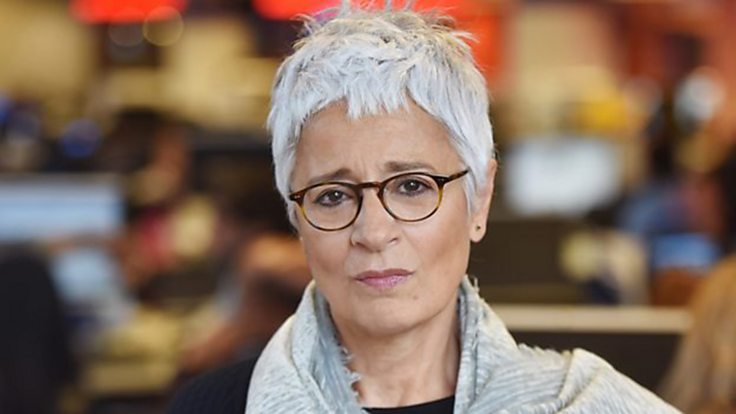
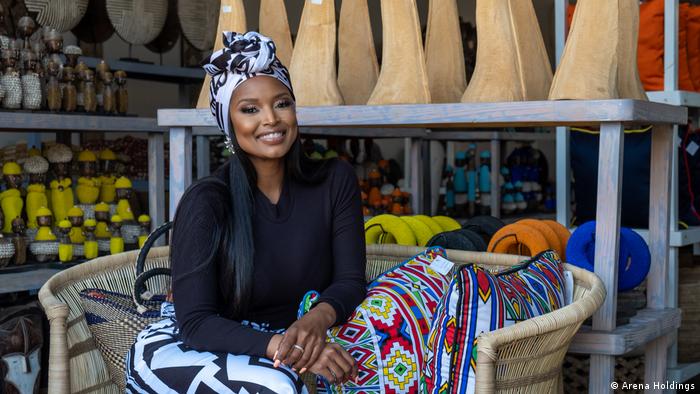
Presented by Shazia Haya in Pashto and Aalia Farzan in Dari, the programme is aimed at women and girls – especially those in rural areas – in Afghanistan and Pakistan. Alongside offering them a platform to voice their views and questions, the new show will also deliver content that informs and educates, empowering the listeners to make informed decisions and choices.

The programme, which talks about women’s rights, healthcare, education, household economy, parenting, children’s health, as well as entertainment, sports and politics, opens with women-focused news from around the world. It discusses with experts the week’s main subject item and includes permanent slots on motherhood and childcare; inspiring stories about successful women from Afghanistan and around the world; and an arts & culture section dedicated to latest works by female writers, artists and musicians.

Shazia Haya and Aalia Farzan are BBC journalists who moved to the UK following the Taliban takeover of Afghanistan. Shazia says: “This programme for me means giving a voice to the voiceless. I hope Mermen will help empower the Afghan women to have better lives – and I feel really privileged to be part of such a journey.”

Aalia adds: “I want our new radio show, Zan, to serve as a window to every Afghan woman’s home. A window which opens every week to bring her the kind of knowledge that is really useful for her, and also to invite her to speak out about the things that worry or frustrate her.”

The new radio programme will be available via FM and shortwave frequencies across Afghanistan and will be available on demand via the websites bbc.com/pashto and bbc.com/persian/afghanistan, and the BBC News Pashto and BBC News Dari channels on Facebook.

BBC News Afghanistan service in Dari and Pashto is part of BBC World Service.

AIB conference on media and the SDGs – 7 July 2022

AIB conference on media and the SDGs – 7 July 2022

AIB conference on media and the SDGs – 7 July 2022

The Association for International Broadcasting (AIB), a member of the UN SDG Media Compact, is organising a virtual forum as a side event to the ECOSOC HLPF to engage media sectors in a global dialogue on the urgency of member states to ensure the global goals are met.

Journalists in all countries must hold power to account on progress made (or delays encountered) on the implementation of the SDGs and Member States’ short- and medium-term plans to meet the crucial 2030 deadline as part of recovery efforts.

The dialogue will explore the power, role and responsibility of global media in accurately and transparently reporting the progress of members states on the 2030 goals, advocating for transformative policies to be adopted as part of the recovery from COVID-19 as well as an upsurge of international solidarity.

This conference will bring together editors, journalists, producers, sustainability experts and more. Best practice will be shared  to encourage journalists and programme makers to tell stories around the SDGs and to hold politicians to account on progress – and in some cases lack of progress – on achieving the SDGs.

The conference will be opened by HE Mr Collen Vixen Kelapile, President of the Economic and Social Council of the United Nations. Expert speakers include Aida Sofić Salihbegović, DW, Steve Herman, VoAAngelina Kariakina, UA:PB, Georgia Arnold, Executive Director of the MTV Staying Alive Foundation and Carys Taylor, Director of the Albert Project, as well as leading editors and journalists from across the world.

The full agenda is available here

Register to join this two-hour conference free of charge here.

DW’s Limbourg: Diversity is one of strengths of DW’s Global Media Forum

DW’s Limbourg: Diversity is one of strengths of DW’s Global Media Forum

DW’s Limbourg: Diversity is one of strengths of DW’s Global Media Forum

Global Media Forum 2022 in Bonn concludes with the attendance of global media leaders: Maria Ressa, Leonid Volkov, Timothy Snyder, David Beasley, Paul Ronzheimer, Barkha Dutt, Audrey Tang, Ulrik Haagerup, Bernhard Pörksen and Gwen Lister.

The two-day Deutsche Welle (DW) media conference, titled “Shaping tomorrow now,” covered hybrid topics on-site in Bonn and online, including journalism education, climate change, digital activism, and war and pandemic reporting.

In his closing remarks, DW Director General Peter Limbourg emphasised the strength of DW’s Global Media Forum in bringing even people from countries in conflict with each other into conversation and constructive debate. “The diversity, reflected in the presence of journalists from Russia, Ukraine, Israel and the Palestinian Territories, was the strength of DW’s Global Media Forum,” he said. “We can ask critical questions. We can address everything. I’m really happy that we had these two days in Bonn.”

A highlight of the event was the keynote of Philippine journalist and Nobel Prize laureate Maria Ressa. “If you don’t have facts, you don’t have truth; if you don’t have truth, you don’t have trust,” Ressa said in her keynote. Fact-based journalism, she said, can restore the trust that has been lost to illiberal governments. A second Nobel Prize laureate, David Beasley, executive director of the World Food Programme, also attended this year’s media conference.

Peter Limbourg similarly addressed the loss of media credibility: “We are confronted with a storm of disinformation, propaganda and censorship. When the free and independent voices work together, we can withstand this storm and make a difference.” 

In an emotional ceremony Monday evening, DW honoured Ukrainian photojournalists Mstyslav Chernov and Evgeniy Maloletka with the Freedom of Speech Award in recognition of their courageous reporting of the Russian attacks on the Ukrainian city of Mariupol in February and March. Jodie Ginsberg, president of the Committee to Protect Journalists (CPJ), delivered the laudatory speech. Ensaf Haidar, wife of Saudi blogger Raif Badawi who received the first Freedom of Speech Award in 2015 while in prison for ten years, read a welcoming speech. 

Reporting from the frontlines and combating disinformation

BILD Deputy Editor-in-chief Paul Ronzheimer reported from Ukraine on his war experiences: “Many journalists died in this war and that’s something you can’t get out of your head,” he said. In another panel discussion, Taiwan’s Digital Minister Audrey Tang and Russian opposition politician Leonid Volkov debated the threat of online censorship and methods to combat disinformation. “It is no coincidence that Putin and the Kremlin shut down all independent media in Russia on the first day of the war,” Volkov said. “They know full well that the media is part of the war effort.”

In his closing speech “Media Coverage in Times of Crisis,” U.S. historian Timothy Snyder drew a parallel between the famine in Soviet Ukraine in 1932-33 and the current Russian war in Ukraine: “Stalin took a particular political decision to blame the Ukrainians,” he said. “As with Stalin, so with Putin. This is a political decision with perfectly predictable consequences.”

On Tuesday afternoon, the ARD.ZDF Media Academy honoured three female graduates with the “Women and Media Technology” award for their work in the field of audio-visual media production and distribution. The award winners (first to third place): Katharina Greiner, Janine Jensch and Wiebke Middelberg.

The participants of the conference in Bonn were able to experience live broadcasts of the DW programs “JaafarTalk” and “Arts.21.” In addition, the 15th GMF offered numerous online events covering topics such as Internet censorship, fact-checking and reporting on the Ukraine war.

The DW Global Media Forum is Germany’s only international conference for representatives of the media from all over the world. Together with its main partners, the German Federal Foreign Office, the State of North Rhine-Westphalia, the Foundation for International Dialogue of the Savings Bank in Bonn, the Federal ministry for Economic Cooperation and Development and the City of Bonn, DW offers media professionals a unique opportunity for interdisciplinary discussions with opinion-leaders from different fields around the pressing issues of our time.  

Nobel Peace Prize laureate Maria Ressa opens DW’s Global Media Forum in Bonn

Nobel Peace Prize laureate Maria Ressa opens DW’s Global Media Forum in Bonn

Nobel Peace Prize laureate Maria Ressa opens DW’s Global Media Forum in Bonn

Global Media Forum in Bonn: Nobel Peace Prize laureate Maria Ressa opens DW‘s international media conference

“If you don’t have facts, you don’t have truth; if you don’t have truth, you don’t have trust,” said Philippine journalist and Nobel Peace Prize laureate Maria Ressa at the opening of Deutsche Welle’s Global Media Forum (GMF).

Nobel Prize laureate Maria Ressa opened her keynote with the questions: “How do we rebuild trust? Because that is what illiberal governments have destroyed. If you don’t have integrity of facts, how can you have integrity of elections?” adding: “The three pillars of technology, journalism and the community will help rebuild trust in journalism.”

In his opening speech, DW Director General Peter Limbourg emphasized the challenges of reporting the war in Ukraine: “This is one of the times in history when journalism can definitely prove its relevance. We cannot stop the war, but we can contribute to decisive political action by keeping the fate of hundreds of thousands of people in the headlines,” he said.

Limbourg: “We are facing a storm of disinformation, propaganda and censorship. When the free and independent voices work together, we can withstand this storm and make a difference.”

In a video statement, German Federal Minister for Foreign Affairs Annalena Baerbock commended this year’s DW Freedom of Speech Award laureates Mstyslav Chernov and Evgeniy Maloletka: “I’m delighted that the Global Media Forum is honouring them with the Freedom of Speech Award today. They stand for the courage of hundreds of journalists reporting from Ukraine.”

Baerbock: “I firmly believe that free and democratic societies need free media to inform citizens and hold those in power accountable. DW’s Global Media Forum is making a vital contribution to achieving this goal. People throughout the world rely on Deutsche Welle as a source for factual, objective and balanced reporting. Because truth is indispensable – in Mariupol and in Moscow, in Brussels and in Bonn.”

North Rhine-Westphalia’s Minister-President Hendrik Wüst stated in a video message that “freedom of expression and freedom of the press” are the “foundations of a liberal democratic society.”

Under this year’s theme “Shaping tomorrow, now,” GMF panel discussions and partner sessions will address how to promote resilient journalism and strengthen civil societies in times of crisis.

Guests from the world of politics joining the GMF today and tomorrow include Claudia Roth, Minister of State for Culture and the Media; Věra Jourová, Vice President for Values and Transparency at the European Commission; Audrey Tang, Taiwan’s Digital Minister; Laura Braam, Deputy Head of Law and Supervision of the Media Authority of the state of North Rhine-Westphalia; and Katja Dörner, Mayor of the City of Bonn.

Speakers from the fields of media, business and academia include Ukrainian UA:PBC journalist Angelina Kariakin; Timothy Snyder, Levin Professor of History at Yale University; Brazilian investigative journalist Patricia Toledo de Campos Mello; Guido Bülow, Head of News Partnerships for Central Europa at Meta; and Ulrik Haagerup, founder and CEO of the Danish Constructive Institute.

Against a backdrop of the war in Ukraine, the GMF will spotlight the challenges of reporting from the front lines by hosting war correspondents from war zones across the globe. Journalists from Germany, Ukraine and Russia such as Paul Ronzheimer, Angelina Kariakina, Tetjana Kyselchuk, Mikhail Zygar and Maria Makeeva will share how they cope with reporting on the war.

Later in the afternoon, DW will honor Ukrainian AP journalists Mstyslav Chernov and Evgeniy Maloletka with its Freedom of Speech Award in recognition of their courageous reporting from the besieged Ukrainian city of Mariupol. Ensaf Haidar, Saudi-Canadian human rights activist and president of the Raif Badawi Foundation for Freedom will attend the ceremony. Jodie Ginsberg, president of the Committee to Protect Journalists, will give a laudatory speech.

The DW Global Media Forum is Germany’s only international conference for representatives of the media from all over the world. Together with its main partners, the German Federal Foreign Office, the State of North Rhine-Westphalia, the Foundation for International Dialogue of the Savings Bank in Bonn, the Federal ministry for Economic Cooperation and Development and the City of Bonn, DW offers media professionals a unique opportunity for interdisciplinary discussions with opinion-leaders from different fields around the pressing issues of our time. 

[Source: DW press release]

Japanese media companies take on the 1.5c challenge

Japanese media companies take on the 1.5c challenge

Japanese media companies take on the 1.5c challenge

The United Nations Information Centre, Tokyo (UNIC Tokyo) and 108 Japanese media companies in the SDG Media Compact have announced the launch of “Promise of 1.5°C. Act now to stop global warming”, a campaign to leverage the power of the media to call for climate actions.

This is the world’s first country-level joint campaign by media companies that are members of the SDG Media Compact, which is a global collaboration framework between the United Nations and media companies.

The objective of this campaign is, through the information dissemination and public engagement by media, to promote understanding of why it is necessary to limit the global average temperature rise to 1.5ºC above the pre-industrial level, to propose concrete actions to stop climate change including global warming, and to encourage individuals and organisations to change their behaviour.

The SDG Media Compact was established by the UN in September 2018 to mobilise the resources and creativity of media organisations and entertainment companies around the world to promote the effort to achieve the Sustainable Development Goals (SDGs). As of 10 June, 279 companies have joined the SDG Media Compact globally. 170 of them are Japanese media companies, accounting for a significant portion of the membership. The “Promise of 1.5°C” campaign, which brings together these media companies’ strengths, is joined by a wide range of media of various sizes, including TV, radio, newspapers, magazines, and online media, and is aimed to call on people across Japan to take action in keeping the “Promise of 1.5°C.”

The campaign title “Promise of 1.5 ºC” symbolises the determination that all individuals and organisations support and act to keep the promises the Parties of the United Nations Framework Convention on Climate Change (UNFCCC) made at the 26th UN Climate Change Conference (COP26) last November. The slogan, “Act Now to Stop Global Warming”, is a message to urge concrete actions to keep the 1.5°C goal alive.

The campaign began on 17 June, and the two-month peak promotional period starts on Monday, September 19, 2022, the first day of the UN High-level Week of the 77th session of the UN General Assembly when heads of state and global leaders gather in New York, USA, through Friday, November 18, the last day (scheduled) of this year’s UN Climate Change Conference (COP27) to be held in Sharm el-Sheikh in Egypt,

Media companies participating in this campaign will enhance public understanding of the reality of climate change through their programs, editorial contents, websites, social media, and events. In addition, they will propose actions to scale up and accelerate climate actions and to show how the “Promise of 1.5ºC” is indeed relevant to every individual and organisation and the participating companies are expected to set more ambitious organisational climate action efforts.

Melissa Fleming, the UN Under-Secretary-General for Global Communications who leads the UN Department of Global Communications, commented, “I welcome this initiative by our office in Tokyo and members of the SDG Media Compact – at a time when action on climate change is a matter of utmost urgency. The science tells us, people’s lives and livelihoods are at stake. The climate crisis threatens all of the Sustainable Development Goals. Our lifestyles have a profound impact on our planet, and all of us can be part of the solution. Japan, as a major greenhouse gas emitter – but also as a great innovator in sustainability, green technologies and energy efficiency – can lead the way. I look forward to seeing this campaign mobilise action across Japan and inspire others to follow suit.”

This campaign is implemented under “ActNow,” the UN’ global campaign to call for climate actions at individual levels.

108 SDG Media Compact member companies have expressed their commitment to the “Promise of 1.5ºC” campaign with this launch. The number is expected to grow in the future.

AICHI TELEVISION BROADCASTING, Akita Asahi Broadcasting, Akita Broadcasting System Inc., AKITA TELEVISION, Aomori Broadcasting Corporation, Aomori Television Broadcasting, Asahi Broadcasting Group Holdings Corporation, Asahi Broadcasting Nagano, Asahi Satellite Broadcasting Limited, bayfm, Broadcasting System of Niigata Inc., BS Fuji, BSS, BuzzFeed Japan, CBC, CHITA MEDIAS NETWORK, Ehime Broadcasting, FM FUJI, FM Kurashiki, Fuji Television, Fukui Television Broadcasting, FUKUOKA BROADCASTING SYSTEM CORP., Fukushima Central TV, Fukushima Television Broadcasting, HBC, Hearst Fujingaho Co., Ltd., Hokkaido TV Broadcasting, Hokuriku Broadcasting, HuffPost Japan, itv, Iwate Asahi Television Co., Ltd., Iwate Broadcasting Co., Ltd., Iwate Menkoi Television, J-WAVE, J:COM, Japan Broadcasting Corporation, KAGOSHIMA TELEVISION BROADCASTING, KAHOKU SHIMPO PUBLISHING Co., Kagoshima Yomiuri Television, Kansai Television, Kodansha, Kumamoto Kenmin Television, Kumamoto Telecasting Corporation, KURASHIKI CABLE TELEVISION Inc., KUTV, MBS, Mie Television Broadcasting, Miyazaki Telecasting Co., ltd., MRT, Nagasaki Culture Telecasting Corporation, Nagasaki International Television, NAGASAKI SHIMBUN, Nagoya Broadcasting Network, New Media, NHK Educational Corporation, NHK Enterprises, NHK Global Media Services, Inc., Nihonkai Television, Nippon Broadcasting System, Inc., Nippon TV, NST Niigata Sogo Television, Co., Ltd., OBC, Okayama Broadcasting, RCC, RKB, RKK, RSK, Ryukyu Asahi Broadcasting, Saga Television, Sakuranbo Television Broadcasting, Seikyo Shimbun, Setonaikai Broadcasting, Shizuoka Broadcasting System, tbc, TBS HOLDINGS INC., Television Nagasaki, Television Osaka, Television Saitama, TELEVISION TSUYAMA Inc., Television Yamanashi, The Asahi Shimbun, THE CHUNICHI SHIMBUN, The Cuisine Press, The Kentsu Shimbun, The Mainichi Newspapers, The Nikkei, The Sankei Shimbun, The Shizuoka Shimbun, The Yamagata Shimbun, The Yomiuri Shimbun, Tokai Television Broadcasting, TOS, TOYAMA TELEVISION BROADCASTING, TSK, TSS, TULIP-TV, TV Asahi, TV SETOUCHI BROADCASTING, TV TOKYO Holdings, TV-U FUKUSHIMA, TV-U Yamagata, tys, UHB HOKKAIDO Cultural Broadcasting, Yahoo! JAPAN, Yamagata Broadcasting, Yamagata Television System, Yamaguchi Asahi Broadcasting, Yamaguchi Broadcasting

The necessity to keep the 1.5ºC goal

Limiting the temperature rise to 1.5ºC above the pre-industrial level was first proposed as an effort to pursue under the Paris Agreement adopted in December 2015. At the 26th UN Climate Change Conference (COP26) held in Glasgow in the UK last November, the United Nations Framework Convention on Climate Change (UNFCCC) Parties reaffirmed this commitment. As described in the special report Global Warming of 1.5ºC published by the Intergovernmental Panel on Climate Change (IPCC) in 2018, keeping global warming under 1.5ºC instead of 2ºC or higher can avoid many of the climate change impacts.

To keep this 1.5ºC target, the IPCC states that CO2 emissions must be reduced by 45% by 2030 from the 2010 level and down to net 0% around 2050 globally, and that emissions of other greenhouse gases (GHG) including methane must also be reduced significantly. According to the update to the National Determined Contribution Synthesis report published by the UNFCCC Office last November, however, with the countries’ current GHG reduction target, GHG emissions will increase by nearly 14% globally in 2030 from the 2010 level.

Reports based on scientific evidence, such as IPCC’s Sixth Assessment Report have become the voice of warning in this state of emergency. The Climate Change 2021: The Physical Science Basis, which is the report published by IPCC Working Group I in August last year, has analysed that the average global temperature has already risen by 1.1ºC and that this rise is attributable to GHG emissions from human activities. Furthermore, the World Meteorological Organization (WMO) has shocked the world by stating in its report WMO Global Annual to Decadal Climate Update for 2022–2026 published in May this year that the probability of the temperature increment exceeding the 1.5ºC threshold over five years between 2022 and 2026 is nearly 50%.

As the escalating climate change is greatly affecting Japan, among other countries, as extreme weather or climate disasters such as heatwaves and large typhoons hit the country almost every year, the IPCC Working Group II report Climate Change 2022: Impacts, Adaptation and Vulnerability published in February this year analysed that climate disasters are expected to become even more intense and frequent in the future.

According to the Emissions Gap Report 2020 released by the United Nations Environment Programme (UNEP) in 2020, Japan is the fifth-largest GHG emitting country in the world. Mobilising climate action through the power of media in Japan is expected to hold a significant impact on the whole world, especially in the current situation where transformative measures to address climate change at all levels of the society are imminently needed.

The Hakuhodo Creative Volunteers supporting the campaign

This campaign is supported by the Creative Volunteers of Hakuhodo DY Holdings Inc., a signatory of the United Nations Global Compact. The campaign title, slogan, statement and logo have been created based on ideas provided by the company’s copywriters and designers taking part in this scheme while taking into consideration opinions of Japanese SDG Media Compact members.

Yuta Iguchi, Creative Director and Copywriter at Hakuhodo DY Holdings commented, “As a consumer, I’m shocked by the fact that the problem has worsened to the point where an attitude of doing things only as far as we can is no longer sufficient. In a wide range of areas including lifestyles and doing business, we need to fundamentally revisit our behaviours and values and change them drastically. That, however, will be the beginning of the new future, I believe. We cannot just continue to endure and struggle.

I hope that a completely new images of our future and positive ideas will be triggered endlessly from this campaign.”

The Association for International Broadcasting is a Member of the SDG Media Compact

Radio Taiwan International becomes AIBs 2022 event partner

Radio Taiwan International becomes AIBs 2022 event partner

Radio Taiwan International becomes AIBs 2022 event partner

International multimedia broadcaster supports world’s leading factual programming awards

The Association for International Broadcasting is pleased to announce a landmark partnership arrangement with Radio Taiwan International for the annual journalism and factual programming awards, the AIBs.

2022 is the 18th year that the UK-headquartered Association for International Broadcasting has staged the AIBs to celebrate work produced for TV, radio and digital platforms.

“We are delighted to welcome Radio Taiwan International as the event partner for the AIBs 2022,” says Simon Spanswick, chief executive of the Association for International Broadcasting. “Taiwan has one of the freest media environments in Asia, so it is absolutely fitting that RTI is stepping up to support the AIBs that celebrate journalism and freedom of expression internationally. The partnership with RTI is central to the continuing success and growth of these renowned and respected awards that showcase outstanding news reporting and factual programming from around the world.”

Cheryl Lai, Chairperson of RTI, adds: “RTI is committed to freedom of the media as a pillar of democracy. We believe that it is vitally important to support those who are holding truth to power around the world, and to celebrate their essential work. RTI is glad to be partnering with these important awards for journalism and factual programming. We look forward to marking the achievements of some of the world’s best programme-makers who bring the stories that matter to global audiences.”

Taiwan supports freedom of the media

Taiwan, a country of around 23.5 million people, is a major economic player in Asia and is noted as one of the world’s leading producers of computer technology. Taiwan has a stable, vibrant democracy with an independent judiciary and the country enjoys one of the freest media environments in Asia, ranking 38th globally in the 2022 RSF media freedom index. RTI is Taiwan’s international multimedia broadcaster that can trace its roots back to 1928, making it one of world’s longest continuously operating broadcasters.

The AIBs celebrate global journalism

The AIBs are the world’s leading awards for factual productions across TV, radio and online and attract entries from broadcasters and production companies in over 40 countries. The competition is divided into 18 categories that range from daily journalism to investigative documentary, sports journalism to human interest.

Entries to the AIBs 2022 can be submitted until 1 July 2022. Work is welcome in all languages and can be for any audience – local, regional, national, or international. After shortlisting, the finalists’ work goes to a global panel of judges who make the final decision on the competition’s winners.

The AIBs 2022 will be presented at a gala dinner in London on 11 November. This will be the first live event after a two-year hiatus caused by the pandemic. The AIBs will take place at a new venue, Church House Westminster in the heart of London – right by Westminster Abbey and the Houses of Parliament. The event is traditionally attended by guests from around the world, including key opinion leaders within broadcasting and production companies, and in politics and regulation, alongside journalists, editors, producers, and directors.