10 October 2017
With an 86% reach of satellite TV households in the Kingdom of Saudi Arabia (KSA), Arabsat is now gearing up to offer the next generation video and connectivity experience to viewers.
A recent analysis by Frost & Sullivan, global research and consulting company finds that Arabsat, one of the world’s leading satellite operators, reaches 86% of satellite TV households in the Kingdom of Saudi Arabia (KSA) and nearly 78% in GCC, including Bahrain, Kuwait, KSA, Oman, Qatar, and UAE.
Arabsat, carries over 500 TV channels, 200 radio stations, pay TV networks and a wide variety of HD channels reaching nearly 4 million households in GCC. Operating six satellites at 3 orbital positions, the operator offers the youngest regional fleet with widespread coverage over the region.
“Satellite services continue to be an essential way of providing entertainment and communications across the entire MENA region where network connectivity is not uniform,” says Y.S.Shashidhar, Managing Director, Frost & Sullivan MENA. “Arabsat with its constant emphasis on innovativeness and partnerships is firmly poised to help its broadcaster customers connect to a wide user base in the region.”
Frost & Sullivan’s Research Director, Vidya S Nath adds, “Arabsat’s exclusive and strategic partnerships with leading international and regional broadcasting networks have enabled it to establish a significant footprint over GCC, especially KSA.”
Frost & Sullivan finds growing demand among end users for high quality of transmission resulting from the rapid increase in the penetration of 4K and HDR TV sets, receivers, Internet streaming boxes as well as cellular hand-held devices. Broadcasters and service providers eyeing viewership retention for boosting their revenue need partners that can offer optimal quality of transmission as well as the widest reach.
“Innovativeness to ensure the highest quality of experience for the viewer stands as our core undertaking and motto,” says Khalid Balkheyour, President and CEO, Arabsat. “Such keenness on innovativeness has both motivated and helped us build an exclusive portfolio of leading regional networks in the region, including the foremost MBC Pro Sports along with exclusive rights to broadcast the Saudi Football League, MBC full HD bouquet, and Rotana full HD bouquet,” he said. “Alongside, to establish our footprint in the Maghreb region, we have launched several strategic initiatives. We want to offer the viewers in Maghreb unparalleled content offering and hence we have on board exclusive access to the complete Mauritanian bouquet, the complete FTA MBC bouquet, the My-Maghreb package as well several other attractive channels across different genres.”
ARABSAT’s ability to ensure localisation combined with international diversity of content makes it a platform of choice for both broadcasters as well as viewers in the MENA region. It has a strong portfolio of exclusive first-class channels for the region such as France 24 Arabic and English HD, TV5 Monde Style HD, among several others.
21 August 2017
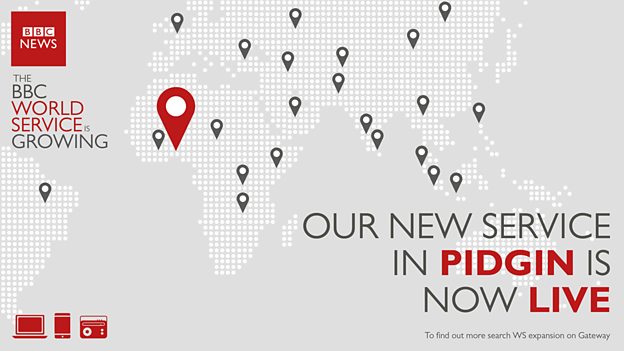
The BBC World Service launched its first new language service in its biggest expansion since the 1940s on 21 August.
A digital Pidgin service for West Africa has launched and will be followed by new online services in Amharic, Afaan Oromo and Tigrinya, aimed at Ethiopia, Eritrea and diaspora audiences around the world. Further services, including Korean, are set to launch from this autumn. This expansion means BBC News will operate in more than 40 languages.
The BBC World Service expansion comes following a funding boost of £289m from the UK Government.
 Director-General of the BBC Tony Hall (pictured left) says: “Today marks the start of a new chapter for the BBC.
“The BBC World Service is one of the UK’s most important cultural exports. In a world of anxieties about ‘fake news’, where media freedom is being curtailed rather than expanded, the role of an independent, impartial news provider is more important than ever. The new services we’re launching will reach some of the most under-served audiences in the world.”
 World Service Director Francesca Unsworth (right) says: “For more than 80 years the BBC World Service has brought trusted news to people across the globe. I’m delighted that millions in West and then East Africa will be able to access the BBC in the languages they speak.
“The BBC World Service expansion will also bring benefits to audiences in the UK. Having more journalists on the ground will enrich our international reporting, bringing news from areas which are often under-reported.”
Pidgin is spoken by an estimated 75m people in Nigeria alone, with additional speakers in Cameroon, Ghana, and Equatorial Guinea.
The Pidgin service is fully digital featuring six daily editions of BBC Minute – a 60-second audio news update – followed by two daily news video bulletins in November. Two further services for West Africa – Yoruba and Igbo – will launch at the beginning of next year.
The Amharic, Afaan Oromo and Tigrinya services will launch online and on dedicated Facebook pages next month. This will be followed later in the year with shortwave radio services in each language, consisting of a 15-minute news and current affairs programme, followed by a 5-minute Learning English programme, from Monday-Friday.
17 August 2017
“We call upon the Iranian authorities to reverse this order urgently and allow BBC staff and former staff to enjoy the same financial rights as their fellow citizens.”
The BBC’s Persian Service is banned in Iran and BBC Persian staff and their families routinely face harassment and questioning from the authorities.
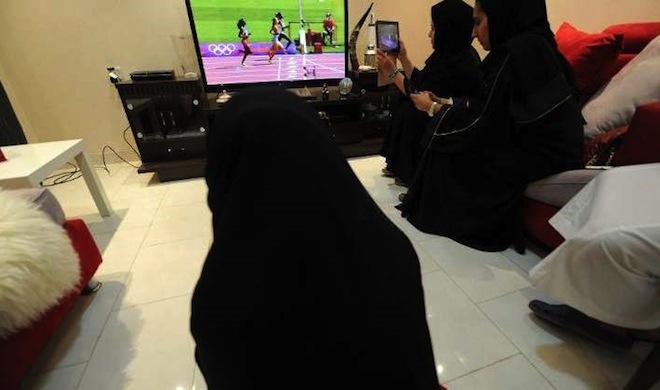
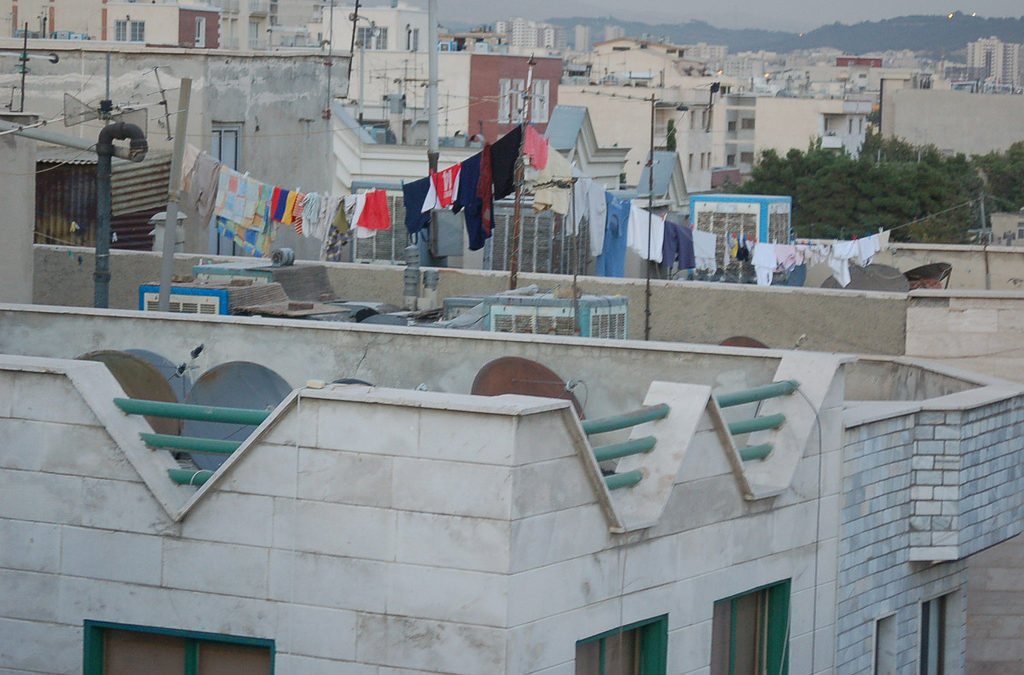
Reception of foreign TV and radio via privately-owned satellite dishes is banned in Iran, although there is widespread flouting of this rule. Dishes are often hidden on balconies and below rooftop parapets, as the image above from BBC Persian shows.
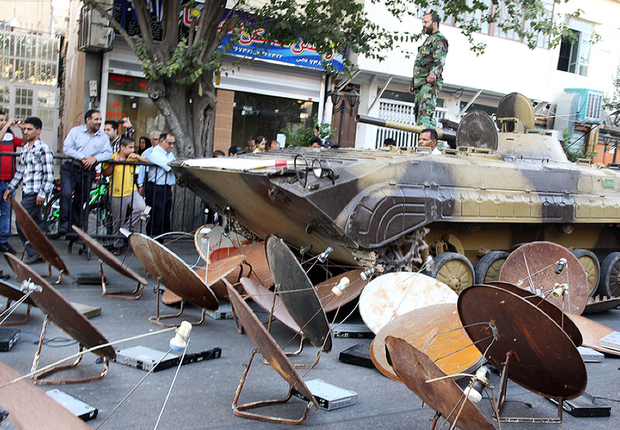
In July 2016, authorities seized and destroyed a reported 100,000 satellite dishes and receivers. According to media reports from Iran, General Mohammad Reza Naghdi, the head of Iran’s Basij militia, oversaw a destruction ceremony in Tehran after the equipment was confiscated and warned of the impact that satellite television was having in the country.
“The truth is that most satellite channels… deviate the society’s morality and culture,” AFP news agency reported him as saying. “What these televisions really achieve is increased divorce, addiction and insecurity in society.”
Naghdi claimed that a total of one million Iranians had already voluntarily handed over their satellite dishes to authorities. Iranian conservatives regularly denounce the channels as an attempt to corrupt Iranian culture and Islamic values and the police regularly raid neighbourhoods and confiscate dishes from rooftops. Under Iranian law those who distribute, use, or repair them can be fined up to $2,800.
Despite the ban on the BBC, the latest figures show the BBC World Service has an audience of 13m in Iran, making it BBC News’ seventh biggest market worldwide.
1 August 2017
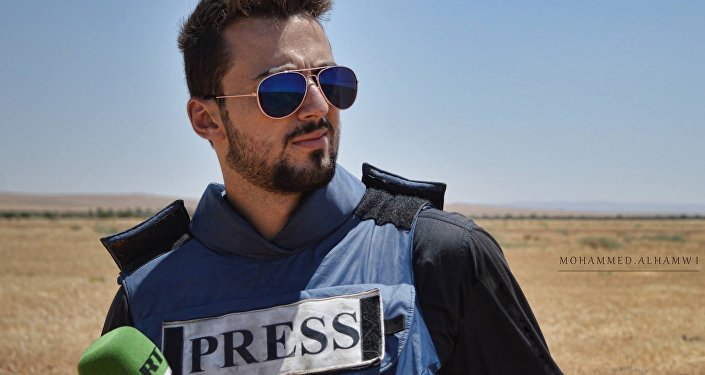
A journalist working with RT Arabic, Khaled Alkhateb, has been killed in shelling from co-called Islamic State in the eastern suburb of Homs, Syria. The journalist was filming a report on the Syrian Army’s operations against IS terrorists.
He and a Syrian Army official were killed in a rocket attack by so-called Islamic State militants near a village called Bghailiyah, in Homs province, according to the head of RT Arabic’s office in Damascus, Abdelhameed Tawfiq.
Khaled Alkhateb was just 25 years old and had recently started to work with RT.
“Today RT Arabic lost a young colleague, journalist Khaled Alkhateb. This is very painful news for all of us,” the head of RT Arabic, Maya Manna, said in a statement.
Saying that Khaled had just recently become a stringer for RT Arabic, Manna added that he had been on assignment to cover the Syrian Army fighting IS in the Homs region.
“This morning, together with soldiers of the Syrian Army, he was heading to the town of al-Sukhnah, where heavy fighting is currently underway to free it. On their way there, not far from Homs, the convoy was attacked by IS militants,” she explained.
“We express our condolences to family and friends of Khaled, and will support them in any way possible. We thank Khaled for his courage and bravery,” Manna said.
Khaled’s father, Gasan Alkhateb, told RT his son loved his work and was always ready to risk his life for the sake of telling the truth.
1 August 2017
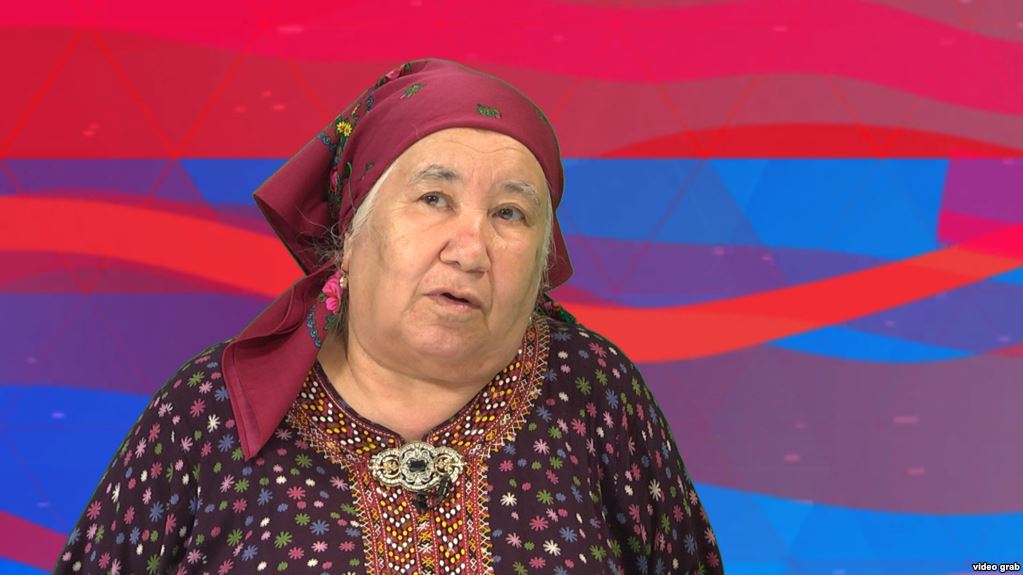
RFE/RL Turkmen correspondent Soltan Achilova has said that she was threatened with death on July 29, while en route to take photos documenting Turkmenistan’s “Day of Bicycles.” Achilova has also said that the man who made the original threat on 29 July identified himself to her as a police officer tasked to watch her wherever she goes, and again warned her against taking photos, or she will be “finished.” The threats follow an assault last week when a man tried to steal her cellphone as she was about to take a picture.
The recent attacks on Achilova, 68, resemble assaults she experienced in November 2016, when two women approached her, yelling “This is the one who takes pictures and pours dirt on Turkmenistan” in the cafeteria at a rehabilitation centre northeast of the capital, Ashgabat. This attack came one day after Human Rights Watch issued a statement decrying an October 25 assault on Achilova, saying “Achilova’s ordeal was clearly yet another orchestrated attempt to silence a critic.”
“Journalism is not a crime, in Turkmenistan or elsewhere in the modern world. Soltan’s life has now been explicitly threatened in an effort to stop her from doing her job in Turkmenistan,” said RFE/RL President Thomas Kent. “The Turkmen government must immediately put an end to the persecution of Soltan Achilova and assure her safety.”
Achilova’s reports appear regularly on the website of RFE/RL’s Turkmen Service, known locally as Azatlyk radiosy. According to Turkmen Service director Farruh Yusupov, she is one of the main contributors to the website of photos and videos from within Turkmenistan. Recently, the focus of her reporting has been the government’s preparations for the Asian Games, including a story on the removal of a statue of former Turkmen president Saparmurat Niyazov from a major thoroughfare in the capital, Ashgabat.
Attacks on RFE/RL contributors in Turkmenistan, one of the world’s most closed societies, have intensified over the past three years. Saparmamed Nepeskuliev, a video journalist who contributed to the Turkmen Service, disappeared more than two years ago, and is now in prison on narcotics charges that rights groups say were “trumped up” in retaliation for his reporting on decrepit infrastructure and economic inequality in the country’s western region. After filing video reports about local life in Turkmenistan’s northern Dashoguz province, correspondent Khudayberdy Allashov was taken into custody and severely beaten in December, 2016; he and his mother were subsequently jailed for three months on charges of possessing chewing tobacco, a product that is widely used in Turkmenistan and is not known to have led to any previous arrest. In December 2014, Achilova was questioned by unidentified men in civilian clothing, as she interviewed people waiting to purchase fresh meat that had suddenly became available in shops around the country.
The United States, the OSCE, and media advocacy organizations have expressed concern about Turkmenistan’s persecution of journalists.
Turkmenistan is ranked “not free” in Freedom House’s 2017 press freedom survey of 199 countries and territories, tied with North Korea at the bottom of the scale with 98 points out of 100.
Because of political conditions, RFE/RL has no bureau inside Turkmenistan, instead working through a local network of contributors to provide the country’s only Turkmen-language alternative to state-controlled media. Its Turkmen Service website logged a monthly average of 440,000 visits and 800,000 page views in 2016, and it has 175,000 followers on Facebook.
27 July 2017
Newstag, the award-winning Stockholm-based media-tech company, will launch a new experience that is especially designed for the Middle East and North Africa (MENA) region later this year. Newstag Arabic نيوزتاج عربية will be available in Arabic and will provide a stream of video news stories each day covering international and regional news, culture and entertainment.
Newstag Arabic نيوزتاج عربية will feature professionally produced news content from suppliers including the Associated Press, AFP and Euronews. Talks are also taking place with prominent news providers from the region. Newstag Arabic نيوزتاج عربية is currently being marketed on Facebook ahead of its launch.
Newstag is an exciting new mobile first application that enables users to create and watch their own personalised video news channels consisting of news and causes they find relevant. Together, all the users create a crowd curated news experience. Newstag is the largest platform for professionally produced news in the world and suppliers range from CNN to CCTV; Bloomberg to RT.
But Newstag is not just about understanding the world it also offers an opportunity to make a difference through its relationship with NGOs and research organisations.
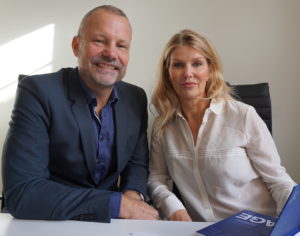
Henrik Eklund and Camilla Dahlin-Andersson
Newstag co-founder, Camilla Dahlin-Andersson, says: “Newstag creates an environment for modern social engagement and offer a relevant, personal, news experience empowering an audience that takes news seriously and wants to make a difference.”
Henrik Eklund, co-founder and CEO, continues: “Currently 60% of existing Newstag users are based in the MENA region which is what prompted us to set up Newstag Arabic. 6% global population live in the Middle East and yet the region accounts for only 0.6% of the global advertising market. We believe there is potential for enormous growth in the coming years.”
