5 December 2017
The award recognizes projects that have the “greatest impact on the development of the global digital community,” and is presented by the Diplomatic Council, a global think tank accredited by the United Nations.
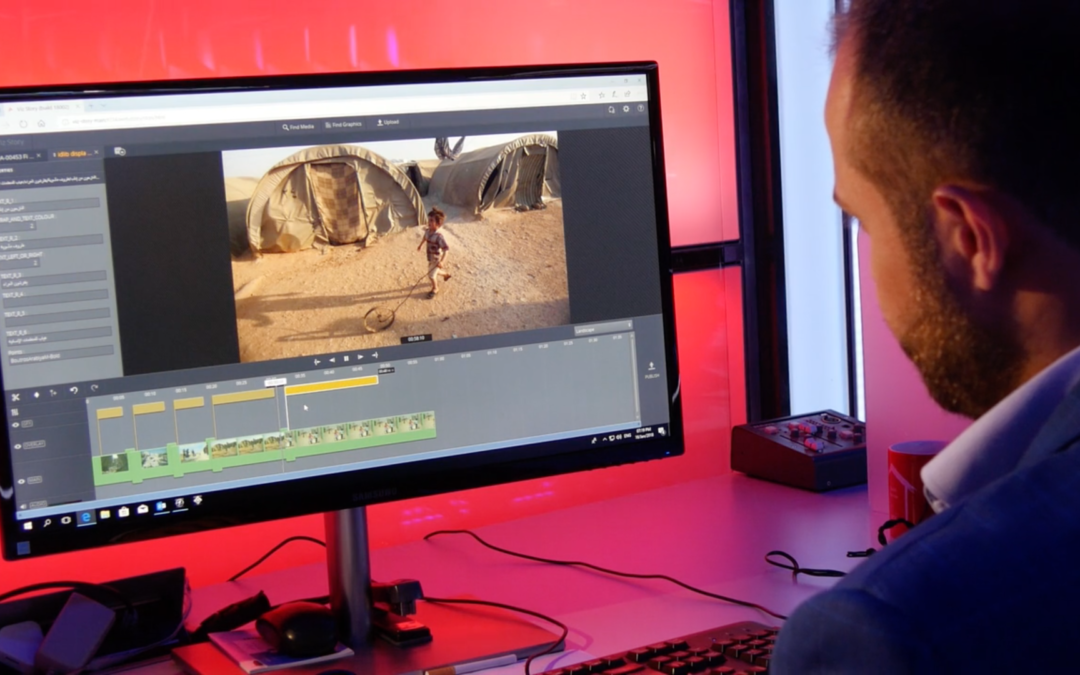
Ruptly Live heralds a new dawn of live content syndication, allowing publishers to deliver quality live content without the usual high costs – making live streaming technology as accessible as possible.
The process removes the need for specialist technology, coding or expertise – all users need to do is sign in, select an event and click to stream.
Live video can be streamed directly to social media platforms such as YouTube, Facebook, Twitter and Periscope, and up to eight lives can be broadcast simultaneously.
Live translations are available in four languages, and the platform offers access to ground-breaking 360 videos and drone footage, also in 4K.
The project was unveiled at MIPCOM in October 2017 during a discussion on the future of live streaming with VICE, 9GAG and What We See.
The DC Global Media Innovator made its debut in 2016 with British company V-Nova, who won the award thanks to their PERSEUS signal compression technology.
In 2017, it was Emblematic Group from Santa Monica, CA, who swept the title for their role in the medium of virtual reality documentary films.
The winner of the 3rd Global Media Innovator will be awarded on February 2 at the annual DC gala in Frankfurt, after the winner is selected by an international panel of top-class media and IT professionals.
(Source: Ruptly press release)
17 November 2017
- TRT World Wins Outstanding Documentary Production at BroadcastPro Middle East Awards, held in partnership with The Arab States Broadcasting Union (ASBU).
- BroadcastPro Middle East Awards cover a broad range of categories to reward excellence in various fields across the broadcast workflow, from production to post-production to traditional broadcast and new media platforms.
- The winners are chosen by a panel of judges from across the MENA with varying technical skills within broadcast to ensure it is fully competent to judge the nominations.
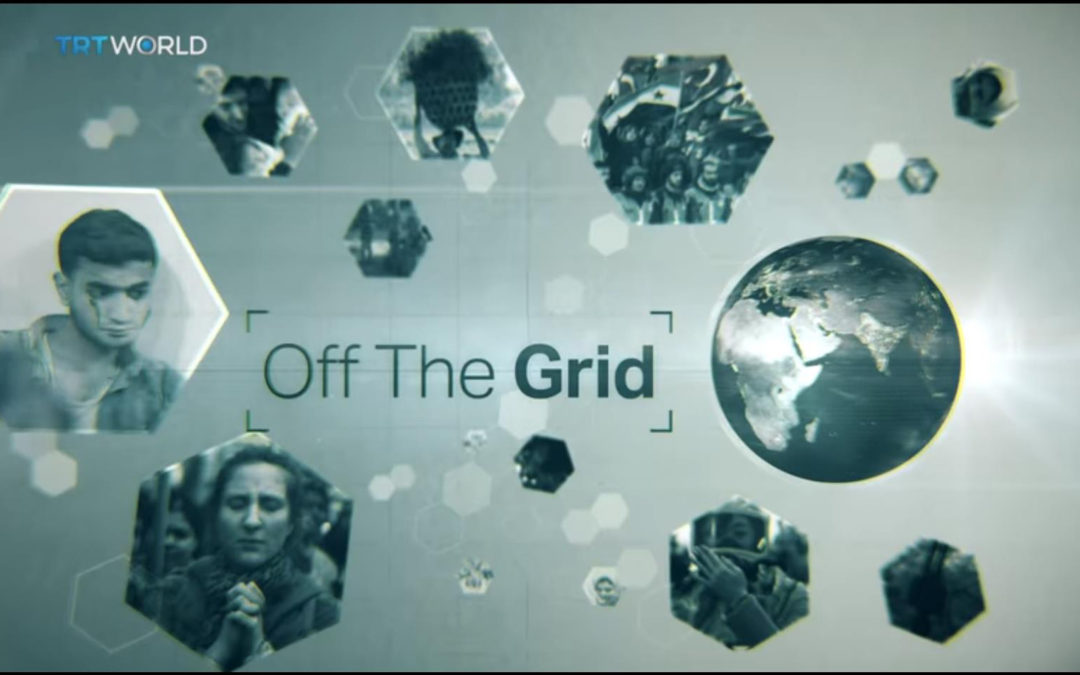
TRT World’s Off the Grid has been awarded the prestigious outstanding Documentary Production of 2017 at BroadcastPro Middle East Awards.
Ibrahim Eren , Director General and Chairman of TRT said: “We are delighted to be recognized with this award. At TRT World, our voice is “humanitarian”, we put the people at the heart of our stories. I also would like to thank BroadcastPro Middle East for awarding our Jarablus documentary, and bringing the endless sufferings of Syrian people to the attention of industry professionals once again.”
The award was presented to Alexandra Pauliat, Executive Producer of Off the Grid, during the seventh edition of the ASBU BroadcastPro Selevision Summit and Awards on November 14, 2017 in Dubai.
“We’ve been trying to tell compelling human stories with high production value in our documentary series. We are happy to receive this award but more importantly we are happy to be the voice of Syrian people who have been going through tremendous suffering for the past few years” she said.
Off the Grid focuses on compelling human stories from across the globe. It is about individuals whose lives have been affected by unforeseen events but who decide to reshape their destinies.
TRT World’s Off the Grid: Jarablus, rising from the ashes
“They hung me up and beat me until I was unconscious. The treatment went on for three months, constant beatings. People were beheaded, there was blood flowing everywhere”, Fawaz al Jasim, recalls the horrors of life in a Daesh prison.
TRT World went to the Syrian city of Jarablus, that is being rebuilt a year after Turkish-backed forces liberated it from Daesh militants. People spoke of public executions, arbitrary arrests and torture on a daily basis.
After two years of living under the yolk of Daesh, life is beginning to return to normal. Women can come out of their homes, children can play on the streets and shops have reopened.
“I hope our children can complete their education and enjoy their childhood and lives. That they can have better lives than ours,” says Iman Alhaj who fled to Jarablus to escape the relentless bombardment of Syrian regime jets in Aleppo.
Team
Alexandra Pauliat (Executive Producer)
Mouhssine Ennaimi (Director/Producer)
Semir SejFovic (Pictures)
Alican Ayanlar(Correspondent)
To watch the award winning short production visit
https://www.youtube.com/watch?v=JrtQR39Tib8
About TRT World
TRT World is a platform of news outlets that inspires change within the world through its diverse reporting. It is headquartered in and broadcasting from the crossroads of East and West- Istanbul, Turkey. In addition, it has three more broadcast centers located in London, Washington DC and Singapore and an extensive global bureau network covering major regions and hot spots. Strategically designed to maximize its global reach, it is broadly available in all major English-speaking territories and can be accessed via traditional media, including free-to-air, cable and satellite, and other digital platforms, including mobiles, desktops and social media. A distinctive voice to the global news landscape, this is TRT World.
Address: Ahmet Adnan Saygun cad. No:83, 34340, Ulus, İstanbul, Turkey
Phone: +90 212 326 30 00
Contact: marcom@trtworld.com
26 October 2017
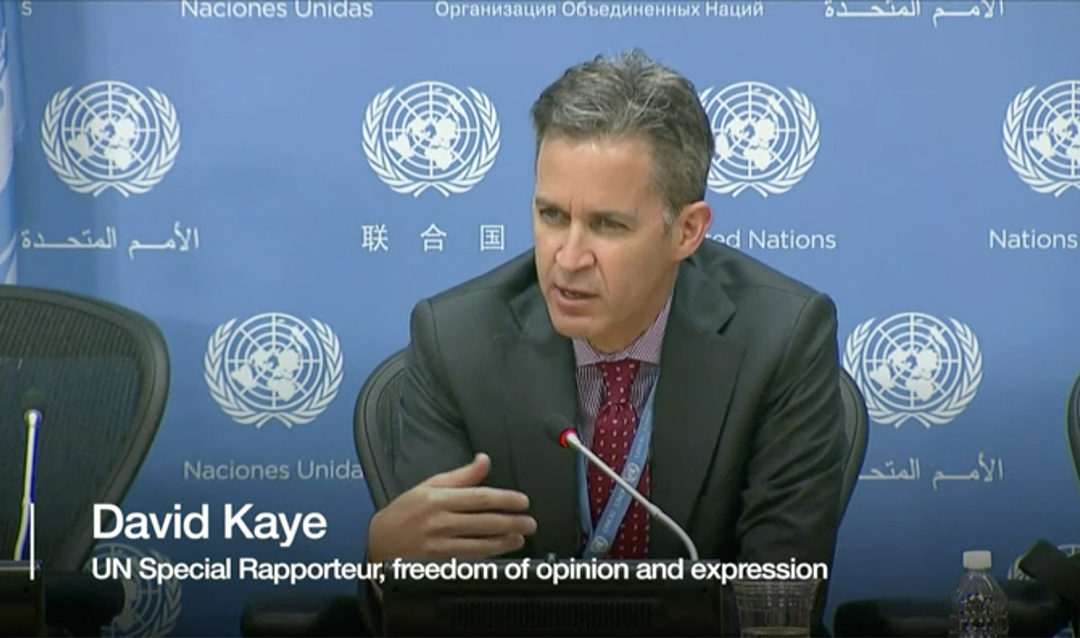
The BBC has filed an urgent complaint to David Kaye, UN Special Rapporteur on the promotion and protection of the right to freedom of opinion and expression, on behalf of the staff of its BBC Persian service. The urgent complaint has also been sent to Asma Jahangir, UN Special Rapporteur on human rights in Iran, who will on Wednesday during her statement to the UN raise her concerns about the harassment of BBC Persian staff and their families.
The appeal comes after the Iranian authorities initiated a criminal investigation into 152 BBC Persian staff, former staff, and contributors, for “conspiracy against national security” in Iran and abroad. A subsequent court order freezes the assets of BBC Persian staff, meaning they cannot inherit family assets and preventing them and their families from selling assets, like property or even cars, in Iran. This is a deprivation of human rights which is against the Iranian constitution.
This is the latest in a sustained campaign of harassment and persecution which is designed to pressure journalists against continuing their work for the BBC. The campaign includes cases of the arbitrary arrest and detention of BBC Persian staff’s families, the confiscation of passports and travel bans on family members leaving Iran to prevent them from seeing their relatives working for the BBC Persian Service, ongoing surveillance and harassment, and the spread of fake and defamatory news stories designed to undermine the reputation of BBC Persian staff and their families.
Tony Hall, Director General of the BBC, said:
“The Iranian government is conducting what appears to be a politically motivated investigation into 152 BBC Persian staff, former staff and contributors, accusing them of conspiracy against national security in Iran. This is an unprecedented collective punishment of journalists who are simply doing their jobs. This is not just a campaign against BBC Persian staff but against fundamental human rights, and the BBC calls on the government of Iran to end this legal action immediately.
“BBC Persian provides independent, fair, and impartial news to a huge number of people in Iran and beyond, thanks to the dedication and professionalism of its staff. I would like to pay tribute to them and their families for their resilience in the face of years of concerted intimidation from the Iranian authorities.
“The BBC, on behalf of its staff, will use all available legal avenues to challenge this order and we call on the international community to use their own influence in Iran to persuade the authorities that this completely unacceptable treatment must end.”
Since the disputed 2009 presidential elections – when the Iranian government accused foreign powers of interference – BBC staff and their parents, siblings and friends have suffered at the hands of the Iranian authorities. Examples include:
- The sister of a journalist was held in Evin prison for 17 days and forced to plead with the journalist via Skype to stop working for the BBC or spy on colleagues
- Many elderly parents have been interrogated, including being questioned late at night
- A child under ten years old was called in for questioning because of their relationship to a staff member
Many BBC Persian staff have not been able to visit their dying parents for fear of imprisonment or being prevented from leaving Iran. Reputations have been attacked in the press and on social media with false and defamatory allegations. Many staff have been subjected to fake news accusing them of sexual impropriety or sexual acts which are illegal in Iran, including those which attract the death penalty.
The BBC’s complaint to the UN cites numerous severe breaches of Iran’s obligations under various international treaties to which it is a signatory.
The Association for International Broadcasting has written to the Iranian Ambassador in London protesting about the attacks on BBC Persian staff.
10 October 2017
With an 86% reach of satellite TV households in the Kingdom of Saudi Arabia (KSA), Arabsat is now gearing up to offer the next generation video and connectivity experience to viewers.
A recent analysis by Frost & Sullivan, global research and consulting company finds that Arabsat, one of the world’s leading satellite operators, reaches 86% of satellite TV households in the Kingdom of Saudi Arabia (KSA) and nearly 78% in GCC, including Bahrain, Kuwait, KSA, Oman, Qatar, and UAE.
Arabsat, carries over 500 TV channels, 200 radio stations, pay TV networks and a wide variety of HD channels reaching nearly 4 million households in GCC. Operating six satellites at 3 orbital positions, the operator offers the youngest regional fleet with widespread coverage over the region.
“Satellite services continue to be an essential way of providing entertainment and communications across the entire MENA region where network connectivity is not uniform,” says Y.S.Shashidhar, Managing Director, Frost & Sullivan MENA. “Arabsat with its constant emphasis on innovativeness and partnerships is firmly poised to help its broadcaster customers connect to a wide user base in the region.”
Frost & Sullivan’s Research Director, Vidya S Nath adds, “Arabsat’s exclusive and strategic partnerships with leading international and regional broadcasting networks have enabled it to establish a significant footprint over GCC, especially KSA.”
Frost & Sullivan finds growing demand among end users for high quality of transmission resulting from the rapid increase in the penetration of 4K and HDR TV sets, receivers, Internet streaming boxes as well as cellular hand-held devices. Broadcasters and service providers eyeing viewership retention for boosting their revenue need partners that can offer optimal quality of transmission as well as the widest reach.
“Innovativeness to ensure the highest quality of experience for the viewer stands as our core undertaking and motto,” says Khalid Balkheyour, President and CEO, Arabsat. “Such keenness on innovativeness has both motivated and helped us build an exclusive portfolio of leading regional networks in the region, including the foremost MBC Pro Sports along with exclusive rights to broadcast the Saudi Football League, MBC full HD bouquet, and Rotana full HD bouquet,” he said. “Alongside, to establish our footprint in the Maghreb region, we have launched several strategic initiatives. We want to offer the viewers in Maghreb unparalleled content offering and hence we have on board exclusive access to the complete Mauritanian bouquet, the complete FTA MBC bouquet, the My-Maghreb package as well several other attractive channels across different genres.”
ARABSAT’s ability to ensure localisation combined with international diversity of content makes it a platform of choice for both broadcasters as well as viewers in the MENA region. It has a strong portfolio of exclusive first-class channels for the region such as France 24 Arabic and English HD, TV5 Monde Style HD, among several others.
21 August 2017
The BBC World Service launched its first new language service in its biggest expansion since the 1940s on 21 August.
A digital Pidgin service for West Africa has launched and will be followed by new online services in Amharic, Afaan Oromo and Tigrinya, aimed at Ethiopia, Eritrea and diaspora audiences around the world. Further services, including Korean, are set to launch from this autumn. This expansion means BBC News will operate in more than 40 languages.
The BBC World Service expansion comes following a funding boost of £289m from the UK Government.
Director-General of the BBC Tony Hall (pictured left) says: “Today marks the start of a new chapter for the BBC.
“The BBC World Service is one of the UK’s most important cultural exports. In a world of anxieties about ‘fake news’, where media freedom is being curtailed rather than expanded, the role of an independent, impartial news provider is more important than ever. The new services we’re launching will reach some of the most under-served audiences in the world.”
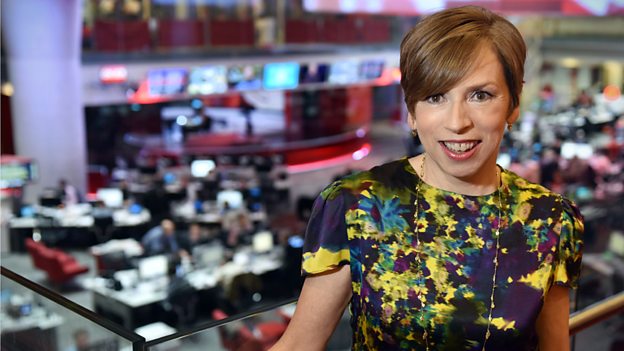
World Service Director Francesca Unsworth (right) says: “For more than 80 years the BBC World Service has brought trusted news to people across the globe. I’m delighted that millions in West and then East Africa will be able to access the BBC in the languages they speak.
“The BBC World Service expansion will also bring benefits to audiences in the UK. Having more journalists on the ground will enrich our international reporting, bringing news from areas which are often under-reported.”
Pidgin is spoken by an estimated 75m people in Nigeria alone, with additional speakers in Cameroon, Ghana, and Equatorial Guinea.
The Pidgin service is fully digital featuring six daily editions of BBC Minute – a 60-second audio news update – followed by two daily news video bulletins in November. Two further services for West Africa – Yoruba and Igbo – will launch at the beginning of next year.
The Amharic, Afaan Oromo and Tigrinya services will launch online and on dedicated Facebook pages next month. This will be followed later in the year with shortwave radio services in each language, consisting of a 15-minute news and current affairs programme, followed by a 5-minute Learning English programme, from Monday-Friday.
17 August 2017
“We call upon the Iranian authorities to reverse this order urgently and allow BBC staff and former staff to enjoy the same financial rights as their fellow citizens.”
The BBC’s Persian Service is banned in Iran and BBC Persian staff and their families routinely face harassment and questioning from the authorities.
Reception of foreign TV and radio via privately-owned satellite dishes is banned in Iran, although there is widespread flouting of this rule. Dishes are often hidden on balconies and below rooftop parapets, as the image above from BBC Persian shows.

In July 2016, authorities seized and destroyed a reported 100,000 satellite dishes and receivers. According to media reports from Iran, General Mohammad Reza Naghdi, the head of Iran’s Basij militia, oversaw a destruction ceremony in Tehran after the equipment was confiscated and warned of the impact that satellite television was having in the country.
“The truth is that most satellite channels… deviate the society’s morality and culture,” AFP news agency reported him as saying. “What these televisions really achieve is increased divorce, addiction and insecurity in society.”
Naghdi claimed that a total of one million Iranians had already voluntarily handed over their satellite dishes to authorities. Iranian conservatives regularly denounce the channels as an attempt to corrupt Iranian culture and Islamic values and the police regularly raid neighbourhoods and confiscate dishes from rooftops. Under Iranian law those who distribute, use, or repair them can be fined up to $2,800.
Despite the ban on the BBC, the latest figures show the BBC World Service has an audience of 13m in Iran, making it BBC News’ seventh biggest market worldwide.