Deutsche Welle: Stable usage figures despite censorship in many countries

Deutsche Welle: Stable usage figures despite censorship in many countries

Deutsche Welle: Stable usage figures despite censorship in many countries

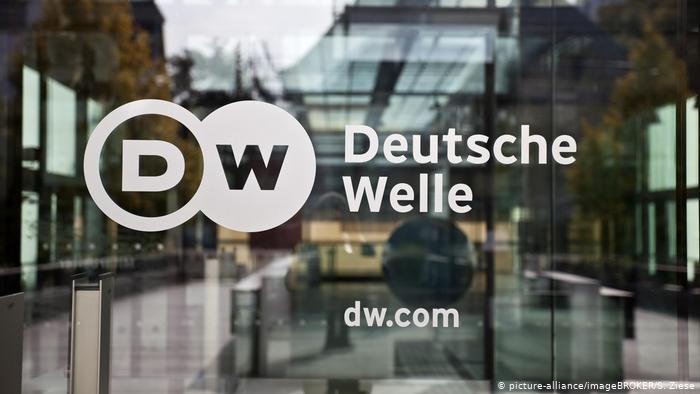
With 291 million weekly user contacts worldwide, DW says that its programme offerings remain stable despite censorship affecting access to its services in several countries. DW’s video content accounts for 225 million user contacts, its audio content for 52 million and text offerings for 14 million.   

Violations of press freedom  

Technical blocking of DW services is by no means anything new for the German broadcaster, but it keeps affecting more and ever larger media markets. DW’s strategy of increasing its use of digital platforms in countries where press freedom is restricted makes it easier for users to continue accessing independent information. In some cases, this requires the use of tools to circumvent censorship, such as the DW App, the Tor browser or of trustworthy VPNs.  

In Russia, following the forced closure of DW’s Moscow bureau in early February, all DW channels were blocked. This was briefly reflected in a dip in TV ratings. However, in the months that followed, increased use of online and social media platforms reversed the impact.  

In late June, the Turkish Radio and Television Supreme Council RTÜK blocked access to DW’s websites. Again, a strategic shift to social media, particularly YouTube and Instagram, compensated for the temporary decrease in usage numbers.      

In Iran, where all DW broadcast channels have been blocked for years, video views of DW Persian jumped sharply following the death of the young Kurdish woman Jina Mahsa Amini in September and the subsequent protests. DW is currently unable to make a longer-term forecast for Iran, as Instagram at present is of limited use to all news providers.   

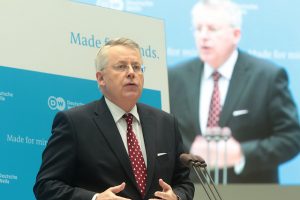
DW Director General Peter Limbourg has criticised the interference by authorities in many countries, describing it as “permanent attacks on press freedom.” Limbourg: “For years now and in more and more countries, governments have been obstructing or blocking access to independent information. The situation is truly alarming. Fortunately, however, we are often one step ahead with our innovative solutions. Our audience can rely on us to bring them news and information.”    
Multilingual success especially on social media  

The best-performing languages of DW’s 32 broadcast languages are English, Spanish and Arabic. Demand for video across all languages and regions – apart from sub-Saharan Africa – is the highest.    

Video content is used primarily by TV partners (accounting for 93 million user contacts) and digital platforms (YouTube accounts for 32 million; Facebook 31 million; Instagram 11 million; TikTok 8 million). YouTube (+6 million) and TikTok (+7 million) have seen the strongest growth this year.  

On Facebook, the best-performing pages are the Arabic-language channels JaafarTalk and DW Arabia. On YouTube, DW News (English) and DW Español (Spanish) as well as DW Documentary (English) and DW Documental (Spanish) stand out. On Instagram, the Albasheer Show (Arabic), +90 (Turkish) accounts and the currently blocked DW Persian are the most successful.  

Acting Managing Director of Programming Nadja Scholz: “DW started tailoring its offerings to digital platforms a few years ago for the very heterogeneous media markets around the world in order to meet the usage behaviour of our predominantly young, educated target groups. This strategy is now paying off.”  

In Latin America, DW reached 12 million more users compared to last year, primarily due to an increase in partial program acquisitions and TV switches by DW journalists with stations in Mexico, Venezuela and Brazil.  

Sub-Saharan Africa is the only DW target region where audio use continues to dominate, with 46 million listeners. But here, too, demand for video content has been growing steadily over the years.  

ABC and CBC extend collaboration and award-winning programme co-productions

ABC and CBC extend collaboration and award-winning programme co-productions

ABC and CBC extend collaboration and award-winning programme co-productions

The Australian Broadcasting Corporation (ABC) and CBC/Radio-Canada have announced that two projects from the Kindred ABC/CBC Animation Collaboration have been given co-production development deals with ABC Kids and CBC Kids:

  • My Shadow is Pink, a preschool series for kids ages 3 to 7, from Headspinner/Sticky Pictures and created by Scott Stuart and Ken Cuperus, based on Stuart’s best-selling book; and
  • The Eerie Chapters of Chhaya, a series for tweens ages 10 to 14, created by Suren Perera, Georgina Love and Thomas Duncan-Watt.

Both projects were chosen from among more than 180 submissions to the Kindred Animation initiative, which was launched earlier this year.

The national public broadcasters also announced the continuation of their successful creative and commercial collaboration. Originally signed in June 2019, the renewed Memorandum of Understanding (MOU) will allow the ABC and CBC/Radio-Canada to continue co-developing dramas, comedies, factual content, children’s programs, and podcasts, and to increase the reach and impact of this content.

Among the programming commissioned under the MOU is the compelling six-part TV series Stuff the British Stole, based on the hugely popular and multi-award-winning podcast of the same name. The radio programme/podcast won the top prize in the AIBs 2022 with presenter Marc Fennell joining the gala event in London via a link from Sydney. 

It has also delivered the spectacular and unorthodox science documentary Carbon: The Unauthorized Biography, narrated by Golden Globe winner Sarah Snook.

“I am pleased to continue our successful partnership with the CBC/Radio-Canada, which has already delivered a range of valuable content to our audiences. In an increasingly crowded international content market, it is vital for public broadcasters to find new ways to deliver our national stories to audiences at home and abroad.” said David Anderson, Managing Director, ABC

“This is such a great partnership. CBC/Radio-Canada and the Australian Broadcasting Corporation are leveraging their resources to support more Canadian and Australian creators so that their stories shine on the world stage. Building on the success of our past co-productions we will continue to show how essential public media is to arts and culture and democracy in both our countries.” — Catherine Tait, President and CEO, CBC/Radio-Canada

The announcements were made in Tokyo at the Embassy of Canada to Japan, just ahead of the Public Broadcasters International conference (PBI Tokyo 2022), an annual international gathering of public media executives. Both Mr. Anderson and Ms. Tait will speak at PBI on November 17 (11:00 a.m. to 12:30 p.m. JST) in a session addressing how public media are positioning themselves in a media ecosystem dominated by the so-called “digital giants.”

Mr. Anderson and Ms. Tait will also participate in the first in-person meeting of the Global Task Force for public media on November 16. The Global Task Force comprises the leaders of eight major public service media from around the world: ABC (Australia), BBC, CBC/Radio-Canada, France Télévisions, KBS (South Korea), RNZ (New Zealand), SVT (Sweden), and ZDF (Germany). Established in 2020 and chaired by Ms. Tait, the Global Task Force promotes and defends the values of public media—access, accuracy, accountability, creativity, impartiality, independence and high standards of journalism—all of which underpin informed and healthy democracies.

USAGM attracts record audience of 410 million

USAGM attracts record audience of 410 million

USAGM attracts record audience of 410 million

​The measured weekly audience for U.S. Agency for Global Media (USAGM) programming grew to 410 million people in fiscal year 2022, according to the agency’s Performance and Accountability Report submitted on 15 November 2022 to the US Congress.

The audience grew by 16 million adults, in the face of a global environment where autocratic regimes are increasingly impeding access to independent media or criminalising its consumption.

“This audience growth, despite sometimes draconian crackdowns on free media, proves what we’ve long known — that people will go to great lengths to seek out the truth,” said USAGM CEO Amanda Bennett. “The increase in audience and improvements in other impact measures laid out in this report speak to a worldwide hunger for accurate and reliable reporting.”

In FY 2022, USAGM measured audiences grew in key countries and regions around the world. In Nigeria, the audience has nearly doubled since it was last measured in 2018, to more than 37 million adults weekly. In Latin America, new data revealed measured audience growth of 22 percent, adding more than 12 million new consumers to the number reported in FY 2021.

USAGM also continued to reach large audiences in countries of key national security interest, despite efforts to block independent reporting in markets including Afghanistan, Russia, and Iran.

USAGM’s web and mobile traffic continued strong growth in FY 2022, with an average of more than an 18% increase across the networks.

USAGM’s networks — the Voice of America, Radio Free Europe/Radio Liberty, the Office of Cuba Broadcasting, Radio Free Asia, and the Middle East Broadcasting Networks — deliver news and programming via radio, television, and internet in 63 languages.

A sixth USAGM entity, the Open Technology Fund, provides tools to help audiences overcome internet restrictions and surveillance. In FY 2022, visits to USAGM networks’ websites through OTF-supported anti-censorship technologies almost doubled to more than 13 million per week.

“On behalf of those seeking independent, fact-based reporting, I want to thank the many brave women and men at our networks working under difficult, at times even life-threatening conditions, to share free media with the world,” added CEO Bennett.

Research conducted to estimate the agency’s global audience adheres to standards developed by the Conference of International Broadcasters’ Audience Research Service and reports the number of unique individuals who access USAGM content, or what is referred to as the unduplicated audience. This global audience estimate is just one element in USAGM’s annual performance report. The agency also measures impact based on quantitative and qualitative data on a wide range of factors, including program quality and credibility, engagement with content, and audience understanding of current events.

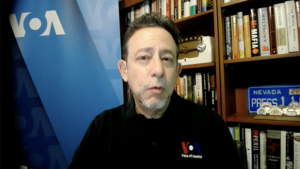
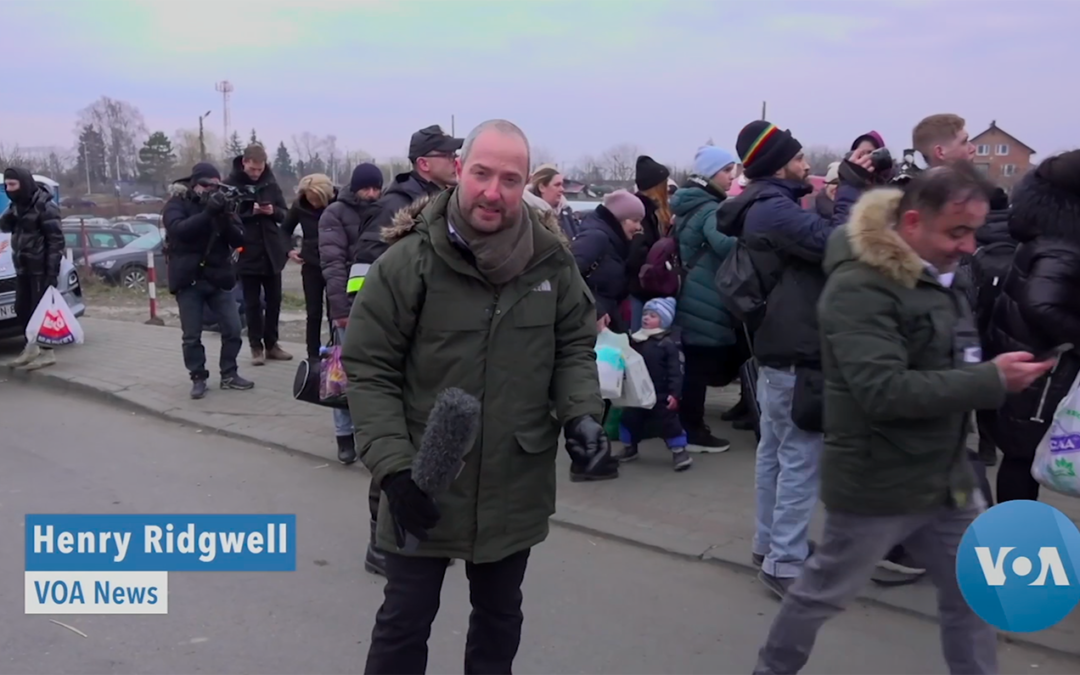
Picture: Henry Ridgwell reporting for VoA News from the Medyka crossing between Ukraine and Poland, February 2022

Arqiva and MainStreaming in streaming video distribution partnership

Arqiva and MainStreaming in streaming video distribution partnership

Arqiva and MainStreaming in streaming video distribution partnership

Arqiva and MainStreaming have forged a technology and services partnership, to jointly offer distribution services for the media streaming market.

The partners will explore how the combination of MainStreaming’s cutting-edge CDN technology and broadcast-grade streaming experience with Arqiva’s global media infrastructure and managed services capability can offer more scalable, flexible, and programming-centric content distribution services for the media streaming market.

With ever-growing viewer numbers on streaming services and the increasing strategic value of online audiences, the streaming needs of the biggest broadcasters and service providers are greater than ever. The combination of a large audience served, consistently high video quality, and low latency is the tough combination to get right hour after hour. As such, secure, scalable and cost-effective content distribution networks are vital. 

Existing streaming distribution networks are not well suited to deliver either the quality of service required by service providers or the quality of experience expected by audiences. The growing carbon footprint of streaming services is also a concern for both providers and audiences. Arqiva and MainStreaming are coming together to address these issues and to challenge conventional approaches to content distribution.

“MainStreaming’s technology makes true edge computing for the media industry a reality, and already delivers important benefits for our industry-leading customers,” said Antonio G. Corrado, CEO, MainStreaming.  “We are excited to work together with Arqiva and the media industry to take advantage of our real-time, ultra-low latency, highly scalable streaming capabilities to deliver broadcast-grade streaming and also create new and exciting edge applications for video delivery.”

Clive White, CTO, Arqiva, commented: “The streaming world is changing fast and navigating the commercial and technical issues has never been harder. Arqiva and MainStreaming will be collaborating on a range of new capabilities and service offerings to meet these challenges with a view to optimising the customer experience and adding value to the biggest broadcasters in our core markets.”

Iran International journalists receive credible threats to life – in the UK

Iran International journalists receive credible threats to life – in the UK

Iran International journalists receive credible threats to life – in the UK

Iran International, the independent UK-based Farsi-language news channel has said that is shocked and deeply concerned by the credible threats to life its journalists have received from the IRGC.

Two of the channel’s British-Iranian journalists have, in recent days, been notified of an increase in the threats to them. The Metropolitan Police have now formally notified both journalists that these threats represent an imminent, credible and significant risk to their lives and those of their families. Other members of Iran International staff have also been informed directly by the Metropolitan Police of separate threats.

Iran International say its journalists are subject to abuse 24/7 on social media. “But these threats to life of British-Iranian journalists working in the UK marks a significant and dangerous escalation of a state-sponsored campaign to intimidate Iranian journalists working abroad. These lethal threats to British citizens on British soil come after several weeks of warnings from the IRGC and Iranian government about the work of a free and uncensored Farsi-language media working in London,” the channel said in a statement.

“Britain is the home of free speech,” the statement continues. “Iran International stands as part of that tradition, proud to serve the 85m people of Iran with independent, uncensored information. The Islamic Republic of Iran, and specifically the IRGC cannot be allowed to export their pernicious media crackdown to the UK. The IRGC cannot be allowed to act abroad with impunity.

“We hope that the UK Government, international governments and other organisations will join us in condemning these horrific threats and continue to highlight the importance of media freedom.

“We would like to thank the Metropolitan Police for their considerable efforts in keeping journalists safe.”

The AIB continues to support channels and their staff under threat from bad actors.

Image: William Barton/Shutterstock​

Iran increases pressure on international broadcasters

Iran increases pressure on international broadcasters

Iran increases pressure on international broadcasters

The Iranian government is stepping up its pressure on Farsi-language broadcasters as protests against the regime continue to escalate across Iran.

Bearing the brunt of the attacks over the weekend of 8-9 October is London-based Iran International TV. The Secretary of the legal and judicial committee of the Iranian parliament, Mohammad-Taghi Naqdali, known as a hardline cleric, called on the Iranian government to “use capabilities in the international arena” to take steps against Iran International that he claims “make calls for riots, destruction of property and regime change.”

Naqdali’s comments follow extensive jamming traced to Iran of international satellites operated by Eutelsat and Arabsat that were stepped up after demonstrations against the Iranian government increased following the death of Mahsa Amini in police custody in September.

The Iranian cleric suggested that his government should lodge complaints about Iran International with UK media regulator Ofcom, saying that the regulator “can be used by the [Iranian] foreign ministry and the Judiciary” to get the broadcaster shut down. In 2019, Iran’s ambassador to the the United Kingdom raised a complaint with Ofcom about a broadcast in September 2018 that was overruled by the regulator with the regulator finding that Iran International had kept within the UK’s Broadcasting Code.

Iran has long been involved in the jamming of TV and radio broadcasts from outside the country where news and information is strictly controlled by the Iranian government. This is contrary to international law, and the ITU Radio Regulations to which Iran is a signatory.

The AIB is working closely with its Members affected by Iranian jamming and by the Iranian government’s attempts to silence their operations.

[Image: By Tasnim News Agency, CC BY 4.0, https://commons.wikimedia.org/w/index.php?curid=98521741]