BBC World Service commissions Fukushima audio drama

BBC World Service commissions Fukushima audio drama

BBC World Service commissions Fukushima audio drama

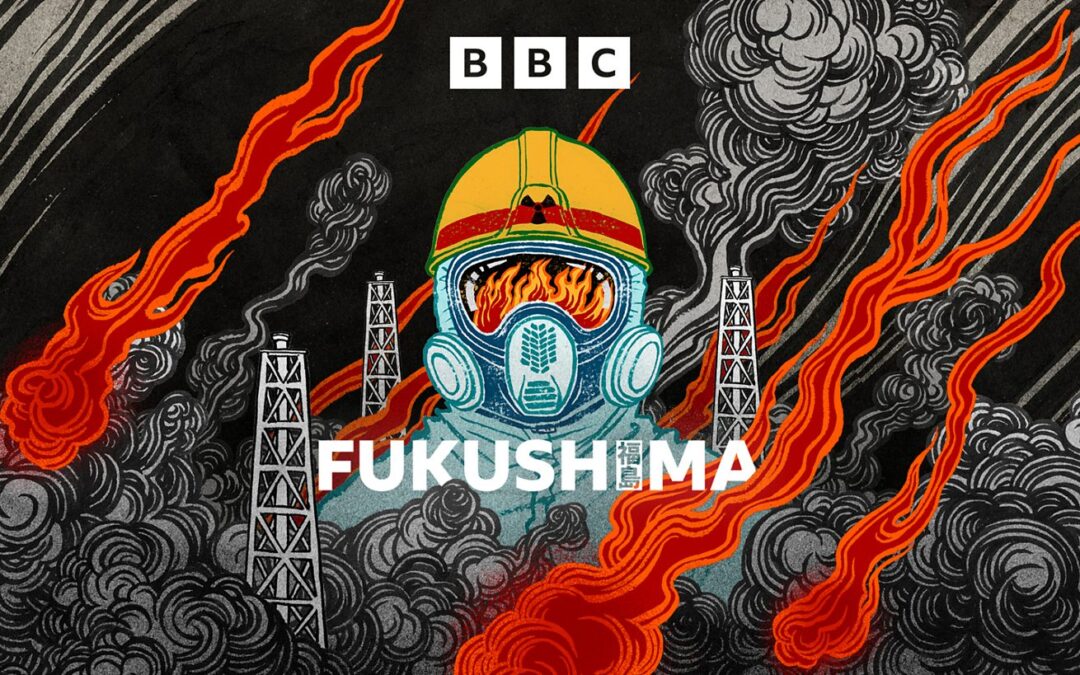
BBC World Service has announced that it has commissioned Fukushima, a new seven-part drama series exploring the 2011 nuclear disaster at the Fukushima Daiichi Nuclear Power Plant in Japan.

In March 2011, the largest earthquake ever recorded in Japan’s history triggered a tsunami which sent five to ten metre waves into coastal towns and cities, killing thousands.

Water barrelled over the seawall protecting the Fukushima nuclear power plant, flooding its basements and cutting power. It led to the world’s most severe nuclear accident since Chernobyl.

The stricken power plant became a ticking timebomb, a threat to life in Japan and beyond. As the energy company and politicians in Tokyo lost control, the reactors became unstable and a “suicide squad” of older workers was sent inside.

Akiko is a journalism student who, 10 years after the disaster, goes in search of the story behind the headlines, of how it unfolded and the consequences for the country.

Simon Pitts, Commissioning Editor, BBC World Service English, says: “Fukushima is a compelling drama that powerfully explores the 2011 disaster.

“Through the eyes of a young journalist the story follows events as they unfold, and interrogates the aftermath and the lasting effects. We’re thrilled to have a cast of brilliant and accomplished actors and crew to bring the story to life, and look forward to sharing Fukushima with our listeners across the world.”

Fukushima is narrated by twice Golden Globe nominated actress Romola Garai, and stars Togo Igawa, Ami Okumura Jones and Eiji Mihari.

It was written by Adrian Penket and produced by Toby Swift and Sasha Yevtushenko. It was commissioned by Simon Pitts for the BBC World Service.

Fukushima premieres on Monday 15 May 2023 and each 30 minute episode will premiere weekly thereafter on BBC Sounds as well as other podcast platforms. There are seven episodes. For more information visit: www.bbcworldservice.com/fukushima

It will broadcast as a radio series on the BBC World Service weekly from Wednesday 31 May at 1030 GMT.

TRT launches TRT Afrika digital service

TRT launches TRT Afrika digital service

TRT launches TRT Afrika digital service

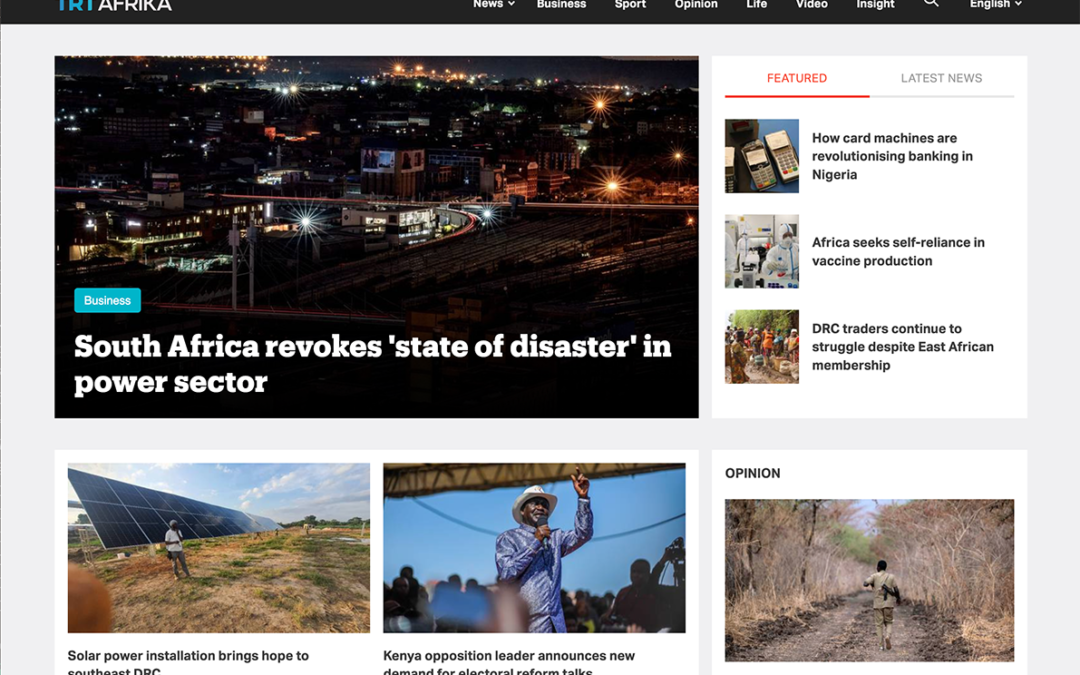
Turkiye’s public broadcaster TRT has launched a new digital news platform, TRT Afrika, to highlight stories of and from the continent to a global audience in four languages, Swahili, English, Hausa and French on the second day of the 1st Broadcasting Summit, organised by TRT and African Union of Broadcasting (AUB). More than 50 media professionals from nearly 25 African countries attended the launching ceremony.

Turkiye’s public broadcaster TRT has launched a new digital news platform, TRT Afrika, to present stories from and about the continent to a global audience in four languages, Swahili, English, Hausa and French on the second day of the 1st Broadcasting Summit, organised by TRT and the African Union of Broadcasting (AUB). More than 50 media professionals from nearly 25 African countries attended the opening ceremony.

Aiming to make Turkiye heard with its international broadcasters, TRT has launched TRT Afrika after TRT World, TRT Arabi, TRT Russian, TRT Deutsch, TRT Francais and TRT Balkan, all of which individually and collectively bring diverse voices and perspectives to global audiences.

The launch ceremony of TRT Afrika, hosted by the Director General of TRT, Mehmet Zahid Sobaci on the second day of the 1st Broadcasting Summit, organised by TRT and the African Union of Broadcasting (AUB), was attended by Fahrettin Altun, Director of Communications of the Presidency of the Republic of Turkiye, Ahmet Albayrak, Chairman of the Board of TRT, Daud Aweis Jama, Minister of Information, Culture and Tourism of Somalia, Gregoire Ndjaka, Chief Executive Officer of the African Union of Broadcasting, TRT management, members of the African Union of Broadcasting and representatives of the foreign mission in Istanbul, along with more than 50 media professionals from nearly 25 African countries.

In the opening speech of the launching ceremony, the Director General of TRT Mehmet Zahid Sobaci emphasised that Africa is subjected to one-sided journalism by the Western media and said, “For years, Africa has been discussed according to the political interests of the West, ignoring the fact that the reasons for the current problems lie in colonialism. The true history, colourful culture, natural beauty and significant stories of the continent were not thoroughly told. TRT Afrika became a manifesto of Turkiye’s constructive and friendly approach, unlike Western society.”

Sobaci explains that TRT Afrika was launched with the goal of being the only platform that sees Africa as it is, and continues, “As an indication of this goal, we have set our motto “Africa as it is” Our new digital news platform will provide news to the entire continent in English, French, Hausa and Swahili. I am convinced that TRT Afrika will help improve our relationship, which has already gained remarkable momentum over the past 20 years. We also continue our efforts to launch the TRT Spanish and TRT Farsi digital news platforms.”

Director General Sobaci pointed out that the 1st Broadcasting Summit organised by TRT and the African Union of Broadcasting (AUB) is one of the most concrete examples of the improving dialog between TRT and African media institutions, saying, “An African proverb says: ‘If you want to go fast, go alone; but if you want to go far, go together.’ Today, with the 1st Broadcasting Summit, we express our will to go further together.”

Gregoire Ndjaka, CEO of the African Union of Broadcasting (AUB), also attended a TRT-AUB summit and said at the ceremony that they came together to strengthen Turkish-African relations and TRT Afrika will reflect the facts about the continent as they are: “The coverage of Africa in other parts of the world gives the impression that it is a place of conflict. We would like TRT Afrika to help us end this perception. As African journalists, we would like to thank President Recep Tayyip Erdogan for his contribution to the development of relations with Africa and for his love for Africa. Because if you do not love a continent, you would not be in that continent and not visit it.”

BBC wins 11 awards at UK journalism awards

BBC wins 11 awards at UK journalism awards

BBC wins 11 awards at UK journalism awards

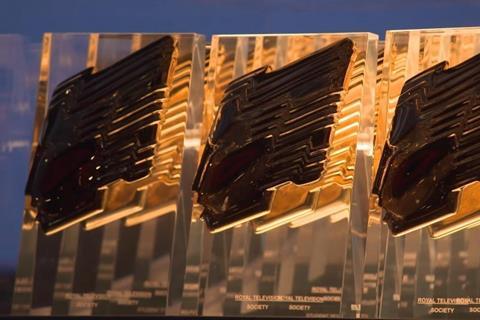
The UK Royal Television Society recognised BBC News for editorial excellence, investigative grit and creative innovation.

Of the BBC’s 11 wins, eight were for BBC News:

BBC News Arabic won the Current Affairs – International award for the excellent Under Poisoned Skies, described by judges as “An enterprising and original piece of journalism”.

BBC News at Ten, praised by judges for its “consistently high standard of reporting from an outstanding team of correspondents, on location and in its new studio” was crowned as Network Daily News Programme of the Year.

The Undercover Voters initiative, developed by BBC News Podcasts during last year’s US midterms for Americast and Newsnight, was successful in the Innovation category with judges saying that it “tackled a really important issue in an interesting and original way”.

Steve Rosenberg’s exclusive interview with President Lukashenko of Belarus, that discussed the Belarus migrant crisis won the category of Network Interview of the Year with the judges praising the interview for being a “brave, exemplary, an electric piece of television, and a masterclass in interviewing a megalomaniac tyrant”

Network Presenter of the Year was given to Clive Myrie for his “ability to bring empathy as well as authority to his distinctive broadcasting” while “radiating dignity and calm under the most intense pressure”.

Our outstanding coverage of War in Ukraine was rightly successful in the News Coverage – International category. Judges described it as “vivid and brave frontline reporting with insightful coverage of the refugee problem and the politics driving the Ukraine conflict”.

Described by judges as “a journalist who has devoted several years to pursuing and exposing appalling failures which wrecked many lives” & “never loses his focus and clarity” – Michael Buchanan wins Specialist Journalist of the Year award for his Maternity Scandals: Fighting for the Truth programme.

We were also recognised, alongside our colleagues at ITN, PA and Sky News, with the RTS Special Award: which was awarded to the Cameras in Court campaign, which this year finally secured access to the Crown Courts.

BBC Nations and Regions were winners in three categories:

The iPlayer Shorts documentary Should I Tell You I’m Trans?, produced by BBC Scotland won the category for On-Demand Journalism.

The Nations and Regions Factual category was won by The Great Ferries Scandal, also by BBC Scotland.

And Colin Campbell from BBC South East Today was crowned as Nations and Regions Reporter of the Year.

Twitter blocks international journalists’ accounts

Twitter blocks international journalists’ accounts

Twitter blocks international journalists’ accounts

Social media platform Twitter has suspended the accounts of a range of journalists who report on the company. 

Reporters including Steve Herman – a long time correspondent for Voice of America (pictured) who has covered the White House extensively – and others from CNN, the New York Times and Washington Post have all been locked out of their accounts. 

In a statement, Voice of America said it “can confirm that at approximately 9:00 p.m. last evening [15 December 2022], Twitter suspended the account of Chief National Correspondent Steve Herman. Later in the evening he received additional notification of the permanent suspension of his account. Mr. Herman is a seasoned reporter who upholds the highest journalistic standards and uses the social media platform as a news gathering and networking tool. Mr. Herman has received no information from Twitter as to why his account was suspended.

“As Chief National Correspondent, Mr. Herman covers international and national news stories and this suspension impedes his ability to perform his duties as a journalist. We request that Mr. Herman’s account be reinstated along with an explanation from Twitter for the suspension.”

The response from across the globe to the suspensions has been swift. The UN Under Secretary-General for Global Communications, Melissa Fleming, said she was “deeply disturbed” about reports that journalists’ accounts were being “arbitrarily” suspended by Twitter. 

“Media freedom is not a toy,” she said. “A free press is the cornerstone of democratic societies and a key tool in the fight against harmful disinformation.”

In Brussels, EU Commissioner Vera Jourova suggested that sanctions could be applied against Twitter using the EU’s Digital Services Act. 

AIB chief executive Simon Spanswick said: “The Association for International Broadcasting is appalled that Twitter is suspending the accounts of respected and highly experienced journalists, including some who work for AIB Member news organisations.

“This goes against the principles of freedom of speech and does an immense disservice to Twitter’s user base across the globe who use the platform to gain news and information from trusted sources. The AIB and its Members call on Twitter to immediately reverse the suspensions of journalists’ accounts.”


RFE/RL Condemns Taliban Move to Further Silence Independent Media​

RFE/RL Condemns Taliban Move to Further Silence Independent Media​

RFE/RL Condemns Taliban Move to Further Silence Independent Media​

The Taliban has removed Radio Free Europe/Radio Liberty’s (RFE/RL) award-winning programming from AM and FM radio transmission networks in Afghanistan.

“Azadi is a lifeline for tens of millions of Afghans, making the Taliban’s decision all the more tragic,” said RFE/RL President and CEO Jamie Fly, speaking on 1 December. “RFE/RL will not change our editorial line to accommodate Taliban demands in order to stay on the air. We know from experience that our audiences make great efforts to find us. The truth cannot be completely suppressed.”

For decades, RFE/RL’s Afghan Service, known locally as Azadi, has been a staple of everyday life in Afghanistan, commonly heard in public settings, from marketplaces to taxis. In a recent survey commissioned by the U.S. Agency for Global Media, half of Afghan adults surveyed use Azadi content weekly. Despite significant pressure from the Taliban, RFE/RL continues to provide bold coverage of stories suppressed by state media. Azadi has given a platform for the most vulnerable — women and girls, victims of violent extremism, the LGBTQI+ community, and youth — to share their experiences. Azadi has also informed Afghans about public health, provided school lessons for girls, exposed corruption, and helped the powerless find community and hope.      

In contrast to official Taliban claims, Afghans have again and again expressed their appreciation and gratitude to RFE/RL for providing a vital public service. RFE/RL will continue broadcasts from outside the country, and will expand options to reach its dedicated audience through other platforms.

RFE/RL’s Afghan Service is one of the most popular and trusted media outlets in Afghanistan, providing uncensored news in the Dari and Pashto languages. Following the Taliban takeover, RFE/RL closed its Kabul bureau, yet Azadi continues to cover events ignored by state media. In partnership with Learn Afghanistan, Azadi has also used innovative and accessible platforms to provide lessons for girls in grades 7-12 now barred from attending school. RFE/RL’s Afghan Service has a growing digital presence to reach younger audiences, with millions of video and page views on its websites, Facebook, Instagram, and YouTube.

Afghanistan is one of the most dangerous places in the world for journalists, and RFE/RL journalists have paid the ultimate price for their commitment to a free press. In 2018, three Radio Azadi journalists — Maharram Durrani, Abadullah Hananzai, and Sabawoon Kakar — were killed in a suicide bomb attack in Kabul. In 2020, Mohammad Ilyas Dayee was killed in a targeted bomb attack.

Deutsche Welle: Broadcasting Council protests against actions taken by Iranian authorities

Deutsche Welle: Broadcasting Council protests against actions taken by Iranian authorities

Deutsche Welle: Broadcasting Council protests against actions taken by Iranian authorities

At its meeting on 25 November, the DW Broadcasting Council discussed coverage of the war of aggression against Ukraine, improvement of DW programming accessibility and threats against journalists from DW’s Persian service.

In late October, the DW Persian service, along with other media and public figures in Europe, were placed on a list by the Iranian regime of supposed supporters of terrorism. In so doing, the regime is providing itself a flimsy legitimation of the action it is taking against critical voices outside of Iran.

The threats and attempts to intimidate employees of the DW Persian service have been going on for years. DW employees and their relatives have repeatedly been interrogated when entering or leaving the country for family visits. This is why employees actively working in the editorial service haven’t been back to Iran for some time. The threats are unmistakable. If the critical coverage were to continue, there could be no guarantees for the well-being of the relatives of DW employees located in Iran.

Since the protests began, Iran has been increasing the pressure on journalists living abroad. Agents working for the regime have contacted people in Iran who follow a DW employee on Instagram. The people were told both on the phone and during interrogations to unfollow the account if they want to avoid reprisals against themselves and against their relatives. Our employee was referred to as an enemy of the state during some of the interrogations. Enemies of the state receive the death penalty in Iran.

The Broadcasting Council condemned the actions taken by Iranian authorities. “We protest against this treatment of journalists,” says Prelate Karl Jüsten, chairman of the Broadcasting Council. “We very strongly condemn these blatant threats and attempts at intimidation as a reaction to our coverage of the peaceful protests. We would like to thank the DW Persian service. Despite these threats, the journalists are doing amazing work and showing the world what is happening in Iran.”