France 24 offers advertising inventory to ecological transition organisations

France 24 offers advertising inventory to ecological transition organisations
France 24 offers advertising inventory to ecological transition organisations

Following the call for applications for “Green Solidarity Campaigns” which took place last summer, France Médias Monde is offering several associations committed to the ecological transition a campaign of 30 spots on the France 24 channel in French, broadcast globally.

The seven selected associations were selected by an internal committee, on the basis of a reasoned application file and a proposal for a TV spot aimed at presenting a concrete action or an awareness campaign in the fight against climate change or protection of biodiversity.

  • CARE France for its campaign “Climate change is sexist” alerting to the fact that girls and women are the first affected by the impacts of climate change and highlighting climate “heroines”.

  • LE GRET for its project to create a marine protected area in favor of biodiversity, carried out in an inclusive and participatory manner with the various local stakeholders, on Sainte-Marie Island in Madagascar.
  • THE LÉO LAGRANGE FEDERATION for the deployment of “Carbone Scol’ERE”, an environmental education program that is fun, positive and eco-citizen commitment, for students aged 9 to 12.
  • AGRONOMERS & VETERINARIES WITHOUT BORDERS for its awareness campaign on agroecology, the way forward for the most vulnerable farming families. 
  • TEERA AFRICA for its actions to protect, with local stakeholders, biodiversity and particularly mangroves, in Benin. 
  • CLUB ENVIRONNEMENT YOFF for its actions in favor of environmental protection in Senegal.
  • TERRE DE LIENS for its awareness campaign “Make farms grow”  in favor of the preservation of agricultural land and the installation of farmers engaged in organic farming .

Their campaigns will be broadcast on France 24 in the coming weeks.

Calls for applications of the same nature will soon be launched by France Médias Monde for the group’s radio channels, RFI and MCD.  
VOA Website Banned in Turkey

VOA Website Banned in Turkey

VOA Website Banned in Turkey

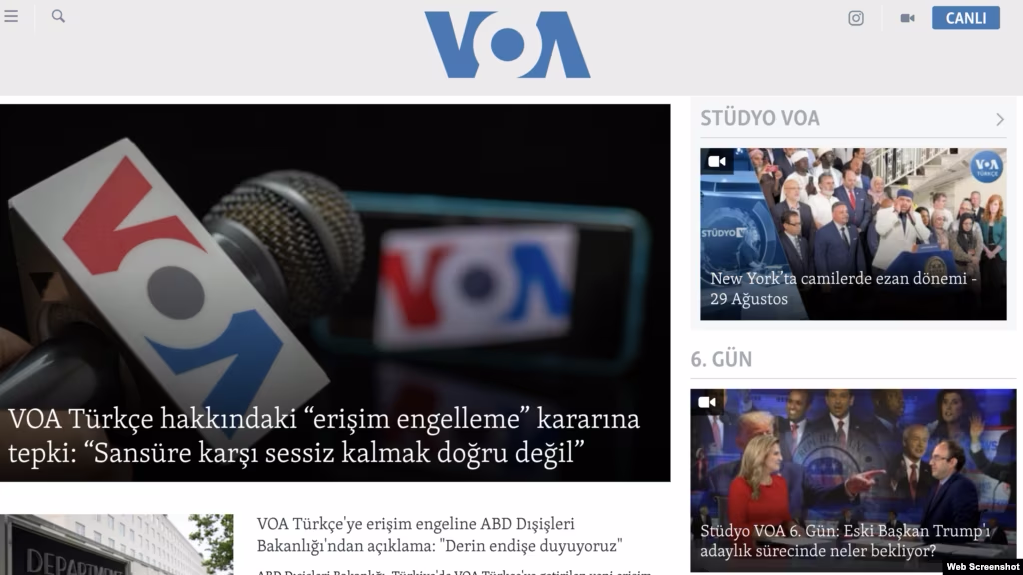
Access to the VOA Turkish website voaturkce.com was blocked in Turkey on Tuesday 29 August, following a court order banning access due to the international news organisation’s failure to apply for a broadcast license from Turkey’s media regulator.

In a warning posted on its website on August 21, the Radio and Television Supreme Council (RTUK) gave VOA Turkish 72 hours to apply for an on-demand broadcast license or risk having the court block access to VOA Turkish content.

The media watchdog cited a 2019 law that authorises RTUK to request licenses from “media service providers” for their radio, TV and on-demand services in order for them to continue their online presence. Broadcast executives who air content without a licence could face charges that carry sentences of up to two years in prison.

VOA’s public relations department in Washington said the broadcaster does not plan to obtain a licence from the regulator.

“Given VOA’s status as a public service international broadcaster legally required to provide ‘accurate, objective, and comprehensive’ news coverage to its global audience, VOA cannot comply with any directive intended to enable censorship,” VOA spokesperson Bridget Serchak said.

Banned without a hearing

Following RTUK’s request Monday 28 August to block access to VOA Turkish content, Ankara’s 9th Criminal Court of Peace issued the ban the same day without holding a hearing.

The court order, obtained by VOA, said the access-blocking decision was sent to the Access Providers Association, an organisation that carries out media bans in Turkey. The court also stated that its ruling can be appealed within seven days.

The decision comes more than a year after RTUK banned access to VOA Turkish’s previous domain name, amerikaninsesi.com, and German public broadcaster Deutsche Welle, as the news outlets refused to comply with the regulator’s license requirement because of censorship concerns.

On July 1, 2022, after the access ban was placed on VOA Turkish and DW, RTUK said that if the outlets acted in accordance with the regulation, “blocking their websites by the independent judiciary would not have been applied.”

“If these broadcasting websites form companies in our country and start their licensing process in accordance with our laws, RTUK will request from the judicial authorities to terminate the access ban,” RTUK said in a statement.

“RTUK supports pluralism, free press, and free reporting by media outlets. However, like every democratic country, Turkey is a state with the rule of law. RTUK, which is a guide to the sector, is in favour of the legal dissemination of news content under certain guarantees,” the regulator added.

Ruling also blocks alternate domain

VOA Turkish moved to a different domain name months after RTUK blocked access in June 2022. Monday’s court ruling blocks access to content under that domain name, as well.

The on-demand broadcast license requested by RTUK is commonly acquired by streaming platforms such as Netflix, Disney+ and Amazon Prime Video to operate in the Turkish market.

The law enables RTUK to impose fines, suspend broadcasting for three months or cancel broadcast licences if the licencees do not follow RTUK’s principles.

Press freedom advocates say that obtaining a broadcast licence from RTUK would allow the regulator to censor news content.

Gurkan Ozturan, who coordinates the Media Freedom Rapid Response alliance at the European Centre for Press and Media Freedom (ECPMF), views the court ruling against VOA Turkish as a “development that gradually diminishes media freedom and increases the pressure that media outlets face.”

“It is quite possible that unwanted news content will be subject to content removal orders after obtaining a licence,” Ozturan told VOA.

He also noted that RTUK’s involvement in news content has increased in recent years.

“We have seen that RTUK has ruled to ban access with arbitrary decisions on the basis of moral values, especially over LGBTI+ news content and all kinds of content in digital media,” Ozturan added.

Source: VoA English News

Pacific Break returns in 2023!

Pacific Break returns in 2023!

Pacific Break returns in 2023!

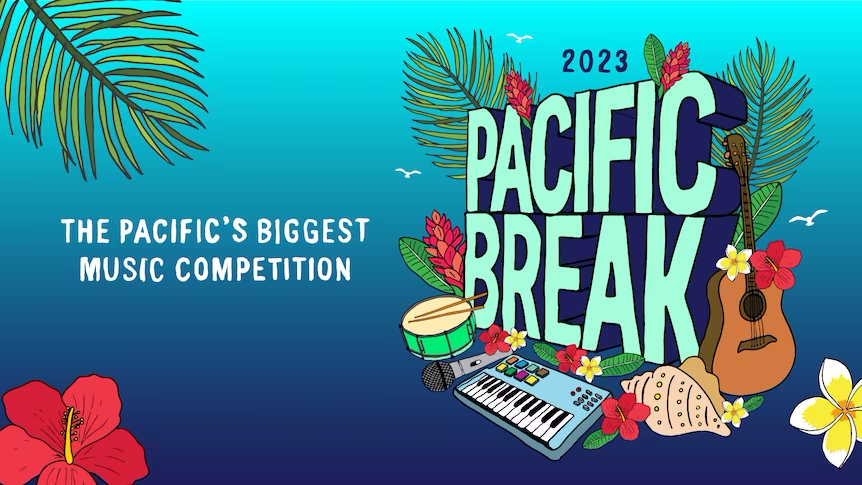
The Pacific’s biggest music competition returns to the ABC in 2023, kicking off on 21 September.

This year, the search for the Pacific and Timor-Leste’s best original talent launches with an exclusive concert in Port Moresby, Papua New Guinea (PNG).

Headlining the show is PNG-born Australian artist Ngaiire who will travel from Australia to Port Moresby to perform. Joining her on stage is last year’s Pacific Break winner Danielle as well as ABC Radio Australia music host and DJ Hau Latukefu who will broadcast a special edition of his weekly music show In The Fale: Live From Moresby.

Pacific Break offers unsigned artists living in the Pacific and Timor-Leste a career-changing opportunity with the winner flown to Australia’s largest international music festival WOMADelaide in March 2024. Throughout the six-week campaign, featured artists have their music and videos featured on ABC Radio Australia and ABC Australia programmes and on ABC Pacific digital and social accounts.

ABC Head International Services Claire M. Gorman said, “It’s great to see Pacific Break returning this year. It’s an important springboard connecting Pacific artists with audiences across the region, and we welcome artists from all genres and all the corners of the Pacific to enter their tracks for consideration.”

This year’s winner will be decided by a panel of judges made up of Ngaiire and ABC Radio Australia music hosts Hau Latukefu (In The Fale), Sose Fuamoli (On The Record) and Rick Howe (Island Music).

According to Ngaiire, “There is so much raw talent in the islands. I feel like the world is going to turn towards what’s happening in Pacific music at some point and Pacific Break is playing an integral part in laying the groundwork. I’m really happy to be a part of the initiative this year helping to find the next winner and even more excited that I get to come home and celebrate it with a live performance with my band.”

The free launch concert will be co-hosted by the Australian High Commission in Papua New Guinea and held at Port Moresby’s Lamana Gold Club. Ngaiire and Danielle’s performances will be recorded and available for audiences to listen on ABC Radio Australia and online through ABC Pacific.

The ABC first held Pacific Break in 2008 when Vanuatu group 26 Roots took out first prize with their track Broken Promises. Last year, PNG singer Danielle made history, becoming the first female artist to win the competition.  Other past winners have included PNG hip-hop artist Sprigga Mek as well as Emmanuel Mailau (PNG), III Kings (Solomon Islands), BSQ (Fiji) and Jaik Berg (Cook Islands).

Entries will open on 21 September until midnight on 2 November with the winner announced on ABC Radio Australia morning show Nesia Daily on Thursday 9 November.

Find out more about Pacific Break by visiting www.abc.net.au/pacificbreak

RFI and France 24 condemn the suspension of their broadcasts in Niger

RFI and France 24 condemn the suspension of their broadcasts in Niger

RFI and France 24 condemn the suspension of their broadcasts in Niger

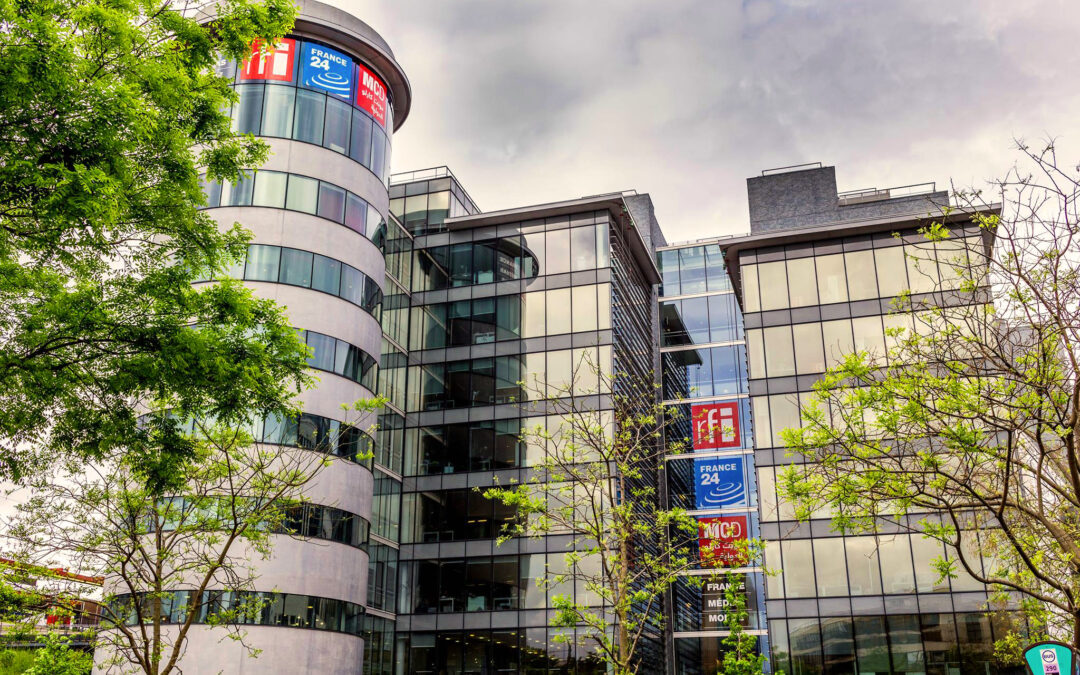
One week after the coup d’état in Niger, the broadcasting of RFI (Radio France Internationale) and France 24 have been interrupted in the country according to multiple sources on the ground. France Médias Monde deplores this decision taken outside any conventional and legal framework, further depriving citizens in the region of their access to free, independent and verified information.

This incident follows previous cases of censorship faced by RFI and France 24 in Mali and Burkina Faso in recent months. The group reaffirms its steadfast commitment to the freedom of information, and the safety of its journalists.

In Niger, RFI operates through 7 FM relay stations, in addition to shortwave broadcasts of its programmes in French, Hausa, and Fulfulde, as well as several satellites (free-to-air on SES 5, Eutelsat 16 An and SES 4 satellites). A network of 44 partner radios also broadcasts their programmes in French, Hausa, and Fulfulde.

In 2022, 1.9 million listeners tuned in to the radio service each week in the country (18% of the population), and RFI was the top international radio station among opinion leaders. Additionally, the channel was followed by a quarter of the Nigerien population each week 2022.

Currently, RFI and France 24 remain accessible in Niger through direct satellite reception with the following channels:

  • SES-5: RFI broadcasts in French, Hausa, Fulfulde, Mandenkan and Kiswahili, France 24 broadcasts in French and in English.
  • Eutelsat 16A: RFI and France 24 broadcast in French.
  • Arab-Sat/Badr: France 24 broadcasts in French, English and Arabic; RFI broadcasts in French.

Furthermore, RFI’s programmes in French, Hausa, and Fulfulde continue to be broadcast on shortwave. Additionally, RFI and France 24 can be accessed on YouTube, their respective apps, websites, and social media platforms.

How to continue watching and reading France 24 in Africa

How to continue listening to and reading RFI in Africa

BBC News launches week-long focus on Artificial Intelligence

BBC News launches week-long focus on Artificial Intelligence

BBC News launches week-long focus on Artificial Intelligence

Throughout the week starting 17 July, BBC News is taking a closer look at Artificial Intelligence (AI) – exploring how AI is already affecting our lives, and looking at the ways it could impact all our futures.

Every day BBC News will launch new thought-provoking and informative journalism to help audiences understand what AI is, what it can do, and how it is shaping the world we live in. BBC News will speak to leading experts in the field and deep dive into issues around jobs, security and technology.

It kicks off with an exclusive interview with Ian Hogarth – the recently announced chair of the UK’s AI Foundation Model Taskforce.

In the interview, Hogarth talks to Zoe Kleinman about the importance of tech innovation in Europe, saying that we need to scale up companies in Europe instead of selling them on to be grown by larger global companies, citing the sales the sales of Skype to Ebay and Deep Mind to Google.

He also warns about AI and calls for greater understanding of the risks – telling the BBC “we’ve got to think about how to protect British jobs”  and explore how we “really hold these [AI] companies to account in an appropriate way”.

They also discuss the environmental cost of the energy the data centres will need which will add up to “a tremendous carbon footprint”.

An interview with Deep Mind founder Mustafa Suleyman, also out on Monday, explores security, the culture of risk taking in the UK to facilitate significant tech innovation, and the potential impact of AI on the way we live. He told the BBC:

“[AI] is going to be hugely product productive and beneficial for our civilisation. And clearly that also means that some people are going to struggle to make the transition. The question is one of values, how do we compensate those people who need to retrain and rescale and give them opportunities to improve and get back into the workplace. And to me, that’s a question of government subsidisation and support and ultimately, of taxation.”

The full interviews can be found on www.bbc.co.uk/news 

Across the week, audiences will be able to learn more across all BBC News platforms – including podcasts on BBC Sounds, news and investigations on the BBC News website and TV packages on the news bulletins and channel, as well as special content for iPlayer.

As AI increases in its capabilities and scope of work, BBC News will look across how it is currently affecting our working lives, and how it could change the job market and affect business. It will also look at the role of AI in education, and how it is already being used in sport and being used to create music and media.

The week also starts with a visual guide to help you understand AI, answering all the questions you need to understand the basics of what AI is, and what it does – from the different types of AI, to how it learns, and how it can understand images.

This follows on from the BBC Sounds ten-part series with Spencer Kelly – Understand: Tech and AI, which aims to demystify the technology in our lives, explore key topics and answers big questions such as ‘Can AI be controlled?’ and ‘Will AI take my job?’

Upcoming highlights will include Click with Marc Cieslak: Marc will create Click’s own AI ‘Gogglebox’, and an iPlayer special on AI Moments that Made your Jaw Drop.

More news and content will be launched every day this week, with range of BBC global platforms sharing the focus on AI including:

BBC Future – BBC.com’s science section will be publishing articles including the A-Z guide of artificial intelligence terms,  how to spot an AI cheater and how AI companies are buying up the rights to actors, musicians and personalities.

BBC Worklife will also be looking at the effect AI can have on your personal and professional life, including how AI can make you feel terrible about yourself – but it shouldn’t and how AI could save Gen Z’s professional futures.

Radio Liberty’s Kyrgyz service unblocked

Radio Liberty’s Kyrgyz service unblocked

Radio Liberty’s Kyrgyz service unblocked

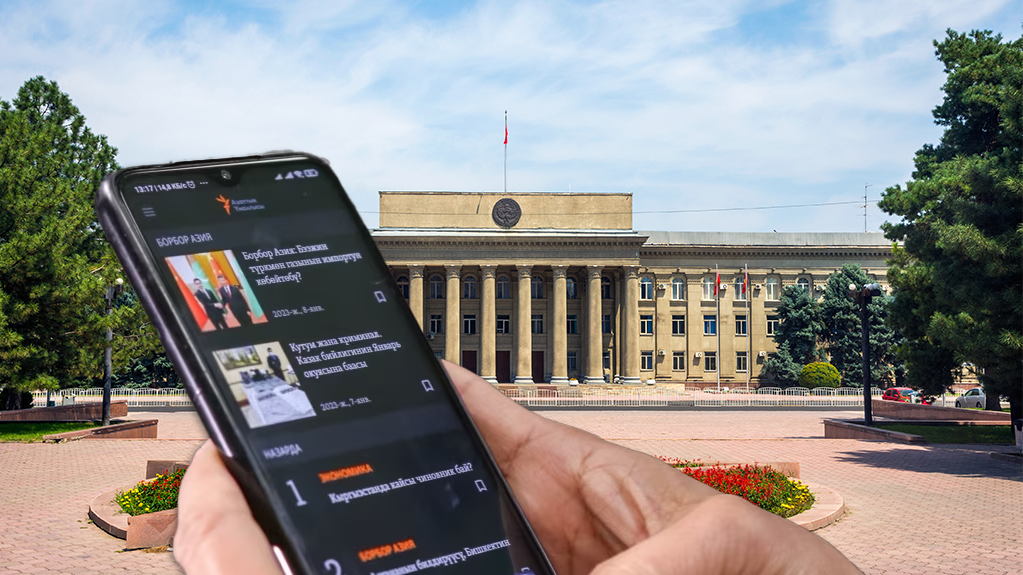
Radio Liberty’s Kyrgyz service has reported that it is no longer blocked in Kyrgyzstan. 

According to the broadcaster, almost all Internet providers in the country have restored access to Azattyk’s websites, rus.azattyk.org and azattyk.org.

The sites have been blocked since October 2022 when the Ministry of Culture implemented a ban and froze the broadcaster’s bank account following a report on a conflict on the Kyrgyz-Tajik border that it said contained “inaccurate information”. 

On 12 July, a court approved a settlement agreement concluded between Azattyk and the Ministry of Culture, Information, Sports and Youth Policy and all legal proceedings were terminated. “The reason for concluding the agreement was that the material became unavailable on the platforms of Radio Liberty,” Azattyk said.