AIB publishes new Member Insight on the evolution of Freeview and hybrid TV distribution

AIB publishes new Member Insight on the evolution of Freeview and hybrid TV distribution

AIB publishes new Member Insight on the evolution of Freeview and hybrid TV distribution

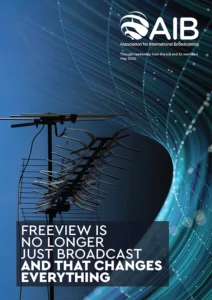
The Association for International Broadcasting (AIB) has published a new thought leadership article examining how the UK’s Freeview platform is evolving through the integration of broadcast and IP-delivered services.

Titled “Freeview Is No Longer Just Broadcast — And That Changes Everything,” the insight has been contributed by AIB Member Global Distribution Services (GDS) and explores how hybrid distribution models are already being deployed in one of the world’s most established digital terrestrial television (DTT) markets.

Freeview remains the UK’s largest television platform, reaching more than 18 million households. While often associated with traditional broadcast delivery, the new insight highlights how developments in IP delivery, data-led monetisation and platform integration are reshaping how services are delivered and experienced by audiences.

The article sets out how hybrid models can combine the scale, prominence and trust of broadcast platforms with the flexibility and performance transparency of digital delivery. It examines the growing role of technologies such as server-side ad insertion (SSAI), real-time audience data, and privacy-compliant monetisation frameworks, and considers how these are being applied within the Freeview environment.

The contribution also identifies the implications of these developments for broadcasters and platform operators. These include changing approaches to market entry, evolving audience measurement models, and the increasing importance of data in shaping both commercial and distribution strategies.

Looking ahead, the insight points to the continued development of IP-first platforms such as Freely, and the extent to which hybrid models may act as a bridge between traditional broadcast infrastructure and fully IP-delivered television services.

Commenting on the publication, Simon Spanswick, Chief Executive of the AIB, said:

“The transition from traditional broadcast to IP-delivered services is one of the most significant structural shifts facing the media industry. What this contribution demonstrates is that the future is not necessarily a binary choice between broadcast and streaming. Instead, we are seeing the emergence of hybrid models that combine the strengths of both. Understanding how these models are being implemented in practice is essential for broadcasters, regulators and policymakers as they consider the future of television distribution.”

Tanya Kronfli, Chief Executive of Global Distribution Services, added:

“Freeview offers something no other platform can match in the UK today — scale, credibility, and accessibility. What we’ve done at GDS is combine that reach with the precision of digital: SSAI monetisation, real-time data, and full transparency on performance. Broadcasters no longer have to choose between traditional TV and digital video — we bring the best of both worlds together in one solution.”

The publication forms part of the AIB’s ongoing programme of member-led insights, designed to share practical experience and inform industry understanding of key strategic developments.

Read the Insight here: https://aib.org.uk/Members/Member-Insight/AIB-TL-Freeview-2026-05-05.pdf

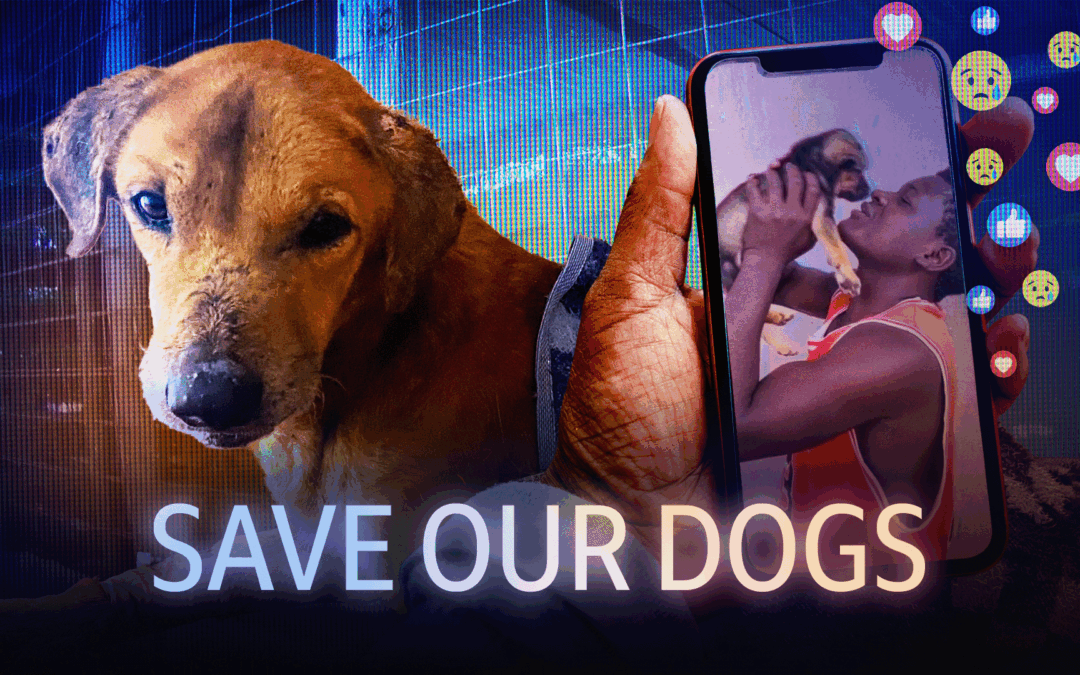
Save our Dogs: BBC Africa Eye exposes social media rescue scam network operating from Uganda

Save our Dogs: BBC Africa Eye exposes social media rescue scam network operating from Uganda

Save our Dogs: BBC Africa Eye exposes social media rescue scam network operating from Uganda

An undercover investigation by the BBC reveals how a network of sham shelters has raised thousands of dollars from donors globally whilst subjecting animals to harm.

Social media videos of injured and distressed dogs are at the centre of a large-scale international donation scam uncovered by BBC Africa Eye. Hundreds of thousands of pounds raised for animal care are sometimes being used to pay for cars, property and personal expenses by those running the accounts.

BBC Africa Eye, from the BBC World Service, reviewed hundreds of online pages raising money for pet shelters in Uganda. Almost 40% of them were linked to shelters in the Ugandan town Mityana.

How the scam operates?

Operating like a rental business, some shelter owners allow multiple content creators to film with the animals in exchange for a fee. Each content creator then runs their own fundraising drive using the video footage of dogs.

In undercover footage, a shelter owner named Charles, explains how the model works:

“You tell people that you have been evicted and the landlord has given you one months’ notice to leave… They will then start a GoFundMe [fundraising campaign] for you to buy land. And once you receive the GoFundMe money, you use it to buy a car or build a house…you just repair and move things around just for show.”

Charles was caught in video footage stating that there have been instances where other content creators have “cut the dogs” to make them appear more battered.

Charles denied injuring dogs. He acknowledged that content creators pay to film at his shelter.

The case of Russet the dog

One dog, Russet, was tracked by the BBC after appearing online badly injured.

Three weeks after his pictures were first posted online, a UK donor negotiated his release from those filming him. He was taken to a veterinary clinic in Kampala.

Veterinary surgeon Dr Isa Lutebemberwa assessed Russet and found his injuries were unlikely to have been accidental. Despite surgery to try and save him, Russet sadly later died.

Dr. Isa Lutebemberwa said meeting Russet changed him and shapes everything he does.

“If you look in his face you’ll see he’s endured a lot of pain and suffering…he had a bright life ahead of him. The voiceless animals out there [in Mityana], they need someone who can advocate for them.”

The people fighting back – local community and activists

With high youth unemployment in Mityana, social media has created new income opportunities – but some local residents told the BBC they are not happy about the bad reputation the scammers have brought the town, and they care about dogs like Russet who may be suffering in the shelters.

Ashiraf, a young local shopkeeper, said many young people are drawn into the trade because ‘dogs are seen as a source of money’, but scamming had never been his path: “My focus is to keep running the family business… I love animals. Even though I desire the money and lifestyle, the scamming business has never been my thing.”

He added that many in the community feel troubled by what is happening:

“People feel sad for the dogs but they don’t speak about it. If more people raised their concerns… a way to tackle this issue could be found.”

As donors have become aware of the scam, UK-based activist group We Won’t Be Scammed, founded by Nicola, herself a former victim, has mounted unofficial rescue operations, recovering more than 50 dogs to date.

Nicola said she initially donated for what she believed was veterinary care, until a colleague identified it as abuse. Many members of the group share similar experiences.

Not all donors have walked away from Uganda. Joanne, a British woman who first sent small donations to a shelter, has since travelled to the country three times in nine months to help run a shelter for stray dogs herself.

Asked whether her presence contributed to the broader problem of scam shelters, she said:

“I don’t think I’m actually making a problem by contributing my funds. The problem is if you closed down all the shelters, where are all the dogs going to go?”

Mityana Police said they have previously investigated animal cruelty at dog shelters in the area, including rescuing injured dogs and making arrests. One case was closed with a warning.

Where to watch or listen

  • BBC Eye TV Documentary ‘Save our Dogs: Inside Uganda’s Rescue Scam’: Available from Monday 4 May
    • BBC News Africa YouTube & on TV channels broadcasting BBC Africa Eye.
    • UK audiences: Watch on BBC iPlayer.
  • Radio – ‘For the love of Dogs’: The investigation will appear on radio show ‘The Documentary’ on BBC World Service radio or wherever you get your BBC podcasts.​
BBC steps up fight against media clampdowns around the world

BBC steps up fight against media clampdowns around the world

BBC steps up fight against media clampdowns around the world

As media freedom faces starker declines in countries around the world, the BBC World Service has unveiled how services are adapting to reach audiences and the extreme measures individuals outside of the BBC take to access critical news and information.

According to the 2026 World Press Freedom Index from Reporters Without Borders (RSF), press freedom is at the lowest point in the last quarter of a century.

As the world is marking World Press Freedom Day (3 May), the BBC speaks to someone involved in smuggling technology and services into Iran to access media, and highlights the difficulties faced in accessing BBC news in some countries.

Fiona Crack, Global Director, BBC News, says:

“We know that democratic values are under threat globally and this pressure goes hand-in-hand with the reduction in press freedom. Draconian actions taken by authorities around the world stop journalists doing their job and withhold information from people, increasing international instability and uncertainty. The BBC World Service is determined to provide for audiences who need us most and to find new ways of reaching them.” 

The BBC World Service is fighting reductions in media freedom by providing for audiences in innovative and diverse ways combatting some of the restrictions put on populations and BBC staff.

Iran

In Iran, amid nationwide internet shutdowns, a clandestine network smuggling Starlink satellite technology into the country has emerged.

The BBC World Service has spoken to “Sahand”, not his real name, who says he has sent over a dozen contraband items to enable internet access into the country since January. 

“If even one extra person is able to access the internet, I think it’s successful and it’s worth it,” says Sahand.

The Starlink devices Sahand sends to Iran are one of the most reliable ways of bypassing the shutdown.

Last year, the Iranian government passed legislation that made using, buying or selling Starlink devices punishable by up to two years in prison.

Sahand says the consequences could be severe if caught. “If I was identified by the Iranian regime, they might make those I’m in touch with in Iran pay the price,” he says.

Many Iranians bypass restrictions by using virtual private networks (VPNs) to access the internet to share and access independent information. 

BBC News Persian has the largest audience of any international media inside Iran. At the start of the 2026 protests, BBC News Persian was reaching 27.5 million people each week on Instagram, almost half the adult internet population of Iran. Following the internet shutdown, audiences in the country fell sharply.

BBC News Persian responded to the internet shutdown by launching a temporary emergency lifeline radio programme and establishing a weekly newsletter. The team have also extended their television news coverage, offering increased live news to meet the demand for information during the war.

Staff who work for BBC News Persian are threatened, harassed and abused for their reporting. Last year saw an alarming increase in the harassment with family members in Iran being taken in for repeated interrogation and their passports confiscated.

Russia

Since the start of the full-scale invasion of Ukraine, access to BBC News Russian in Russia has been severely restricted and the service’s website and most social media platforms are blocked. This action initially saw an audience drop of 95% across Russia. The numbers have since recovered significantly as the service works dynamically to reach their audiences, finding alternative platforms.

Like Iranians, audiences in Russia now use VPNs to access BBC content on the BBC News Russian website and on social platforms like Telegram, YouTube and Instagram.

BBC News Russian podcasts were banned on all platforms in Russia in 2022 and in response, they moved to YouTube. Since the Russian authorities’ subsequent intentional slowdown of YouTube in 2024, podcast output has also been made available on a dedicated Substack page.

BBC News Russian journalists also produce a weekday newsletter with mirror links to enable access to BBC content without the need for a VPN.

For many, their work has personal consequences. Several members of BBC News Russian staff have been labelled ‘Foreign Agents’ by Russia and are now at risk of criminal prosecution.

Belarus

In Belarus, there was an unprecedented post-election media crackdown in 2020.

According to the independent Belarusian Association of Journalists (BAJ), 22 media workers are currently in prison. In the past six years, almost all independent publications and their social media pages have been blocked, banned and even declared extremist, effectively making it a crime for audiences inside Belarus to engage with them. 

BBC News Russian journalists are no longer able to operate in Belarus.

The extremism designation has been imposed on BBC News Russian content, and all BBC sites have been blocked. As of March 2026, it is illegal for people in Belarus to share BBC News Russian content.

BBC News Russian are pivoting to social media to ensure audiences in Belarus continue to have access to independent news from the BBC. 

BBC Studios unveils BBC Belgium

BBC Studios unveils BBC Belgium

BBC Studios unveils BBC Belgium

From 5 May 2026, premium drama channel BBC First will be rebranded to BBC Belgium, enhancing the most popular international channel in Flanders with a fresh new identity.

Audiences will continue to have access to a packed lineup of world class dramas and compelling light crime series’ in a new-look home, all of which have been especially curated for Flemish audiences and fully localised with Dutch subtitles.

Bram Husken, SVP and General Manager Benelux and Nordics at BBC Studios, said: “Rebranding the channel to BBC Belgium allows us to better reflect our loyal Belgian audience and our commitment to bringing exceptional British stories to the region. For over a decade, our handpicked stories having been starting conversations, and changing perspectives. Our new identity will help to deepen our growing connection with fans of the best British content.”

New series’ premiering from launch on BBC Belgium include:

Wild Cherry – 6 May
Created and written by BAFTA-award winning Nicôle Lecky, Wild Cherry is set in a private enclave in the Home Counties. The six-part series is a provocative and deliciously honest look at mother/daughter relationships in a haze of social media, hidden apps and peer pressure that asks: how far will we go to protect our children? And just how much do teenage girls know about the women raising them? If the apple doesn’t fall far from the tree, then who is leading these girls astray?

The Marlow Murder Club S3 – 5 May
Now an established part of newly promoted DI Tanika Malik’s crime solving team, retired archaeologist Judith Potts, dog walker Suzie Harris and vicar’s wife Becks Starling are back and bringing their unconventional methods to a string of high-profile murders. But it soon becomes clear to the amateur sleuths that this time their investigations may hit closer to home than ever before. From the sudden death of the kindest man in Marlow, the town’s beloved Mayor, to a celebrity chef found dead at the launch of his cookbook with half the town in attendance, the team will be working under the watchful eye of the Marlow community. They’ll also be called to an eerie manor house in the middle of nowhere where they’ll face a case intrinsically linked to Becks’ past that could threaten the future of their roles as civilian advisors. Judith, Suzie and Becks will have to pull closer together than ever to catch these killers. Starring Samantha Bond, Jo Martin, Cara Horgan and Natalie Dew.

Call The Midwife S15 – 7 May
When senior members of the Nonnatus House staff head to Hong Kong on a mercy mission, the younger midwives are left to cope alone. As the Christmas action shifts between the sun-drenched Far East and a snowy East End, Sister Julienne suddenly finds herself excited about the Order’s future. After years of battling change, she decides to embrace it, work with it, and see what love can do. This change of energy reverberates throughout series 15. The new series kicks off in 1971 with several of the ladies embracing Women’s Lib and burning their bras outside Nonnatus House. As the year unfolds, we see the team handle cases including premature birth, placenta previa, kidney cancer, tuberculosis and slavery.

Lynley – 8 May
Leo Suter and Sofia Barclay star as the unconventional detective duo DI Tommy Lynley and DS Barbara Havers in a modern reimagining on the popular original series. Tommy Lynley is a brilliant police detective but an outsider in the force – simply by virtue of his aristocratic upbringing. He is paired with Barbara Havers, a sergeant with a maverick attitude and a working-class background. With seemingly nothing in common and against all odds, the mismatched duo of Lynley and Havers become a formidable team, bonded by their desire to see justice done.

Foyle’s War S6 – 16 May
The sixth series of Foyle’s War unfolds in the uneasy months following Victory in Europe, as Britain struggles to transition from conflict to recovery. Detective Chief Superintendent Christopher Foyle, played by Michael Kitchen, increasingly disillusioned with the political constraints placed upon his work, finds himself navigating a new landscape where wartime loyalties shift, old secrets resurface, and the boundaries between justice and national interest blur.

Series 6 begins in June 1945 when Foyle, tracking an escaped Russian POW at the behest of British intelligence, becomes involved in a murder investigation conducted by his former subordinate, DI Paul Milner. The situation threatens not only their already strained relationship, but also Foyle’s life. Meanwhile, Sam Stewart (Honeysuckle Weeks), struggling to adjust to civilian life, once again becomes indispensable as she and Foyle uncover the truth behind a wave of nighttime robberies and the suspicious death of a man charged with treason.

Miss Scarlet S6 – 25 May
When we last saw Eliza Scarlet, her life seemed out of balance. A new Detective Inspector had taken charge at Scotland Yard; one with no intention of enlisting her services. But true to form, Eliza didn’t back down. Through grit and brilliance, she earned the DI’s respect. And Eliza’s maternal housekeeper decided to marry coroner Barnabus Potts as Season 5 wrapped—what will that mean for the household? Now as a new chapter begins, we wonder: Will Eliza continue to pour everything into the job, or will she attend to her personal life?

BBC Belgium will officially launch on 5 May 2026.

BBC Studios expands footprint in Africa with CANAL+

BBC Studios expands footprint in Africa with CANAL+

BBC Studios expands footprint in Africa with CANAL+

BBC Studios has announced that premium factual channel BBC Earth will launch in French language for the first time in Africa on CANAL+ in April 2026.

The launch will bring world class natural history programming and premium factual storytelling to a wider African audience, providing 22 French-speaking Sub-Saharan African countries access to the channel.

The new French language feed will bring BBC Studios’ award winning factual catalogue to millions of additional viewers, offering a breathtaking window into the natural world, pioneering scientific documentaries and extraordinary human stories.

At launch, BBC Earth will present a standout line-up of landmark natural history series and powerful documentaries from BBC Studios’ acclaimed factual library. Viewers can expect celebrated productions from BBC Studios Natural History Unit, including Seven Worlds, One Planet, The Green Planet, Frozen Planet II and Blue Planet II, all narrated by Sir David Attenborough.

The channel line-up also features a wide selection of specialist wildlife documentaries such as Natural World: Giraffes – Africa’s Gentle Giants, My Congo, Cheetah Family and Me, and Natural World: Cheetahs Growing Up Fast, offering intimate portraits of remarkable species and the people working to protect them. Global series including Africa, Earth, Universe and The Planets will also be available on the channel, providing perspectives on the natural world.

Adventure and exploration are also central to the channel, with titles such as Where the Wild Men Are, Life Below Zero, Arctic with Bruce Parry and Steve Backshall’s Extreme River Challenge taking viewers into some of the world’s most remote and challenging environments.

The channel’s programming will be dubbed in French and expertly curated scheduling tailored to the interests and viewing habits of Francophone markets.

Pierre Cloete, VP for Africa at BBC Studios, said: “The French language launch of BBC Earth on CANAL+ marks a significant milestone in BBC Studios’ commitment to making exceptional factual content accessible to global audiences in their own language. We are thrilled to expand BBC Earth’s footprint in partnership with CANAL+. African audiences have a deep passion for documentary storytelling and we are proud to bring even more people the very best of BBC Studios’ natural history, science, and factual catalogue.”

Fabrice Faux, Channels & Content Director for French-Speaking Africa said : “CANAL+ is happy and proud to offer its subscribers the high-quality factual entertainment from BBC Earth, which will ideally complement its discovery vertical. Educational programming is also a key component of CANAL+’s offers in Africa, and BBC Earth is a strong addition in this area.”

The channel will be available on Channel 203 within TOUT CANAL+

wedotv BIG stories Launches on Freeview UK Channel 275

wedotv BIG stories Launches on Freeview UK Channel 275

wedotv BIG stories Launches on Freeview UK Channel 275

wedotv movies now available on channel 98 as a DTT Channel with FAST, SSAI and CMP enabled

Freeview today welcomes the launch of wedotv BIG stories on Channel 275, further expanding its diverse content offering to UK audiences.

In addition, wedotv movies is now available on Channel 98 as a fully integrated DTT channel, combining traditional broadcast reach with advanced digital monetisation capabilities, including FAST architecture, Server-Side Ad Insertion (SSAI), and a Consent Management Platform (CMP).

Both channels are powered by cutting-edge technology from Synapse and facilitated by Global Distribution Services, a leading content aggregator and distributor on the UK DTT platform.

wedotv BIG stories brings viewers a compelling slate of high-quality factual and documentary programming, while wedotv movies offers a curated selection of popular films, now enhanced through hybrid broadcast and streaming capabilities. The integration of FAST, SSAI, and CMP ensures scalable monetisation, targeted advertising, and compliance with evolving privacy standards.

Global Distribution Services currently operates 140 TV channels on Freeview, reinforcing its position as one of the largest channel aggregators on the platform. Through its partnership with Synapse, Global Distribution Services continues to enable broadcasters and content owners to launch and monetise channels efficiently across the UK’s leading free-to-air ecosystem.

Tanya Kronfli, CEO of Global Distribution Services, commented: “We are proud to support wedotv in expanding its footprint on Freeview. By leveraging Synapse’s technology stack — including FAST, SSAI, and CMP — we are enabling a seamless blend of linear broadcast and IP innovation. This launch reflects our commitment to delivering scalable, future-ready channel solutions while maximising reach and monetisation opportunities on the UK’s leading free-to-air platform.”

Philipp Rotermund, CEO of wedotv, added: “The launch of wedotv BIG stories on Freeview marks another important milestone in our UK expansion. We are delighted to strengthen our presence on the platform and to bring engaging, high-quality storytelling to a wider audience. With wedotv movies now available as a DTT channel powered by advanced ad-tech capabilities, we are combining the scale of broadcast with the precision and flexibility of digital.”

This dual launch highlights the ongoing evolution of the Freeview platform, blending broadcast distribution with IP-delivered innovation to provide viewers with more choice and advertisers with enhanced opportunities.