ABC champions Southeast Asian emerging media leaders with new Future Voices programme

ABC champions Southeast Asian emerging media leaders with new Future Voices programme

ABC champions Southeast Asian emerging media leaders with new Future Voices programme

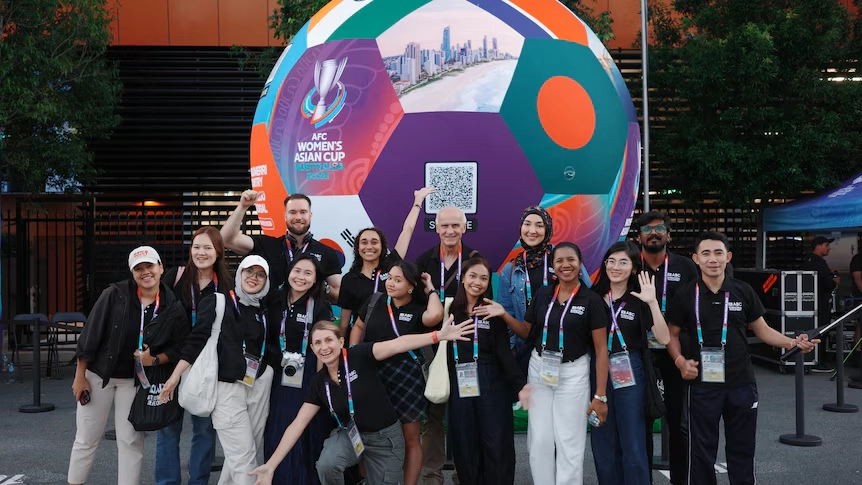
ABC International’s media development unit, ABC International Development (ABCID), has launched an innovative three-year programme called Future Voices, offering hands-on leadership and digital journalism training to Southeast Asia’s next generation of media leaders.

The programme’s launch coincides with Australia hosting the Asian Football Confederation (AFC) Women’s Asian Cup and some participants are spending two-weeks in Brisbane and the Gold Coast where they will receive on-the-ground mentoring and mobile journalism training at matches and earn a micro-credential in Leadership and Sports Diplomacy at Griffith University.

ABC International Head Claire M. Gorman said, “We are proud to launch this significant new programme, leveraging the ABC’s expertise in building and managing independent, ethical and inclusive newsrooms and sharing these skills with our colleagues across the region. Future Voices will strengthen Australian connections with Asia, building meaningful relationships with and between the region’s media organisations and this year, championing female participation in news and sports media.”

ABCID Manager Jo Elsom said the new programme will equip young media professionals with a suite of practical reporting skills, strengthening their capacity to elevate coverage of cultural and sporting events in their own countries.

“Programme graduates will have the unique opportunity to practice commentary, interviews, and match-day reporting in real time at a major international women’s sporting event, developing high-quality, multi-platform sport content in a fast-paced environment. Combined with their course at Griffith University, they will return to their media organisations with important new leadership and management skills.”

“It’s critical that we continue enhancing the capability of our media leaders across our region, to encourage diverse and independent reporting – Future Voices gives journalists from across our region such a wonderful opportunity to build connections and deepen their skills.”

Head of the ASEAN-Australia Centre, Fiona Hoggart, said the Centre is dedicated to championing initiatives like Future Voices that build capability and deepen Australia’s connections with Southeast Asia.

“The ASEAN-Australia Centre is proud to support such a valuable programme,” Ms Hoggart said. “Future Voices not only strengthens our partnerships in Southeast Asia, it gives young journalists the chance to build practical skills and supports quality reporting across our region as Australia hosts the Women’s Asian Cup.

“Participants will form relationships with colleagues from across Australia and Southeast Asia that will last for years to come.”

Griffith University Pro Vice-Chancellor Professor Caitlin Byrne AM said, “Griffith University is committed to supporting a strong and vibrant media landscape across the Asia–Pacific. We are delighted to partner with the ABC to equip sports journalists from the region with the skills and confidence to lead informed, meaningful public discourse within a rapidly evolving media environment.”

Future Voices aims to deepen Australia’s regional connections and foster a peaceful, prosperous Southeast Asia, with a new cohort entering the program each year, and is supported by the Australian Government Department of Foreign Affairs and Trade’s ASEAN-Australia Centre.

ABC Radio Australia launches on DAB+

ABC Radio Australia launches on DAB+

ABC Radio Australia launches on DAB+

ABC Radio Australia is now available on DAB+ digital radio in Australia, making it easier than ever for Pacific communities to connect with trusted news, music, sport and culture from home.

Listeners in Australian capital cities, the Gold Coast and Launceston can tune in to ABC Radio Australia on DAB+, bringing the ABC’s international Pacific and Timor-Leste broadcast service to digital radio for the first time in Australia. 

ABC Radio Australia offers 24-hour programming including Pacific-focused news and current affairs, music, sport and cultural storytelling. The service has long been available internationally, and via the ABC Pacific website and ABC listen app, and its arrival on DAB+ expands access for audiences across Australia. 

The service showcases Pacific voices and perspectives, with content reflecting life, culture and conversations from countries including Fiji, Papua New Guinea, Samoa, the Solomon Islands, Timor-Leste, Tonga, Vanuatu and the Northern Pacific, alongside stories about Pacific communities living in Australia. 

ABC Director Audio Ben Latimer said the launch was about meeting audiences where they are and deepening connections with Pacific communities. “ABC Radio Australia plays a vital role in reflecting Pacific voices and experiences and connecting communities across our region. 

“Making the service available on DAB+ expands access even further, helping more people engage with trusted Pacific news, culture and storytelling – in the car, at home, and in everyday life.”

Head of ABC International Claire Gorman said, “With support from the Australian government, ABC Radio Australia has doubled its broadcast footprint in the Pacific in recent years, and tripled its unique content, bringing the best news, sport, music and culture to Pacific audiences.

“It is only fitting that this is now easily available to Australian audiences on DAB+, so they can learn and engage more with the diverse and important Pacific region.”

Listeners can find ABC Radio Australia by scanning for DAB+ stations on their digital radio, alongside other ABC networks DAB+ networks ABC Jazz, ABC Country, Double J, ABC Sport, triple j Unearthed and ABC Kids listen.

Information about DAB+ including availability and tuning instructions can be found on the ABC’s Help page.

ABC Radio Australia is also available on ABC listen.

BBC News Uzbek launches on TikTok

BBC News Uzbek launches on TikTok

BBC News Uzbek launches on TikTok

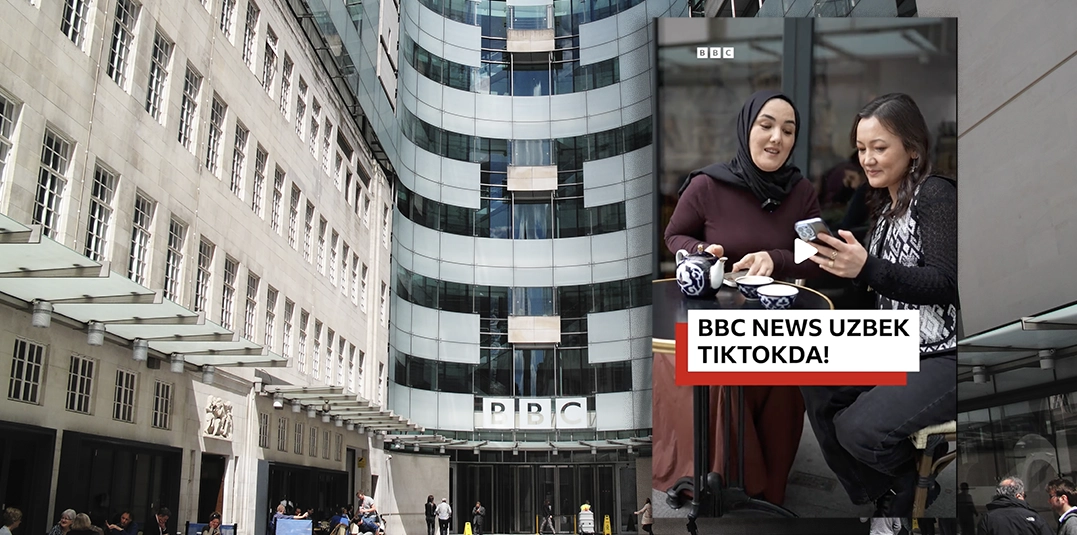
BBC News Uzbek (BBC News O‘zbek) has expanded its social-media reach with the launch of its channel on TikTok where the @bbcnewsuzbek feed now brings videos to Uzbek-speakers – in Uzbekistan, Central Asia and beyond. 

The BBC News Uzbek newly launched TikTok channel adds to the service’s social-media presence: on YouTube (more than 2 million subscribers), InstagramFacebook (with separate feeds for audiences in Uzbekistan, Afghanistan and elsewhere, using different scripts), XTelegram, WhatsApp, and the Russian network OK.ru.

Across its digital platforms, BBC News Uzbek reaches a weekly audience of 1.67 million people – an increase of 37% since the year before. The launch of the @bbcnewsuzbek feed on TikTok builds on the success of the service’s presence on Instagram where around 800,000 people engage with its content every week.

BBC News Uzbek News Editor, Khayrullo Fayz describes the launch on TikTok as a natural next step in better serving younger audiences: “We have always prioritised meaningful conversations, producing unique and original journalism that serves our audiences in Uzbekistan and the wider region. TikTok is another platform through which we can deliver our offer to younger generations of Uzbek-speakers, wherever they are: reporting and explaining the news, listening to our audiences and asking questions, with them and for them, to understand the issues that matter, as well as tackling disinformation and misinformation with the BBC’s impartial and independent journalism.”

In addition to current news, the BBC News Uzbek feed on TikTok will bring content on subjects that are in demand with its audience, including health, education, and history.

BBC News Uzbek is part of the BBC World Service. 

NHK WORLD-JAPAN Radio begins shortwave for Iran

NHK WORLD-JAPAN Radio begins shortwave for Iran

NHK WORLD-JAPAN Radio begins shortwave for Iran

In light of recent developments in the situation in Iran, NHK has begun temporary shortwave transmissions of its Japanese language international radio service, NHK WORLD-JAPAN Radio. NHK’s mission as an international public service media has led to this initiative to provide essential information to Japanese nationals residing in or travelling in the region.

Following the attacks on Iran by the United States and Israel, Internet connectivity and international telephone services in the region have become unstable resulting in limited access to information in Japanese. In response NHK has begun temporary shortwave transmissions of its Japanese language international radio service to provide essential information to Japanese nationals in the area the broadcast started at 11:30 AM Japan time (0230 GMT) on 1 March.

NHK normally broadcast six hours of shortwave programming every day to the Middle East. However, in view of the current situation the broadcast schedule has been expanded to provide a continuous 24-hour service. In addition to content from NHK Radio 1, the broadcasts will include safety and security information for those in the region.

For those in neighbouring countries or other areas where Internet access remains available NHK also provides Japanese language news on the NHK world Japan website, along with simultaneous and on demand streaming of its television and radio programmes.

The transmission schedule is:

Transmissions from the Yamata Transmitting Station (Japan)

The transmission schedule is:

Transmissions from the Yamata Transmitting Station (Japan)

Time (JST) Frequency

01:00–02:00

11915 kHz

02:00–04:00

11670 kHz

04:00–06:00

9665 kHz

06:00–08:00

11675 kHz

08:00–10:00

11660 kHz

10:00–14:00

17560 kHz

14:00–18:00

9700 kHz

18:00–22:00

9740 kHz

22:00–23:00

11685 kHz

23:00–01:00

9450 kHz


Transmissions from the France Relay Station (Issoudun)

Time (JST) Frequency

02:00–04:00

11800 kHz

12:00–14:00

6150 kHz

Japan Standard Time is nine hours ahead of GMT/UTC.

Trailblazing surgeon Professor Kelvin Kong delivers 2026 Wang Gungwu Lecture

Trailblazing surgeon Professor Kelvin Kong delivers 2026 Wang Gungwu Lecture

Trailblazing surgeon Professor Kelvin Kong delivers 2026 Wang Gungwu Lecture

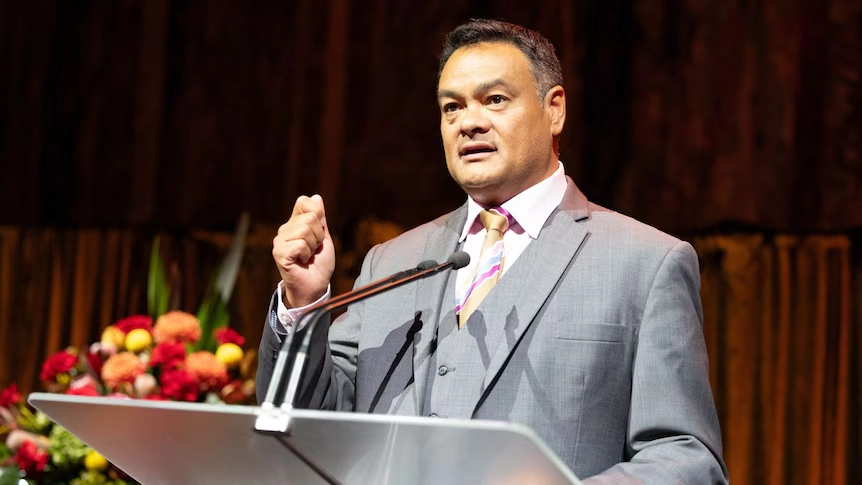
Surgical pioneer Professor Kelvin Kong AM presents the 2026 Wang Gungwu Lecture, premiering on Friday 20 February at 8:00pm AEDT on ABC Australia and ABC iview.

In its fifth year, the annual Wang Gungwu Lecture celebrates the contributions of inspiring Chinese Australians to business, science, politics, education, sport and culture.

Professor Kong is a proud Worimi man of Chinese Malaysian heritage and recognised as Australia’s first Indigenous surgeon. He has dedicated his life to improving the health of others through his work in paediatric and adult otolaryngology, head and neck surgery and his distinguished career spans medicine and policy development with a focus on improving health outcomes for Indigenous communities.

In an uplifting address delivered at Parliament House’s Great Hall in Canberra, Kong honours the sacrifices of his Chinese ancestors who endured war and poverty and his Aboriginal family members who faced structural barriers and policies of exclusion.

Kong also addresses the ongoing challenges faced by Chinese and First Nations peoples who experience racism, microaggressions and assumptions around identity, and reflects on his own experiences navigating his identity and a sense of belonging.

“I’m so humbled by this,” Professor Kong said upon finding out he had been offered to deliver this year’s lecture. “There are so many amazing Chinese Australians in this country that I put on a pedestal and I’m probably sitting on the bottom of that list, so to think that I’m worthy of a conversation makes me extremely honoured.”

Minister for International Development, Minister for Small Business and Minister for Multicultural Affairs, the Hon. Dr. Anne Aly said, Chinese-Australians are the largest multicultural community in the country. Spanning many generations, languages and origins, contributing to every aspect of Australian society.

“Our national story weaves ancient songlines and migrant journeys, with inspiring Australians such as Professor Kelvin Kong AM bringing that story to life. As a Worimi man of Malaysian Chinese heritage, he embodies the intersection of histories that have shaped this country and demonstrates how diversity strengthens our institutions and our shared sense of purpose.”

ABC International Head Claire M. Gorman said, “We are delighted to be bringing Professor Kong’s story to audiences in Australia and to the Asia Pacific across our ABC TV, digital and social platforms, celebrating a unique First Nations and Chinese migrant experience. This is our fifth year of working with the National Foundation of Australia China Relations in producing the Wang Gungwu lecture. It’s a productive partnership which provides a vehicle for us to tell the story of modern Australia to audiences across our region.”

Chair of the National Foundation for Australia-China Relations and the lecture’s host Marina Go AM, said “Professor Kong is an inspiration. He brings to his lecture his skill as a surgeon, a sense of awe at the gift of hearing, and authenticity as a storyteller. As he highlights in his own life the extraordinary contributions of both Chinese-Australians and the Traditional Owners, he brings us together as a nation”.

About the Wang Gungwu Lecture

The annual Wang Gungwu Lecture, named after eminent Chinese historian Professor Wang Gungwu AO, CBE, celebrates the substantial and longstanding contributions of Chinese Australians to Australia’s national story.

The Lecture is a partnership between ABC International and the National Foundation for Australia-China Relations, an initiative of the Department of Foreign Affairs and Trade.

Previous speakers have included Olympic diving champion Melissa Wu OLY, business leader Ming Long AM, Australian Children’s Laureate and author/illustrator Gabrielle Wang, and former Australian of the Year and paediatrician Dr John Yu AC.

Where to watch:

  • The 2026 Wang Gungwu Lecture will premiere on ABC Australia and ABC iview at 8:00pm AEDT on Friday 20 February.
  • It will also be available on demand via ABC Asia from 9:00am AEDT on Saturday 21 February.
Global Media Security: Tim Davie and Fiona Crack speak about the BBC World Service

Global Media Security: Tim Davie and Fiona Crack speak about the BBC World Service

Global Media Security: Tim Davie and Fiona Crack speak about the BBC World Service

Speaking at Global Media Security and Innovation 2026 event organised by the BBC World Service, BBC Director-General Tim Davie emphasised the World Service’s growing importance in times of insecurity and instability and urged the UK government to back the World Service.

BBC News Global Director Fiona Crack pressed the case for innovation, investment, and urgent intervention in the distribution space.

Both speeches can be read here: Tim-Davie&Fiona-Crack-GlobalMediaSecuritySpeeches.

Greeting the participants at the event, which focused on overcoming barriers to open and free media and discussed new ways of providing reliable content to global audiences, Tim Davie said:

“Media security means two things: the ability to produce journalism and the means to deliver it. For BBC journalism to thrive, and to be useful for people around the world, they need to have access to it. There is little point in producing world class journalism if people cannot read, see and hear it.

“This conversation comes at a critical time for the BBC. We’re in the middle of a discussion about the BBC’s future as part of the process of reviewing our Royal Charter. The BBC World Service is front and centre of that debate. Today it remains the most trusted international news provider around the world. Across 43 languages, it’s thanks to the World Service that BBC News reaches 418 million people on average every week.

“I have often talked about the growing importance of the BBC World Service in times of insecurity and instability. People in all corners of the globe depend increasingly on our ability to reach them with independent, impartial, accurate journalism they can trust. So as part of Charter review, we’re making the case for a strong BBC World Service that’s fit for the future.

“In the meantime, the current funding arrangement with the Foreign Office runs out at the end of March. Seven weeks today. We’re waiting to hear the outcome of the settlement. But while we do, other Western news organisations are cutting their international reporting teams, disinformation is flooding the digital sphere at an incredible speed, and state-backed media firms are using AI to promote propaganda.

“We have no time to lose. As a country, we face big decisions about our role in the international arena.

“I urge the government to back the World Service, to act decisively and confidently about what we can achieve in this space, and to act soon… So that amid all the global uncertainty, audiences can continue to rely on our journalism – the very best the UK has to offer.”

Fiona Crack, Global Director, BBC News said:

“If trusted news is the frontline in a war against disinformation, we are face to face with the enemy. And to be fit for this fight, we need to innovate and invest in our technological armour. Distribution and media security is an area that has always been a strength for the UK; we are building on a history of integrity and trust. But the world order is rapidly changing.”

She added: “How we reach our audiences is under considerable strain. Instances of hostile interference are climbing. The BBC is blocked, jammed, throttled or subject to shutdowns in an escalating number of countries. Only last month, when confronted with civil unrest, the Iranian regime enforced a total internet blackout. This is a problem on the rise.”

She concluded by saying: It is our greatest duty to serve those in greatest need. As the largest and most trusted international news provider, the BBC World Service can play a unique role in helping to bring media security to countries and populations globally – but we can only do so with an industry-wide response and the right long-term investment in circumvention. Let me be clear, creating enhanced routes to audiences is no longer a desirable outcome. It is business critical. The risks of not doing so are far too great.”