25 May 2018
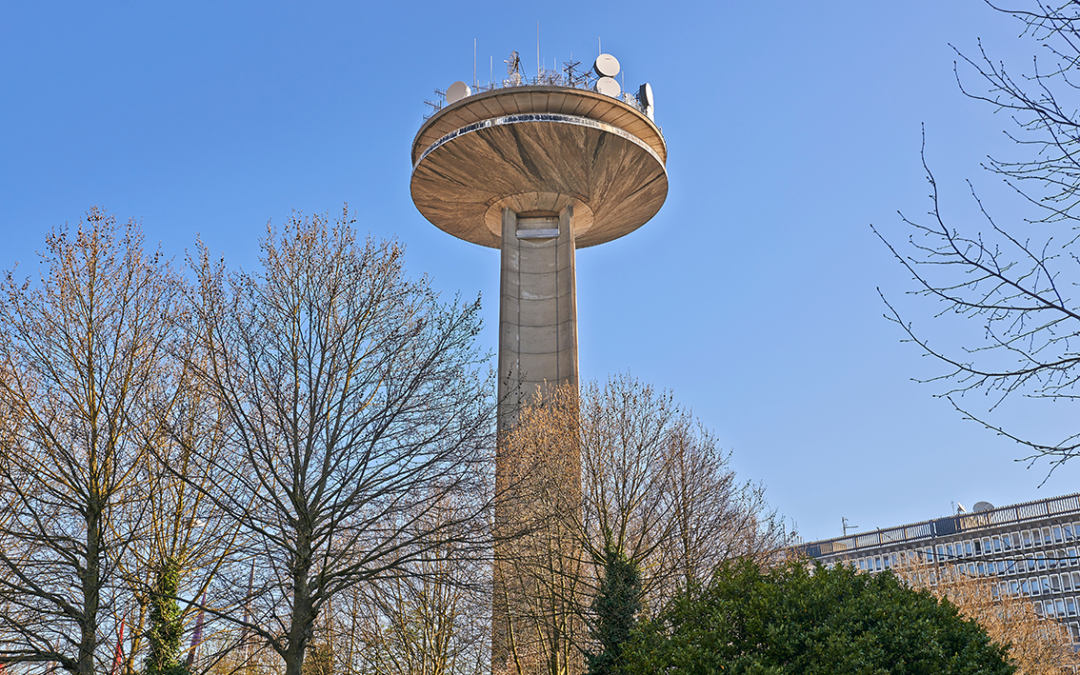
Deutsche Welle (DW), Germany’s public international broadcaster, marked its 65th anniversary in May.
DW was launched on 3 May 1953 with a speech by then Federal President Theodor Heuss who addressed the “dear listeners in faraway countries”. DW started broadcasting three hours a day on shortwave in German only. It added five-minute news bulletins in English, French, Spanish in October 1954 and gradually expanded its offer.
No longer just an international radio broadcaster DW is now a global multimedia network.
DW introduced television in 1992, DW TV is now available round-the-clock in four languages: German, English, Arabic (Middle East, North Africa and Europe) and Spanish (for Latin America).
DW offers a variety of audio content and publishes online news in 30 languages on dw.com. It is seen as a trustworthy service, according to 96 per cent of its worldwide users.
In 1965 Deutsche Welle launched its Academy which has trained thousands of journalists from around the world.
Deutsche Welle’s 2017 budget was around €326m, from the federal tax budget.
DW says it employs some 3,400 people from 60 countries in Bonn and Berlin.
The Channel interviewed then DW DG Erik Bettermann in 2103 when DW marked its 60th anniversary.
25 May 2018
VRT to drop digital terrestrial TV broadcasts in December
Flemish public broadcaster VRT has announced that it is to end its DVB-T digital terrestrial TV (DTT) broadcasts on 1 December.
VRT DTT offer is available in Flanders and the Brussels region. VRT says that the high cost of operating this service (€1m a year) is not justified by the relatively small number of users (45,000). VRT signalled that it was willing to discuss with TV Vlaanderen, a private digital satellite TV and DTT (using DVB-T2) service provider for the Flanders region, to make its offer available on TV Vlaanderen DTT services.
VRT also indicates that its offer is available via VRT NU (VRT Now), which is accessible on any device and offers also rewind / forward features and catch-up services, via cable (Telenet), IPTV (Proximus-Scarlet-Orange), satellite (TV Vlaanderen) and also via platforms such as Stievie.
Given the long advance notification it is to be expected that most current users of VRT DTT offer are unlikely to lose the service.
8 May 2018
Broadcasts from the BBC and VoA have been stopped in Burundi, two weeks before the country votes in a referendum that could see the president’s rule extended for over a decade. At the same time, Radio France Internationale has been warned against broadcasting remarks that are “untruthful and partisan”.
On 4 May, a statement was issued by the country’s media regulator, the National Communication Council, stating: “The international radios, ‘BBC London’ and ‘Voice of America ‘VOA’ have been suspended from broadcasting throughout the Burundi territory for six months starting on 7 May 2018 for breaching laws regulating the media and unethical conduct.”
“We are dismayed by the actions taken today by the Burundi National Communications Council to ban VOA from broadcasting its news and information programs,” said VOA director Amanda Bennett.
 According to Human Rights Watch, Burundi enjoyed one of the most independent media environments in the region. When President Pierre Nkurunziza (pictured) – who has been in power since 2005 – announced his bid for a third term in 2015, there was a significant tightening of restrictions on the media. Today, the World Press Freedom Index ranks Burundi at position 159 of 180 countries in the press freedom index.
BBC World Service programmes have been carried on its local FM relays in Burundi until the crackdown: Bujumbura on 90.2MHz and Mount Manga on 105.6MHz. VoA also has two local FM relays in the country.
30 April 2018
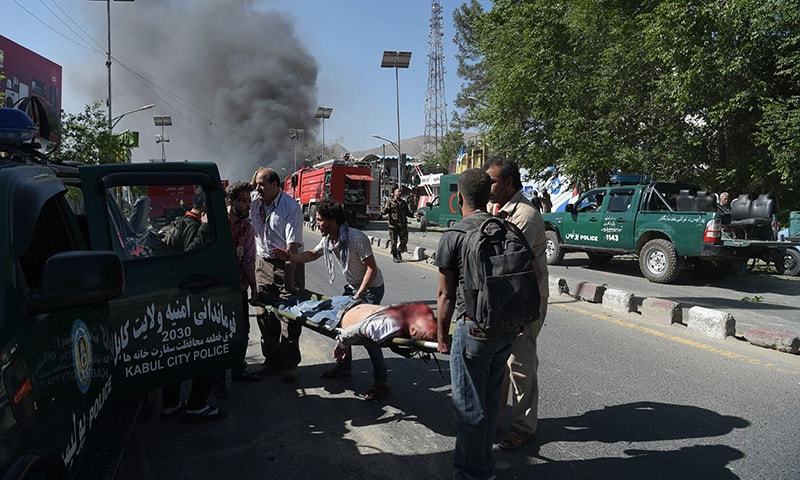
Monday 30 April has been one of the deadliest days for journalists working in Afghanistan. Ten journalists were among dozens killed in multiple attacks across the country. News Agency AFP says that it is the worst days for the country’s media since 2001.
AFP reported that two suicide blasts in Kabul killed 25 people including Shah Marai, the agency’s chief photographer in Kabul, along with at least eight other journalists. Reporters Without Borders said this was the most lethal single attack on the media since the fall of the Taliban.
The attack, claimed by the Islamic State group, was condemned internationally by groups including the United Nations and the European Union, and spurred an outpouring of grief among Afghan journalists, many of whom took to Twitter to post tributes to colleagues and friends.
Journalists from Radio Free Europe and Afghan broadcasters Tolo News and 1TV were among those killed in Kabul.
 AFP’s Marai – who was buried later Monday – joined the international news agency as a driver in 1996, the year the Taliban seized power, and began taking pictures on the side, covering stories including the US invasion in 2001.
In 2002 he became a full-time photo stringer, rising through the ranks to become chief photographer in the bureau. He leaves behind six children, including a newborn daughter.
“This is a devastating blow for the brave staff of our close-knit Kabul bureau and the entire agency,” said AFP Global News Director Michele Leridon, describing him as a “treasured colleague”.
“We can only honour the extraordinary strength, courage, and generosity of a photographer who covered often traumatic, horrific events with sensitivity and consummate professionalism,” Leridon said.
“We also send our condolences to the families of other journalists killed in this terrible attack.”
Jamie Angus, Director of BBC World Service, announced: “It is with great sadness that the BBC can confirm the death of BBC Afghan reporter Ahmad Shah following an attack earlier today. The attack took place in Khost province.

“Ahmad Shah was 29. He had worked for the BBC Afghan service for more than a year and had already established himself as a highly capable journalist who was a respected and popular member of the team.
“This is a devastating loss and I send my sincere condolences to Ahmad Shah’s friends and family and the whole BBC Afghan team. We are doing all we can to support his family at this very difficult time.”
Photo credits: AFP/BBC
12 April 2018
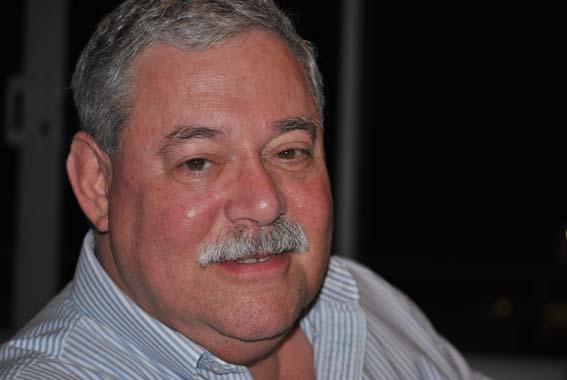
It is with sadness that we report the death of Dick Tauber of CNN, well-known and respected in the international broadcasting community.
Jack Womack, SVP, CNN Worldwide writes:
I’m sorry to share with you that we lost our friend and colleague Dick Tauber last night. Dick was 73 years old and died after a lengthy illness.
Dick started his career at CNN as second in command running the Satellite desk one year after its launch in 1980. After an incredible 32-year career at CNN, Dick retired in 2013 as VP Transmission Systems and New Technology.
Dick had so many accomplishments here at CNN. When CNN received wide acclaim for being the only network to Broadcast live from Baghdad during the first Gulf War, it was his idea to marry the Baghdad to Amman and Amman to Atlanta four-wire audio circuits in Amman, allowing CNN its historic coverage and being the only U.S. television network to broadcast live as bombs fell.
Dick also championed and pushed the network into new field transmission technologies and satellite transponder capacity. Along with others, he was instrumental in CNN with expanding the satellite truck fleet and acquisition and deployment of CNN’s fly-away uplinks.
Dick loved his job and being an important part of CNN. He always wanted to make sure CNN was first with transmission from any spot on the planet. Dick secured his place as one of the people that helped build CNN from almost the start of CNN in the 1980’s into what it is today.
Dick’s dedication to the industry included his long chairmanship of the World Broadcasting Unions-International Satellite Operations Group (WBU-ISOG) that worked to communicate to the satellite industry the most important requirements of broadcasters and to collaborate on procedures that protected interference issues. He also represented TBS/CNN at the North American Broadcasters Association (NABA) and was on the board of directors from 1998-2003.
He won many industry awards spanning three decades, including the Outstanding Individual Achievement Emmy Award for Satellite Coordination for the Turner Broadcasting Systems GOODWILL GAMES from the National Academy of Television Arts and Sciences in 1986, to a 2007 Science and Technology Emmy Award and IBC Judges Innovation Award, both for development and implementation of CNN’s revolutionary Digital Newsgathering transmission system. In 1991, Dick received an “Industry Visionary” award from Communications Week magazine as one of the “25 Most Influential” industry leaders for the year.
Dick had a great sense of humor and mentored so many people at CNN to share in his love for the news and satellite transmission industry.
Dick will be greatly missed. Please join me as we offer our condolences to the Tauber family.
21 March 2018
According to a report in the South China Morning Post, China is planning to merge its state television and radio networks into one mega broadcaster in an overhaul that, the report says, is designed to tighten the Communist Party’s grip on public opinion and burnish the country’s global image.
China Central Television (CCTV), China National Radio (CNR) and China Radio International (CRI) will be consolidated into a new broadcaster that is to be called Voice of China – a name that is reminiscent of international broadcasters at the height of the Cold War.
“Our senior editors are convening meetings to convey the news this afternoon,” said a source who talked to SCMP and who requested anonymity. Another source at CCTV also confirmed the merger to the newspaper.
A document introducing the changes began circulating on social media on Tuesday. It says the consolidated group will sit directly under the State Council, China’s cabinet, and will be led by the party’s Central Publicity Department.
It also outlines changes to the propaganda unit and the Central Organisation Department – two already powerful agencies that will have even more heft after the revamp.
The propaganda department will absorb the country’s top media watchdog – the State Administration of Press, Publication, Radio, Film and Television – taking over its regulatory power on news, publications and film.
According to the document, Voice of China’s main duties will be to “promote the party’s theories, principles and policies”, “coordinate and organise major propaganda coverage”, “strengthen the ability to shape public opinion”, “improve its global communication capabilities”, and “tell the China story well”.
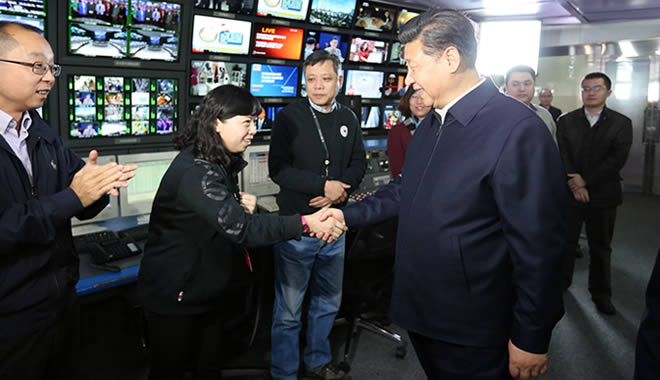
Under President Xi (seen above visiting CCTV headquarters), Beijing has also grown increasingly eager to be heard in a world it sees as dominated by Western narratives that are unfair and biased against China.
CCTV rebranded its international English-language news channel as CGTN in a move some observers say is to distance itself from Chinese state media.