Funding boost for New Zealand public broadcasting

Funding boost for New Zealand public broadcasting

Funding boost for New Zealand public broadcasting

Public broadcasting allocated additional 15m NZ dollars in 2018 budget

New Zealand Broadcasting, Communications and Digital Media Minister Claire Curran announced the allocation of an extra NZD 15m (USD 10.2m, GBP 7.8m, EUR 8.7m) for public broadcasting on 11 July.

This additional funding is to be spread between RNZ (Radio New Zealand), the NZ On Air funding agency and a new fund targeting “under-served audiences”. This increase results from a recommendation from a Ministerial Public Media Advisory Group which found that NZ public media were funded at a lower level compared with those in developed countries of a similar size (Norway, Finland, Denmark, Ireland) as well as in Australia and Canada.

Welcome boost

This extra funding represents a 11.4% boost on the 2017 NZD 131.116m budget for public broadcasting. It will be allocated as follows:

  • NZD 4.5m for RNZ, “so that it can extend its multimedia services to reach more people in different ways – “RNZ + Stage 1’.”
  • NZD 4m for NZ On Air, “to enable it to boost its reach to under-served audiences such as children, and for innovative on-line drama.”
  • NZD 6m for a Joint Innovation Fund “to pilot a new type of sector-wide collaboration that would see RNZ commission content for its platforms from the commercial sector in a joint venture with NZ On Air.”
  • NZD 0.5m for the Ministry for Culture and Heritage (MCH) to undertake research on capacity for media collaboration and the levels of funding for an effective public media

NZ On Air is an independent Crown entity funding agency, which finances media projects and content, including television programmes and activities, community broadcasting as well as local music and artists and other projects that support local content and are important to New Zealanders.

NZ On Air describes its funding model as “unique in the world. Its flexibility has allowed us to follow the audiences, ensuring that as audiences find their media in new ways and places, they can still find local content.”

RNZ was established under the Radio New Zealand Act 1995 as a stand-alone, Crown-owned entity with major responsibilities being National Radio, Concert FM and Radio New Zealand International. RNZ is funded through NZ on Air (92%) the MCH and Parliament’s Office of the Clerk (8%) and receives no advertising revenue.

RNZ total expenditure in 2017 was NZD 38.981m.

The RNZ Charter, reviewed every five years, sets out RNZ operating principles

Wide and varied offer

RNZ offer has evolved and expanded since the 1995 Act. It includes now:

RNZ National, which broadcasts round-the-clock, its programme mix includes news and current affairs, documentaries and features, drama and music. At least 33% of the music it broadcasts is New Zealand in origin.

Talk-orientated programmes make up 60% of air time. Specialist features and documentaries produced exclusively for RNZ National focus on the interests of particular groups in the community.

Māori programming can be heard across the schedule.

RNZ Concert is RNZ’s fine music network. Music comprises 85% of air time. Much of this is classical, with additional specialist music programmes covering jazz, contemporary and world music.

Concert actively promotes New Zealand music and composition, providing an important showcase for the best of the country’s performing artists. “Its specialised production department commissions work from New Zealand musicians and composers, and initiates an extensive range of music programmes. The station delivers live broadcasts of concerts and recitals both of New Zealand artists and visiting international artists.”

Concert also features international programmes selected from public radio broadcasters overseas.

RNZ Pacific (formerly Radio New Zealand International or RNZI) provides a wide range of New Zealand programmes to listeners in the Pacific and beyond.

RNZ Pacific programmes are streamed online, and are available also in North America, Europe, Asia Pacific and Africa on World Radio Network (WRN – in ), on SW frequencies around the Pacific, and some Pacific stations rebroadcast also RNZI News Bulletins and other features.

In addition to its English-language programmes, RNZ Pacific broadcast daily short (4 – 10 minutes each) news bulletins in the following languages: Niuean, Cook Island Maori, Tongan, Samoan.

NZ Parliament broadcasts all sittings of Parliament.

The RNZ News service “provides vital elements throughout [its] 24-hour programming schedule, bringing impartial news and information to New Zealanders every day.”

Online Broadcasting

RNZ provides live-streaming of all its broadcasting services: RNZ National; RNZ Concert; RNZ Pacific, and the Parliamentary Network.

Most spoken word content is also available on-demand, with an online programme library which currently features more than 170,000 individual items.

Online broadcasting services are accessible through the RNZ website and smartphone applications.

What about television?

There is no public-funded television network in New Zealand.

TVNZ (Television New Zealand) is a Crown-owned fully commercially-funded commercial TV network.

It operates three channels, TVNZ 1, a general interest channel (news and current affairs, locally and internationally-produced drama, general entertainment and documentaries) TVNZ 2, which targets a younger audience with  dramas, comedies and reality TV shows, and TVNZ Duke, airs comedies, dramas, documentaries, movies and sport.

Sources

NZ On Air Annual Report 2017; RNZ Annual Report 2016/2017; TVNZ Annual Report 2017
Russia threatens France 24 with losing licence

Russia threatens France 24 with losing licence

Move follows French media regulator warning to RT France

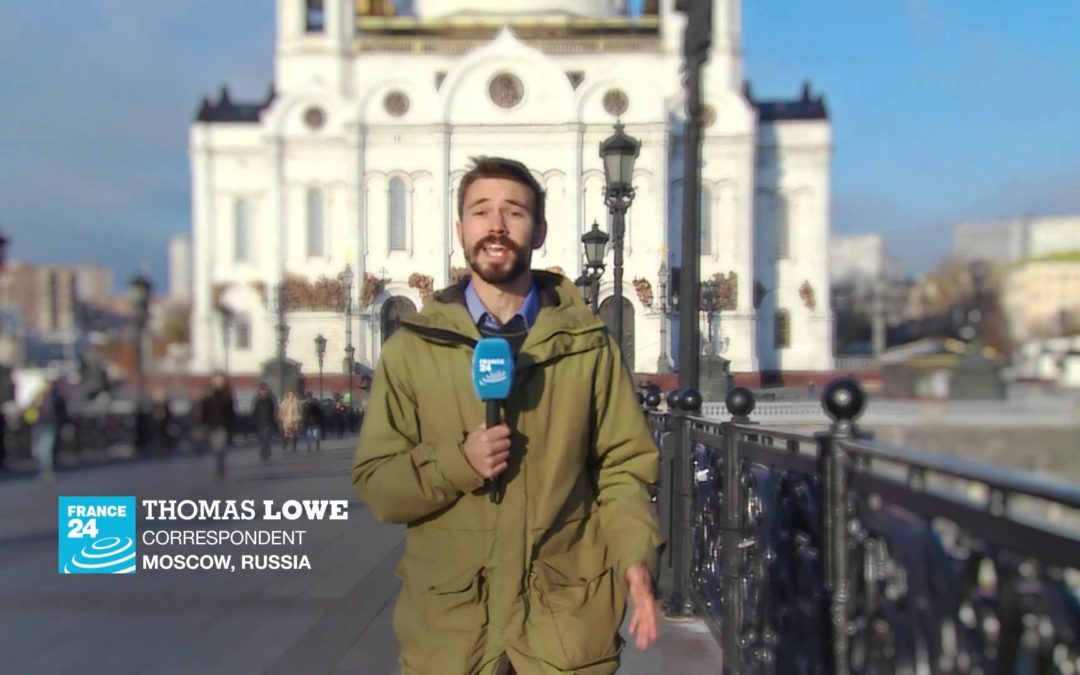
The Russian federal agency regulating the mass media and telecommunications, Roskomnadzor, warned French international TV news channel France 24 that it was in violation of a Russian media law for being “under the control of a foreign legal entity”, Russian news agency Tass reported on 29 June. The law limits foreign ownership of media companies in Russia to 20 per cent.

In a letter to the channel Roskomnadzor warned France 24 that it could be stripped of its licence.

A day earlier the French broadcast media regulator CSA had issued a warning to RT’s French-language outlet, RT France, over what it said was a misleading report about a suspected chemical attack in Syria broadcast earlier this year.

RT France said that “the misleading association between the translation and a specific video clip aired on 13 April was the result of a purely technical glitch, which has since been put right.”

The CSA didn’t fine RT France, but it has the authority to do so or to suspend its licence.

Clear retaliation

Roskomnadzor’s threat is seen as being a clear retaliation to the CSA warning, as confirmed by comments made by RT chief editor Margarita Simonyan to Russia’s state news agency RIA Novosti. “Russia is a big country, unlike many, we can afford ourselves the luxury of tit-for-tat measures,” Simonyan was quoted saying.

BBC DG and France Télévisions CEO elected EBU President and Vice-President

BBC DG and France Télévisions CEO elected EBU President and Vice-President

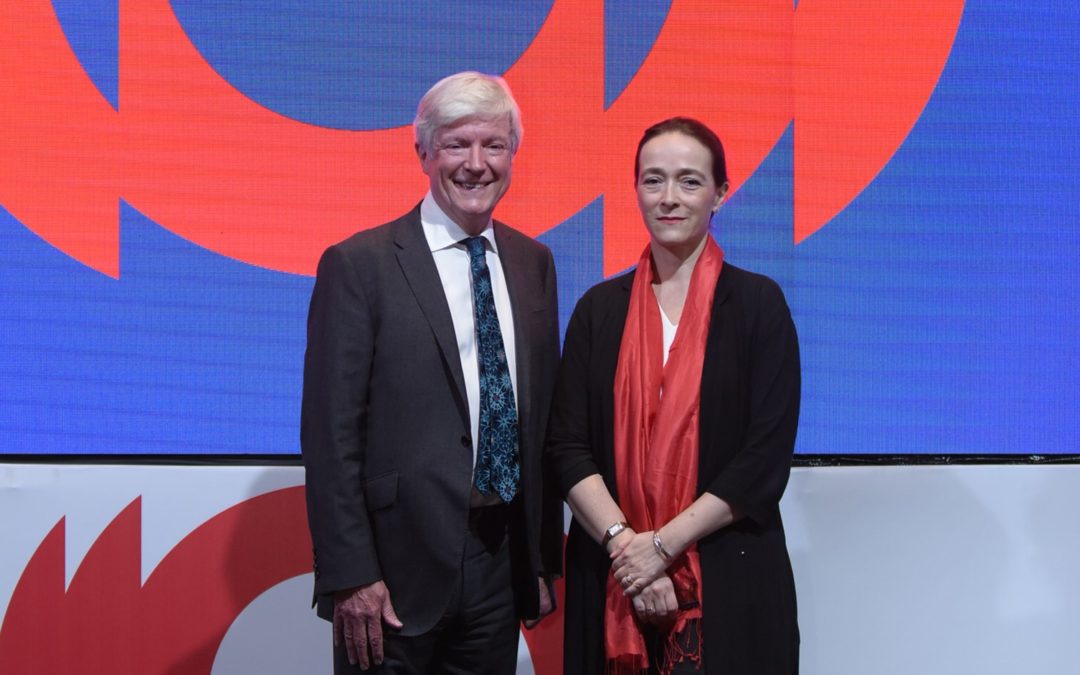
The European Broadcasting Union (EBU) has elected BBC Director General Tony Hall as its new President, and France Télévisions CEO Delphine Ernotte Cunci to serve as EBU Vice-President.

Both were elected by absolute majority at the EBU’s 80th General Assembly in Tirana on 29 June.

They will succeed outgoing President Jean-Paul Philippot, General Administrator of the Radio Télévision Belge de la Communauté Française (RTBF), who has served as EBU President since 2009, and RAI (Radiotelevisione Italiana) President Monica Maggioni, EBU Vice-President since 2015.

Hall and Ernotte Cunci will take up their new roles from 1st January 2019 for a two-year period. Since they are not already members of the EBU Executive Board, they shall each assume non-voting Observer status on the Board until their term of office begins. The EBU Executive Board is made up of 11 members.

Following EBU procedure for nominations on the Executive Board, the President and the Vice-President elected for the next term co-opt a third person chosen for having experience in how the EBU operates. Together, they constitute the Board Nomination Committee, which will draw up a list of candidacies for a seat on the Board; these candidacies must be received no less than 10 weeks before the General Assembly Winter Session.

The Board Nomination Committee sends the list to all EBU Active Members for comments.

After receiving these the Committee sends “to all Active Members its list of nine candidates, which shall be balanced and include persons from the main contributors to the Union and from other categories of Members, reflecting the geographical and cultural diversity of the Union.”  

The nine members who will serve on the Board, with the President and Vice-President, are all senior representatives of EBU Active Member organizations and are elected by the General Assembly at its winter session for a two-year tenure.

The Executive Board meets around seven times a year.

The EBU has 73 Members in 56 countries from Europe and beyond

WBU Position on C-Band June 2018

WBU Position on C-Band June 2018

Background The World Broadcasting Unions International Media Connectivity Group (WBU-IMCG) Intentional Interference to Satellite Services Working Group (IISS) has drafted the following proposal for a WBU position on C-Band. In producing the proposed position below, the group referenced and updated the 2015 WBU-ISOG[1] position on C-Band. Examples of the impact on broadcasters of interference to their C-Band downlinks were invaluable in industry defense of C-Band spectrum at ITU WRC-15.

WBU C-Band Position

WBU members welcome technological change and the benefits it brings to both audiences and broadcasters. At the same time, many tried and tested technologies continue to deliver reliable and efficient services for WBU members. Satellite services have long provided valuable broadcasting services and remain an essential part of often complex broadcast supply chains serving our audiences, both nationally and internationally, for public service and commercial broadcasters.

C-Band FSS downlink frequencies between 3,400-4,200 MHz, have been and are extensively used throughout the world by WBU members for Fixed Satellite Services (FSS) applications and will continue to be used for the foreseeable future, in particular above 3,600 MHz. Since FSS downlink sites receive extremely weak signals from satellites in geosynchronous orbit, they are particularly fragile and susceptible to interference. WBU members have experienced serious interference to services where this spectrum has been opened up to other users and, because few countries require these receive-only downlink sites to be licensed or registered, little recourse is available. The WBU encourages our members to register their downlink sites.

WBU members have been and will continue to be highly dependent upon the use of satellite services using C-Band spectrum to 100 of thousands of FSS downlink sites for contribution and distribution. C-Band allows the operation of reliable, efficient and cost effective global and regional contribution/distribution systems and is also ideally suited to delivering media services into rapidly developing regions of the world. The potential allocation of C-band FSS spectrum to Mobile Services will create chaos to the economics of broadcasting by satellite, potentially interrupting services to audiences around the world. Furthermore, C-Band is critical for satellite services in tropical regions as it suffers less from the attenuation effects of heavy rainfall than higher frequency bands.

WBU members therefore call on satellite service providers and government regulators to protect the availability of the upper part of the C-Band spectrum, where the band has been allocated to satellite services and is currently used to provide many broadcasting services, enabling broadcasters around the world to continue to provide vital broadcasting services to billions of people across the world.

1 WBU-IMCG was previously known as the WBU International Satellite Operations Group (WBU-ISOG).

US international broadcaster cuts operations in Myanmar

US international broadcaster cuts operations in Myanmar

Radio Free Asia (RFA), the private, nonprofit US government-funded corporation that broadcasts to Asian countries, halted its TV broadcasts to Myanmar saying it “will not compromise its code of journalistic ethics.”

Myanmar

RFA aired its last original TV broadcast on the Democratic Voice of Burma (DVB) network on state-owned Myanmar Radio and Television (MRTV) on 11 June.

RFA took this decision after the Myanmar government told DVB that it could not carry RFA’s programming if the word “Rohingya” continued to be used. RFA’s Burmese Service’s TV programming has been available on DVB since October 2017.

Explaining the  broadcaster’s decision to pull out, RFA’s President Libby Liu (pictured) said: “Radio Free Asia will not compromise its code of journalistic ethics, which prohibits the use of slurs against ethnic minority groups. RFA will continue to refer to the Rohingya as the ‘Rohingya’ in our reports. Use of other terms, even those that fall short of being derogatory, would be inaccurate and disingenuous to both our product and our audience.

“By forbidding the use of the word ‘Rohingya,’ Myanmar’s government is taking an Orwellian step in seeking to erase the identity of a people whose existence it would like to deny. RFA will continue to provide audiences in Myanmar with access to trustworthy, reliable journalism, particularly when reporting on issues that local and state-controlled media ignores and suppresses.”

Following a Burmese military crackdown in Myanmar’s Rakhine state some 700,000 Rohingya Muslims have fled to Bangladesh since August 2017.

RFA indicates that its content and programming will continue to be available for its audience in Myanmar on shortwave, social media (YouTube/ Facebook) and RFA Burmese’s website.

DVB, which aired RFA TV broadcasts, is a Thailand-based multimedia organization run by Burmese expatriates. It was launched in Norway in 1992, broadcasting to Myanmar on shortwave. It started TV broadcasts in 2005. In February DVB signed an agreement with MRTV to broadcast its channel free-to-air in digital format in the country.

Two Reuters journalists were arrested in Myanmar on 12 December 2017 and charged with violating the Official Secrets Act.

Striking where it hurts

Striking where it hurts

Qatari pay-TV operator claims widespread Saudi-backed piracy harming its services

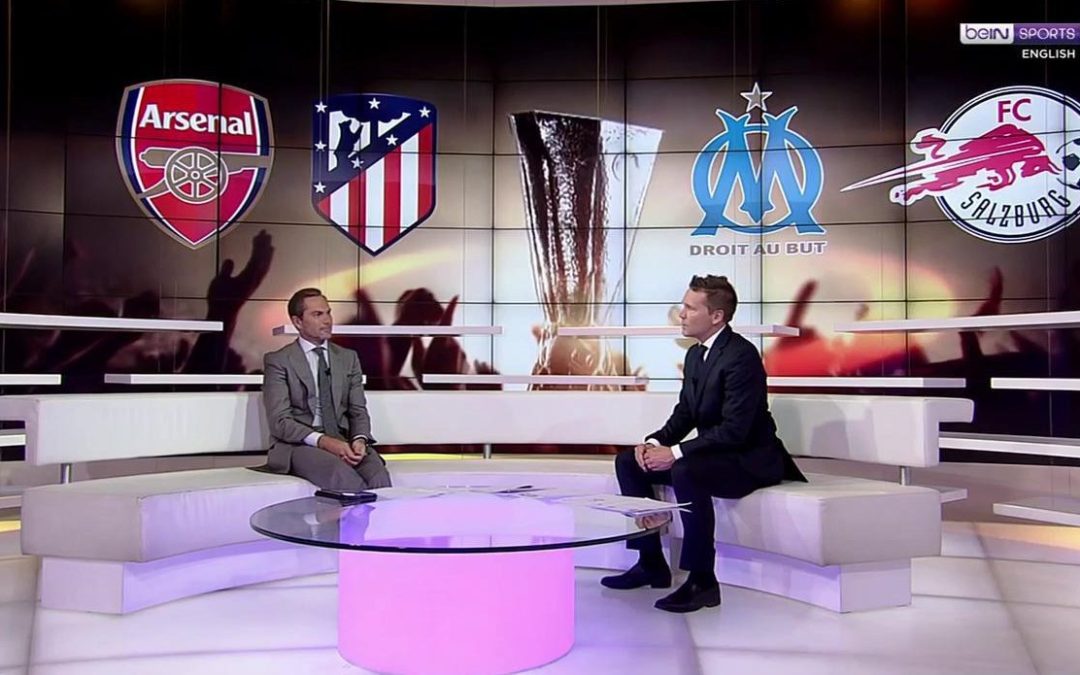
Subscription TV services are often targeted by individuals and rogue operators eager to access content for free, sometimes to redistribute it for profit. Subscription-only sports and film channels are victims of choice for pirates. The Qatar-based beIN Media Group claims that its content has been pirated and distributed across the Middle East region by a Saudi-based piracy network since October 2017. Loss of subscriptions and revenues is of serious concern for the operator less than a fortnight before the start of the FIFA Football World Cup. beIN owns exclusive rights to the World Cup, but damage and losses are likely to extend after and beyond it. The attack looks to be clearly politically motivated.

Why beIN Media?

Relations between Qatar and Saudi Arabia have been quite strained over many years. Saudi Arabia, opposes the Muslim Brotherhood a political Islamist group founded in 1928, which it sees as a threat to the kingdom’s institutions and declared as a terrorist organisation in March 2014.

Saudi Arabia blames Qatar for supporting the Muslim Brotherhood, which openly supported uprisings in Arab countries from 2011, and other Islamist movements, such as Hamas, which it labelled an extremist organisation in June 2017.

Following an alleged hacking incident of Qatari news and social media websites on which false and incendiary quotes attributed to Qatar’s emir, Sheikh Tamim Bin Hamad al-Thani, were posted in late May 2017, Saudi Arabia, several Gulf Cooperation Council (GCC) countries and Egypt severed relations with Qatar. Some countries shut down all broadcasts of Qatari media inside their borders, including Al Jazeera, and expelled journalists working for the network.

Later that month these countries issued 13 demands to end the diplomatic crisis. These included calling on Qatar to end its support for extremist organisations such as the Muslim Brotherhood and Hamas, and the closure of Al Jazeera.

Saudi Arabia sees Al-Jazeera Arabic as very partisan and close to the Muslim Brotherhood.

The beIN Media Group was created in January 2014 after Al Jazeera dissociated itself from all its sports activities. The holding expanded its portfolio to include movies, general entertainment, factual and kids content, it acquired the film and television studio MIRAMAX and the largest Turkish pay-TV platform, Digiturk, in 2016. The group has now a portfolio of some 60 channels distributed in 43 countries across five continents.

beIn channels are available in the Middle East via Qatar’s Es’hailSat (25.5° East) and Egypt’s Nilesat (7.3° W) satellites.

High stakes

beIn claims that a Saudi-based piracy network calling itself “beoutQ” has been pirating and selling subscriptions to ten satellite channels carrying premium live sports content stolen from beIN and other broadcasters since October 2017.

This is a very sophisticated and well-funded operation. Tom Keaveny, beIN’s managing director for the Middle East, told The New York Times that beoutQ’s operation “takes industrial scale knowledge and ability and multimillion dollar funding … This isn’t someone in their bedroom.”

Pirated beoutQ channels are available on set top boxes (STBs) openly sold in retail outlets across Saudi Arabia and other countries. However, Oman banned the importation and sale of beoutQ STBs in late May.

beoutQ channels are beamed from the Arabsat-operated Badr 4/5/6/7 satellites (at 26° East).

beIN called on Arabsat to cease making its facilities available to beoutQ, but the satellite operator has denied liability.

beIN general counsel Sophie Jordan told AFP “We have requested FIFA to take direct legal action against Arabsat and the indications we have, show that they are behind that.” Despite saying it supports beIN’s anti-piracy efforts, “FIFA has been reluctant to openly criticise Saudi Arabia,” according to The Independent, unsurprisingly since Saudi and UAE investors are backing a $25bn plan to create global football tournaments for FIFA.

Saudi Arabia officials told The Independent that neither Arabsat nor the Kingdom had any affiliation with beOutQ. Furthermore, they said, Arabsat does not control the content transmitted on its satellites.

It will be interesting to see if beIN will succeed in protecting its valuable content from what seems to be a hostile state-sponsored undertaking.