24 January 2018
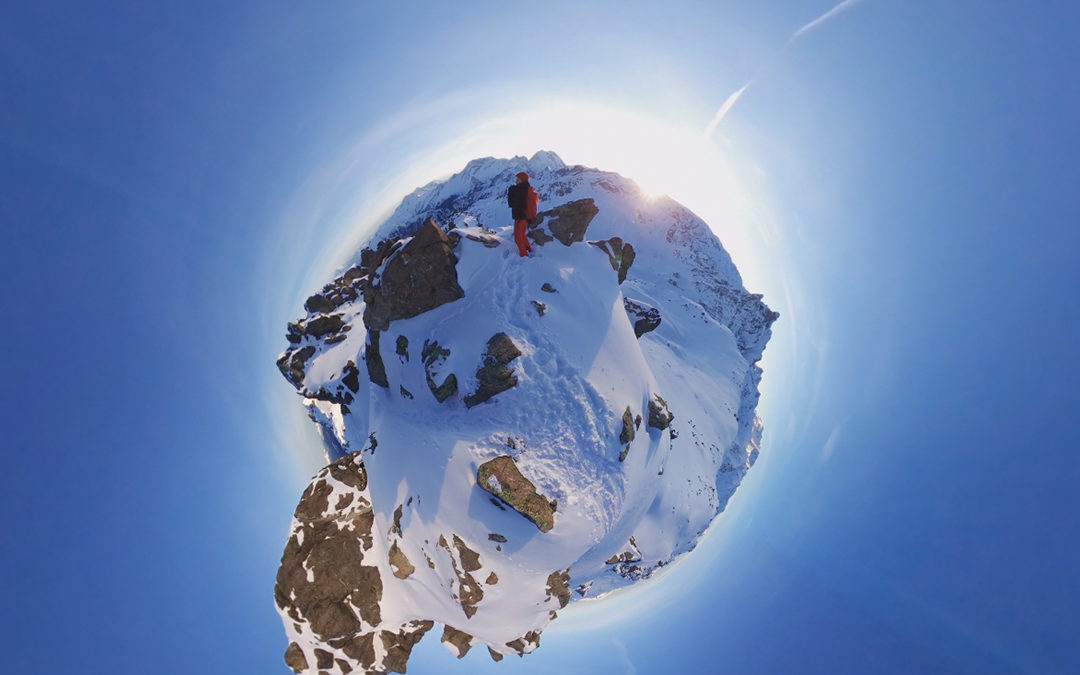
For the first time, Euronews’ 360° news content is available on smart TVs across the globe thanks to a partnership with The Dream VR, the world’s first VR and 360° TV platform.
Euronews, the pioneer international newsroom in the production of immersive video reports, partners with The Dream VR, the only technology provider in the world able to broadcast 360º content on connected TVs.
For a potential audience of 300 million Samsung Smart TVs and 50 million Apple TVs in 180 countries, a patented technology allows The Dream VR users to activate Euronews 360º content on Smart TVs using just the remote control arrows.
A selection of Euronews’ best immersive content is already available via a dedicated channel on The Dream VR app and fresh content will be uploaded as it is produced.
Euronews is the first news media to partner with The Dream VR, joining over 150 channels, with content from Disney, Sony, Universal, Univision and leading soccer clubs around the world.
The partnership also includes monetisation of Euronews’ 360º videos via display advertising.
Euronews was the first international newsroom to fully incorporate 360º video news into its production workflow in 2016. Today, this cutting-edge publishing platform reaffirms Euronews’ position as a leading innovator in Europe when it comes to immersive journalism.
The Dream VR team is located in Madrid, Barcelona and Miami. Its VR app has 2 million downloads and is available on every major 360º and VR platform including Samsung Smart TV, Appel TV, iOS, Android, Google Daydream, Oculus Rift, Samsung Gear, HTC Vive, Topying, Pico and coming soon to PSVR.
| |
Thomas Seymat, VR & immersive journalism editor, Euronews |
“Reaching new audience is the Euronews immersive journalism team’s aim in 2018. We are very pleased to benefit from the innovative and exclusive worldwide solution from The Dream VR to allow smart TV viewers to live a unique experience of international and European news.”
| |
Albert Palay, CEO THE DREAM VR |
“THE DREAM VR is extremely glad to be able to have Euronews as a partner, the latter being the biggest news player in Europe, with growing potential and influence around the world thanks to their recent partnership with NBC News. This collaboration gives us the chance to have great up-do-date content of general interest, which will attract a varied and high standard public worldwide.”

22 January 2018
Under the theme of ‘SHABAB2030’ (‘Youth 2030’), the latest edition of “MBC AL AMAL” yearly event took place Sunday at the Palazzo Versace in Dubai. The annual awards by MBC Group aim at supporting and promoting sustainable development, creative youth projects and entrepreneurship in the region – as well as enabling students from low-income backgrounds a chance at pursuing higher education.
The 2018 ceremony was attended by notable guests from the United Nations High Commissioner for Refugees (UNHCR), represented by Toby Howard, Head of UNHCR office in the UAE, as well as the World Food Programme (WFP). Several partners, specialists, social activists and other VIP guests were also in attendance.
Hosting leading institutions in the region, entrepreneurs, creative visionaries and small and medium-sized enterprises – all distinguished by their tireless work towards social, humanitarian and youth initiatives – the “MBC AL AMAL” awards included three segments: Part one of the event was dedicated to honouring MBC AL AMAL partners from humanitarian and other non-profit organisations.
This was followed by the announcement of the winners of the ‘SHABAB2030’ project, which aims at encouraging young people all over the Arab world to get involved in creative, innovative and sustainable projects that can change the world for the better. Last but not least, the final segment of the event saw five female students awarded the Soraya Al-Salti University Scholarship. Named after the late Jordanian activist, this scholarship – managed by Newton Education Services – offers a number of fully-funded and partial scholarships for Arab women looking to pursue a master’s degree in various fields, for up to two years. The total value of the grant is $100,000, which was this year distributed equally to the five winners.
CEREMONY AND AWARDS
Sam Barnett, CEO of MBC Group delivered an opening speech welcoming guests and thanking them for being “partners and pioneers of hope”. He stressed the importance of individual and youth initiatives in activating the economic cycle, in addition to the necessity of supporting development projects pertaining to empowering the younger generation and building a better future for them. He also noted the “importance of broadcasting positive spirits, keeping the torch of hope lit despite wars, crises and obstacles to promoting diversity.”
MBC AL AMAL PARTNER WINNERS
- Education for Employment (EFE): Received by Andrew Baird, CEO, EFE Global.
- United Nations High Commissioner for Refugees (UNHCR): Received by Toby Howard, Head of UNHCR office in the UAE.
- Generations for Peace (GFP): Received by Dr. Mohanned Al-Arabiat, GFP Board Member and President.
SHABAB2030 WINNERS
The ten winners were chosen after presenting their projects to a committee of prominent investors and major companies in the region. This pitch, in association with “MBC AL AMAL”, was held with the aim of finding the projects with the most potential to scale.
- Ahmed Al Azzouzi, Toufoula Kids (Tunisia)
This mobile application specialises in Arabic-language educational content aimed at children in pre-school and school.
- Afnan Ali, Eureka (Jordan)
Specialising in tech-education, this academy prepares children to become engineers or tech-entrepreneurs through comprehensive multi-level programmes.
- Ahmed El-Murtada, SIMPAY (Sudan)
A start-up that provides online-market places, crowd-funding sites, and small platform-oriented businesses with applications to seamlessly facilitate easier and faster payment-processing.
- Amira Cheniour, SEABEX (Tunisia)
An agricultural e-monitoring and smart automation system that helps farmers make better use of available resources, such as water and energy, to produce larger quantities that are of better quality.
- Hassan Al-Balawi, Wakecap (Kingdom of Saudi Arabia)
Focusing on utilising wearable technology products to improve safety and productivity at construction and industry sectors.
- Mostafa Kandil, SWVL (Egypt)
This private alternative to public transportation enables individuals taking a journey in the same direction to share a ride during rush hour for a flat fare. The carpool-style system increases efficiency for all involved.
- Layal Jebran, Moubarmij (Lebanon)
A platform that provides high-quality educational programmes online, focusing on Arabic tutorials in video form.
- Ahmad Al-Hidiq, Salamtak (United Arab Emirates/Palestine)
The code name for an initiative launched under HeyDoc!, this telemedicine platform connects patients with doctors, no matter the location.
- Khaled El-Nems, E-Rain Gate (United Arab Emirates/Egypt)
A venture that controls irrigation systems via small electronic networks. This prevents systems from flooding during heavy rain or storms.
- Hashim Al Zaabi, Wavex (United Arab Emirates)
Combining features that promote renewable and sustainable solutions, this project carries out crowd-funding for renewable projects, as well as energy transactions via blockchain.
SORAYA AL-SALTI UNIVERSITY SCHOLARSHIP RECIPIENTS
- Irene Baghdadi (Egypt): Sustainable Development
- Khadija Radwan (Egypt): Design and Project Management
- Lynn Sharbatly (KSA): Law
- Mayada Sabry (Jordan): Communication Disorders
- Mariam Al-Nahrawi (Egypt): Geological Sciences.
Finally, the event’s entertainment was provided courtesy of the much-loved Palestinian singer, Yacoub Shaheen – best known as the 2017 “Arab Idol” – who presented the choir “Sonbola”, comprised of refugee children with outstanding musical talents.
(Source: MBC press release)
19 January 2018
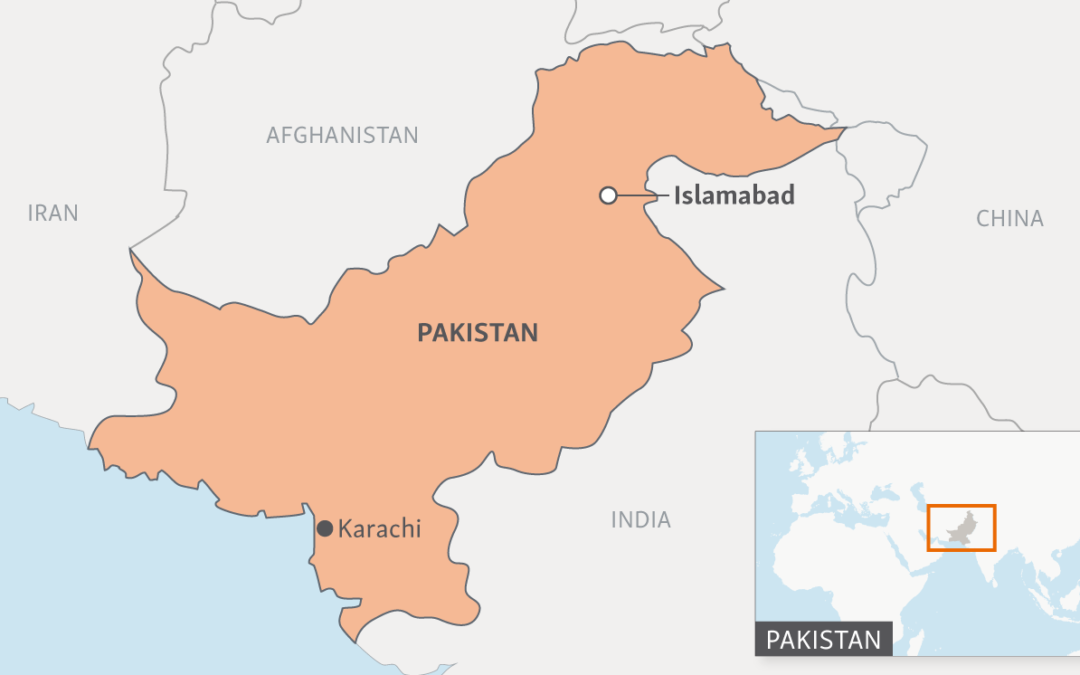
Radio Free Europe/Radio Liberty (RFE/RL) has deplored the closure by Pakistan’s Interior Ministry of its office in Islamabad, Pakistan, following accusations by the country’s Inter-Services Intelligence (ISI) agency that its programs are “against the interest of Pakistan” and “in line with [a] hostile intelligence agency’s agenda.”
“Radio Mashaal serves no intelligence agency or government,” said RFE/RL President Thomas Kent, using the local name of RFE/RL’s Pashto-language service in Pakistan. “Our reporters are Pakistani citizens who are dedicated to their country and live and raise families in the villages in which they report. We demand that their safety be ensured, and that they be permitted to resume their work without fear or delay.”
Interior Ministry officers arrived at the company’s Islamabad bureau on January 19 to present the closure order and clear and seal the premises. The order came amid deteriorating U.S.-Pakistan relations. Pakistan’s chief of army staff General Qamar Javed Bajwa stated on January 12 that Pakistan feels “betrayed” by U.S. criticism that it is not doing enough to fight terrorism and by Washington’s decision to suspend military aid for Islamabad.
RFE/RL, a private news organization supported by a U.S. congressional grant, has documented increasing threats against Mashaal journalists over the last two years as a result of their reporting. Freedom House has designated the country “not free,” and the Committee to Protect Journalists consistently ranks it among the most dangerous countries for the media.
Radio Mashaal was established in 2010 to provide an alternative to extremist propaganda in the tribal regions along Pakistan’s border with Afghanistan, reaching audiences that are otherwise subject to the “mullah” radio of Taliban extremists and the recruitment efforts of other militant groups.
Mashaal senior editor Daud Khattak spoke optimistically about the tribal regions recently. “Twenty years ago, people of [the tribal areas] saw weapons as a symbol of grandeur. Today, they want schools and colleges…[and] courts.”
While Mashaal continues to use radio to reach its audience, it also counts more than 1.6 million Facebook fans, and registered 81 million video views on Facebook and 10 million views on YouTube in 2017.
(Source: RFE/RL press release)
11 January 2018
Arab Satellite Communications Organization – Arabsat – has announced that during CABSAT (14th-16th January 2018 at Dubai International Convention and Exhibition Centre) it will showcase the capabilities and services of its Arabsat 6th generation satellites. Arabsat is preparing to launch two new satellites in 2018 to complete its 6th generation satellites project, which consists of four satellites.
Eng. Khalid bin Ahmed Balkheyour, President & CEO of Arabsat, said that at CABSAT Arabsat will also showcase the latest agreements that enhance its Hot Spot 26° East, and will announce the signature of new contracts and agreements.
On January 3-4, Arabsat held its 160th Board of Directors meeting in Istanbul, Turkey, under the chairmanship of Dr. Nasser Al-Hujailan, Deputy Minister of Culture and Information in Saudi Arabia. On the agenda were the results of 2017 as well as the estimated budget for 2018.
(Source: Arabsat press release)

9 January 2018
Dining with the Chef : Washoku in Paris
Part 1 – Culinary Heritage Abroad
Jan. 5 Fri. 14:30/ 20:30/ Jan. 6 Sat. 2:10/ 8:10 (UTC) <28 min.>
Part 2 – Game Changers
Jan. 12 Fri. 14:30/ 20:30/ Jan. 13 Sat. 2:10/ 8:10 (UTC) <28 min.>
Master chef Tatsuo Saito and singer/actress Yu Hayami explore Japanese cuisine in Paris. Ambitious chefs in France are devoting their talents to dishes such as sushi and ramen, striking a balance between remaining true to the tradition and adding their own signatures. Chefs from Japan also are redefining the boundaries. See how they handle the ingredients of Japanese cuisine and the five basic tastes, including umami.
One Last Vision : A Photographer’s Final Journey
Jan. 5 Fri. 23:10/ Jan. 6 Sat. 5:10/ 10:10/ 17:10 (UTC) <49 min.>
World-renowned photographer Yoshikazu Shirakawa has been taking pictures for more than half a century. His collections include “The Alps,” “The Way of Buddhism,” and “The World’s Hundred Greatest Mountains.” Now, at 82, he is working on his 12th compilation. It pays homage to the laws of nature, from which Shirakawa believes humans should learn. The program chronicles his journey to the Midwest of the United States, where he encounters nature head on.
Alain Ducasse, Japanese Cuisine Par Excellence
Jan. 6 Sat. 23:10/ Jan. 7 Sun. 5:10/ 10:10/ 17:10 (UTC) <45 min.>
Alain Ducasse, master of French cuisine and worldwide restaurateur, has long held an interest in Japan’s traditional “washoku” cuisine. He has opened a restaurant in Tokyo’s luxurious Ginza area, challenging himself to make the most of ingredients sourced from across the country. With the arrival of winter, Ducasse has selected sea urchin and pole-and-line fished cod from Hokkaido, as well as Shogoin Daikon radish from Kyoto. He draws inspiration from Japan and his homeland in turning the ingredients into delectable French dishes.
Expressions from the ObscureⅡ
Jan. 27 Sat. 23:10/ Jan. 28 Sun. 5:10/ 10:10/ 17:10 (UTC) <49 min.>
Self-taught artists are claiming respect and recognition for themselves and their work. Marie Suzuki is one such person, a creator of what has come to be known as art brut, made by artists who have learned on their own. She cultivates her skills primarily to please herself. Nevertheless, others have taken notice. The program features an exhibition of Japanese art brut in Nantes, France, including that of Suzuki. Tune in to see how boundless imagination turns into expression beyond words.
(Source: NHK WORLD TV press release)
